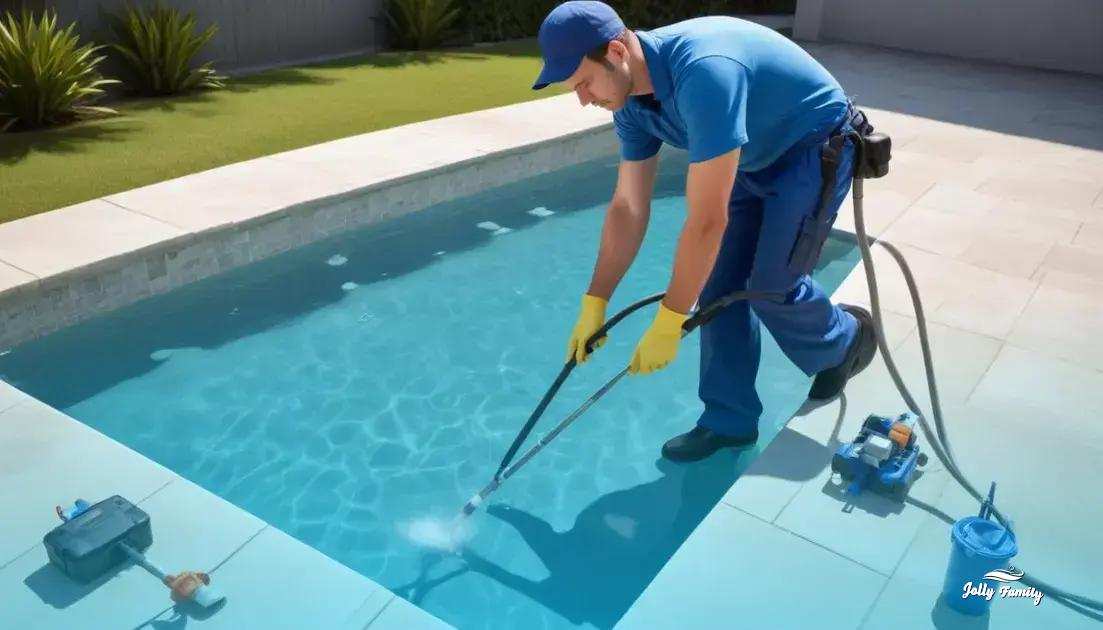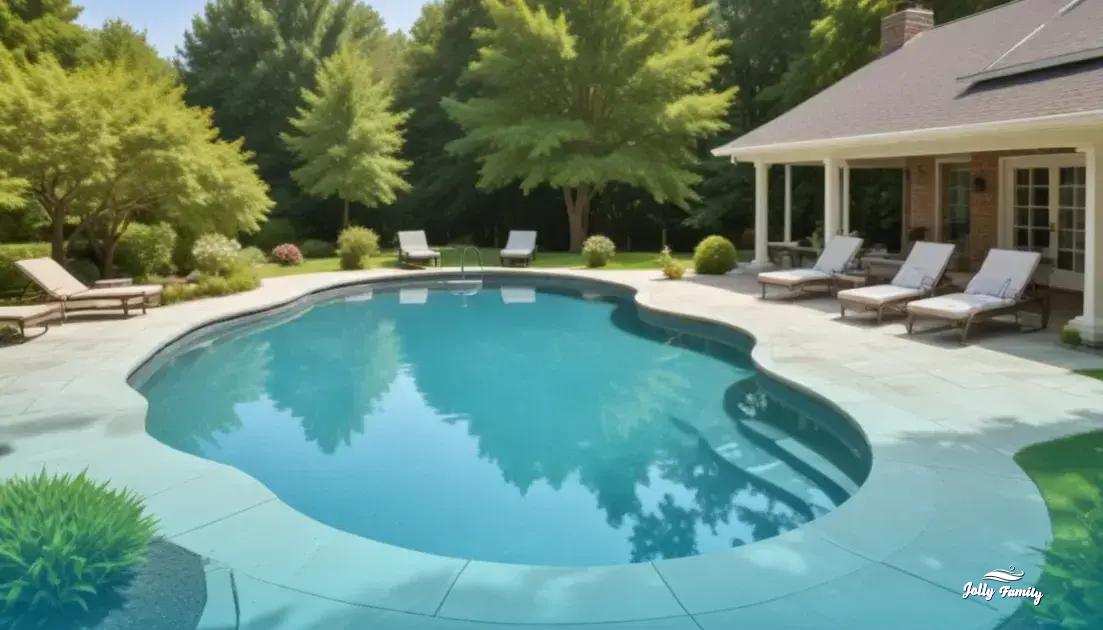


what does a professional pool cleaning service include: skimming, vacuuming and brushing, precise chemical testing and balancing, filter and pump inspection and maintenance, stain removal or deep cleaning, safety checks and seasonal opening and closing, and a written service report with repair recommendations.
what does a professional pool cleaning service include? Many homeowners ask that — and Jolly Family, trusted in Kissimmee, handles skimming, filter care, chemical balance and safety checks so your pool stays inviting and safe.
What a standard cleaning visit covers
A standard pool cleaning visit focuses on quick, effective tasks that keep water clear and equipment working. Technicians use a checklist to prevent small issues from becoming big problems.
routine cleaning tasks
- Skimming the surface to remove leaves, insects and debris with a long-handled net.
- Emptying skimmer and pump baskets to restore proper circulation and prevent clogs.
- Brushing walls, steps and tile to remove algae and surface buildup.
- Vacuuming the pool floor or running an automatic cleaner to pick up settled dirt.
water testing and balancing
- Testing pH, free chlorine, total alkalinity and calcium hardness with test strips or a digital meter.
- Adjusting chemicals as needed to reach safe ranges and improve water clarity.
- Applying a shock treatment when chlorine levels are low or after heavy use.
filter and equipment care
- Inspecting and cleaning filters (backwash or cartridge rinse) to maintain flow.
- Checking the pump, motor, heater and valves for proper operation and leaks.
- Removing debris from skimmer weirs and checking return jets for good circulation.
spot cleaning and stain control
- Scrubbing the waterline and tiles to prevent scale and scum marks.
- Spot-treating stains or algae patches with targeted products.
- Noting areas that may need deep cleaning or specialty treatment later.
safety checks and communication
- Verifying pool safety features like covers, gates and ladder condition.
- Leaving a clear service report that lists actions taken and recommended follow-ups.
- Advising owners about any urgent repairs or seasonal steps to protect the pool.
Most standard visits take 30–90 minutes depending on pool size and condition. A regular schedule helps keep maintenance predictable and reduces costly repairs.
Detailed chemical testing and water balance
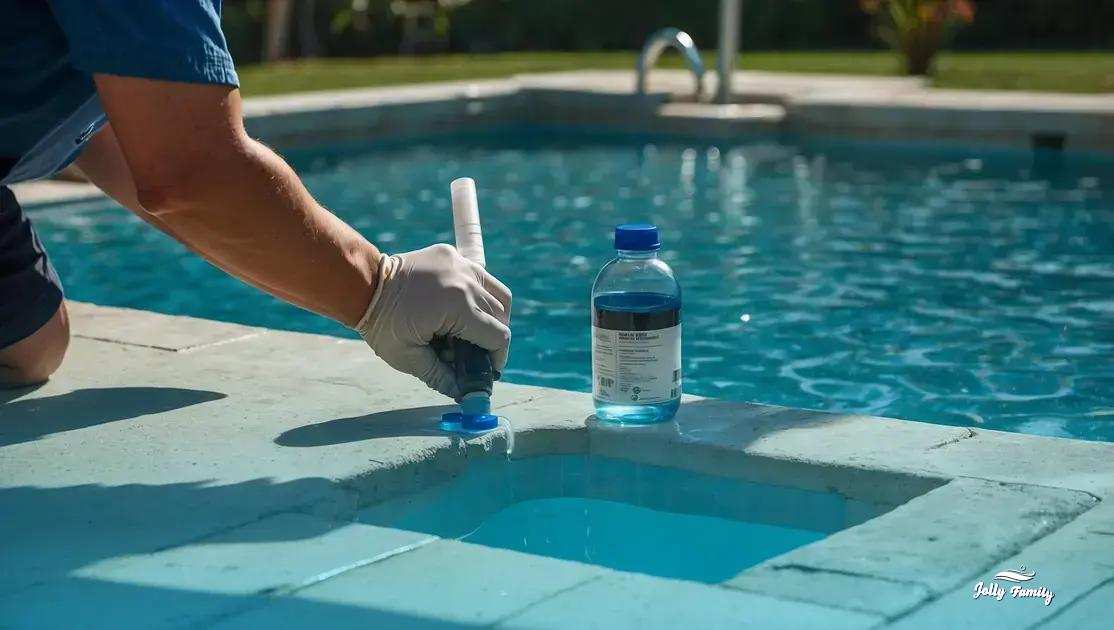
Accurate chemical testing keeps water safe and clear. Test the water at elbow depth, away from returns, to get a true sample. Use a liquid test kit, test strips, or a digital meter for best results.
key parameters and ideal ranges
- pH: 7.2–7.6 — affects comfort and sanitizer efficiency.
- free chlorine: 1–3 ppm for residential pools; raise after heavy use or storms.
- total alkalinity: 80–120 ppm — stabilizes pH swings.
- calcium hardness: 200–400 ppm — prevents corrosion or scale.
- cyanuric acid (stabilizer): 30–50 ppm for outdoor chlorinated pools.
testing frequency and timing
- Test at least once a week for private pools; test 2–3 times weekly with heavy use or hot weather.
- Always test after adding chemicals and again after adequate circulation (2–6 hours).
how to adjust levels safely
- To lower pH: add muriatic acid or sodium bisulfate in small doses, then retest.
- To raise pH: use soda ash (sodium carbonate) carefully.
- To raise alkalinity: add sodium bicarbonate; to lower it, use acid slowly.
- To raise calcium hardness: add calcium chloride; lowering hardness often requires partial drain and refill.
- For low chlorine: add liquid chlorine or granular shock; for stabilized chlorine, use appropriate tablets.
troubleshooting common issues
- Cloudy water: check chlorine, pH and filter function; consider a shock treatment.
- Rapid pH rise: often from high alkalinity or source water; lower with acid and retest.
- Combined chlorine (chloramines): causes odor and irritation — perform breakpoint chlorination (shock).
best practices and record keeping
- Keep a testing log with date, time, and values to spot trends.
- Follow product labels for dosages and safety gear like gloves and eye protection.
- If values are unstable despite corrections, inspect equipment or consult a professional.
Equipment inspection, filtration and pump maintenance
Check equipment weekly to spot small problems early. Focus on the pump, filter and visible plumbing. Look for leaks, odd noises or low flow.
pump and motor checks
- Inspect the pump basket and clean out hair and debris. A clogged basket reduces flow and strains the motor.
- Listen for grinding or humming — these can signal worn bearings or a failing motor.
- Feel the motor housing: it should be warm, not hot. Excess heat may mean poor ventilation or electrical issues.
- Check the shaft seal and unions for leaks. Small drips today can become big repairs later.
filter maintenance by type
- Sand filters: backwash when pressure rises 8–10 psi above clean reading and add new sand every 5–7 years.
- Cartridge filters: remove and rinse cartridges monthly; replace cartridges when fabric is worn or torn.
- Diatomaceous earth (DE) filters: backwash and recharge DE after cleaning cycles; inspect grids for tears and replace if damaged.
pressure and flow monitoring
- Read the filter pressure gauge before cleaning and after. A steady rise means the filter is dirty or flow is restricted.
- Low pressure at the pump can indicate a blockage or air leak on the suction side.
- Check return jets: weak return flow often points to a pump or filter problem.
valves, skimmers and visible plumbing
- Operate multiport and diverter valves to ensure smooth movement and no leaks at valve stems.
- Empty skimmer and pump baskets regularly and inspect skimmer weirs for cracks.
- Look for discolored pipes, soggy ground or mold — signs of hidden leaks.
routine tasks and simple fixes
- Tighten loose unions and fittings, but avoid over-torquing plastic parts.
- Clean hair and debris from impeller pockets if flow is poor; power down equipment before opening housings.
- Keep the equipment pad clear of clutter and allow airflow around the motor to prevent overheating.
when to call a professional
- Schedule pro service for persistent low flow, repeated leaks, electrical faults, or when the motor needs replacement.
- If you detect sudden pressure swings, loud noise, or visible bearing smoke, shut equipment off and contact a technician.
- A certified tech can test motor amps, inspect seals, and perform safe repairs that prevent further damage.
Deep cleaning: tile, brush, vacuum and stain treatment
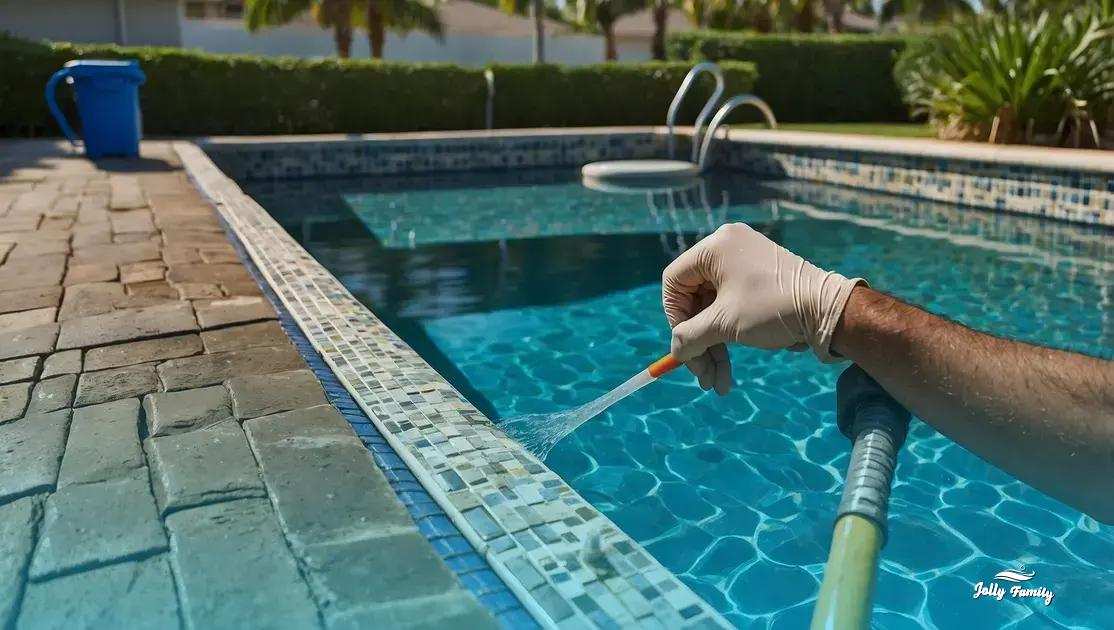
Deep cleaning removes scale, biofilm and stains that regular visits may miss. Technicians target the waterline, grout and floor, using the right tools and steps to protect the surface.
tools and products used
- Brushes: nylon for vinyl and fiberglass, stainless-steel or brass-bristled for concrete and heavy scale.
- Vacuum: manual leaf vacuum or powered suction connected to the pump; automatic cleaners for ongoing debris removal.
- Tile cleaners and descalers: non-abrasive commercial cleaners for mild buildup; consult a pro for muriatic acid or strong acids.
- Stain removers: oxidizers for organic stains, metal chelators for iron/copper, and poultices for stubborn marks.
step-by-step deep clean
- Lower water level slightly if needed to expose heavy waterline scaling.
- Brush loosening scale and algae, working in small sections and using firm, even strokes.
- Apply tile cleaner or descaler per label, allow dwell time, then scrub and rinse thoroughly.
- Vacuum the loosened debris from the floor and corners, keeping the pump running to move waste to the filter.
- For fine suspended particles, use a clarifier or flocculant and vacuum when they settle.
stain identification and targeted treatment
- Organic stains (leaves, pollen): treat with shock or an oxidizing agent and brush.
- Metal stains (brown, green): use a metal sequestrant or a specialized metal remover; sometimes partial drain and spot-treating is needed.
- Rust or tannin stains: require different chemistries—test a small area first and follow product directions closely.
- When a stain won’t lift, a poultice or professional abrasive cleaning may be necessary to restore the surface.
vacuuming and finishing touches
- Vacuum slowly to avoid stirring fine debris; use overlap strokes for full coverage.
- Rinse tile and pool walls after chemical application to remove residues.
- Backwash or clean filters after deep cleaning to restore flow and filtration efficiency.
safety and precautions
- Wear gloves and eye protection when handling cleaners or acids; follow label safety instructions.
- Avoid mixing chemicals. If acid is used, ensure proper dilution and ventilation and consider a certified tech for application.
- Document treatments and monitor water chemistry for 24–48 hours after cleaning to rebalance as needed.
when to call a professional
- Hire a pro for heavy scale, deep-set metal stains, or any treatment requiring strong acids or abrasive equipment.
- If the finish shows etching or discoloration after cleaning, a specialist can assess repair or resurfacing options.
Safety checks, signage and seasonal opening/closing tasks
Safety checks, signage and seasonal tasks are critical steps technicians perform to protect swimmers and equipment across the year.
safety checks
- Inspect gates, fences and latches to ensure they close and lock properly.
- Test pool alarms, covers and automatic shutoffs for reliable operation.
- Check ladders, handrails and diving boards for secure mounting and corrosion.
- Look for trip hazards, slippery decking or loose grates around the pool perimeter.
- Verify drains and anti-entrapment covers are intact and secured.
signage and emergency info
- Install clear safety signs and depth markers where swimmers can see them; use durable, weatherproof materials.
- Post emergency contact information and CPR/basic rescue instructions in a visible area.
- Ensure signs are mounted at eye level and not blocked by furniture or plants.
- Replace faded or damaged signs to keep messages clear and compliant with local rules.
seasonal opening tasks
- Remove covers carefully, remove debris from cover, and inspect for damage.
- Refill to proper water level and reconnect pumps, heaters and automation systems.
- Clean or replace filters, then run the pump to circulate and clear cloudy water.
- Test and balance chemicals; perform a shock treatment if needed before first use.
- Reinstall safety equipment, signs and lane markers; test alarms and gates after startup.
seasonal closing and winterization
- Balance water chemistry before closing to protect surfaces and equipment.
- Lower water level if required, remove accessories and store them indoors.
- Blow out or drain plumbing lines and install winter plugs or use pool-safe antifreeze where appropriate.
- Clean and cover filters or remove cartridges for storage; secure the pool cover and anchor points.
- Label stored chemicals and keep them in a cool, dry place away from children and pets.
record keeping and owner communication
- Leave a service report listing safety items checked, chemical readings and recommended follow-ups.
- Note any missing or damaged safety gear and advise on immediate actions.
- Provide simple seasonal care tips so owners know when to call and what to watch for.
when to hire a professional
- Call a pro for complex winterization, major cover repairs, alarm installation or electrical issues.
- Hire certified technicians for code-related safety fixes or when structural repairs are needed.
- If you spot recurring leaks, failing gates or failed alarms, schedule a professional inspection promptly.
Choosing a local pro: why Kissimmee homeowners trust Jolly Family

Homeowners choose a local pro for fast service and knowledge of the area. In Kissimmee, that local edge matters for weather, water and seasonal care.
local expertise
Local technicians know how heat, rain and landscaping in Kissimmee affect pools. They recommend treatments that work with regional water and plant debris.
reliable scheduling and clear communication
Regular visits, on-time arrivals and simple service reports build trust. Technicians who call before arrival and leave clear notes make ownership easier.
transparent pricing and tailored plans
Good providers offer straightforward quotes and options for weekly or monthly care. A custom plan fits pool size, usage and budget without hidden fees.
trained, licensed and insured techs
Certified and insured technicians reduce homeowner risk. Proper training means safer chemical handling and better equipment care.
community reputation and real reviews
Local referrals and recent job photos help confirm quality. Homeowners trust companies that show consistent positive feedback from neighbors.
warranty, follow-up and emergency support
Trust grows when companies offer satisfaction guarantees, quick follow-up on issues and emergency response for pumps or leaks.
Choosing a nearby pro gives faster fixes, tailored service and a team that knows Kissimmee pools well.
Keep your pool safe and inviting
Professional pool cleaning covers skimming, water testing, filter and pump care, deep cleaning and safety checks to stop small issues from growing.
Regular maintenance keeps water clear, extends equipment life and saves you time. It also lowers the chance of costly repairs and unsafe conditions.
Keep a simple service log, follow test results, and hire a local, licensed technician for complex tasks. A routine visit now can protect your pool all year.
FAQ – Common questions about professional pool cleaning
What does a standard pool cleaning visit include?
A standard visit usually covers skimming, emptying skimmer and pump baskets, brushing walls, vacuuming, water testing and a basic equipment check.
How often should I schedule professional cleanings?
Most homeowners choose weekly or biweekly service. Frequency depends on pool use, nearby trees and weather.
How long does a typical service visit take?
Visits typically last 30–90 minutes, depending on pool size and condition or if deep cleaning is needed.
Do I need to be home during the service?
You don’t have to be home if you provide access and clear instructions. Many pros leave a service report after each visit.
Are the chemicals safe for my family and pets?
When handled by trained technicians and used per label instructions, chemicals are safe. Technicians wear protection and advise on safe reentry times.
When should I call a professional instead of doing DIY maintenance?
Call a pro for persistent cloudy water, repeated leaks, motor or electrical issues, heavy scale or metal stains, and complex winterization.