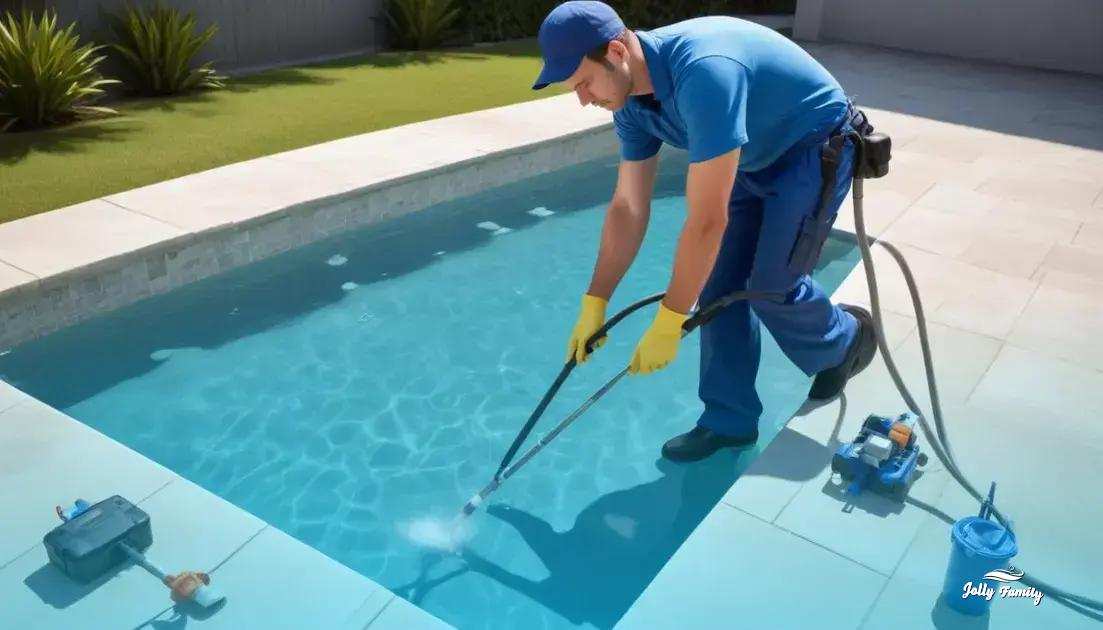

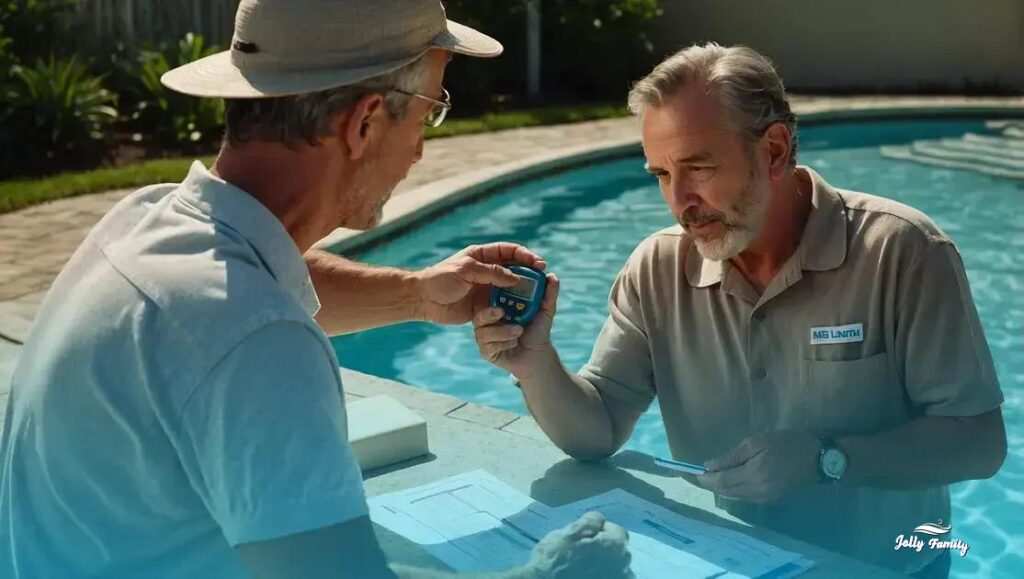
professional vs homeowner pool chemical treatment: professionals provide formal training, precise testing equipment, and rapid corrective actions for complex problems, while homeowners can manage routine pH and sanitizer care; hire a pro for persistent algae, cloudy water, equipment failure, leaks, or contamination to prevent costly repairs and liability.
professional vs homeowner pool chemical treatment — want to know which approach saves time and keeps swimmers safe? Think of pool care like a recipe: small measurement errors change the whole result. Test weekly, log results, and call Jolly Family in Kissimmee when readings drift or safety feels uncertain.
understanding the core differences: training, tools, and expected results
Pros receive formal training and handle complex chemistry daily, while homeowners often rely on manuals or quick online searches. That gap shows up in test choices, dosing, and how fast problems clear.
training and knowledge gaps
Professionals learn pool chemistry, algae control, and safety procedures. They know how to read titration results, adjust stabilizer levels, and diagnose recurring issues. Homeowners usually learn basic pH and chlorine targets, which works for routine care but can miss subtle imbalances.
- Pro skills: calibrated testing, shock protocols, scale and corrosion prevention, local code awareness.
- Homeowner skills: test strips, simple dosing, and basic weekly checks.
tools and testing accuracy
Tools change the outcome. Digital meters and titration kits give precise numbers. Test strips are fast and cheap but less exact. Accuracy matters for salt systems, bromine pools, and heated water.
- Pro tools: photometers, pH probes, titration sets, chemical feeders, calibrated pumps.
- Home tools: test strips, basic color comparators, handheld floaters, small shock packs.
expected results and maintenance rhythm
Expect different timelines. A pro can often restore balance in a day or two by using concentrated treatments and proper circulation. Homeowners may need repeated doses and more time to see fixes, especially with algae or cloudy water.
Keep a log of readings and actions. >Consistent results come from routine testing, correct dosing, and good filtration. Missing one step can cause recurring issues.
safety, handling, and liability
Chemicals are hazardous. Professionals use PPE, store products correctly, and follow disposal rules. Homeowners should never mix acids and chlorine or add dry chlorine into low-water areas. Safety mistakes can cause injuries and void insurance.
when diy is enough and when to call a pro
DIY works for steady weekly upkeep: pH tweaks, routine chlorination, skimming, and simple shocks. Call a pro when you face persistent cloudiness, unexplained algae, strong odors (combined chlorine), equipment failure, or when you need precise calibration for salt or mineral systems.
- Call a pro: repeated test failures, rapid pH swings, scale buildup, or after a major contamination.
- DIY suitable: regular checks, minor chlorine or pH adjustments, and routine filter cleaning.
safety and liability risks when homeowners handle pool chemicals
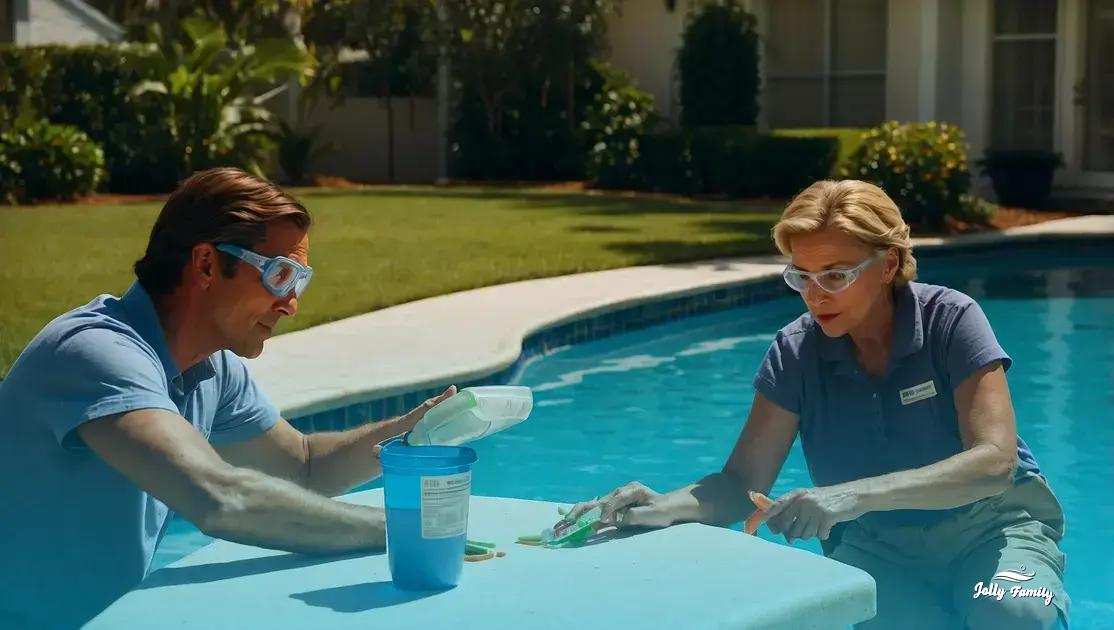
Handling pool chemicals at home carries real, avoidable risks. Small mistakes can cause burns, breathing problems, equipment damage, and legal headaches.
common hazards to watch for
- Mixing chlorine and acids creates toxic chlorine gas that can injure lungs quickly.
- Dry chemicals can ignite if they contact organic material or moisture.
- Skin and eye burns from splashes are common without protection.
- Improper disposal harms plants, wildlife, and local waterways.
safe handling practices
Always read and follow the product label. Wear chemical-resistant gloves, eye protection, and a mask when measuring or pouring. Work outside or in a well-ventilated area and keep bystanders, children, and pets well away. Add chemicals to water, never water to a chemical, and use dedicated scoops or measuring devices.
- Measure carefully and avoid estimating doses.
- Keep containers dry and sealed when not in use.
- Do not mix different products unless instructions explicitly allow it.
storage and disposal
Store chemicals in their original, intact containers in a cool, dry, locked area away from direct sunlight. Separate oxidizers like chlorine from acids and organic materials. Keep an up-to-date inventory and follow local regulations for disposal—never pour concentrated chemicals down storm drains.
liability and insurance risks
Accidents can lead to medical claims, property damage, or fines. Some insurance policies may deny coverage if negligence is proven, such as ignoring safe storage or labels. Document maintenance, receipts, and test logs to show you followed care standards if a dispute arises.
what to do in an emergency
- If fumes appear, evacuate everyone and call emergency services immediately.
- For skin or eye exposure, rinse with running water for at least 15 minutes and seek medical help.
- Do not induce vomiting if chemicals are swallowed—call poison control right away.
- Contain small spills with absorbent materials and dispose of them per local rules; for large spills, contact professionals.
testing frequency, dosing accuracy, and water-balance best practices
Test water at least once a week and after heavy swim days, rain, or hot weather. More frequent checks keep small problems from growing.
testing schedule and quick checks
Use test strips for a fast check and a photometer or titration kit for accurate results. Test weekly and again after storms, parties, or if water looks cloudy or smells.
- Quick check: test strips for free chlorine and pH.
- Accurate check: titration or digital meter for alkalinity, chlorine, and hardness.
- After adjustments, retest: pH in 15–30 minutes; sanitizer levels after a few hours.
dosing accuracy and measurement tips
Always measure chemicals with the right tools. Small errors make big differences. Use calibrated scoops, a digital scale, or manufacturer dosing charts.
- Add chemicals to water, not water to chemicals.
- Split large doses into smaller steps and retest between additions.
- Use a pump or brush to improve circulation after dosing.
water-balance order and target ranges
Adjust in the right order to get stable, lasting results. Start with alkalinity, then pH, then calcium hardness, and finally sanitizer and stabilizer.
- pH: aim for 7.2–7.6.
- Total alkalinity: 80–120 ppm.
- Calcium hardness: 200–400 ppm (varies by pool type).
- Free chlorine: 1–3 ppm for most pools; follow local guidelines for higher-use pools.
- Cyanuric acid (stabilizer) for outdoor chlorine pools: 30–50 ppm recommended.
filtration, circulation, and timing
Good chemistry needs good flow. Run your filter enough each day to turn over the pool water at least once. Clean or backwash filters on schedule.
- Check pump run time by season and pool size.
- Inspect and clean skimmer and pump baskets weekly.
- After shocking or heavy dosing, run the pump longer and retest before swimming.
record keeping and when to seek help
Keep a simple log with date, readings, chemicals added, and weather. Logs reveal trends and help spot recurring issues.
- Call a pro if levels swing wildly, if you get repeated cloudy water, or when using specialty systems like salt or mineral generators.
- Consistent testing and careful dosing reduce costs and keep swimmers safe.
equipment, hidden costs, and when DIY becomes expensive
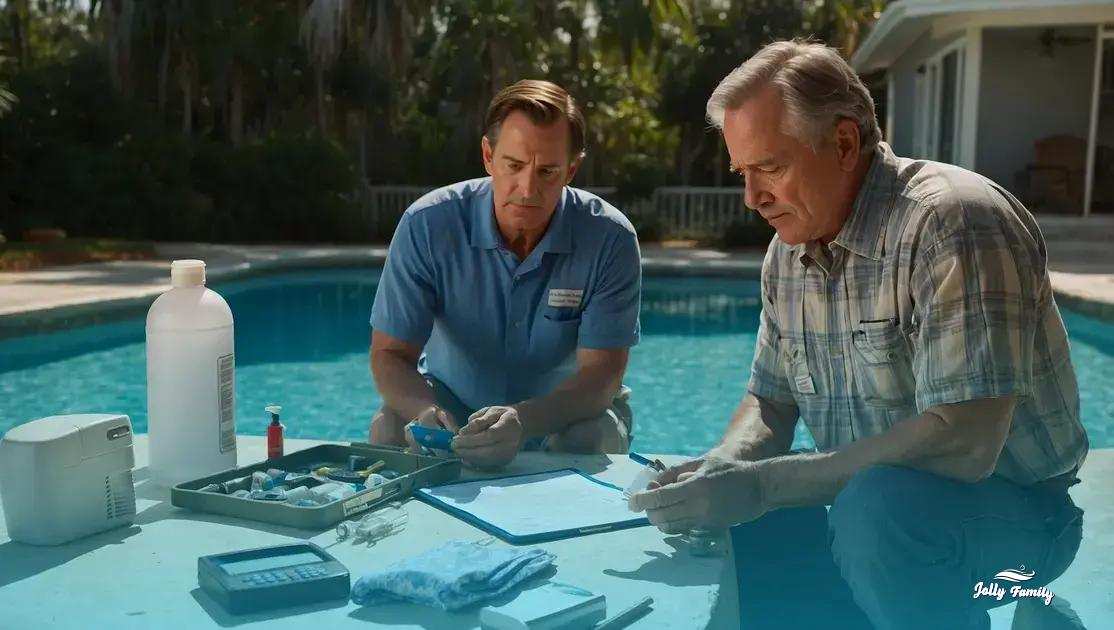
Buying and maintaining pool gear can surprise many homeowners. A single broken pump or corroded heater can cost more than a season of routine chemicals. Small expenses add up fast.
essential equipment and who pays
- Basic homeowner gear: skimmer, basic test strips, floating chlorinator, cartridge or sand filter, small shock packs.
- Higher-tier gear: salt chlorine cell, automatic chemical feeder, digital controllers, high-capacity pumps, heater—these raise upfront and repair costs.
- Pro-only tools: calibrated photometers, titration kits, chemical feeders installation gear—often not worth buying for occasional use.
hidden and recurring costs
Think beyond bottles of chlorine. Expect recurring needs like replacement filter media, test reagents, stabilizer, and pumps’ electrical use. Labor for repairs and emergency service calls is another big line item.
- Filter media and cartridge replacement.
- Salt cell or heater replacement after years of use.
- Energy costs from running pumps longer after treatments.
- Replacement of corroded fittings, liners, or pool finishes caused by imbalanced water.
when diy becomes more expensive
DIY saves money only if problems stay small. Costs climb when issues repeat or cause damage. Repeated shocking, wasted chemicals, or wrong dosing can harm equipment and pool surfaces.
- Persistent algae or cloudiness that needs multiple treatments.
- Rapid pH swings that etch the pool surface or corrode equipment.
- Major equipment failures like seized pumps or burnt-out heaters.
- Time spent diagnosing problems that a pro could fix faster.
how to cut costs and choose wisely
Buy quality where it matters. A reliable pump and a good filter save money long term. Keep a maintenance log and schedule seasonal professional checks to catch small issues early.
- Compare repair vs replacement costs before fixing old equipment.
- Use accurate testing tools or occasional pro analysis instead of guessing.
- Bundle annual service or seasonal tune-ups to lower per-visit cost.
quick decision checklist
Use this to decide whether to keep DIY or hire help:
- Are problems recurring despite proper care? Consider a pro.
- Is replacement gear nearing end of life? Factor replacement into your budget.
- Do you lack time, tools, or clear test results? Professional service may cost less than repeated mistakes.
- If equipment issues risk big repairs or safety, hire a professional.
real-life scenarios: common problems that call for professional help
When routine fixes don’t work, it’s time to consider professional help. These real-life signs show when a problem is beyond simple weekly care.
persistent algae or stains
If green, yellow, or black algae return after repeated shocks, or dark stains keep appearing on the surface, a pro can identify the species, treat it correctly, and use pressure washing or an acid wash when needed. Repeated DIY shocks waste time and chemicals.
cloudy water that won’t clear
Cloudiness after proper filtration and chemical adjustments may mean a filter problem, organic overload, or microscopic particles. A technician can test for combined chlorine, use flocculants, service filters, and recommend the right clarifier or backwash schedule.
strong chemical odors or eye irritation
A persistent chlorine smell or red eyes often signals high combined chlorine (chloramines) or poor oxidation. Professionals use non-chlorine oxidizers, breakpoint chlorination, and ozone or UV checks to restore safe levels faster and more reliably.
equipment failure or strange noises
Pumps that hum, heaters that won’t ignite, or erratic automation calls for trained diagnostics. Pros check electrical connections, motor bearings, impellers, and gas lines safely. DIY fixes can void warranties or create hazards.
leaks, sudden water loss, or unexplained damage
Large drops in water level or wet spots around the deck may hide plumbing or structural leaks. Technicians use pressure tests, dye tests, and electronic leak detectors to find and repair the issue before it causes costly damage.
advanced systems and calibration needs
Salt chlorinators, mineral systems, and automated feeders need precise calibration and periodic service. If readings swing or the salt cell shows scale or low output, a pro can clean, test conductivity, or replace components correctly.
after major contamination or storm events
Sewage, heavy debris, or floodwater introduce bacteria and organics that simple chemicals can’t always fix. Professionals follow health guidelines, perform shock treatments, and confirm safety before reopening the pool to swimmers.
what professionals typically do
- Run full lab-grade tests for stabilizer, metals, and contaminants.
- Perform targeted treatments (oxidation, algaecide, clarifiers) and mechanical services.
- Inspect and repair pumps, filters, heaters, and automation systems.
- Use leak detection gear and offer documented reports for insurance or home sales.
When issues repeat, cause safety concerns, or risk major repairs, calling a professional usually saves money and time compared to trial-and-error DIY approaches.
how Jolly Family in Kissimmee manages chemical treatment reliably
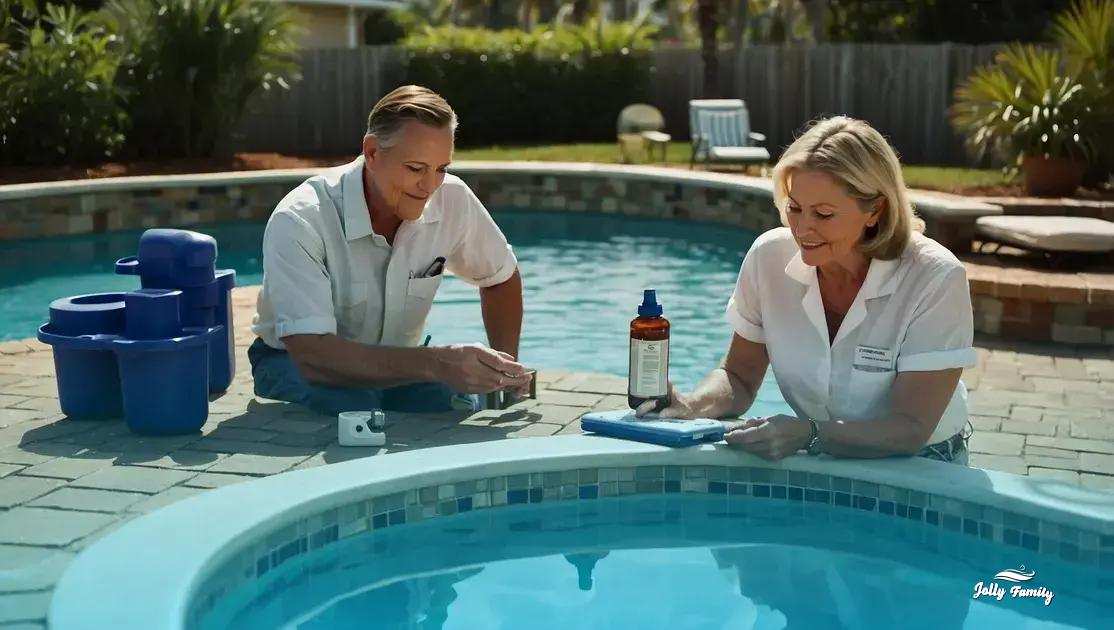
The Jolly Family in Kissimmee keeps pool chemistry steady by following a simple, consistent routine that any homeowner can copy. They test, record, act, and call help when needed to avoid surprises.
weekly routine and seasonal checks
They test water at least once a week and more often after heavy use or storms. At season start and close, they schedule a full service to inspect equipment and rebalance water.
tools and accurate testing
The family uses a digital photometer for reliable readings and kept a small backup kit of test strips for quick checks. Accurate tools cut chemical waste and guesswork.
record keeping and simple logs
They keep a notebook with date, readings, weather, and chemicals added. This log shows trends and helps decide when to DIY or call a pro.
safety and proper storage
Chemicals stay in a locked, shaded box away from the pool area. The Jollys wear gloves and goggles when handling products and never mix items. Children and pets are kept clear during dosing.
when they call a professional
If algae returns, levels swing wildly, or equipment acts up, they call a local technician. Professionals handle complex fixes like salt cell maintenance, leak detection, and electrical repairs.
cost-saving habits
Small habits save money: run the pump enough for a full turnover, clean skimmer baskets weekly, and follow dosing steps instead of large one-time additions. These steps prevent bigger repairs.
By combining careful testing, clear logs, safe handling, and timely pro visits, the Jolly Family keeps their pool safe, clear, and ready for family use without wasted time or chemicals.
Final takeaway
professional vs homeowner pool chemical treatment boils down to skill, tools, time, and risk. Professionals bring training, precise gear, and fast fixes. Homeowners can manage steady weekly care with the right routine.
Use accurate testing, keep a simple log, and follow safe handling rules. Test regularly, store chemicals locked and dry, and never mix products. These habits save money and protect swimmers.
Call a professional when problems repeat, equipment fails, or health risks appear. A timely pro visit often costs less than repeated DIY attempts or major repairs.
Decide based on your time, budget, and comfort with risk. When in doubt, prioritize safety and get expert help.
FAQ – professional vs homeowner pool chemical treatment
What is the main difference between professional and homeowner chemical treatment?
Professionals have formal training, calibrated tools, and experience with complex issues. Homeowners can manage routine care but may miss subtle imbalances or equipment problems.
How often should I test my pool water?
Test at least once a week and after heavy use, storms, or hot weather. Use accurate tests for full checks and test strips for quick spot checks.
What safety steps should homeowners follow when handling pool chemicals?
Wear gloves and eye protection, work in a well-ventilated area, add chemicals to water (never water to chemical), and keep products locked and dry away from children and pets.
When should I call a professional instead of DIY?
Call a pro for persistent algae or stains, cloudy water that won’t clear, equipment failures, leaks, strong chemical odors, or after major contamination or storms.
What hidden costs can DIY pool care incur?
Expect costs for filter media, salt cell or heater replacement, higher energy use, and repairs from imbalanced water. Repeated mistakes can be more expensive than a professional visit.
Can mishandling pool chemicals affect my insurance coverage?
Yes. Negligence like improper storage or mixing can lead to denied claims. Keep receipts, logs, and follow safety rules to show you acted responsibly.