
Why my pool water is cloudy all the time: common causes include poor filtration, low free chlorine or high combined chlorine, imbalanced pH/alkalinity, high calcium or dissolved solids, and heavy bather or environmental contaminants; test free chlorine, pH and alkalinity, clean or backwash the filter, then shock or oxidize as indicated.
If you’re asking why my pool water is cloudy all the time, you’re not alone. Small chemistry errors or a clogged filter often hide behind the haze — a few quick checks usually point to the problem. Read on for practical steps you can try and when Jolly Family should step in.
Common causes of persistent cloudy pool water
Persistent cloudiness usually points to a few clear problems: filtration, water chemistry, or contaminants. Check each area step by step to find the cause.
Filtration and circulation problems
A dirty or undersized filter can’t remove fine particles. Clogged cartridges, old sand, or a failing DE grid reduce flow and let particles stay suspended. Also check pump run time — short cycles keep water from clearing.
Chemical imbalance
Low free chlorine, high pH, or high total alkalinity prevents proper sanitization and causes haziness. Test free chlorine, pH, and alkalinity and adjust slowly: big swings can worsen cloudiness.
Combined chlorine and chloramines
High combined chlorine (chloramines) forms when chlorine binds to contaminants. It reduces sanitizer power and can make water look dull. Shocking the pool or using an oxidizer often breaks these compounds.
Algae and organic growth
Even light algae blooms can turn water milky. Algae cling to walls and release tiny particles. Visible slime or green tint means you should scrub surfaces, boost sanitizer, and run filtration longer.
High calcium hardness or dissolved solids
Very hard water or elevated total dissolved solids create a cloudy, chalky look. Scaling or a gritty feel hints at calcium issues. Partial draining and refill or a water softening step may be needed.
Environmental contaminants and bather load
Leaves, pollen, sunscreen, and heavy swimmer use introduce oils and particles that cloud water. Skimming, vacuuming, and using a clarifier can help, but repeated heavy contamination needs better prevention.
After checking these areas, run simple tests (test strips or a digital meter), clean or backwash the filter, and adjust chemicals gradually to see which fix clears the pool.
How to test water quickly: what to check first
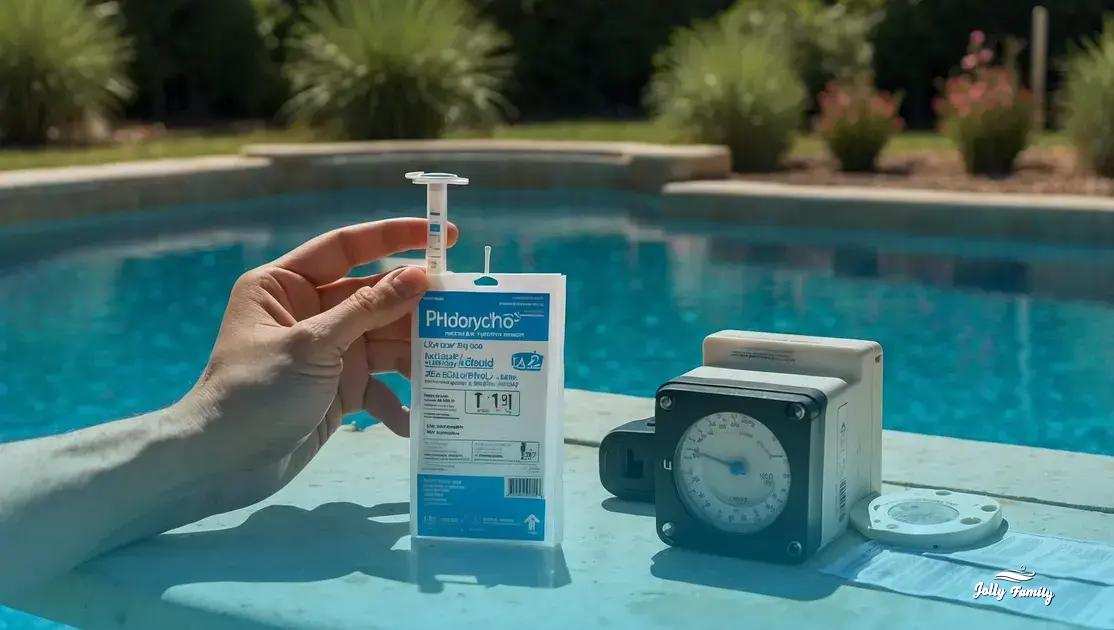
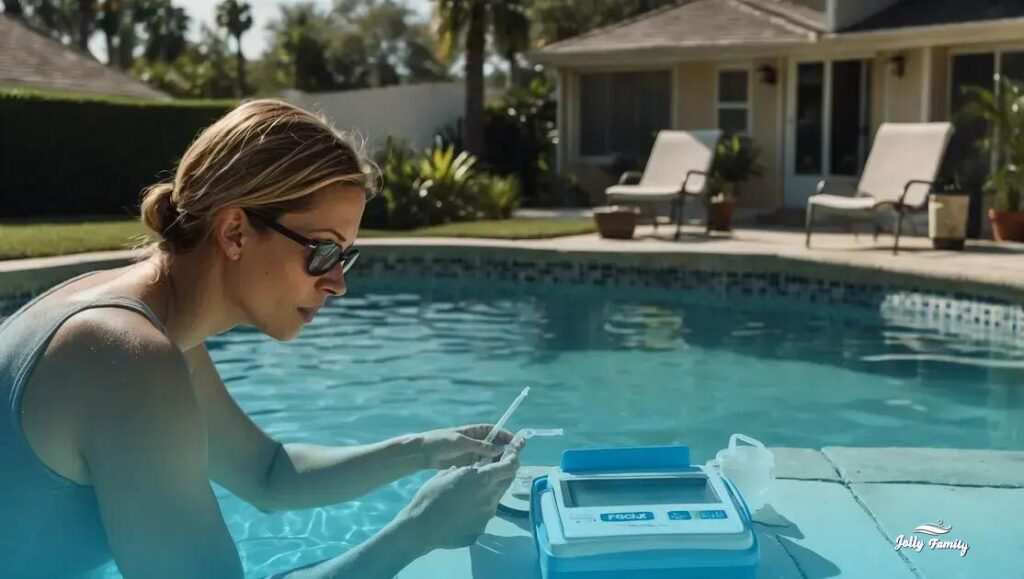
Keep a simple kit ready: test strips or a DPD liquid kit, a digital pH/ORP meter, and a clean sample bottle. Quick tests save time and point to the real problem.
Where to take a sample
Collect water from about elbow-deep, away from return jets and skimmers. Rinsing the container first avoids false readings.
What to test first
Start with these three: free chlorine, pH, and total alkalinity. They change conditions fast and often explain cloudiness.
- Free chlorine: Ideal 1–3 ppm for most pools. If under 1 ppm, sanitizer power is low.
- pH: Aim for 7.2–7.6. High pH reduces chlorine effectiveness.
- Total alkalinity: Keep 80–120 ppm. Too high or too low makes pH hard to control.
Fast extra checks
If the basics look okay, check combined chlorine (chloramines), cyanuric acid (stabilizer), and calcium hardness. High combined chlorine or CYA can cause persistent haze.
How to read test strips and kits
Follow the kit timing exactly. Compare colors in good light. For liquid DPD tests, read free chlorine after the first reagent and total chlorine after the second. Subtract to find combined chlorine.
Quick interpretation tips
If free chlorine is low but combined chlorine is high, shock the pool. If pH is high, add a pH reducer; if pH is low, add a small amount of alkali. If alkalinity is off, correct it before chasing pH swings.
Short-term actions to clear water
- Run the pump and filter longer (8–12 hours) after chemical fixes.
- Backwash or clean the filter if flow is low.
- Use a clarifier for fine suspended particles, but only after sanitizer and pH are balanced.
Retest after 4–6 hours and again the next day. Small, steady adjustments work better than large chemical swings.
Chemical adjustments and shock treatments that work
When cloudiness won’t go away, a well-timed shock and correct chemical tweaks often clear the water. Use shock to remove combined chlorine, kill algae, and oxidize organic contaminants.
Types of shock
There are two common options: chlorine-based shock (calcium hypochlorite or sodium dichloro) and non-chlorine oxidizers (potassium monopersulfate). Chlorine shock raises free chlorine to rapidly sanitize. Non-chlorine shock oxidizes organics without raising chlorine level.
Step-by-step shock routine
- Test and balance first: check free chlorine, pH, and alkalinity. Aim for pH 7.2–7.6 for best shock performance.
- Read the product label: calculate dose based on your pool volume and follow manufacturer instructions.
- Apply at dusk: add shock late in the day to avoid UV breakdown. For granules, sprinkle evenly or pre-dissolve if label recommends.
- Run filtration: keep the pump running for at least 8–12 hours after shocking to move treated water through the filter.
- Brush and circulate: brush walls and floors to free trapped particles so the filter can capture them.
- Clean the filter: backwash or clean cartridge/DE elements if flow drops or debris appears.
Safety and timing
Always wear gloves and eye protection when handling shock. Never mix different chemicals. After chlorine shock, wait until free chlorine returns to safe swim range (check label) before re-entering the pool. Non-chlorine oxidizers often allow shorter wait times, but follow the product directions.
How to choose which shock to use
Use chlorine shock for algae or heavy contamination. Choose non-chlorine oxidizer for routine oxidation when you want a shorter no-swim window or to remove organics without boosting chlorine.
Follow-up actions
If cloudiness persists after shock, use a clarifier to bind fine particles, run the filter longer, and retest chemicals. Repeat shock only if tests or visible signs show persistent chloramine buildup or algae. Regular maintenance prevents frequent shocks.
Filtration and circulation: troubleshoot your equipment
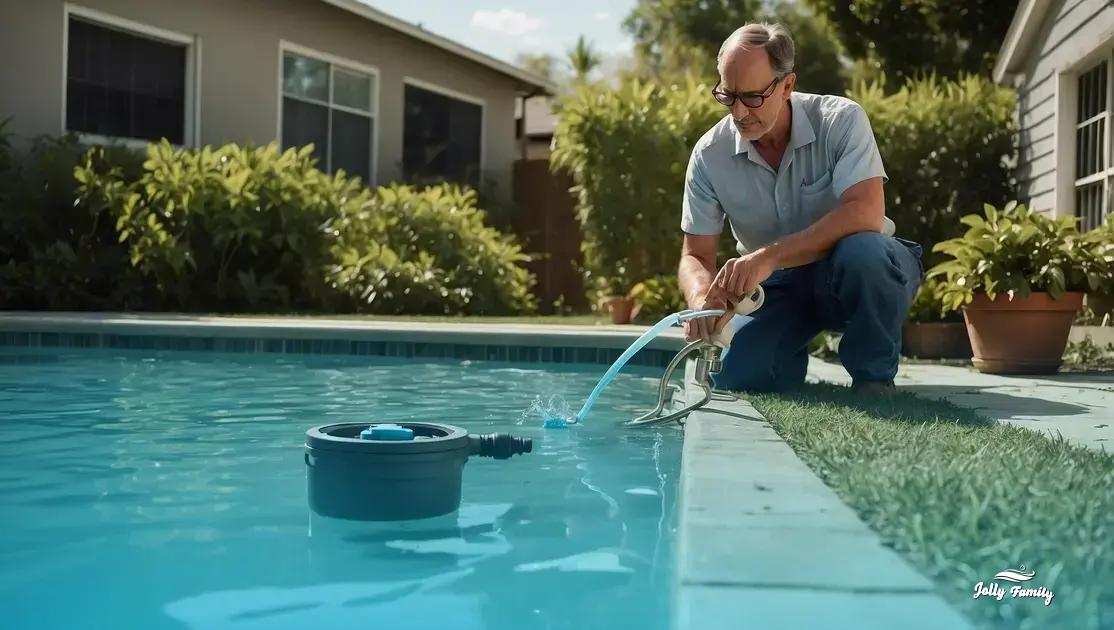
If your pool stays cloudy, poor filtration or weak circulation is often the reason. Work methodically: small fixes like cleaning baskets or backwashing usually restore flow fast.
Check the pump and priming
Confirm the pump is running and not making unusual noises. Air in the system or a loose pump lid can reduce suction. If the pump struggles to prime, inspect the suction line, the pump basket and the lid O-ring for cracks or debris.
Clean skimmer and pump baskets
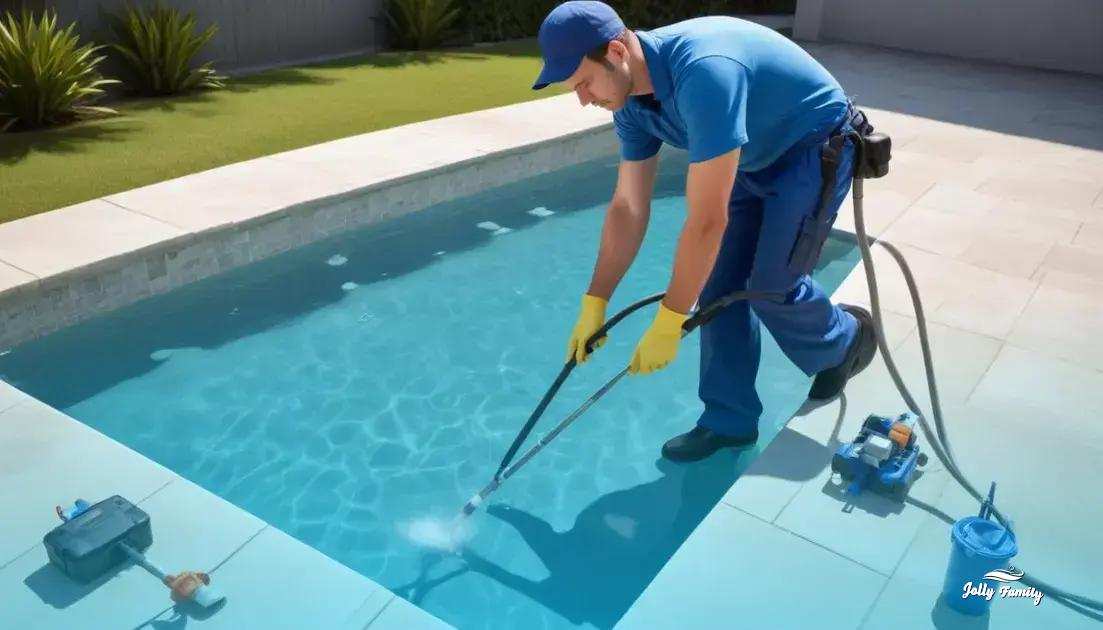
Empty skimmer and pump baskets regularly. Blocked baskets cut flow to the filter and let fine particles stay suspended. Rinse baskets with a hose and check the skimmer weir for free movement.
Monitor filter pressure
Look at the filter pressure gauge when the pump is on. Note the clean, baseline pressure so you can see rises. As a rule, if pressure climbs about 8–10 psi over the clean baseline, the filter needs backwashing or cleaning.
Backwash and clean the correct way
For sand and DE filters, backwash until the water runs clear, then add fresh DE if required. For cartridge filters, remove and spray cartridges; replace if damaged. Do not run the pump with the filter open.
Inspect valves, returns and circulation pattern
Ensure multiport valves and check valves are in the right position and not leaking. Point return jets slightly downward or around the pool to improve circulation. Poorly directed returns create dead zones where particles settle and cloud the water.
Signs you may need repairs or upgrades
If flow stays low after cleaning, the impeller might be clogged or the motor failing. Persistent low turnover (longer than 8–12 hours per full pool volume) suggests the pump or filter is undersized. In that case, consider professional service or equipment replacement.
After restoring proper flow, run the filter 8–12 hours and retest water chemistry. Clear circulation plus balanced chemicals is the fastest path to clear water.
Prevention plan: weekly routine to keep water clear
- Daily quick check: skim leaves and floating debris, empty skimmer baskets, and glance at the pump to confirm it’s running.
- Run the filter: aim for 8–12 hours daily during heavy season. Longer run time moves fine particles to the filter.
- Weekly water tests: test free chlorine, pH, and total alkalinity once a week. Keep chlorine 1–3 ppm, pH 7.2–7.6, alkalinity 80–120 ppm.
- Adjust slowly: make small chemical changes and retest after a few hours to avoid swings that cause more cloudiness.
Cleaning and circulation tasks
- Brush and vacuum: brush walls and floor once a week to dislodge algae and particles, then vacuum to remove them.
- Empty pump basket: clear the pump strainer and skimmer baskets weekly; clogged baskets cut flow and increase cloudiness.
- Filter care: backwash sand/DE filters when pressure rises 8–10 psi over baseline; clean cartridge filters monthly or sooner if dirty.
Oxidation and shock
- Weekly oxidizer: use a non-chlorine shock (potassium monopersulfate) weekly during high use to clear organics and reduce cloudy water.
- Chlorine shock as needed: apply chlorine shock after heavy storms, visible algae, or when combined chlorine is high. Follow product wait times before swimming.
Monthly and seasonal checks
- Test stabilizer and hardness: check cyanuric acid and calcium hardness monthly; correct extremes to prevent cloudiness and scale.
- Inspect equipment: check pump seals, lid O-rings, valves and return fittings for leaks or wear each month.
Record and adjust
- Keep a log: note test results, chemical doses, weather and bather load. Patterns help you prevent repeat problems.
- Act early: small, regular tasks stop issues before they require heavy chemical fixes or long filter runs.
When to call Jolly Family for professional maintenance
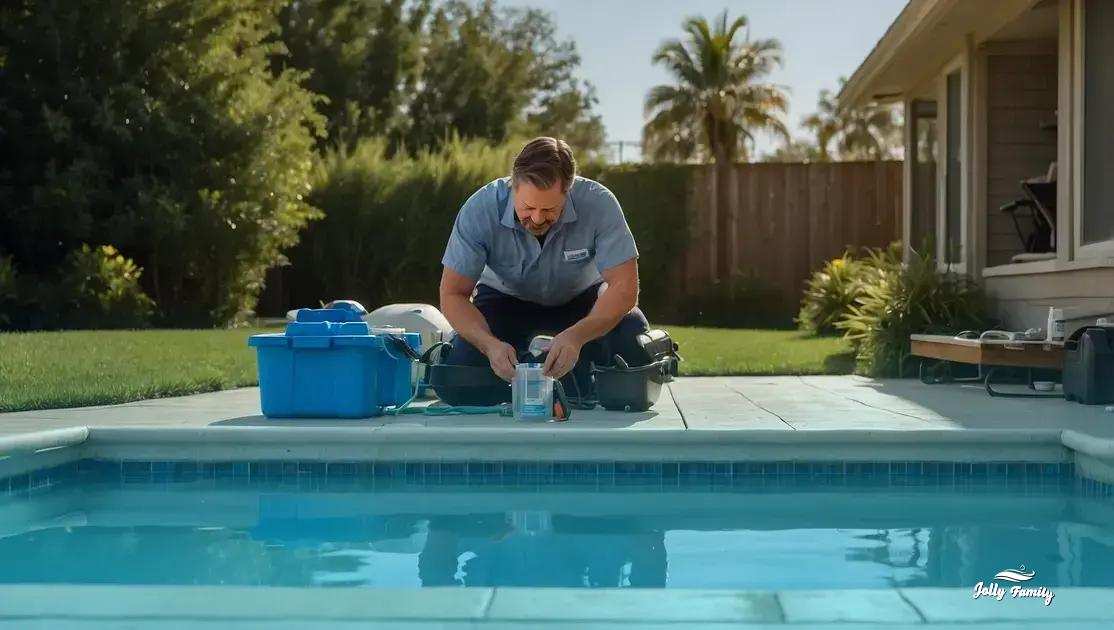
- Cloudiness persists for more than 48 hours after you balanced chemicals, cleaned the filter, and ran the pump—it’s time to call a pro.
- Recurring algae or stains that return after shock and brushing indicate deeper issues requiring professional treatment.
- Filter or pump signs: persistent low flow, loud motor noises, leaking seals, or a gauge that won’t stabilize after cleaning.
- Equipment replacement or upgrade needs, such as an undersized pump, damaged DE grids, or when energy-efficient options are desired.
- Water hardness or high total dissolved solids that cause scaling, cloudy film, or gritty texture—these often need partial drain, refills, or specialist measures.
- Major contamination events like heavy storms, sewage contact, or chemical spills that pose health risks and need immediate professional cleanup.
What a professional visit includes
Expect a full inspection of pump, filter and plumbing, precise water testing with a digital meter, targeted cleaning or backwash, and clear repair or replacement recommendations. A technician may perform a shock treatment, adjust chemical dosing, and document results so you can track progress.
When to book routine service: if you notice repeated problems, prefer hands-off care, or before high-use seasons. Regular professional checks prevent small issues from becoming persistent cloudy water.
Simple steps to clear cloudy pool water
If your pool stays cloudy, start with three checks: water chemistry, filtration, and visible debris. Test free chlorine, pH, and alkalinity, and look for clogged baskets or a dirty filter.
Balance chemicals slowly, run the pump longer, and clean or backwash the filter. Use shock or an oxidizer when combined chlorine or algae are present, and brush surfaces so the filter can catch particles.
Keep a weekly routine: skim, brush, test, and record results. Small, regular actions prevent most cloudiness and save time and chemicals.
Call a professional if cloudiness lasts more than 48 hours after your fixes, if equipment shows damage, or after a major contamination. Most problems clear with steady care, but expert help speeds the fix when needed.
FAQ – Common questions about cloudy pool water
Why is my pool water cloudy all the time?
Cloudy water usually comes from poor filtration, chemical imbalance, or contaminants like algae, sunscreen and leaves. Check filter, free chlorine, pH and total alkalinity to narrow the cause.
How do I test pool water quickly?
Use test strips or a DPD liquid kit and a digital pH meter; collect water elbow-deep away from returns, then check free chlorine, pH and alkalinity first.
When should I shock my pool and which shock should I use?
Shock when combined chlorine is high, after heavy use, storms, or visible algae. Use chlorine shock for algae and heavy contamination, or non-chlorine oxidizer for routine oxidation and shorter no-swim times.
How often should I clean the filter and backwash?
Empty skimmer and pump baskets weekly; backwash sand/DE filters when pressure rises about 8–10 psi over baseline; clean cartridge filters monthly or sooner if dirty.
What daily or weekly routine prevents cloudiness?
Skim daily, run the filter 8–12 hours in heavy season, test chemicals weekly, brush and vacuum once a week, and use a weekly oxidizer to remove organics.
When should I call a professional?
Call a pro if cloudiness lasts more than 48 hours after your fixes, if equipment shows low flow or leaks, or after major contamination or recurring algae.