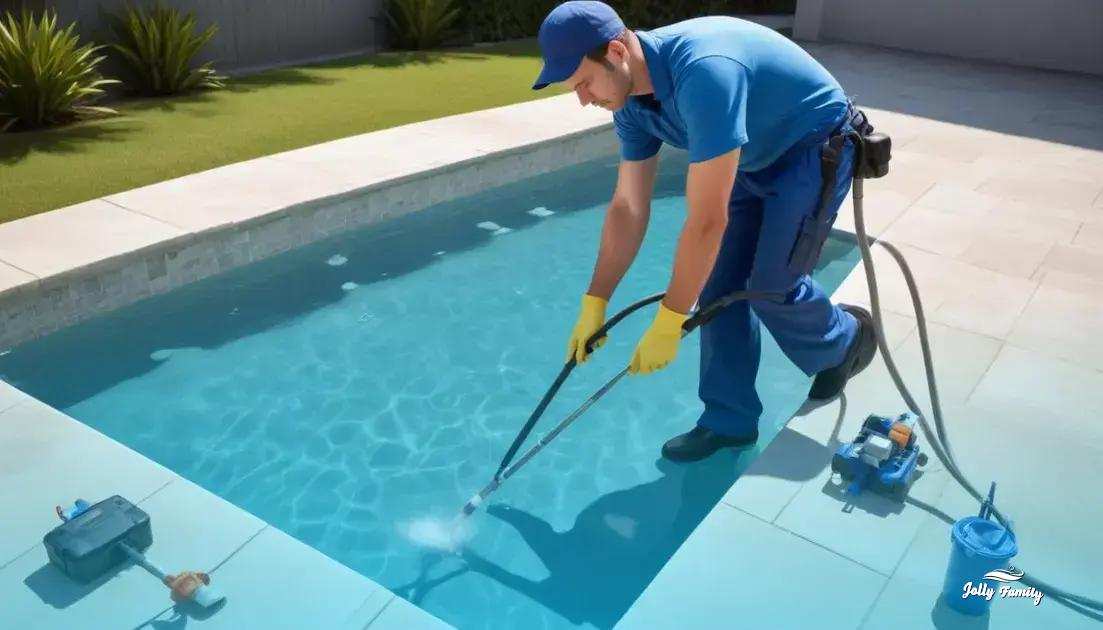

pool algae problem professional help: If algae persists after brushing, shock and proper chemical balancing, shows dark rooted stains, returns quickly, or coincides with low flow/high filter pressure or high cyanuric acid, hire a pool pro to diagnose equipment, apply targeted treatments and stain removal, and set a preventive maintenance plan to restore safe swim conditions.
pool algae problem professional help can catch you off guard — green corners, slimy walls, cloudy water. Ever tried home remedies that only delayed the mess? Here I explain quick checks you can run, simple fixes, and when Jolly Family should step in to restore safe, clear water.
How to identify common algae types and what they signal
Spotting algae early helps you act before it spreads. Check color, texture, location and whether the growth brushes off easily.
Common types and quick clues
Green algae appears as cloudy water or fuzzy patches on surfaces. It usually brushes away and often means low sanitizer or poor circulation.
Yellow (mustard) algae looks like grainy, mustard-colored spots on steps and shallow areas. It clings tightly and resists normal chlorine levels.
Black algae shows as dark spots with roots in plaster or grout. It is hard to remove by brushing and may indicate porous surfaces or long-term neglect.
Pink slime or biofilm appears as slimy pink or orange streaks near drains, skimmers, or tile lines. It suggests organic contamination and low sanitizer contact.
Simple field checks
- Collect a small sample in a clear cup to see color and suspension.
- Brush the area: if it comes off easily it’s likely green algae; if it stays, suspect black or mustard algae.
- Rub the stain with a cloth to test for staining vs. surface growth.
- Test chlorine, pH and stabilizer levels immediately.
- Inspect circulation: stagnant corners, blocked returns or a weak pump often hide algae hot spots.
What each sign usually signals
If water is cloudy and green, think low free chlorine or recent heavy rain. Grainy yellow patches point to poor circulation and resistant algae strains. Persistent dark spots often mean the algae is rooted in the surface and needs stronger treatment. Slimy pinks signal organic buildup and possible interior plumbing or skimmer issues.
Next steps to confirm and act
After identification, brush the affected areas, test water, run the filter continuously and check the filter media. If growth returns after basic treatment or if dark spots and stains persist, the problem may be deeper than surface algae.
These checks let you decide whether to continue with shock and targeted chemicals or call a professional for inspection and specialized treatment.
Immediate, safe actions to control an active algae bloom
Act immediately when you see an active algae bloom. Put on gloves and eye protection before handling chemicals and keep people and pets out of the pool.
Safety and quick checks
- Test free chlorine, pH and total alkalinity. Aim for pH 7.2–7.6 to make chlorine work well.
- Measure stabilizer (cyanuric acid); very high levels can lock up chlorine.
- Turn the pump and filter on and leave them running continuously while treating.
Treatment sequence
- Brush vigorously all walls and steps to free algae from surfaces so chemicals can reach it.
- Remove large debris with a skimmer to avoid clogging the filter.
- Shock the pool using a granular or liquid chlorine shock. For heavy blooms, raise free chlorine to the product’s recommended shock level; follow label directions closely.
- After shocking, add a quality algaecide as directed. Use a copper-based or non-metal algaecide for stubborn strains, following the label.
- Use a pool vacuum to waste if the water is extremely dirty, reducing the load on the filter.
Filtration and cleaning
Run the filter 24/7 until water clears. Backwash sand or DE filters when pressure rises 8–10 psi above baseline. Clean or rinse cartridge filters frequently; consider a deep-clean with filter cleaner.
Clarifiers and repeat dosing
If water stays cloudy after shock, add a clarifier or flocculant per instructions to help the filter capture fine particles. Repeat shock and brushing daily until algae is gone, testing water each morning.
When this is not enough
If dark spots, stains or algae roots remain after several treatments, or if algae returns quickly, contact a professional. Persistent blooms may need specialized chemicals, stain removal, or equipment repair.
Keep records of chemical doses and tests. Clear notes help a technician diagnose recurring problems and prevent reoccurrence.
Testing and balancing chemicals: chlorine, pH and shock protocols
Regular testing and careful balancing keep water clear and safe. Test free chlorine, pH, total alkalinity and stabilizer (CYA) at least twice a week during heavy use or when treating algae.
Essential target ranges
- Free chlorine: 1–3 ppm for normal use; higher during shock or algae treatment.
- pH: 7.2–7.6 so chlorine works effectively.
- Total alkalinity: 80–120 ppm to stabilize pH swings.
- Cyanuric acid (stabilizer): 30–50 ppm for outdoor pools; high CYA reduces chlorine efficiency.
Simple testing steps
- Use a reliable pool test kit or digital photometer for best accuracy.
- Collect water from elbow depth away from returns, rinse the vial, then fill for the test.
- Follow kit instructions exactly: add reagents in order and compare colors or read the meter.
- Record results and the date to track trends that cause algae.
Balancing the water
Adjust in this order: alkalinity, pH, then chlorine. Raise alkalinity with baking soda; lower it with muriatic acid or pH decreaser. Adjust pH in small steps and retest after mixing for a few hours. Only add chlorine after pH is in range.
Shock protocols for clarity and algae control
For mild issues, use a normal shock dose and brush the pool. For active algae, boost free chlorine to a higher shock level per product instructions—often in the double digits (ppm) for severe blooms. Consider a non-chlorine shock for quick clearing of chlorine-demanded contaminants, but use chlorine shock to kill algae roots. Always follow label directions and safety warnings.
Practical tips and safety
- Wear gloves and goggles when handling chemicals. Never mix different products.
- Add chemicals to water, not water to chemicals. Dissolve granules in a bucket if required by the product.
- Run the filter continuously after dosing and brush treated areas daily.
- Wait to swim until free chlorine returns to safe levels (typically under 3 ppm) and pH is balanced.
- If chlorine demand remains high or algae returns quickly, consult a professional—persistent imbalance or high CYA may need expert correction.
Equipment checks that often stop algae growth (filters, pumps, circulation)
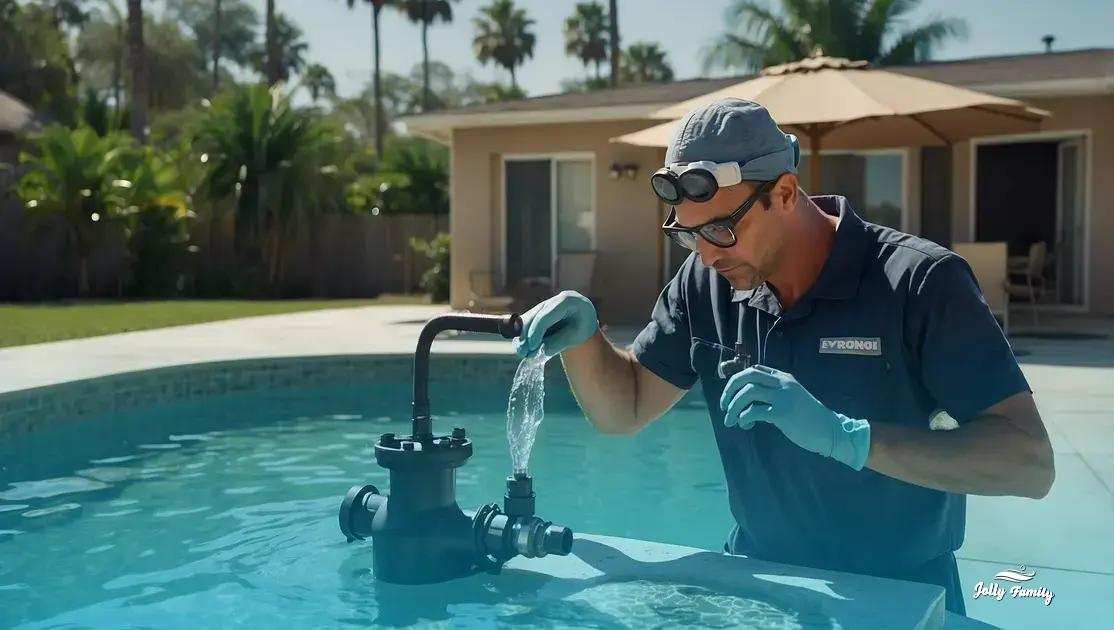
Start by checking the pool’s circulation parts for clear signs of trouble: low flow, frequent cloudy water, or rising filter pressure.
Filter checks
- Read the pressure gauge and note the baseline. Backwash sand/DE filters when pressure rises 8–10 psi above baseline.
- Inspect cartridge filters for dirt, tears or compressed pleats; rinse weekly and deep-clean monthly.
- For DE filters, check grids for clogging and add fresh DE after backwash per instructions.
- Look for cracked housings, leaking O-rings or loose clamps that let debris bypass the filter.
Pump and motor
- Empty the skimmer and pump strainer baskets to keep water flowing freely.
- Listen for unusual noises and feel for excessive heat—these can signal a failing motor or blocked impeller.
- Watch for air in the pump lid or loud gurgling; air indicates a suction leak or a clogged skimmer/line.
- Make sure the pump is properly primed and running the recommended hours, especially during treatment.
Circulation and returns
- Verify return jets are open and aimed to create good surface circulation across the pool.
- Check all lines and fittings for reduced flow; weak returns often hide algae hotspots.
- Ensure skimmer weirs move freely so surface debris is drawn in rather than pushed around.
Valves, pipes and flow control
- Cycle multiport or plumbing valves to confirm they seat correctly and are not stuck between positions.
- Inspect visible plumbing for cracks, leaks or loose unions that lower suction or pressure.
- Consider a flow meter or pressure log to spot gradual drops in performance.
Practical maintenance steps
- Clean baskets and strainers weekly during heavy use.
- Backwash or clean filters at the first sign of pressure rise beyond the safe range.
- Schedule a filter deep-clean and pump service before peak season.
- Keep a simple log of filter pressure, pump runtime and any repairs to spot trends quickly.
If flow problems or recurring algae persist after these checks, a professional inspection can locate hidden issues like collapsed laterals, sealed-off plumbing or worn impellers that need expert repair.
When professional help makes sense and what Jolly Family provides
Call a professional when simple fixes don’t stop the algae or when safety and equipment are at risk. Persistent blooms, dark stains, or repeated returns after treatment usually need expert attention.
When professional help makes sense
- Algae returns quickly after shock and brushing, indicating deeper issues.
- Dark spots or stains that stay after multiple treatments.
- High cyanuric acid (CYA) or constant chlorine demand you can’t correct.
- Visible equipment failures: low flow, constant high filter pressure, noisy pump, or air in lines.
- Large pools, commercial sites, or tight timelines that require fast, reliable results.
- Health or safety concerns for swimmers during treatment.
What Jolly Family provides
- On-site diagnostic inspection with full water testing and equipment check.
- Targeted chemical treatments: professional-strength shock, algaecides, and clarifiers used safely.
- Stain and root removal for black algae and stubborn deposits.
- Filter deep-clean, DE grid service, cartridge cleaning, and pump repairs.
- Custom maintenance plans and scheduled service to prevent repeat problems.
- Clear written estimates, treatment plans and follow-up testing to confirm results.
What to expect during a service visit
- A technician inspects the pool, skimmer, pump and filter and records baseline readings.
- They test free chlorine, pH, alkalinity and CYA and explain findings in simple terms.
- The team proposes a treatment plan with timeline, required closures and safety steps.
- Treatments may include brushing, shock dosing, algaecide and equipment repair or filter cleaning.
- After treatment, they retest and leave clear notes on next steps and prevention tips.
Hiring a pro often saves time and money by stopping recurring algae, protecting surfaces and restoring safe swimming faster than repeated DIY attempts.
Preventive maintenance plans for clear water every season in Kissimmee
Set a regular plan to keep your pool clear all year in Kissimmee. Simple, consistent tasks prevent algae and cut repair costs.
Weekly checklist
- Skim surface and empty skimmer and pump baskets to improve flow.
- Brush walls and steps to stop algae from taking hold.
- Test free chlorine and pH; adjust to target ranges (free chlorine 1–3 ppm, pH 7.2–7.6).
- Run the filter at least 8–12 hours daily, more when weather is hot or after heavy use.
Monthly tasks
- Inspect filter pressure and backwash or clean cartridges when pressure rises 8–10 psi above baseline.
- Check total alkalinity and adjust if needed to keep pH stable.
- Test cyanuric acid (stabilizer) seasonally; high CYA can reduce chlorine effectiveness.
- Look for leaks, cracked seals or loose fittings around the pump and filter.
Seasonal adjustments for Kissimmee
- During the rainy season, test more often and shock after heavy storms to counter runoff and organic load.
- In hotter months, increase circulation and monitor chlorine closely to prevent daily drops.
- Before storm season, secure equipment, raise pump pads if prone to flooding and store chemicals safely.
Equipment care
Keep filters clean and schedule professional DE grid or cartridge deep-cleans yearly. Lubricate O-rings, check pump bearings for noise, and replace worn parts to maintain steady flow.
Algae prevention strategies
- Maintain steady sanitizer levels rather than sporadic large doses.
- Use a weekly algaecide during warm months as a preventive step for vulnerable pools.
- Improve circulation by adjusting return jets and adding a small booster pump for dead zones.
Recordkeeping and professional support
Keep a simple log of test results, chemical doses and equipment notes. Schedule professional inspections before peak season and if you see recurring algae despite regular care. Pros can tune equipment, correct CYA issues, and offer tailored plans for Kissimmee’s climate.
Keep your pool clear and safe
Regular care and quick action stop algae before it spreads. Test water twice a week and keep chlorine and pH in range. Clean skimmer and pump baskets and brush pool surfaces often. Run the filter daily and backwash or clean when pressure rises. Keep a simple log of tests and treatments to spot trends.
If algae returns, dark stains appear, or equipment fails, call a professional. A technician can find high CYA, fix pumps, and remove stubborn algae safely. Professional service often saves time and money compared with repeated DIY attempts.
Small, steady steps plus timely expert help will keep your pool clear and safe all season.
FAQ – pool algae problem professional help
How can I tell if my pool has algae or just cloudy water?
Look at color and texture: green fuzzy patches or cloudy green water suggest green algae; grainy yellow spots indicate mustard algae; dark spots that resist brushing may be black algae.
What immediate steps should I take when I find an algae bloom?
Keep people out, wear gloves and goggles, brush affected areas, test chlorine and pH, run the filter continuously, and apply shock per product instructions.
Which chemical levels matter most for preventing algae?
Keep free chlorine 1–3 ppm, pH 7.2–7.6, total alkalinity 80–120 ppm, and cyanuric acid 30–50 ppm for outdoor pools.
When should I call a professional instead of treating myself?
Call a pro if algae returns after treatment, dark stains persist, equipment shows low flow or high pressure, or if you can’t correct high CYA or chlorine demand.
How often should I test and clean equipment to prevent algae?
Test water at least twice a week during heavy use, skim and empty baskets weekly, brush weekly, and clean or backwash filters monthly or when pressure rises 8–10 psi.
Can a professional remove black algae or stains that I can’t remove?
Yes. Professionals use specialized chemistry, stain removal techniques, and equipment service to remove rooted black algae and restore surfaces safely.