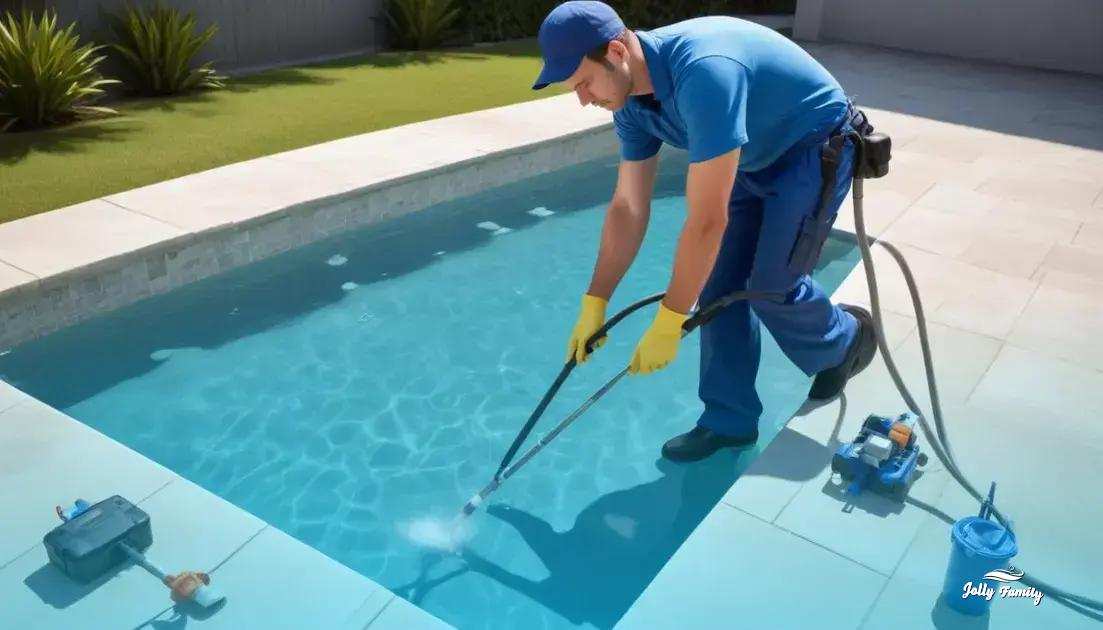

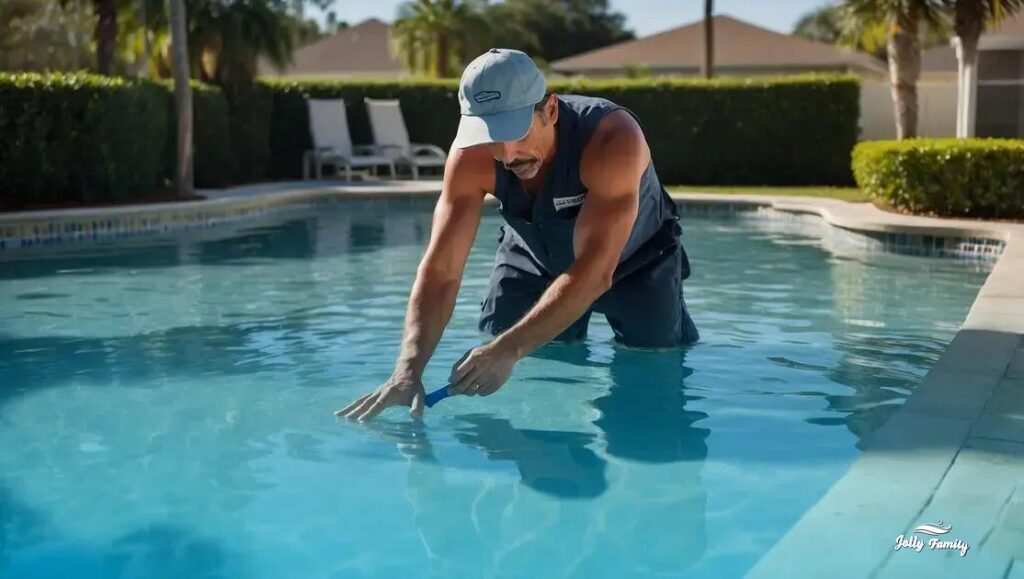
pool maintenance to prevent green water requires routine testing and balancing of chlorine and pH, daily skimming and weekly brushing, running the pump for 8–12 hours, regular filter cleaning, and prompt shock or algaecide treatments when needed to remove nutrients and stop algae before it blooms.
pool maintenance to prevent green water matters for Kissimmee homeowners who want safe, swim-ready pools. Want a simple weekly routine that keeps algae away and shows when to call Jolly Family?
What causes green water and how to spot it early
Algae growth is the main reason pools turn green. When sanitizer is low, circulation is poor, or filters are clogged, microscopic algae multiply and tint the water. Warm temperatures and high nutrient levels (like phosphates) speed this process.
Main causes of green water
- Low free chlorine: levels below 1–2 ppm let algae thrive.
- Poor circulation: dead zones near steps or corners don’t get treated water.
- Clogged or dirty filters: reduced filtration allows particles and algae to stay suspended.
- Imbalanced pH: pH above 7.6 reduces sanitizer effectiveness.
- High nutrients: leaves, pollen, and fertilizers add phosphates and nitrates that feed algae.
Early signs to spot it
- Faint green tint when viewed from the pool deck instead of clear blue.
- Water clarity drops quickly after removing debris.
- Visible green film or specks on walls and steps.
- Slimy or slippery pool surfaces when brushed.
- Test strips show low free chlorine or high combined chlorine.
- Filter pressure rises or flow feels reduced at returns.
Quick home checks you can do
Look for color changes from a few steps away and check the bottom: if the pool goes cloudy or darker, act fast. Use test strips to read free chlorine and pH. Inspect the skimmer and pump basket for leaves and debris. Check the filter pressure gauge; a sustained rise often means cleaning is needed.
Small fixes that confirm the issue
Brush the walls and vacuum loose material to see if the tint clears. If brushing stirs up more green, algae is likely present. Running the pump for several hours and retesting chlorine helps confirm whether circulation or sanitizer levels were the cause.
When to monitor more closely
If your pool is in direct sun, after heavy rain, or following heavy use, check water daily for several days. Keeping simple records of test strip results and filter pressure can help you spot a trend before the water turns fully green.
Daily and weekly pool maintenance checklist for preventing algae
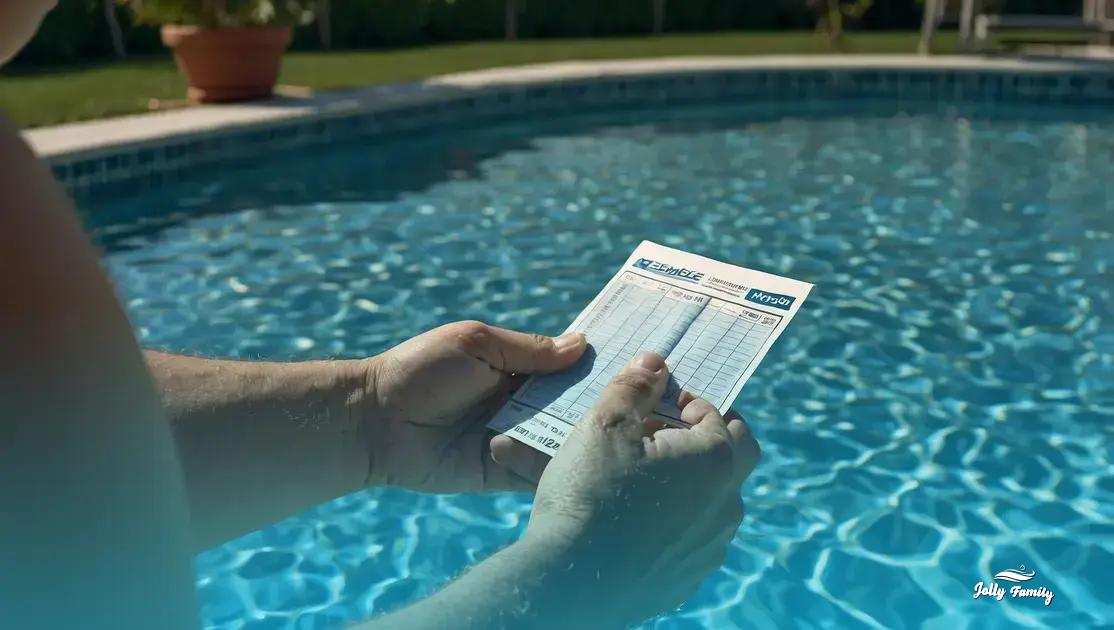
Follow this daily and weekly checklist to keep algae out and water clear. Simple, short tasks done on schedule prevent green water.
Quick daily tasks
- Skim surface debris and empty the skimmer basket to remove leaves and pollen.
- Check water clarity from the deck; note any new green tint.
- Test free chlorine with test strips; aim for 1–3 ppm in normal conditions.
- Look at the pump and filter: ensure the pump is running and no unusual noises occur.
Key weekly tasks
- Brush all walls, steps, and corners to dislodge early algae spots.
- Vacuum the pool to remove settled organic matter.
- Test and record pH and alkalinity; keep pH between 7.2 and 7.6 and alkalinity near 80–120 ppm.
- Run the pump for 8–12 hours depending on pool size and weather to ensure full turnover.
- Backwash or clean filters when pressure rises 8–10 psi above the clean baseline.
When and how to shock
- If you see cloudiness or green tint, perform a shock treatment per product instructions; for visible algae, raise free chlorine temporarily to a higher level as directed.
- Apply shock in the evening and run the pump overnight for best distribution.
- Re-test the next day and repeat shock if free chlorine remains low.
Occasional and preventive steps
- Use a phosphate remover if tests show high nutrients or after heavy debris events.
- Consider a routine algaecide dose weekly in warm months or after heavy rain.
- Inspect and clean pump baskets and skimmer weirs every week or after storms.
Record keeping and simple tips
- Keep a small log of chlorine, pH, filter pressure, and run hours to spot trends early.
- After heavy pool use or rain, check levels daily for three days.
- If green returns quickly despite proper care, consult a pro to inspect circulation and filtration.
Chemical balance: testing, target ranges, and simple fixes
Regular chemical testing keeps small problems from turning into green water. Use simple kits and clear target ranges to act fast.
Testing methods and how often
- Test strips – quick and easy for daily spot checks of free chlorine and pH.
- Liquid drop kits – more accurate for weekly testing of alkalinity, chlorine, and CYA.
- Digital meters – handy for pH and ORP if you want fast, repeatable readings.
- Frequency: test free chlorine and pH daily in hot months or after storms; test alkalinity, CYA, and calcium weekly to monthly.
Target ranges to aim for
- Free chlorine (FC): 1–3 ppm for routine protection; raise above this when shocking.
- pH: 7.2–7.6 keeps chlorine effective and eyes comfortable.
- Total alkalinity: 80–120 ppm to stabilize pH swings.
- Cyanuric acid (stabilizer): 30–50 ppm for outdoor chlorinated pools (avoid excess).
- Calcium hardness: 200–400 ppm to prevent scale or corrosion.
- Combined chlorine: keep <0.5 ppm; higher means shock is needed.
Simple fixes for common imbalances
- Low free chlorine: add chlorine granules or liquid chlorine; for algae risk, perform a shock treatment per label.
- High chlorine: stop adding chlorine and let levels fall; run the pump and wait, or use a neutralizer only if immediate balance is needed.
- High pH: add muriatic acid or sodium bisulfate in measured doses; add slowly and retest after circulation.
- Low pH: raise pH with soda ash (sodium carbonate) in small amounts, then retest.
- Low alkalinity: add sodium bicarbonate (baking soda) to reach the 80–120 ppm range.
- High alkalinity: lower gradually with small acid additions or partial water replacement if needed.
- High calcium hardness: dilute by partial drain and refill or use a sequestering agent to prevent scaling.
- High CYA: partial drain and refill are the practical fix; avoid overuse of stabilizer.
How to apply chemicals safely and effectively
- Always follow product instructions and dose by pool volume.
- Apply granular chemicals to the deep end with the pump running for good mixing; add liquid chemicals near return jets.
- Shock in the evening to prevent UV breakdown of chlorine; run the pump overnight.
- Wait recommended times before swimming after adding chemicals and after shocking.
Routine balancing checklist for weekly care
- Test and record FC and pH every day in warm weather; weekly otherwise.
- If pH is off, correct pH first, then adjust alkalinity if needed.
- Maintain FC in range; if algae risk rises, shock and brush surfaces.
- Run pump long enough for a full turnover (typically 8–12 hours), and clean or backwash filters when pressure rises 8–10 psi.
- Keep a simple log of results to spot trends and act before water turns green.
Filter and circulation: steps to keep water moving and clear
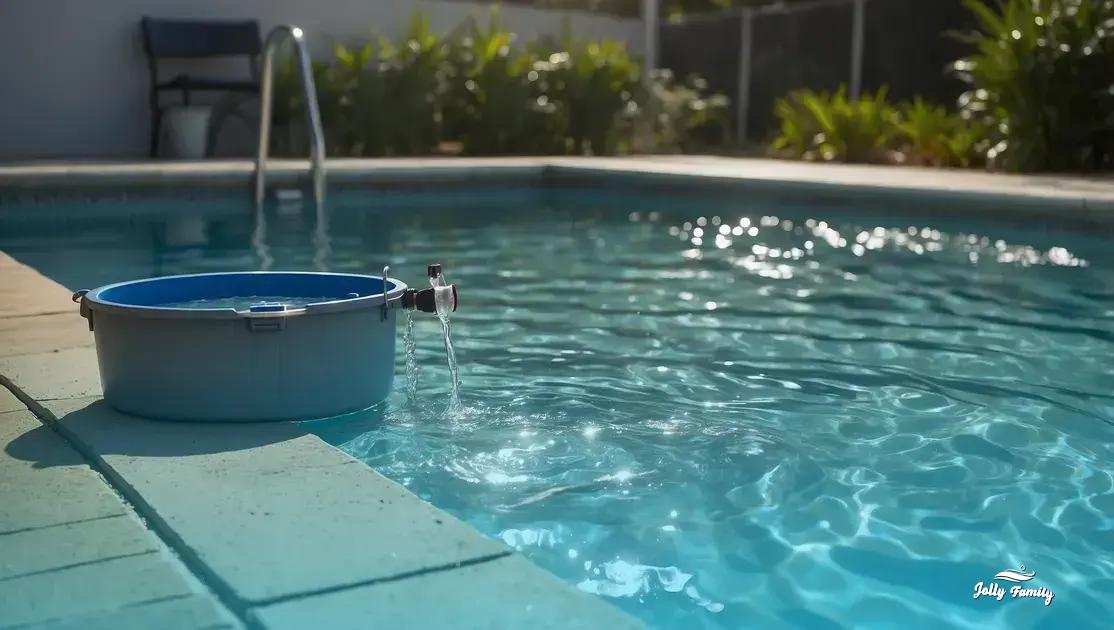
Good circulation and a clean filter stop debris and algae before they cloud the water. Small, regular checks keep flow steady and water clear.
Pump run time and turnover
- Run the pump long enough for a full turnover. Aim for 8–12 hours daily in warm months or after heavy use.
- Increase run time on hot, sunny days or after storms to prevent stagnant zones.
- Use a timer or automation to ensure consistent pump cycles without guesswork.
Set up returns and skimmers correctly
- Point return jets slightly downward and across the pool to create a circular flow that carries debris to skimmers.
- Keep the water level near the skimmer midpoint so skimmers work efficiently.
- Check and empty the skimmer and pump baskets weekly or after heavy leaf fall.
Filter care: cleaning and maintenance
- Watch the filter pressure gauge: when pressure is 8–10 psi above the clean baseline, clean or backwash the filter.
- For sand or DE filters, backwash until the water runs clear; for cartridge filters, rinse and soak cartridges as recommended.
- Inspect filter media and replace worn parts per manufacturer guidance to keep flow and filtration effective.
Troubleshooting poor circulation
- If flow is low, check pump basket for clogging and clear debris.
- Listen for air sounds in the pump—air leaks at suction lines or a low water level reduce flow.
- Confirm valves are open and return fittings are free of obstructions; sometimes a closed valve or a clogged jet cuts turnover time.
Routine checks and smart upgrades
- Daily: glance at pump operation and ensure water is returning from all jets.
- Weekly: record filter pressure, clean baskets, and inspect hoses for cracks or leaks.
- Consider upgrading to a variable-speed pump for better flow control and energy savings, and add an automatic timer or controller for consistent run time.
Simple habits that prevent green water
- Brush corners and steps to avoid dead zones where algae starts.
- Keep a short log of pump hours and filter pressure to spot trends early.
- Act quickly on any drop in flow—small fixes now prevent big problems later.
Shock treatments and algaecides: when and how to use them safely
Use shock treatments and algaecides to stop and prevent algae, but only when tests show low chlorine or visible growth. Treat quickly to avoid a full bloom.
When to shock
- After tests show low free chlorine or high combined chlorine (chlorine that smells like strong pool odor).
- When water turns cloudy or a green tint appears.
- After heavy rain, high bather load, or debris events that add nutrients.
- As a follow-up if routine chlorine and brushing do not clear early algae.
Types of shock and when to use each
- Calcium hypochlorite or sodium dichlor (chlorine shock) – fast and strong. Use for active algae and cloudy water. Follow label for dose based on pool volume.
- Non-chlorine oxidizing shock (potassium peroxymonosulfate) – good for routine oxidation and quick reopening; it won’t kill heavy algae as fast as chlorine.
- Algaecides – long-chain polyquats are good for prevention; copper or metal-based algaecides kill algae but can stain if overdosed. Use algaecide as directed and usually after shocking for best results.
Safe application steps
- Always read and follow the product label. Dosage varies by product and pool size.
- Shock in the evening or night to avoid UV breakdown of chlorine and get better contact time.
- Never mix different chemicals together. Add each product separately, and never pour water into chemicals.
- Wear gloves and eye protection when handling powdered or concentrated products. Keep children and pets away.
How to treat visible algae
- Brush all surfaces to loosen algae so chemicals can reach it.
- Apply the chosen shock product by broadcasting granules or diluting liquid per the label; target higher free chlorine for active algae as instructed.
- Run the pump and filter continuously after shocking. Aim for several hours to overnight circulation.
- After 24 hours, test free chlorine and clarity. Repeat shock if algae remains. Continue brushing between treatments.
Using algaecide correctly
- Use algaecide as a preventive step once weekly in hot months or after heavy rain.
- Apply after the pool is balanced and free chlorine is in range for better results.
- Avoid overload of metal-based algaecides to reduce staining risk; follow label and consider a sequestering agent if metals are suspected.
Safety and follow-up checks
- Wait the label-specified time before swimming. Typical wait times vary by product and dose.
- Retest free chlorine and pH after treatment. Correct pH if needed to keep sanitizer effective.
- If green water persists despite proper shock and algaecide use, consult a professional to check filtration, circulation, and hidden nutrient sources.
When to call a pro: how Jolly Family prevents recurring green water
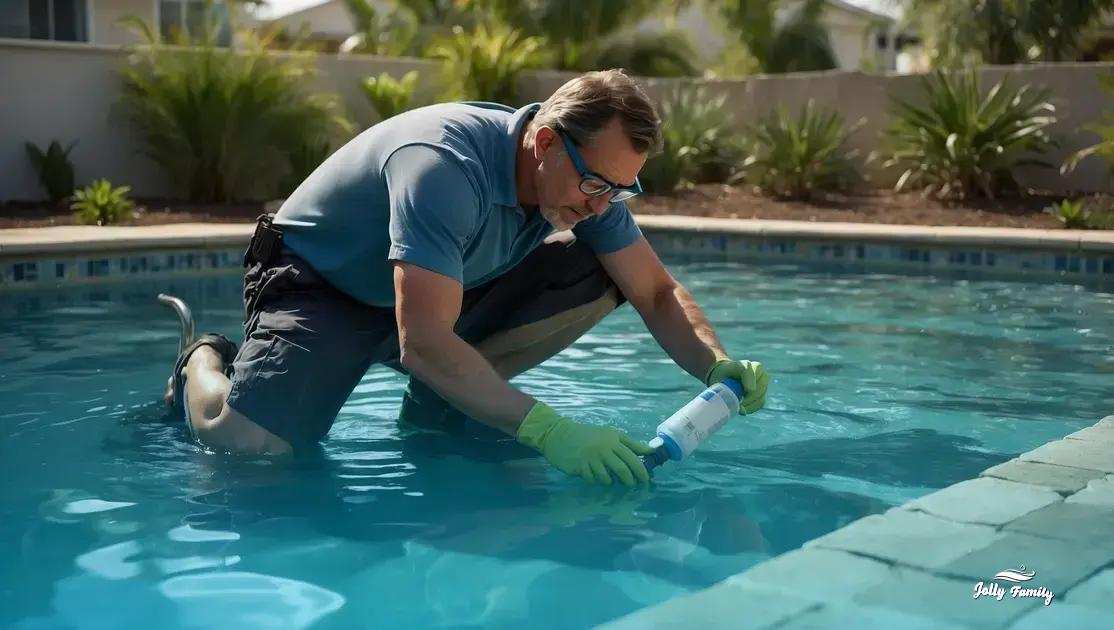
If green water keeps coming back despite cleaning, it may be time to call a pro. Persistent algae, repeated cloudy water, or unexplained filter pressure spikes are signs that simple fixes aren’t enough.
When to contact a professional
- If algae returns within days after proper shocking and brushing — this suggests a hidden source or poor circulation.
- If filter pressure stays high after cleaning or backwashing, which may mean worn media or blocked lines.
- When test results show consistently odd readings (very high CYA, unexplained phosphates, or low sanitizer retention).
- If pool surfaces stain or metal-based treatments are needed; experts can avoid damage.
- After equipment failures like a broken pump, leaking pipes, or malfunctioning timers that reduce turnover.
How professionals diagnose the issue
A pro starts with full diagnostics: detailed water testing, filter inspection, and a pump and circulation check. They look for nutrient sources, hidden debris, and equipment faults that backyard checks miss.
Typical pro treatments and fixes
- Precision shock and targeted algaecide dosing based on lab-grade test results.
- Deep filter service: media replacement, thorough cleaning, or DE recharge when needed.
- Phosphate removal or metal sequestration to remove nutrients that feed algae.
- Repairs or upgrades to pumps, returns, and valves to restore proper flow and turnover.
- Partial water replacement when CYA or metals are too high to correct otherwise.
Preventive plans used by pros
Pros can set a simple maintenance plan with regular visits, water logs, and seasonal treatments. A good plan includes routine testing, filter checks, and minor tweaks to prevent recurrence. This is often more cost-effective than repeated emergency treatments.
What to expect on a service visit
- A clear checklist: water tests, equipment inspection, and a written plan of recommended fixes.
- Transparent dosing and safety steps, with wait times before swimming clearly explained.
- Follow-up checks or a short warranty on work to ensure the green water stays gone.
Keep your pool clear and ready to swim
Simple, steady care prevents green water: test chemicals, balance pH, run the pump, and brush surfaces each week. Small actions add up fast.
When you spot a tint or low chlorine, act quickly: shock if needed, brush walls, and run the filter overnight. Use algaecide as a preventive step during hot months.
Keep a short log of test results, filter pressure, and pump hours. Aim to run the pump 8–12 hours daily in warm weather. If algae returns often, call a professional to diagnose hidden issues.
FAQ – Preventing green water in your pool
How often should I test my pool water to prevent green water?
Test free chlorine and pH daily in hot weather or after storms; test alkalinity, CYA, and calcium weekly to monthly. Quick daily checks catch problems early.
What chlorine level should I keep to avoid algae?
Keep free chlorine around 1–3 ppm for routine protection. Raise levels temporarily when shocking or treating visible algae.
When should I shock the pool?
Shock when free chlorine is low, combined chlorine is high, or you see cloudiness or a green tint. Shock in the evening and run the pump overnight.
Will using algaecide stop green water entirely?
Algaecide helps prevent algae but works best with proper sanitizer, circulation, and filtration. Use it as a supplement, not a replacement for chlorine.
How long should the pump run each day to prevent algae?
Aim for 8–12 hours daily in warm months or after heavy use to ensure full turnover and good circulation; increase run time on very hot days.
What signs mean I should call a pool professional?
Call a pro if algae returns soon after treatment, filter pressure stays high after cleaning, tests show strange chemistry, or equipment fails. A pro can diagnose hidden issues.