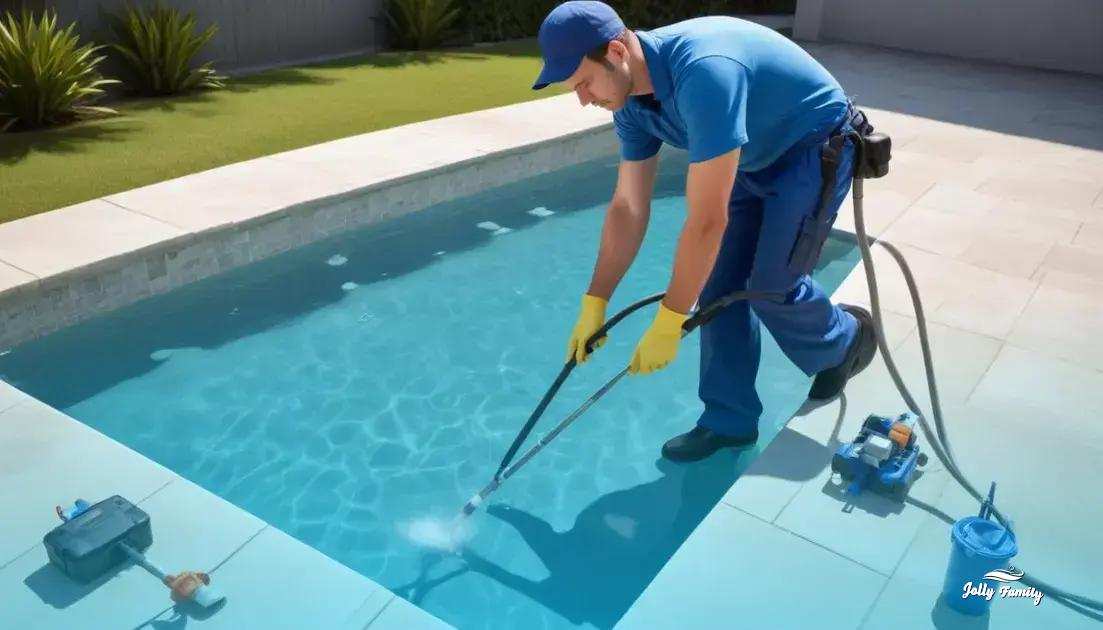

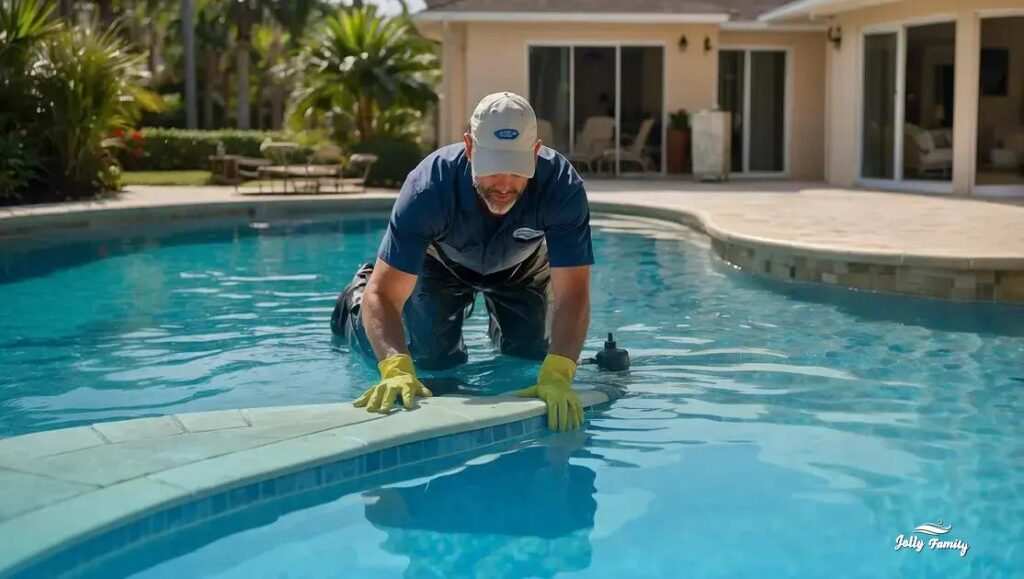
pool cleaning service for Airbnb properties Kissimmee delivers routine testing and chemical balancing, skimming and vacuuming, filter and pump maintenance, same-day emergency repairs, and documented service logs to keep pools safe, odor-free, guest-ready, and compliant—minimizing health risks and protecting host reviews and bookings.
pool cleaning service for Airbnb properties Kissimmee can make or break guest impressions. Ever had a last-minute panic over cloudy water? With Jolly Family, you get consistent, family-owned care that keeps pools guest-ready.
why dedicated pool cleaning matters for Airbnb hosts
Keeping a pool spotless matters more than you might think. Clean water protects guests, boosts reviews, and reduces costly repairs.
Health and safety
Contaminated water can cause skin rashes, ear infections, and stomach bugs. Regular testing of pH and sanitizer levels prevents these issues. Short checks after each guest stay cut risk and keep the pool safe to use.
Guest experience and reviews
Guests judge rentals by the small details. Clear, odor-free water and a tidy deck make photos and first impressions shine. Happy guests leave better reviews and book again.
Turnover efficiency
Fast cleanings between bookings keep check-ins on schedule. Trained technicians can handle skimming, vacuuming, and quick chemical adjustments so openings aren’t delayed.
Preventive maintenance saves money
Routine care stops small problems from becoming big repairs. Cleaning filters, checking pumps, and balancing chemicals extend equipment life and lower long-term costs.
Compliance and host protection
Some local rules require pool records for short-term rentals. A dedicated service provides logs, receipts, and safety checks that protect hosts and reassure guests.
Practical checklist for hosts:
- Test pH and sanitizer at least weekly.
- Skim and remove debris daily when occupied.
- Vacuum and brush walls on a regular schedule.
- Clean or backwash filters monthly.
- Keep a chemical log and service receipts.
- Have an emergency contact for same-day fixes.
guest-ready checklist: water clarity, safety, and odor control
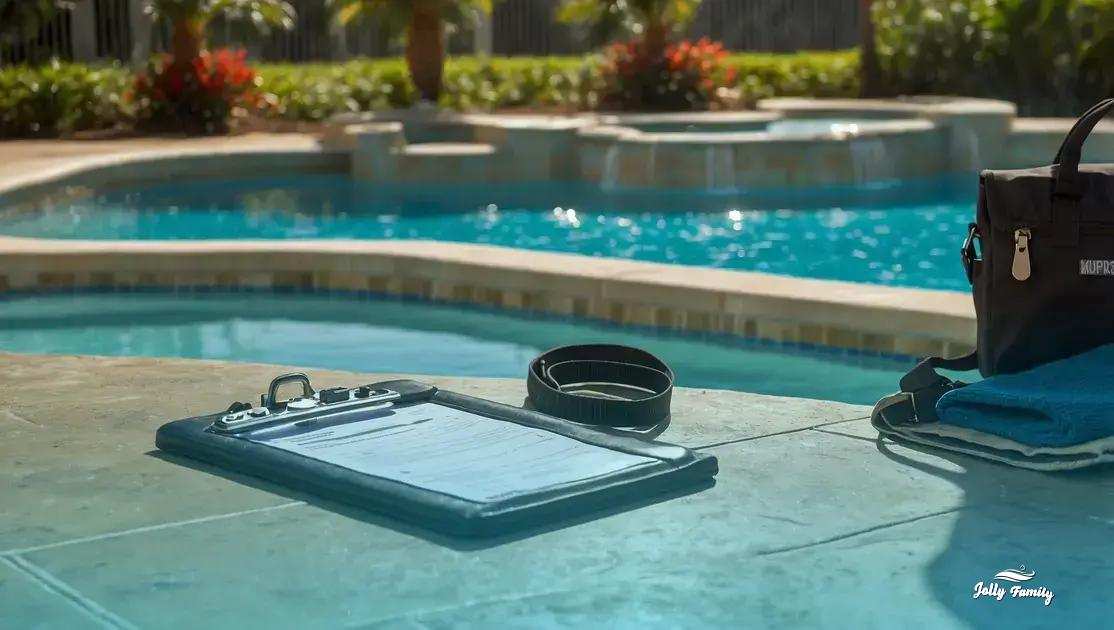
Before every check-in, run a short guest-ready checklist to ensure water clarity, safety, and no unpleasant odors. These quick steps reduce complaints and keep guests safe.
Water clarity checks
Test pH and free chlorine with strips or a digital meter. Aim for pH 7.2–7.6 and free chlorine 1–3 ppm. Skim surface debris, empty skimmer baskets, and run the pump for 8–12 hours if the water looks dull. If water is cloudy, shock the pool per product instructions and vacuum or backwash the filter.
Safety essentials
Verify that all safety items are in place: a working gate latch, life ring or reaching pole, pool depth markers, and non-slip surfaces. Check drain covers and pool lights. Keep an emergency contact list and a visible rule sheet for guests. Document checks in a log for compliance and proof of maintenance.
Odor control and algae prevention
A strong chlorine smell usually means chloramines, not too much chlorine. Shock the pool or perform a superchlorination treatment to remove chloramines, then re-test. Maintain cyanuric acid (stabilizer) at recommended levels and use an algaecide if you spot green or slimy patches. Brush walls and tiles regularly to stop algae buildup.
Quick pre-check before guest arrival
- Test pH and sanitizer; record readings.
- Skim surface and clear filter baskets.
- Run pump and confirm good circulation.
- Check safety gear, gates, and signage.
- Remove chemical containers and store them locked.
- Wipe deck areas and remove slip hazards.
Fast responses to problems
If you find cloudy water, strong odor, or equipment failure, restrict pool access and notify your maintenance provider immediately. Keep a trusted local technician on call for same-day fixes to avoid lost bookings.
chemicals and testing: keeping pH and sanitizers balanced
Regular chemical testing keeps a rental pool safe and swim-ready. Simple readings tell you when to add chemicals and when to lock the pool until it’s safe again.
Key levels to monitor
- pH: ideal 7.2–7.6 — affects comfort and sanitizer performance.
- Free chlorine (FC): aim for 1–3 ppm for guest use.
- Total alkalinity (TA): 80–120 ppm to stabilize pH.
- Cyanuric acid (stabilizer): 30–50 ppm for outdoor pools to protect chlorine from sunlight.
- Calcium hardness: 200–400 ppm to prevent scaling or corrosion.
Common test methods
Use test strips for quick checks, a liquid titration kit for more accuracy, or a digital meter for fast, repeatable results. Cross-check with a second method if readings look off.
How to adjust chemicals
- To raise pH: add sodium carbonate (soda ash) in small doses and retest after circulation.
- To lower pH: add muriatic acid or sodium bisulfate slowly while the pump runs.
- To raise chlorine: use liquid bleach (sodium hypochlorite) for daily dosing; use calcium hypochlorite or a non-stabilized shock for superchlorination.
- To add stabilizer: dissolve cyanuric acid per product directions; add gradually to avoid over-stabilizing.
Always follow product labels and add chemicals to water, not water to chemicals. Wait and retest after full circulation before allowing guests to swim.
When to test and record
Test at check-in and check-out, weekly during low use, and after heavy rain or many swimmers. Keep a log of readings and actions taken. Logs help with guest questions and local compliance.
Quick troubleshooting
- Cloudy water: check chlorine, pH, and filter; run filter longer and vacuum.
- Strong chlorine smell: likely chloramines — shock the pool and improve circulation.
- Red or green tint: test for metals and algae; treat with metal sequestrant or algaecide as needed.
- Rapid pH drift: test alkalinity and stabilize TA before correcting pH repeatedly.
Safety note: store chemicals locked, use gloves and eye protection, and never mix different products.
service cadence: how often to schedule cleanings for rentals
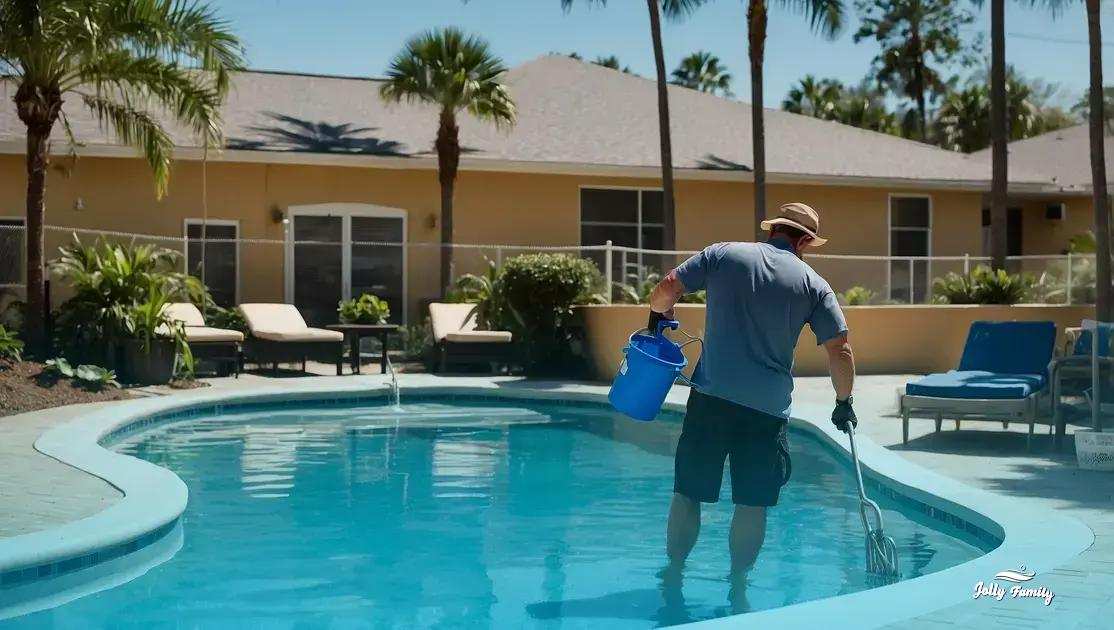
Set a clear service cadence to keep the pool safe, crystal clear, and ready for each guest. Simple, regular checks prevent complaints and costly repairs.
Recommended frequencies
- After every checkout: skim surface, empty skimmer baskets, test pH and free chlorine, adjust chemicals as needed, and run the pump for several hours.
- Weekly: vacuum, brush walls and tiles, clean or backwash filters, test total alkalinity and stabilizer, and inspect drains and safety gear.
- Monthly: deep-clean filters, check pump and heater performance, measure calcium hardness, and perform a shock treatment if needed.
- After heavy use or storms: test and rebalance water, remove debris, and shock if contamination is likely.
- High-occupancy periods: increase checks to every 24–48 hours or arrange same-day service between short bookings.
Pump runtime and circulation
Aim for 8–12 hours of pump runtime daily under normal conditions. In hot weather or with many swimmers, increase runtime toward 12–24 hours to maintain clear water and even chemical distribution.
Scheduling by stay length
- Short stays (1–3 nights): service after each checkout.
- Medium stays (4–10 nights): mid-stay quick check and full service at checkout.
- Long stays (30+ nights): weekly service plus an additional check after storms or heavy use.
Emergency and same-day response
Plan for a local technician who can respond same-day for cloudy water, pump failure, or safety issues. Restrict pool access until repairs or rebalancing are complete.
Documentation and host communication
Keep a simple log of tests, actions, and service dates. Share key readings with guests if requested and keep receipts for compliance. A clear schedule and records protect hosts and build guest trust.
- Post a visible rule sheet for guests and a photo of the last service date in the host app.
- Consider flexible plans that add visits during peak season or for rapid turnovers.
fast turnovers and emergency fixes between guest stays
Quick turnovers depend on speedy, focused steps that restore swim safety without delaying check-in. Have a clear plan for common issues and a local contact for emergencies.
Immediate priority actions
- Secure the area: block pool access until it’s safe — use a barrier or safety cone and inform guests politely.
- Assess water: test pH and free chlorine immediately to decide if shock or minor dosing is needed.
- Remove debris: skim surface, empty skimmer baskets, and vacuum visible contaminants.
- Circulate water: run the pump and filter system to speed chemical distribution and clear cloudiness.
Common fast fixes
For cloudy water, run the filter longer, vacuum, and add a pool shock or flocculant as appropriate. For low chlorine, dose with a measured amount of liquid bleach or granular chlorine and retest after circulation. If a pump or heater issue appears minor—loose wiring, tripped breaker—perform basic checks and call a technician if it’s beyond simple reset steps.
Tools and supplies to keep on hand
- Test strips and a digital meter for quick readings.
- Small shock doses, pH increaser and decreaser, and algaecide.
- Basic hand tools, spare pump fuses, and hose clamps for minor repairs.
- A portable vacuum or manual leaf net.
- A clipboard or app to log actions and readings.
Timing tips: a well-practiced team can complete a turnover check in 30–90 minutes. If the pool needs a shock, allow proper circulation and re-test before granting access.
Communication and documentation
Tell arriving guests promptly if you must delay pool use and give an ETA. Keep a brief service log with timestamps, readings, and actions taken. Documentation protects hosts and reassures guests.
When to restrict access and call pros
Lock the pool and call a technician for persistent cloudiness after treatment, visible equipment failure, chemical spills, or suspected contamination. Don’t reopen until tests show safe levels.
choosing a local partner: why Jolly Family is trusted in Kissimmee
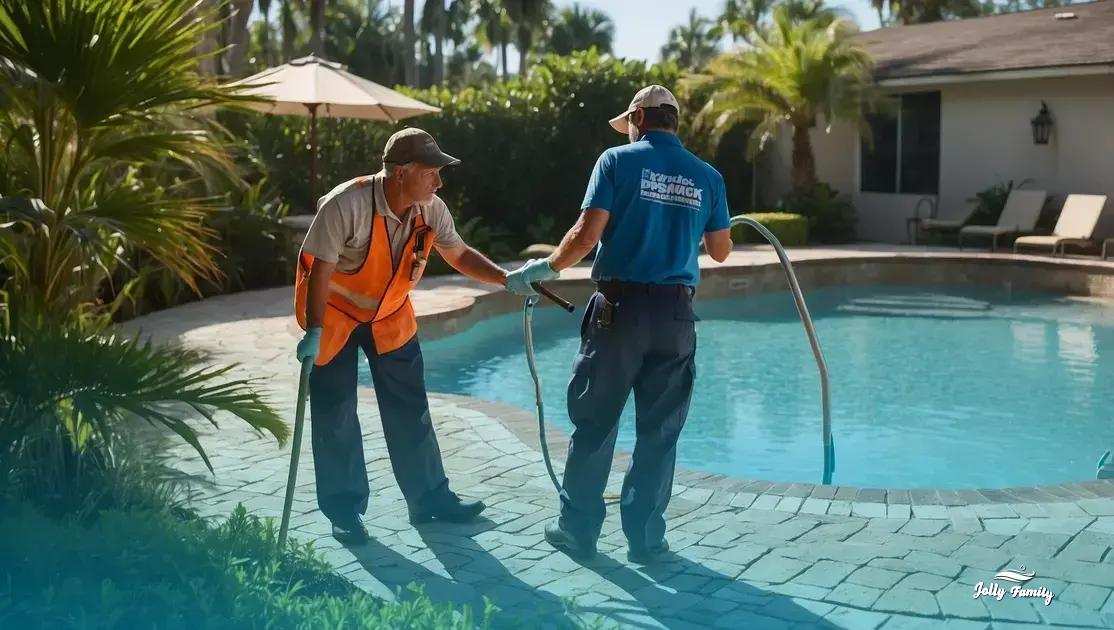
Choosing a local partner makes pool care simpler and faster for hosts. A nearby team knows Kissimmee weather, common pool issues, and fast routes between rentals.
Local knowledge and quick response
Technicians who work in the area spot problems early. They respond faster for same-day fixes and know when storms will affect water quality. Fast response reduces canceled swims and bad reviews.
Proven trust and transparency
Reliable providers show licenses, insurance, and clear pricing. Ask for recent references and sample service logs. Hosts value teams that keep neat records and share test results after each visit.
Guest-focused service
Look for partners who schedule work around check-ins, offer quick turnovers, and hide chemicals and tools from guest view. A polite crew that communicates delays keeps guests at ease.
Consistent processes and documentation
A trusted company follows a checklist for every visit: test readings, skimming, pump checks, and filter care. Maintenance logs and emailed receipts protect hosts and help with local compliance.
Why hosts pick a family-owned team
- Personal attention and consistent technicians.
- Faster emergency calls and flexible scheduling.
- Clear, honest invoices and easy communication.
- Local reputation backed by guest reviews and referrals.
Before hiring, request a sample service plan, ask about emergency response time, and confirm record-keeping. These steps make it easier to trust a partner and keep guest stays stress-free.
Final thoughts on keeping your rental pool guest-ready
Consistent pool care protects guests, improves reviews, and cuts long-term costs. A tidy, clear pool shows guests you care and lowers the chance of safety or health issues.
Make small routines part of every stay: service after each checkout, test pH and sanitizer levels, and keep a simple maintenance log. These steps help you catch problems early and avoid last-minute emergencies.
Choose a local, responsive service that documents visits and offers fast turnarounds. With regular attention, your Kissimmee property will stay safe, inviting, and more likely to earn repeat bookings.
FAQ – Pool cleaning for Airbnb properties in Kissimmee
How often should I schedule pool cleanings for my Airbnb rental?
Service after every checkout is best for short stays. Also schedule weekly maintenance, monthly deep-cleaning, and extra visits after storms or heavy use.
What chemical levels should I expect the technician to maintain?
Expect pH 7.2–7.6, free chlorine 1–3 ppm, total alkalinity 80–120 ppm, and cyanuric acid 30–50 ppm for outdoor pools.
What should I do if the pool is cloudy right before guest arrival?
Restrict access, run the pump, skim debris, test chemicals, and perform shock or vacuuming as needed. Call a local technician for same-day help if problems persist.
Do I need to keep records of pool maintenance?
Yes. A simple log of test readings, service dates, and actions protects you, helps meet local rules, and reassures guests.
How quickly can a local company in Kissimmee respond to emergencies?
Response time varies, so ask providers about same-day service. Local, family-owned teams often offer faster turnaround and flexible scheduling.
Which safety items should be checked during each visit?
Check gate latches, life rings or reaching poles, drain covers, pool depth markers, pool lighting, and remove slip hazards from the deck.