
reliable pool cleaning company Kissimmee delivers regular professional pool maintenance, accurate water testing, filter care, equipment inspection and prompt repairs to keep pools safe, clear and swim-ready, documenting results and offering timely emergency response by insured, locally experienced, trusted technicians.
reliable pool cleaning company Kissimmee — want a clear, safe pool without the guesswork? As a local homeowner you may notice cloudy water or chemical swings; at Jolly Family we offer steady weekly care, honest checks and simple fixes that save time and worry.
common signs your pool needs professional cleaning
Cloudy or green water is a clear sign of trouble. Cloudiness often means poor filtration or an algae bloom that needs professional treatment.
Strong chemical smell or red eyes can indicate unbalanced chlorine levels. When simple dosing doesn’t fix it, a technician can test total chlorine, combined chlorine, and pH properly.
Visible algae, slimy walls, or a dark scum line along the tile mean the pool chemistry and circulation are failing. Algae can hide in filters and plumbing if not treated correctly.
Poor circulation or weird pump noises are equipment warnings. Low flow, air in the pump, or frequent filter clogs suggest a mechanical issue that affects water quality.
Frequent, sudden changes in pH or chlorine after dosing often point to underlying water chemistry problems or contaminated fill water. If adjustments don’t hold, call a pro.
Stains on the pool surface or metal discoloration are signs of metals or organic buildup. Professionals use specific treatments and metal sequestrants to avoid damage.
quick checks you can do
- Use a test strip to check free chlorine and pH — record results.
- Look for visible algae or scum lines after a few days without service.
- Watch the pump pressure gauge and listen for unusual sounds.
- Inspect the skimmer and filter basket for excessive debris or oil.
If any of these checks show repeated issues, a certified technician can diagnose filtration, chemical balance, and equipment problems safely and efficiently.
what a weekly maintenance visit from a pro includes
A weekly pro visit keeps your pool safe, clear, and ready to use. Technicians follow a checklist to spot problems before they grow.
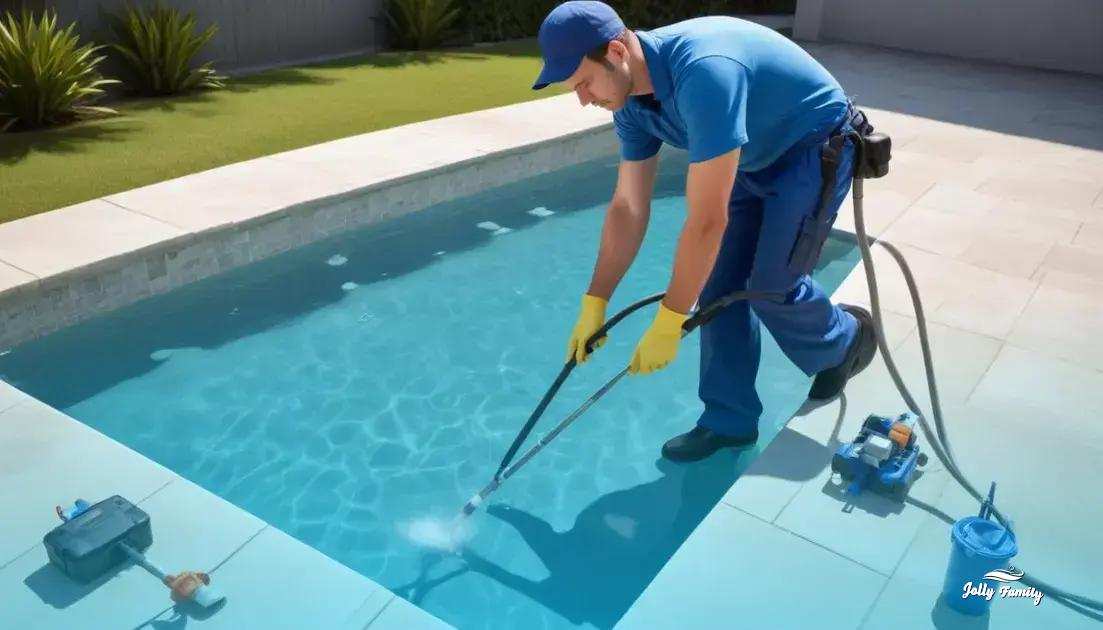
Surface care: skimming leaves and debris, emptying skimmer baskets, and brushing walls and steps to remove algae and oil build-up. These tasks improve circulation and filter performance.
vacuuming and filter maintenance: a tech will vacuum the floor when needed, check the pump basket, and backwash or clean the filter to restore proper flow. Clean filters help the water stay clear longer.
water testing and chemical adjustments
Technicians test free chlorine, total chlorine, pH, total alkalinity, and sometimes calcium hardness and cyanuric acid. They use reliable kits or digital meters and record results. If levels are off, they add precise doses of sanitizer, pH up/down, or alkalinity increaser. Shock treatments are applied only when necessary to remove contaminants quickly.
equipment inspection: checking the pump, motor, valves, heaters, salt cell (if present), automatic cleaner, and lights. The tech listens for odd noises, reads pressure gauges, and looks for leaks or worn parts that need repair.
They also check the water level, tile line, and pool surround for stains or safety hazards. Small tasks like tightening fittings, clearing skimmer weirs, or removing a small stain are often handled on the spot.
communication and records
After service, a good company leaves a short report with test results, actions taken, and recommendations. Photos or notes help you understand issues and plan repairs. Regular records make it easier to track trends and prevent costly fixes.
Routine weekly visits save time and money by keeping chemistry stable, protecting equipment, and giving homeowners peace of mind about pool safety and appearance.
chemical balance basics: what Jolly Family tests and why
Free chlorine measures the active sanitizer that kills bacteria and algae. Ideal range is about 1–3 ppm for most residential pools. If low, a tech adds chlorine or performs a shock; if too high, they dilute with fresh water.
Combined chlorine (chloramines) shows leftover, bound chlorine that smells and irritates eyes. Values should be very low; if elevated, a professional shock treatment and better filtration are needed.
pH affects sanitizer strength and comfort. Aim near 7.4–7.6. Low pH can corrode metal parts; high pH reduces chlorine effectiveness. Techs add pH up or down in measured doses.
Total alkalinity buffers pH and prevents swings. A typical target is 80–120 ppm. Technicians raise or lower alkalinity to stabilize pH and avoid frequent adjustments.
Calcium hardness protects surfaces and equipment. Very low levels can etch plaster; very high can cause scaling. Pros balance hardness with chemicals or partial water replacement when needed.
Cyanuric acid (stabilizer) shields chlorine from sun but can bind it if too high. Outdoor pools often aim for 30–50 ppm. If levels are excessive, dilution or partial drain may be recommended.
Salt level (for salt systems) must match the generator’s spec, usually in the low thousands of ppm. A tech checks the cell and salt concentration and cleans or adjusts the system for steady chlorine output.
Metals and phosphates can stain surfaces and feed algae. Technicians test for iron, copper, and phosphate levels and use sequestering agents or targeted treatments to prevent damage.
how Jolly Family tests and acts
Jolly Family uses calibrated meters, titration kits, and test strips for quick checks. They record results, note trends, and apply precise doses rather than guesswork. When a parameter won’t hold, they investigate filters, circulation, and source water.
- Measure: digital photometer or titration for accuracy.
- Record: log numbers to spot trends over time.
- Treat: add sanitizer, shock, pH adjusters, or sequestering agents as needed.
- Recommend: repairs, filter service, or water dilution when chemistry can’t be fixed with chemicals alone.
Regular testing prevents surprises, keeps swimmers safe, and extends equipment life by addressing small issues before they become costly.
how Jolly Family keeps Kissimmee pools safe and predictable
Jolly Family keeps Kissimmee pools safe and predictable by following simple, repeatable steps every visit. Technicians run fast tests, check gear, and make small fixes that stop big problems later.
They test free chlorine, pH, alkalinity, and stabilizer, then add measured amounts of chemicals. Tests use calibrated meters or titration kits so results are reliable. Notes are logged to spot trends over time.
Equipment checks include the pump, filter, valves, salt cell, and cleaner. Techs listen for odd sounds, read pressure gauges, and look for leaks. Filters are cleaned or backwashed to restore flow.
what customers can expect
- Scheduled weekly or custom visits to match pool use and weather.
- Digital or written service reports with test numbers and actions taken.
- Small repairs or adjustments done on the spot when safe.
- Clear recommendations for parts replacement or further diagnostics.
- Fast emergency response if water turns green or equipment fails.
Safety is part of the plan: proper chemical handling, sealed storage, and attention to slip or trip hazards around the deck. Techs are trained and insured, and they follow local codes for pool safety.
Seasonal checks help before heavy use or after storms. For salt systems, cells are inspected and cleaned. For plaster or tile, stains and scale get timely treatment to avoid costly resurfacing.
Clear communication is key: homeowners get plain-language updates, cost estimates, and tips to keep pools steady between visits. This steady care reduces surprises and keeps the pool ready for family fun.
practical steps owners can take between professional visits
Small, regular actions keep your pool clear and cut down on costly repairs. Simple checks a few times a week make a big difference.
Skim and remove debris daily or after storms. Leaves and bugs clog skimmers and filters, reduce circulation, and feed algae. Use a leaf skimmer and empty the skimmer basket when it’s half full.
Run the pump long enough each day to complete full turnover for your pool size—usually 8–12 hours in warm weather. Good circulation helps filters work and keeps chemicals evenly mixed.
Use test strips or a small test kit 2–3 times a week to check free chlorine and pH. Record results on a simple note or app. If levels drift, add small, measured doses of sanitizer or pH adjuster per the product label.
quick checklist between pro visits
- Skim surface and check baskets: daily or after wind.
- Test chlorine and pH: 2–3 times weekly.
- Check water level: keep it near the skimmer midpoint.
- Brush walls and steps: once a week to prevent algae.
- Inspect pump and filter: watch for odd noises or high pressure.
- Remove visible oil or sunscreen film with a surface skimmer or clarifier per label.
Store chemicals in a cool, dry place out of reach of children and pets. Never mix different pool chemicals together. Use gloves and follow label instructions when handling any treatment.
If water stays cloudy, you see slime, or chemical tests won’t stabilize after small adjustments, call your service tech. Quick homeowner care helps, but professionals fix hidden problems like poor filtration or contaminated source water.
how to pick the right maintenance plan for your home
Choosing the right maintenance plan starts with your pool type and how often you use it. Small, rarely used pools need less frequent service than large family pools with heavy use.
Consider pool surface and features: plaster, pebble, tile, waterfalls, or heaters all need specific care. Special features can add to the cost but prevent bigger repairs later.
Think about equipment age and condition. Older pumps, filters, and salt cells may require more frequent checks. A plan that includes equipment inspection and minor repairs saves surprises.
what to compare between plans
- Visit frequency: weekly, biweekly, or monthly.
- Included services: skimming, vacuuming, filter cleaning, chemical testing, and equipment checks.
- Parts and repairs: are small parts or labor included or billed separately?
- Emergency response: how fast will the company handle a green pool or pump failure?
- Seasonal services: winterizing, startup, and storm cleanup availability.
- Reporting: do you get clear service notes and test results after each visit?
Set a budget range and match it to the level of care you need. Cheaper plans may omit filter service or tests that prevent long-term damage. Value is not just price but what is covered.
Look for flexible plans that allow upgrades or add-ons. For example, weekly maintenance plus occasional deep clean or acid wash when needed keeps costs predictable.
Ask about guarantees and insurance. A reputable company should carry liability insurance and offer workmanship warranties for repairs they perform.
questions to ask the provider
- What exactly is included in the routine visit?
- How do you handle chemical spikes or algae outbreaks?
- Will I receive a written report with test numbers each visit?
- Are replacement parts and labor quoted in advance?
- Can the plan be adjusted seasonally or when we travel?
Check local reviews and ask for references. Local experience matters because Kissimmee weather, groundwater, and landscaping affect pool chemistry and service needs.
Finally, choose a plan that gives clear communication and predictable costs. A good match keeps your pool safe, lowers repair risk, and saves time for your family.
Final thoughts on keeping your pool ready
Regular care stops small problems from becoming big ones. Watching for signs, keeping chemistry balanced, and scheduling routine checks save time and money.
Professional maintenance helps keep equipment working and water safe. A local, reliable company can test accurately, treat issues, and handle repairs you shouldn’t do yourself.
Simple owner tasks—skimming, testing, and running the pump—make a big difference between visits. These steps lower costs and keep the pool ready for use.
Pick a plan that fits your pool and ask for clear reports. If problems persist, call a technician early to avoid costly repairs and downtime.
FAQ – Pool maintenance and reliable pool cleaning company Kissimmee
What services are included in a typical weekly maintenance visit?
A weekly visit usually includes skimming, emptying skimmer baskets, brushing, testing and adjusting chemicals, filter checks, and a basic equipment inspection.
How often should I schedule professional cleaning for my pool?
Most family pools do well with weekly service; smaller or rarely used pools may need biweekly or monthly visits depending on weather and use.
Can I manage pool chemistry myself between professional visits?
Yes. Simple tasks like skimming, testing free chlorine and pH, and running the pump help a lot. Call a pro if levels won’t stabilize or you see algae.
How do I choose a reliable pool cleaning company in Kissimmee?
Look for local reviews, proof of insurance, clear service reports, transparent pricing, and technicians who use calibrated tests and explain results plainly.
What should I do in an emergency like green water or pump failure?
Stop using the pool, run the pump if safe, and call your service provider right away. Fast response prevents damage and shortens downtime.
Are repairs and replacement parts usually included in maintenance plans?
Plans vary: some include minor parts or labor, others bill repairs separately. Always ask what is covered, emergency response time, and any warranties or insurance.