
pool cleaning specialists Kissimmee provide routine chemical balancing, skimming, filter maintenance, and safety inspections tailored to local heat, storms, and short-term rentals; they document test results and photos, offer turnover services for Airbnbs, and respond quickly to stains, algae or equipment faults to keep pools safe, clear, and guest-ready.
pool cleaning specialists Kissimmee — ever wonder why some pools stay crystal clear while others turn cloudy? At Jolly Family, we mix local experience with routine care and precise water checks so you spend less time fixing problems and more time enjoying the pool. Curious what reliable, consistent maintenance looks like?
Signs your pool needs professional cleaning and how Jolly Family detects them
Cloudy or green water is the first clear sign a pool needs professional cleaning. Small leaves and floating debris that keep coming back also show that skimming and filtration aren’t working well.
Watch for surface film, slimy walls, or dark stains on the floor. These often mean algae or metals are building up. A strong chemical or rotten-egg smell can point to poor water balance or a failing sanitizer system.
How Jolly Family detects problems
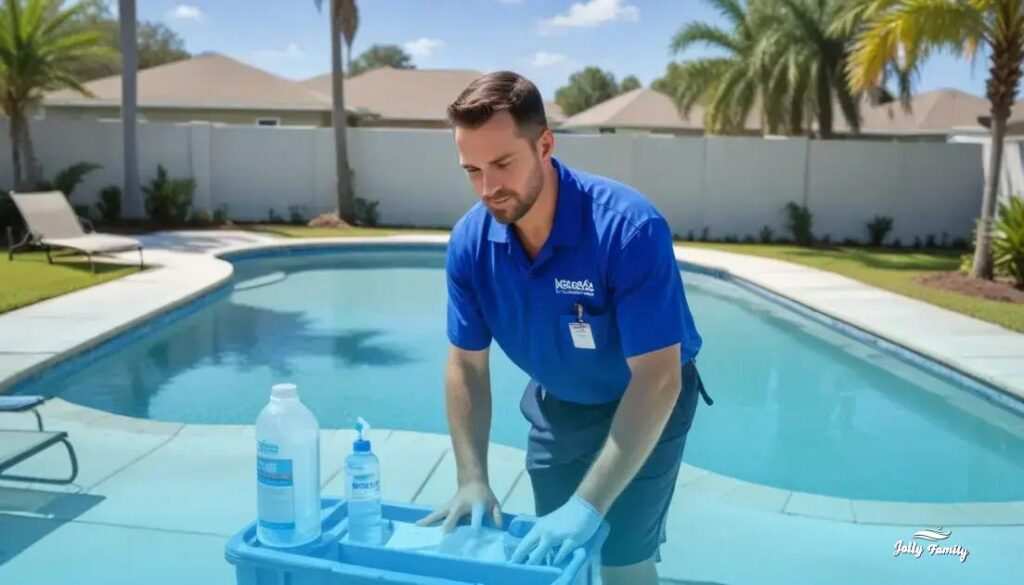
Water chemistry testing is a fast check: technicians use digital meters and test kits to read pH, free chlorine, total alkalinity, calcium hardness and salt levels. Values outside normal ranges explain cloudy water, scaling or skin irritation.
- pH below 7.2 or above 7.8 — can cause cloudy water and eye irritation.
- Low free chlorine — often the cause of algae growth and odors.
- High calcium hardness or total dissolved solids — leads to scaling and cloudy appearance.
Technicians also inspect equipment: pump pressure, filter condition, skimmer baskets and return jets. A dirty cartridge or sand bed, low pump flow, or blocked returns are common causes of recurring debris and poor circulation.
Visual and tactile checks include wall and tile wiping, looking for stains, and checking for slippery surfaces. Jolly Family documents these findings with photos and notes so you can see the issue and track fixes over time.
In some cases, technicians take a water sample for lab analysis to detect metals, organics or hidden contamination. This deeper test helps choose the right treatment without trial-and-error chemistry.
Simple homeowner checks before calling a pro: use a test strip, empty the skimmer, and clear visible debris. If problems return quickly or tests show imbalance, professional service is the next step.
What a routine Jolly Family service covers: chemistry, skimming and inspections
Water chemistry and balancing
Technicians measure pH, free chlorine, total alkalinity, calcium hardness and salt (if used) with digital meters and test strips. Values outside the normal range are corrected on-site with measured doses of sanitizer, pH adjusters or hardness treatments. Proper balance prevents cloudy water, skin irritation and scaling.
- pH target: 7.4–7.6 for comfort and sanitizer efficiency.
- Free chlorine: kept within the recommended range for the pool type.
- Calcium hardness: adjusted to avoid scaling or surface damage.
Skimming, brushing and vacuuming
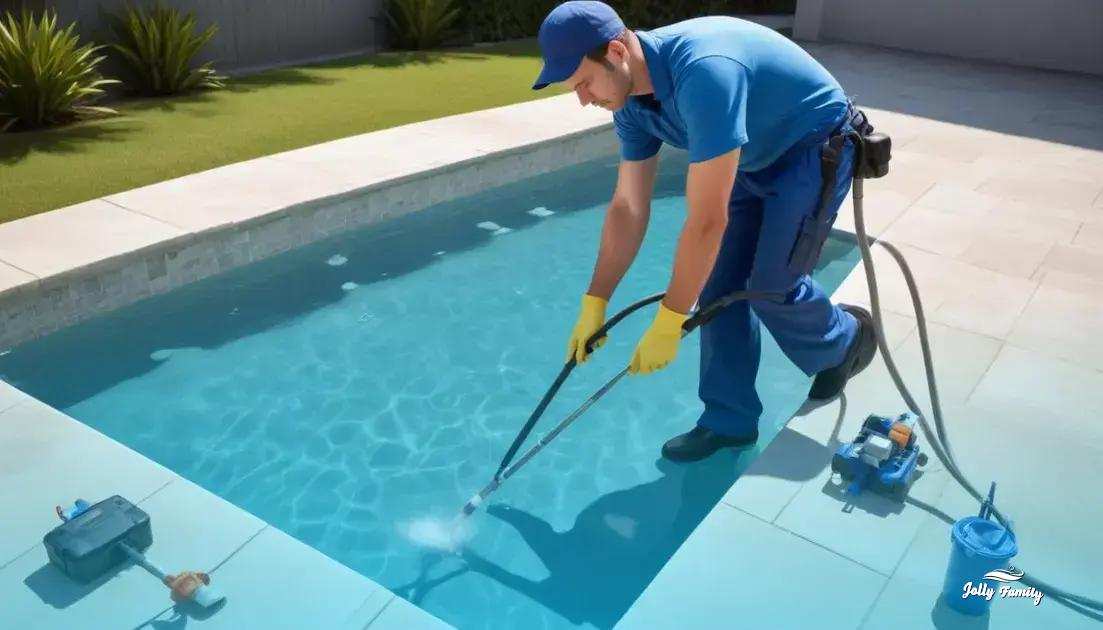
Technicians remove floating leaves and debris with a skimmer, brush walls and tile to dislodge algae, and vacuum where settled debris remains. Regular surface cleaning reduces filter load and improves water clarity between visits.
- Surface skimming: clears leaves, insects and oils.
- Brushing: prevents stains and inhibits algae growth.
- Vacuuming/backwashing: restores clarity by removing settled dirt.
Equipment inspection and basic maintenance
Each visit includes a check of the pump, filter, heater, chlorinator and return jets. Technicians record pump pressure and flow and inspect filters, skimmer baskets and seals. Common findings like clogged cartridges, low pump flow or cracked baskets are noted and often fixed immediately or scheduled for repair.
- Filter condition: clean or backwash cartridge, sand or DE systems as needed.
- Pump and motor: verify proper operation and look for leaks or noises.
- Returns and skimmers: clear blockages and confirm good circulation.
Documentation and homeowner guidance are provided after every service. Jolly Family leaves a short report or photos showing test results, actions taken and recommended next steps. This record helps track trends and avoid recurring issues.
Simple tasks homeowners can do: empty skimmer baskets, remove large debris, and run the pump daily. If cloudiness, algae or unusual odors return after a service, schedule a follow-up so technicians can perform targeted treatment or lab analysis.
Quick actions you can take between visits to keep water clear
Keep debris off the surface by skimming daily. Empty skimmer baskets and remove leaves or toys right away. Quick removal prevents clogged filters and stains.
Make sure the pump runs enough hours for good circulation. As a rule, run the pump long enough to turn the pool water over once a day—about 8–12 hours depending on your pump and pool size. Check return jets to confirm water flow.
Easy tests and what to aim for
Use test strips two to three times a week to spot problems early. Aim for pH 7.4–7.6 and free chlorine near 1–3 ppm. If strips show low chlorine or pH out of range, add small measured doses and re-test later.
- Daily: skim, empty baskets, check water level.
- Every few days: test water and adjust sanitizer or pH as needed.
- Weekly: brush walls and vacuum settled debris.
Keep filters clean. Rinse or backwash sand/DE systems and clean cartridge filters when pressure rises or flow drops. A dirty filter makes water stay cloudy even with correct chemistry.
Shock and prevent algae: if you see cloudy water, a green tint, or after heavy use or storms, shock the pool according to product directions. Brushing after shocking helps remove algae before it settles.
Use a pool cover during heavy leaf seasons and after storms to cut down on work. If issues come back quickly despite these checks—persistent cloudiness, strong odors, or algae—contact a professional for a targeted service or lab testing.
Choosing frequency and plans for Kissimmee weather and short-term rentals
Kissimmee’s hot, humid summers and frequent storms change how often pools need service. Adjust cleaning schedules by season, guest turnover and visible water or equipment issues.
Recommended visit frequencies
- Private, low-use pools: weekly visits for chemistry, skimming and basic checks. Good in cooler months or for single-family use.
- High-use or summer months: twice-weekly to control algae, boost circulation, and keep sanitizer levels steady when temperatures rise.
- Short-term rentals and Airbnbs: turnover service before and after each guest plus at least one full inspection per week. Pre-arrival checks within 24 hours keep pools guest-ready.
- After storms or heavy rain: same-day or next-day service to remove debris, rebalance chemistry and inspect equipment for clogs or damage.
Plans that match local needs
Offer tiered plans so owners pick the right coverage. A typical lineup:
- Basic weekly plan: chemistry, skimming, filter check and short report.
- Standard twice-weekly: adds brushing, vacuuming and more frequent chemistry adjustments—ideal for summer months.
- Vacation rental plan: guest turnover cleaning, pre-arrival testing, emergency callout priority and photo documentation for hosts.
Plans should include flexible add-ons like shock treatment after heavy use, algaecide cycles in hot months, and lab water tests when metals or persistent cloudiness appear. Custom quotes work best for differing pool sizes and rental schedules.
Practical scheduling tips for owners
- Share guest calendars with your service provider so techs can schedule pre-arrival checks.
- Increase visits during high season or when many guests book back-to-back.
- Book a post-storm clean early to avoid stains and filter overload.
Quick homeowner checklist: run the pump daily, empty skimmer baskets, skim surface debris after storms, and report cloudy water or odors right away. These simple steps reduce the frequency of emergency treatments.
Clear communication and a documented service log with photos help track trends and justify schedule changes. For rentals, insist on a written agreement that covers response times for guest issues and routine turnover services.
Safety checks and documentation for family homes and Airbnb properties
Regular safety checks reduce accidents and protect families and guests. Inspect gates, latches and pool fences to ensure they close and lock easily. A self-closing, self-latching gate is a key barrier for small children.
Essential safety checks
- Gate and fence: verify latch function, no gaps under the fence, and proper height.
- Anti-entrapment drains and covers: confirm drain covers are intact and fastened to prevent suction hazards.
- Pool alarms and safety devices: test surface or gate alarms monthly and replace batteries as needed.
- Ladders, rails and steps: check for secure mounting, no rust, and non-slip grips.
- Deck and surfaces: look for trip hazards, cracks or slippery areas; repair or add non-slip grip where needed.
- Life-saving equipment: have a reachable ring buoy, reaching pole and a first-aid kit stored nearby.
Check electrical safety: GFCI outlets near the pool must work, and pool lights should show no exposed wiring. Ensure pool heaters and pumps are free of leaks and unusual noises.
Documentation hosts should keep
For family homes and short-term rentals, keep a clear service log with dates, test results and photos. Include pH and sanitizer readings, filter pressure, pump run times and any corrective actions taken. Photo evidence after each visit helps show the pool was safe and ready for use.
- Inspection photos: gates, drain covers, alarm tests and rescue equipment.
- Service notes: what was checked, what was fixed, and recommendations for the owner.
- Guest-ready checklist for rentals: pre-arrival water check, skimmer empty, and visible safety gear in place.
Provide clear guest instructions: where safety gear is stored, basic pool rules, and emergency contact numbers. For Airbnb hosts, attach recent inspection photos to the listing or guest welcome message to reduce disputes.
When unusual issues appear—cloudy water, broken latch, or electrical faults—document the problem, take photos, and schedule repairs immediately. Quick action limits liability and keeps guests safe.
Final steps to keep your pool safe and clear
Regular service and quick home checks stop small problems from growing. Weekly or twice-weekly visits plus daily skimming keep water clear and equipment healthy.
Test water two to three times a week, run the pump long enough to turn over the water, and keep filters and skimmer baskets clean. Shock after heavy use or storms to prevent algae.
For family pools and rentals, keep photos and test logs. Clear safety gear, working gates, and alarms protect guests and lower liability.
If issues return or you see stains, strong odors, or equipment faults, contact pool cleaning specialists Kissimmee for a fast, targeted fix.
FAQ – pool cleaning specialists Kissimmee
How often should I schedule professional pool cleaning in Kissimmee?
Schedule weekly for low-use private pools, twice-weekly in hot months or high use, and turnover service for rentals before and after each guest.
What should I do after heavy rain or a storm?
Skim visible debris, run the pump, and call your service provider same-day or next-day to rebalance chemistry and check filters and equipment.
Which maintenance tasks can I do myself between visits?
Do daily skimming, empty skimmer baskets, run the pump long enough for a full turnover, and test water with strips two to three times a week.
What does a typical Jolly Family service include and will I get a report?
Services cover water chemistry, skimming, brushing, vacuuming, and equipment inspection; technicians leave test results, photos, and recommended next steps.
How do plans differ for short-term rentals or Airbnbs?
Rental plans add guest turnover cleanings, pre-arrival checks within 24 hours, photo documentation, and faster response for guest issues.
Are safety checks required and what gets documented?
Yes—inspect gates, latches, drain covers, alarms, and life-saving gear. Technicians document findings with photos, test logs, and service notes for owners and hosts.