
pool maintenance service near Kissimmee provides scheduled chemical balancing, equipment inspection, filter cleaning, emergency repairs, and seasonal adjustments tailored to central Florida’s climate, offering transparent pricing, certified technicians, and prompt local response to keep pools safe, clear, and ready for use year-round.
pool maintenance service near Kissimmee can save you time and prevent costly repairs. Curious how a trusted, family-owned team helps keep pools guest-ready? At Jolly Family, we combine regular chemical checks, equipment inspections, and timely visits so your backyard stays safe and inviting.
how Jolly Family schedules routine maintenance for Kissimmee pools
Jolly Family organizes pool care with clear visit types so owners know what to expect. Plans are flexible: weekly, biweekly, monthly, plus startup and closing visits.
Scheduling frequency and visit types
Weekly visits suit busy homes and hot months. Biweekly works for moderate use. Monthly plans help vacation properties. An initial inspection sets the baseline and creates a tailored calendar.
What a routine visit includes
Technicians follow a consistent checklist to keep the pool safe and clear:
- Skim surface and remove debris.
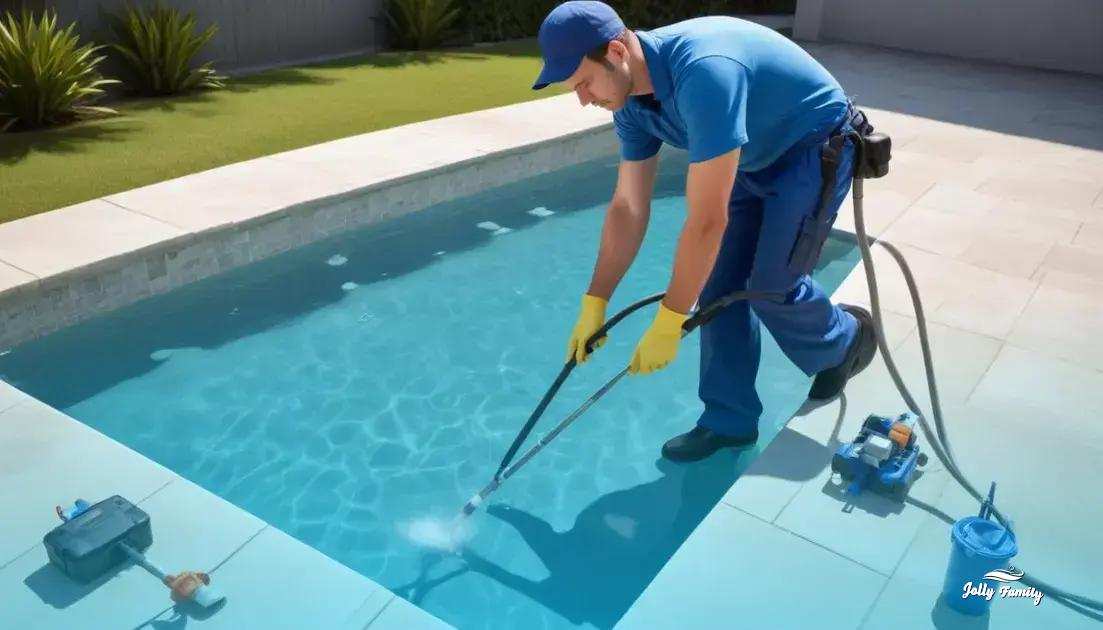
- Vacuum or brush walls and floor as needed.
- Test and adjust chemical balance (pH, chlorine, alkalinity).
- Empty skimmer and pump baskets; inspect filters and pumps.
- Log readings and take a photo of the pool after service.
Booking, reminders, and communication
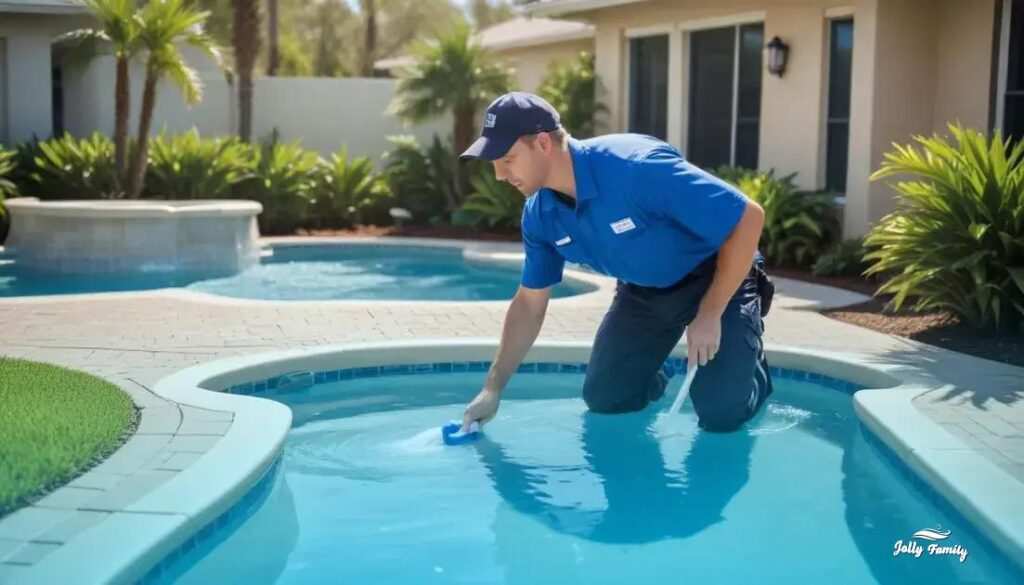
Customers can book online or by phone. Jolly Family sends text or email reminders and a same-day arrival window. Technicians arrive in plain uniforms and share a service photo and brief report after each visit.
Emergency or one-off cleanings are available if alarms, cloudy water, or equipment issues appear between scheduled visits. Rescheduling is simple through the customer portal or a quick call.
Plans include transparent pricing and clear notes about add-on repairs or part replacements so homeowners aren’t surprised by extra costs.
what routine checks and chemical balances keep water safe
Regular checks keep pool water safe and swim-ready. Test chemistry at least once a week, more often in hot weather or after heavy use.
Key water chemistry levels
- pH: ideal 7.2–7.6. Too low irritates skin; too high reduces chlorine effectiveness.
- Free chlorine: maintain 1–3 ppm for residential pools. Higher levels may be needed after heavy use.
- Total alkalinity: keep 80–120 ppm to buffer pH and prevent swings.
- Calcium hardness: aim for 200–400 ppm to avoid scaling or corrosion.
- Cyanuric acid (stabilizer): 30–50 ppm for outdoor pools using chlorine; very high levels reduce chlorine efficiency.
- Combined chlorine: should be under 0.2 ppm; higher values mean chloramines and require shocking.
How to test and act
Use a reliable liquid test kit for accuracy; test strips are faster but less precise. Always sample water from elbow depth, away from returns. Record results each visit.
- If pH is high, add muriatic acid or sodium bisulfate slowly; if low, add soda ash (sodium carbonate).
- Adjust alkalinity before pH when swings occur.
- Shock the pool when free chlorine is low, combined chlorine is high, or after heavy bather loads. Follow label dosages.
- Use algaecide as preventive care in warm months or after clearing algae.
Mechanical and visual checks
Chemistry works best with good circulation and clean equipment. Include these simple checks in every visit.
- Empty skimmer and pump baskets; clean the pump strainer.
- Inspect filter pressure and backwash or clean cartridges when needed.
- Check return fittings, visible plumbing, and salt cell (if present) for buildup.
- Confirm pump run time and look for leaks or unusual noises.
- Note water clarity and surface debris; brush walls and vacuum as required.
Common problems and quick fixes
- Cloudy water: check filter function, shock the pool, and run a clarifier if needed.
- Green water (algae): brush surfaces, shock heavily, and maintain circulation until clear.
- Scaling: lower calcium hardness and adjust pH to prevent deposits on tiles and equipment.
- Foam or odors: remove organic contaminants, add clearant, and ensure proper chlorine level.
Keep clear service records and photos. Small, regular corrections prevent big repairs and keep swimmers safe.
seasonal adjustments and problem prevention in central Florida climate
Central Florida weather changes fast. Adjusting chemistry and equipment by season prevents algae, stains, and equipment damage.
summer and heavy rain
Summer brings heat and frequent storms. Test chemistry more often and increase circulation to reduce algae risk.
- Test weekly or after heavy rain for pH and free chlorine.
- Run the pump 8–12 hours daily for good filtration and mixing.
- Shock the pool after storms or heavy bather use to remove contaminants.
- Use a stain and scale control if water is hard or metal is present.
hurricane and storm preparation
Before a storm, secure loose items and reduce algae fuel in the water.
- Raise water level slightly to allow for heavy rain, or lower it if instructed by local guidance.
- Add chlorine or shock to achieve a strong sanitizer residual before the storm.
- Turn off electrical equipment during flooding risk and protect heaters and controls.
- Schedule a post-storm service to clear debris, test water, and restart equipment.
fall and mild winter care
Temperatures drop slightly but algae can still grow. Maintain steady chemistry and reduce heavy treatments unless needed.
- Keep pH in the ideal range: 7.2–7.6, and maintain free chlorine at recommended levels.
- Inspect and service filters after the summer season to keep them efficient.
- For infrequently used pools, set a reliable maintenance schedule to avoid neglected issues.
preventive maintenance checklist
Simple, regular tasks stop most seasonal problems.
- Record chemistry and equipment readings each visit.
- Clean skimmer and pump baskets weekly.
- Backwash or clean filters when pressure rises 8–10 psi over normal.
- Brush walls and vacuum to remove algae spores and debris.
- Keep spare parts for common failures: seals, impellers, and pressure gauges.
Consistent small actions reduce big repairs and keep your pool ready for use year-round.
signs your pool needs professional attention and when to call
Watch for clear warning signs that mean a pool needs professional help. Early action prevents bigger damage and keeps swimmers safe.
visible water issues
- Persistent cloudiness: water stays cloudy after normal filtration and basic chemical adjustments.
- Green or discolored water: algae that returns quickly or spreads despite shock treatments.
- Unusual surface film, strong chlorine smell, or foam that homemade fixes don’t remove.
equipment and pressure warnings
- High filter pressure: gauge reads 8–10 psi over the normal level after cleaning.
- Pump makes loud grinding or rattling noises, loses prime, or won’t run at all.
- Visible leaks around plumbing, pump seals, heater, or pool shell.
chemical and testing problems
- Frequent pH or chlorine swings that don’t respond to correct dosing.
- Combined chlorine (chloramines) causing eye or skin irritation even when free chlorine appears adequate.
- Salt cell or sanitizer failure in salt systems where chlorine production drops.
safety and structural signs
- Cracks, sinking coping, or tile and plaster damage that allow water loss.
- Electrical faults such as tripping breakers or sparks — do not attempt DIY fixes.
- Rapid unexplained drop in water level, which may indicate a leak.
when to call a professional
- Call immediately for leaks, electrical issues, or equipment that stops working.
- If water is green or cloudy and stays that way after 24–48 hours of DIY treatment, schedule a service.
- Arrange service when filter pressure remains high after backwash or cartridge cleaning.
- Contact a tech before replacing major parts — a diagnosis can avoid unnecessary purchases.
- Request post-storm inspection for debris, hidden damage, and water chemistry reset.
what a technician will do
- Perform a full chemical analysis and correct imbalances safely.
- Inspect pumps, motors, filters, heaters, and salt cells for faults and wear.
- Pressure-test plumbing to find leaks and recommend repairs.
- Clean or replace filters, adjust run times, and provide a clear repair estimate.
how to prepare for the visit
- Clear pool decks and remove toys or covers so the tech can work quickly.
- Note when the issue began and any recent changes (storms, heavy use, repairs).
- Have access details ready and share any service history or recent parts replaced.
choosing a local partner: reliability, safety, and long-term care plans
Choosing a local pool partner gives faster service and local know-how for Kissimmee weather. Focus on reliability, safety, and clear long-term plans.
qualifications and trust
- Licensing and insurance: confirm an active license and liability coverage before hiring.
- Local reviews and references: check recent customer feedback and ask for nearby references.
- Background-checked staff: safety matters when techs enter your property.
service plans and transparency
Good providers offer flexible plans (weekly, biweekly, seasonal) and clear written scopes. Look for straightforward pricing and no-hidden-fees policies.
- Written estimates, itemized invoices, and a clear cancellation policy.
- Service reports with time stamps and photos after each visit.
safety and equipment care
- Safety protocols: trained technicians, proper protective gear, and safe chemical handling.
- Regular equipment checks, documented maintenance, and recommended replacement timelines.
- Emergency repair options and parts or labor warranties for critical fixes.
communication and long-term value
Choose a partner who uses digital records, sends service photos, and explains fixes in plain language. A strong long-term plan includes seasonal adjustments, filter care, and annual system checks.
questions to ask before you hire
- What is your typical response time for emergencies?
- Can you provide proof of insurance and licensing?
- Do you share sample service reports and local references?
- Which services are included in the plan and which are extra?
Keep your Kissimmee pool ready year-round
Regular care prevents costly repairs and keeps swimmers safe. A pool maintenance service near Kissimmee handles chemistry, equipment checks, and seasonal prep so your pool stays clean and ready.
Choose a local team with clear plans, transparent pricing, and quick response for storms or equipment issues. Small, regular steps save time and money over the long run.
Ready to make pool care simple? Schedule an inspection or ask for a plan that fits your schedule and budget.
FAQ – Pool maintenance service near Kissimmee
What services are included in a routine maintenance plan?
A routine plan usually covers skimming, vacuuming or brushing, chemical testing and balancing, emptying skimmer and pump baskets, filter checks, and a service report with photos.
How often should my pool be serviced in Kissimmee?
Weekly visits are best in hot months or for heavy use. Biweekly can work for light use and monthly plans suit some vacation properties.
How much does pool maintenance typically cost?
Cost varies by pool size and frequency. Expect a range from modest weekly fees to higher rates for extensive services or repairs; ask for an itemized estimate.
What problems need immediate professional attention?
Call a tech right away for leaks, electrical faults, pump failure, or water that stays green or cloudy after 24–48 hours of DIY attempts.
How should I prepare for a scheduled service visit?
Clear the pool deck, remove toys and covers, provide gate or key access, and note any recent issues so the technician can work efficiently.
How do I choose a reliable local pool company?
Verify licensing and insurance, read local reviews, ask for references, confirm response times for emergencies, and look for clear pricing and service reports.