
pool water treatment service Kissimmee provides scheduled testing, precise chemical balancing, filter and pump maintenance, targeted algae prevention, stain remediation and storm recovery, plus equipment inspection and documented treatment plans to keep residential pools safe, clear, and swim-ready while reducing costly repairs and downtime.
pool water treatment service Kissimmee can feel overwhelming — cloudy water, odd odors, pH swings. Ever wondered which fixes you handle and when to call a pro? At Jolly Family, we guide homeowners through quick checks and take care of the complex balancing so your pool stays safe and inviting.
common water problems in Kissimmee pools and quick detection tips
Pools in Kissimmee often show easy-to-spot issues like cloudy water, visible algae, or a strong chlorine smell. These signs usually point to simple causes you can check quickly.
Common problems and what they look like
Cloudy water: Water looks milky or hazy. Causes include poor filtration, high calcium, or tiny particles. Cloudiness often clears after filtration or a proper chemical balance.
Algae growth: Green, yellow (mustard), or black patches on walls and steps. Algae appear after low sanitizer levels or poor circulation.
Strong chlorine odor: A sharp smell usually means chloramines (combined chlorine), not too much chlorine. It signals the need for shock or better ventilation.
Scale and stains: White crusts or colored stains appear from high calcium or metals in the water. Stains may show as brown, blue, or green marks on plaster.
pH and alkalinity swings: Bubbling, eye irritation, or cloudy water can come from pH outside the target range. Fast swings point to low alkalinity or improper dosing.
Quick detection tips
- Do a daily visual sweep: check water clarity, walls, steps, and skimmer for leaves or debris.
- Smell test: a strong chlorine odor usually means chloramines — consider a shock treatment.
- Pump and filter check: low flow or high pressure hints at a dirty filter or blocked skimmer.
- Simple chemical check: use test strips or a liquid kit to read free chlorine, pH, and alkalinity.
- Spot test stains: rub a small area with a brush; if color lifts, it may be surface debris or algae.
How to test like a pro
Collect water from elbow depth, away from returns. Use a reliable kit and compare results to target ranges: free chlorine 1–3 ppm, pH 7.2–7.6, total alkalinity 80–120 ppm, and calcium hardness 200–400 ppm. Test at the same time of day for consistent readings.
If readings are off, adjust one parameter at a time and retest after circulation. Keep notes of values each visit to spot trends and avoid repeat problems.
Call a professional if algae returns quickly, stains persist after treatment, or you see repeated chemistry swings despite proper care.
understanding chemical balance: pH, chlorine, alkalinity and target ranges
Chemical balance keeps pool water safe, clear, and gentle on skin and equipment. When pH, chlorine, and alkalinity fall out of range, swimmers get irritated and surfaces can corrode or scale.
Key parameters and target ranges
- Free chlorine: 1–3 ppm for routine sanitation.
- pH: 7.2–7.6 to protect eyes, skin, and chlorine efficiency.
- Total alkalinity: 80–120 ppm to buffer pH and prevent rapid swings.
- Calcium hardness: 200–400 ppm to avoid scale or etching.
- Cyanuric acid (stabilizer): 30–50 ppm for outdoor pools to protect chlorine from sun.
How to test
Collect water at elbow depth away from returns. Use a liquid test kit or quality strips and compare colors in good light. Test free chlorine, pH, and alkalinity at least once a week, and after heavy rain or heavy pool use.
Simple adjustments
- To raise chlorine: add chlorine granules or shock following product directions. Run the pump while circulating for several hours.
- To lower chlorine: wait and allow sunlight to reduce levels, or partially dilute with fresh water if levels stay high.
- To raise pH: add sodium carbonate (soda ash) in small doses, then retest after circulation.
- To lower pH: add muriatic acid or sodium bisulfate carefully, always following safety steps and adding acid to water, not water to acid.
- To raise alkalinity: add sodium bicarbonate (baking soda) in measured amounts and retest.
- To lower alkalinity: add small amounts of acid and aerate the water (pump and return to surface) until pH and alkalinity reach targets.
Practical tips for stable chemistry
- Adjust one parameter at a time and allow full circulation before retesting.
- Keep a log of readings to spot trends and make gradual corrections.
- Maintain clean filters and run the pump 8–12 hours daily in warm months.
- Monitor cyanuric acid seasonally; too much stabilizer reduces chlorine effectiveness.
- If values swing repeatedly or algae keeps returning, contact a professional for a full water analysis.
seasonal challenges in Kissimmee and how professional treatment helps
Kissimmee pools face distinct seasonal stress: a hot, sunny summer with frequent storms and a milder dry season. These swings change sanitizer needs, circulation, and the risk of algae or stains.
Seasonal issues to expect
- Rainy season (June–October): heavy rain dilutes chemicals and can lower calcium and alkalinity. Storm debris clogs skimmers and filters quickly.
- High heat and sun: UV breaks down free chlorine faster, raising sanitizer demand and encouraging algae growth.
- Cold snaps (brief, mild): lower water temperature reduces chlorine activity and can cause cloudy water if circulation is reduced.
- Hurricane or strong storms: sudden contamination, large debris load, and rapid chemistry swings after runoff.
- Busy seasons and holidays: more swimmers mean higher bather load, added organics, and faster chlorine use.
Quick homeowner actions by season
- After heavy rain: test water, run the pump, and skim debris; retest within 24 hours.
- During hot, sunny weeks: raise testing frequency, maintain free chlorine at 1–3 ppm, and consider small daily chlorine doses.
- Before and after big gatherings: shock the pool and run extra circulation to clear organics.
- For storms: remove large debris safely, check equipment for damage, and avoid swimming until chemistry is balanced.
How professional treatment helps
Technicians offer scheduled maintenance tuned to Kissimmee seasons: routine testing, tailored shock treatments, and filter service timed to local weather. Pros track cyanuric acid and chlorine dynamics so stabilizer levels protect chlorine without reducing effectiveness.
- Proactive algae prevention with targeted treatments and brushing.
- Filter cleanings and backwashing after heavy debris to restore flow and filtration.
- Stain and scale remediation when mineral or metal issues appear after storms.
- Equipment inspection and repairs to avoid downtime during peak season.
- Emergency response after hurricanes or floods to restore safe, swim-ready water fast.
Practical tips to stay ahead
- Keep a simple log of test results and treatments to spot seasonal trends.
- Run the pump longer on hot days (8–12+ hours) and after storms.
- Adjust treatment plans seasonally with a pro — small, regular corrections beat big fixes.
- If chemistry swings or algae returns quickly, schedule a professional water analysis rather than guessing.
what Jolly Family does during a treatment visit: checklist and benefits
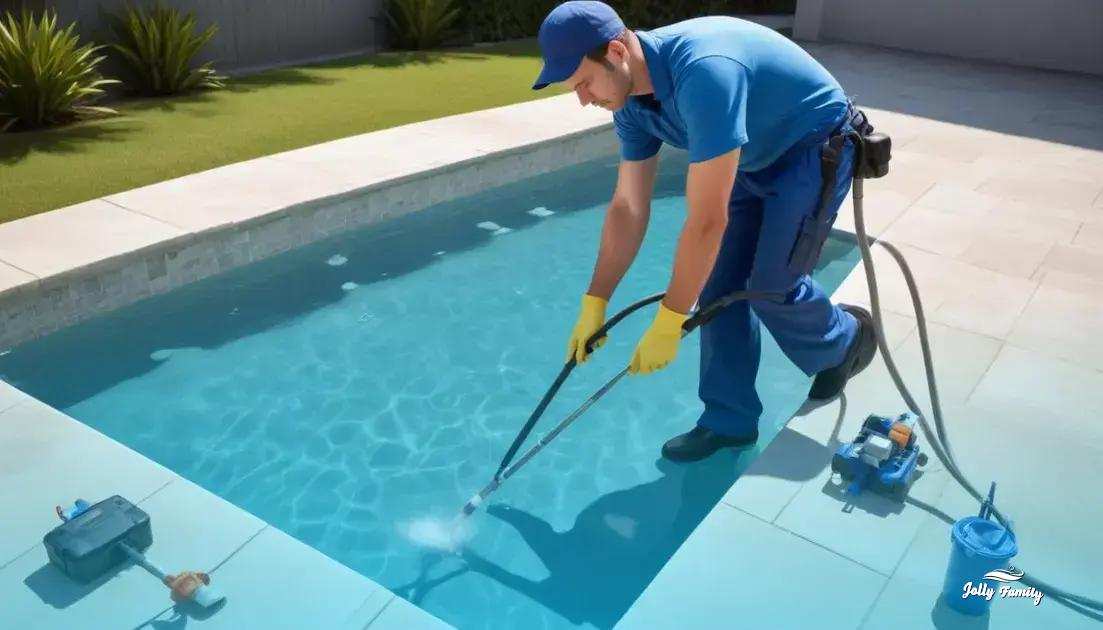
A typical Jolly Family treatment visit focuses on clear, safe water and reliable equipment. The technician follows a consistent process so homeowners get steady results without guesswork.
Checklist during the visit
- Arrival and safety check: secure pool area, check covers, and note any visible hazards.
- Visual inspection: scan water clarity, tile line, skimmer, and pool surfaces for algae or stains.
- Skimmer and basket cleaning: remove leaves and debris to restore proper flow.
- Filter and pump check: read pressure gauge, inspect for leaks, and backwash or clean if needed.
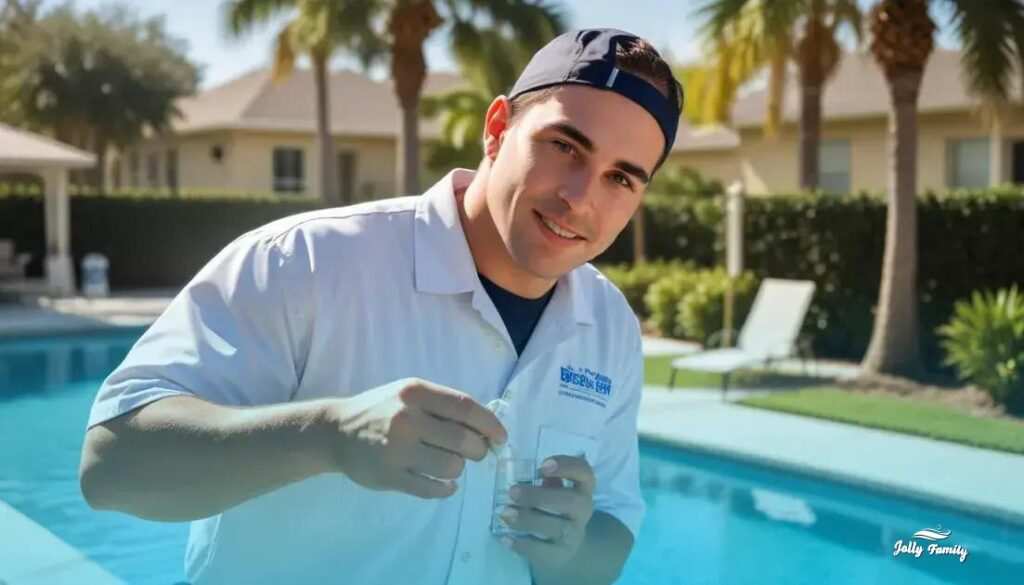
- Water sampling and testing: take a sample at elbow depth and test for free chlorine, pH, total alkalinity, calcium hardness, and stabilizer.
- Chemical adjustments: dose chlorine, pH correctors, or alkalinity buffers based on measured values. Adjust one parameter at a time and allow circulation.
- Targeted treatments: apply algaecide, stain remover, or shock when required, following safety guidelines.
- Brushing and spot cleaning: brush walls, steps, and returns to dislodge buildup and improve filtration.
- Equipment maintenance: inspect timers, heaters, and automatic cleaners; tighten fittings and note parts needing replacement.
- Documentation and homeowner notes: log readings, treatments, and any recommendations; leave clear next-step guidance.
Benefits for Kissimmee homeowners
- Consistent water quality: regular checks keep sanitizer levels steady so the pool stays swim-ready.
- Time saved: professional visits free homeowners from weekly testing and dosing chores.
- Early problem detection: pros spot small equipment or chemistry issues before they become costly repairs.
- Seasonal tuning: treatments are adjusted for Kissimmee heat, rain, and storm risks to prevent algae and large swings.
- Safety and peace of mind: documented service logs and clear recommendations help families use the pool safely.
If recurring chemistry swings, stains, or equipment faults appear, the technician can recommend a deeper analysis or a targeted repair visit to restore long-term balance.
simple troubleshooting steps homeowners can do before calling a pro
Before calling a pro, try a few quick checks that fix common issues and save time. Start with safety: turn off electrical equipment before inspecting and wear gloves when handling chemicals.
Basic visual and equipment checks
- Do a visual sweep: look for leaves, debris, or visible algae on steps and walls.
- Check skimmer and pump baskets: remove debris to restore flow.
- Inspect the pump: confirm it’s running, listen for unusual noises, and check the pressure gauge. A rise of 8–10 psi above normal usually means a dirty filter.
- Verify power and timers: ensure breakers and timers are on and the pump schedule is active.
Quick water tests and simple chemistry fixes
Collect water from elbow depth away from returns and use test strips or a liquid kit. Target ranges: free chlorine 1–3 ppm, pH 7.2–7.6, alkalinity 80–120 ppm.
- If chlorine is low: add chlorine shock per product directions and run the pump until levels return to target.
- If pH is high: add small doses of pH decreaser, circulate, and retest.
- If pH is low: add soda ash in measured amounts, circulate, then retest.
Filtration and clearing cloudy water
- Backwash or clean the filter if pressure is high. For cartridge filters, remove and rinse cartridges.
- Run the pump longer (8–12 hours) to improve turnover, especially after heavy use or storms.
- Brush pool surfaces and vacuum to waste if cloudiness is caused by debris or algae particles.
Algae and persistent cloudy water
Brush affected areas and apply an appropriate algaecide or shock. After treatment, run circulation and monitor chlorine and pH. If algae returns within a few days, it may require a professional-level shock or complete filter service.
When to call a professional
- Signs of leak or equipment failure: rapidly falling water level, constant pump cavitation, or visible cracks.
- Repeated chemistry swings despite correct dosing and circulation.
- Stains that don’t lift after brushing and treatment.
- Electric or mechanical failures (no power, burned wiring signs) — leave electrical repairs to a pro.
Keep a simple log of test results and actions taken. That record helps a technician diagnose persistent problems faster and avoids repeat visits.
Keep your Kissimmee pool safe and hassle-free
Regular checks and balanced chemistry keep water clear and safe. Test weekly, run the pump daily, and keep a short log of readings.
Handle small fixes like skimmer cleaning or a quick shock yourself. Call a trusted professional for persistent algae, equipment faults, or repeated chemistry swings.
Seasonal service prevents big problems after storms and during hot months. Small, steady steps save time and money over the long run.
With simple care and timely pro help, your pool stays inviting all year long.
FAQ – pool water treatment service Kissimmee
How often should I test my pool water?
Test at least once a week and after heavy use, storms, or hot spells. More frequent checks help spot swings early.
What should I do after heavy rain or a storm?
Skim debris, run the pump, retest chemicals within 24 hours, and shock if chlorine is low or water looks cloudy.
How can I tell if I have algae and how do I treat it?
Look for green, yellow, or black patches on walls and steps. Brush the area, shock the pool, add algaecide if needed, and run filtration until clear.
Why does my pool smell strongly of chlorine?
A strong chlorine smell usually means chloramines (combined chlorine). Shock the pool and maintain proper free chlorine to remove them.
When should I call a professional service?
Call a pro for repeated chemistry swings, persistent algae or stains, equipment failures, leaks, or after major storm damage.
How long should I run the pump and how often clean filters?
Run the pump 8–12 hours daily in warm months and longer after heavy use. Clean skimmer baskets weekly and backwash or service filters when pressure rises above normal.