
how often should a pool be professionally cleaned: For private low-use pools, schedule professional service every 4–8 weeks; family pools every 2–4 weeks; high-use or commercial pools weekly; increase visits after storms, heavy leaf fall, or recurring cloudiness, and arrange monthly checks for saltwater systems to monitor cells and salinity.
how often should a pool be professionally cleaned? If you own a pool in Kissimmee, that question matters — especially when safety, clarity, and longevity are on the line. I’ll walk through signs, schedules, and how Jolly Family helps keep your water ready for family time.
Signs your pool needs professional cleaning now
If your pool looks or feels different, that’s a clear sign it may need professional cleaning now. Cloudy water, green tint, or a strong chemical smell are common warnings. Don’t ignore these signs — they point to problems that can get worse fast.
- Cloudy or milky water: Indicates poor filtration, high phosphates, or an algae bloom. Check the filter and test chlorine and pH levels.
- Green or discolored water: Usually algae. Brushing and shock treatment help short-term, but persistent green means call a pro.
- Visible algae or slime on walls: Algae can hide in crevices. Professionals use specialized treatments and brushing to remove roots and stains.
- Waterline ring and stains: Scum lines or mineral stains suggest build-up that needs deep cleaning and possible surface treatment.
- Debris piling in the skimmer: Large leaves or silt can overwhelm skimmers and filters, reducing flow and stressing equipment.
- Persistent eye or skin irritation: If swimmers suffer irritation despite normal chlorine readings, bacterial or chemical imbalance may exist.
- Unusual pump noise or low flow: Clogged pump baskets or failing equipment reduce circulation and require professional inspection.
- Frequent need for shock or extra chemicals: If you must add chemicals often to keep balance, hidden contamination or filtration issues may be the cause.
Immediate checks you can do
- Look at water clarity and color from different angles in daylight.
- Open the skimmer and pump baskets; remove visible debris.
- Test basic levels: free chlorine, pH, and alkalinity with strips or a kit.
- Check the filter pressure gauge; a high reading often means a backwash or clean is needed.
- Run the pump and watch for steady return flow; weak jets signal circulation problems.
When to call a professional
- Water remains cloudy or green after basic cleaning or shock treatment.
- Algae returns within a few days despite treatment.
- Repeated chemical imbalance or unexplained irritation to swimmers.
- Visible stains, scaling, or damage to the pool surface.
- Pump, filter, or heater shows persistent faults, noises, or loss of flow.
- You lack time, tools, or confidence to handle deep cleaning and safe chemical handling.
Getting a pro early can save money and avoid bigger repairs. A trained technician will diagnose the root cause, treat contaminants correctly, and restore safe, clear water.
Recommended cleaning frequency by pool type and usage
Professional cleaning frequency depends on the pool type, how often it’s used, and local climate. Below are clear, practical schedules and short notes to help you choose the right plan.
Typical schedules by pool type
- Private residential (low use): Professional service every 4–8 weeks for filter checks, vacuuming, and chemical balancing.
- Family pool (regular use): Every 2–4 weeks to prevent algae, manage bather load, and keep water clear.
- High-use or event pools: Weekly professional attention is best when many swimmers or parties happen often.
- Saltwater pools: Monthly professional visits are common to inspect the chlorine generator, clean electrodes, and check salinity.
- Commercial, hotel, and condo pools: Multiple times per week or daily checks plus a weekly deep clean, per local health codes.
By surface and equipment
- Plaster/concrete: Deep cleaning and stain removal every 6–12 months; professionals handle acid washes and resurfacing advice.
- Fiberglass and vinyl: Less porous surfaces need fewer deep cleans—schedule pros every 3–6 months for inspections and minor repairs.
- Filters and pumps: Professional filter service and inspection at least every 1–3 months, with cartridge or DE cleaning as recommended.
Adjust frequency for usage and climate
- Increase visits after storms, heavy leaf fall, or long events. Rain and runoff raise contaminants and demand faster intervention.
- Hot, humid climates speed algae growth—plan more frequent cleanings during warm seasons.
- Winter or off-season: one professional prep (winterize) and one start-up inspection before reopening.
Services to expect from a professional visit
- Comprehensive water testing and precise chemical adjustment.
- Filter clean or backwash, pump inspection, and pressure gauge check.
- Vacuuming, brushing, and removal of algae or biofilm from walls and steps.
- Spot treatment for stains, scaling, or mineral buildup when needed.
- Safety checks for heaters, pumps, and automatic systems.
Quick decision checklist
- Schedule sooner if water is cloudy, green, or has a scum line.
- Call a pro after persistent swimmer irritation or repeated chemical imbalance.
- If you see low flow, strange noises, or rising filter pressure, book an inspection.
- Prefer professional help when you lack time, equipment, or confidence handling pool chemicals safely.
What professionals do: checklist of services and benefits
- Full water analysis: Professionals test free chlorine, combined chlorine, pH, alkalinity, calcium hardness, and cyanuric acid. Results guide precise chemical dosing.
- Chemical balancing and shock treatment: Technicians adjust chemicals to safe ranges and apply shock when needed to kill bacteria and clear cloudy water.
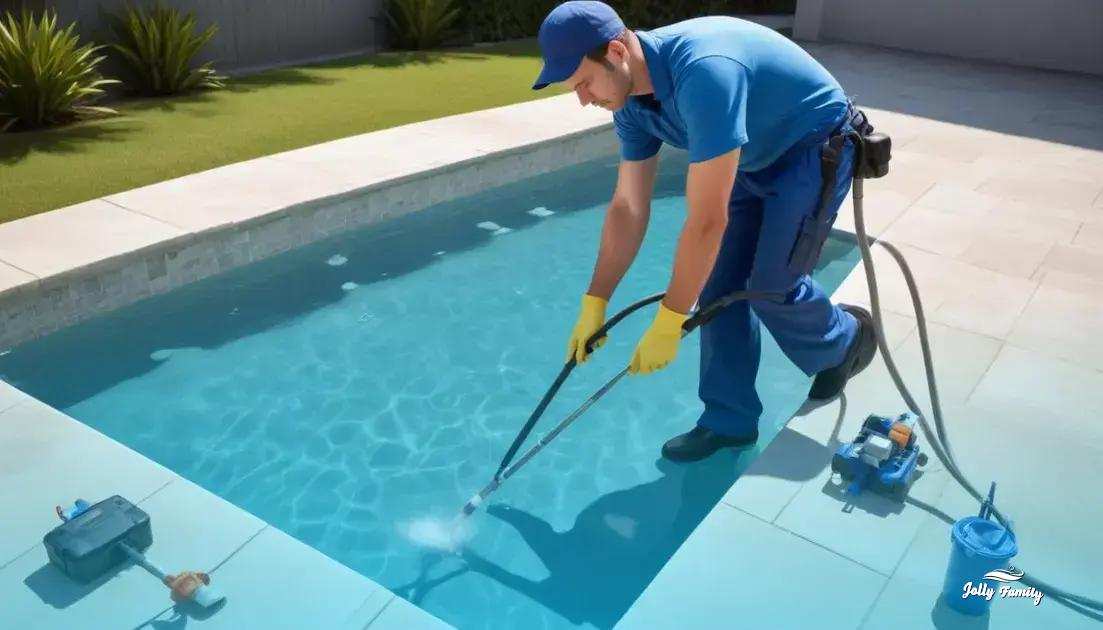
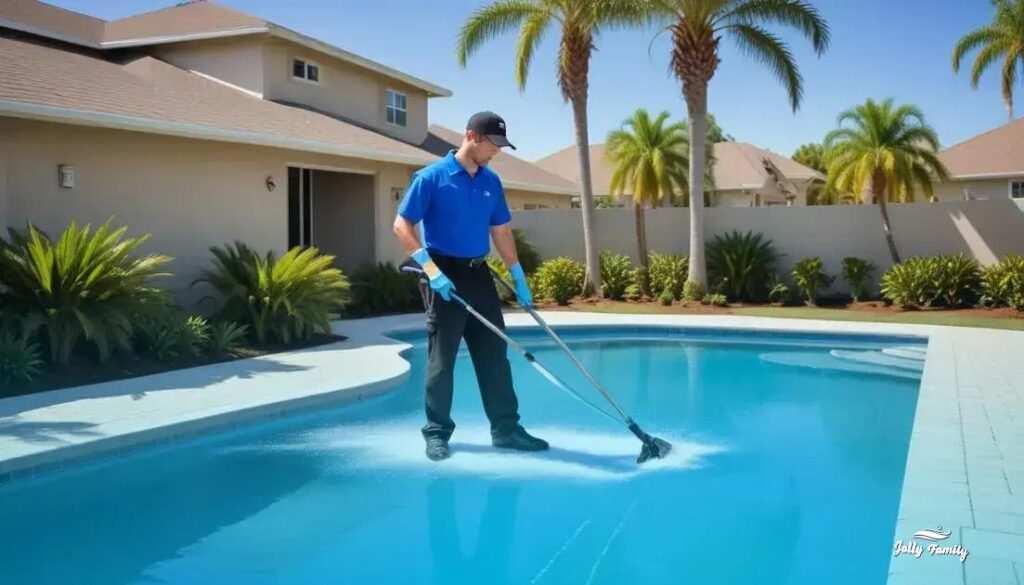
- Vacuuming and brushing: Manual or automatic vacuuming removes settled debris. Brushing breaks algae and biofilm from walls, steps, and tile lines.
- Filter service: Cleaning, backwashing, or replacing filter media (sand, cartridge, DE) to restore flow and filtration efficiency.
- Skimmer and pump maintenance: Emptying baskets, checking seals, and clearing strainers so the system runs smoothly.
- Equipment inspection: Checking pumps, heaters, timers, chlorinators, and salt cells for wear and correct operation.
- Stain and scale treatment: Spot treatments or specialized cleaners remove mineral stains and calcium buildup without damaging surfaces.
- Algae remediation: Targeted algaecide, brushing, and follow-up checks to prevent fast returns of growth.
- Safety and compliance checks: Inspecting ladders, handrails, drains, and safety covers; advising on local code needs for public or shared pools.
- Detailed service report: A clear summary of work done, test results, recommended fixes, and timing for next visit.
Equipment and safety checks
Technicians verify flow rate and pump pressure, listen for unusual noises, and confirm heaters and timers work. They also inspect drain covers and electrical connections to reduce risk.
Advanced services
For stubborn problems, pros offer acid washes, tile restoration, filter media replacement, and surface repair. These are done with correct tools and safety measures to protect the pool finish.
Benefits of hiring a professional
- Faster diagnosis of hidden issues that DIY checks can miss.
- Safer chemical handling and accurate dosing.
- Longer equipment life from routine maintenance.
- Better water clarity and healthier swim conditions.
- Time saved and fewer emergency repairs.
What to expect after a visit
You should receive test readings, a clear list of fixes, and simple care steps to follow between visits. Schedule follow-ups based on usage, weather, and the tech’s recommendations.
How Kissimmee weather and seasonality change maintenance needs
Kissimmee’s subtropical climate affects pool care all year. Hot summers and high humidity speed algae growth and make chlorine work faster. Heavy rains and storms add debris and change water chemistry quickly.
Summer and rainy season (May–October)
- Increase professional visits to weekly or every 7–10 days during peak heat and storms.
- Test chemicals more often—aim for 2–3 times per week—to keep sanitizer and pH in range.
- Backwash or clean filters sooner; heavy leaf fall and runoff can clog systems fast.
- Look for algae after long hot spells or warm night temperatures; treat quickly to avoid spread.
Storms and quick weather shifts
- After strong rains or thunderstorms, check for cloudiness, low chlorine, and debris in the skimmer.
- Run a full circulation cycle and consider a professional shock if contamination or runoff is suspected.
- Secure loose covers and inspect equipment for water intrusion or damage.
Shoulder seasons (spring and fall)
- Adjust to every 2–4 weeks for regular use; increase visits if temperatures suddenly rise.
- Spring startup: plan a professional inspection to balance water, clean filters, and remove winter buildup.
- Fall prep: remove leaves and check heaters or covers before heavy rains begin.
Winter and lower-use months
- Even mild winters in Kissimmee need attention—schedule a professional visit monthly or before reopening after a long idle period.
- Lower temperatures slow algae but also reduce chlorine activity; pros can advise safe adjustments to chemical levels.
Practical tips tied to local weather
- Keep a short-term service plan for the rainy season: more testing, pre-storm securing, and prompt post-storm cleanups.
- Ask pros about a salt cell check if you have a saltwater system; high evaporation can raise salinity and cause scaling.
- Track usage and weather together: a pool used heavily on hot weekends may need a pro visit even if it’s the same calendar week.
Adapting your maintenance schedule to Kissimmee’s weather reduces problems and keeps water clear and safe.
How Jolly Family builds a reliable maintenance plan for your pool
Jolly Family builds a reliable maintenance plan by starting with a thorough site visit and a clear checklist. Technicians inspect water chemistry, filters, pumps, and the pool surface, then propose a schedule that fits your usage and local weather.
Assessment and custom plan
- Initial inspection: Measure chlorine, pH, alkalinity, and look for stains, algae, or equipment wear.
- Personalized schedule: Plans vary by family size, guests, pets, and sunlight—what works for one pool may not fit another.
- Written proposal: You get a simple plan that lists tasks, visit frequency, and expected outcomes.
Routine visits and flexibility
- Regular service: Options include weekly, biweekly, or monthly visits based on your pool’s needs.
- Seasonal adjustments: More visits in hot, stormy months; fewer in low-use seasons, plus startup and winter checks.
- On-demand add-ons: Deep clean, stain removal, or equipment repairs added when needed without long contracts.
Communication and transparency
- Clear pricing: Upfront costs and itemized services so you know what you pay for.
- Digital reports: After each visit you receive test readings, photos, and simple recommendations via email or app.
- Care instructions: Easy home-care steps between visits to keep chemistry steady and reduce extra charges.
Emergency response and quality checks
- Rapid support: Same-day or next-day response for cloudy water, pump failure, or safety issues.
- Follow-up visits: Technicians return to confirm treatments worked and adjust as needed.
- Warranty and records: Service logs help track recurring problems and protect warranty claims on equipment.
What a reliable plan delivers
- Consistently clear, safe water and fewer surprise repairs.
- Longer equipment life through routine checks and timely fixes.
- Less time spent on testing and treatments for you, with professional oversight.
Final steps to keep your pool clear and safe
How often a pool should be professionally cleaned depends on pool type, use, and local weather. Low-use residential pools often need service every 4–8 weeks. Family pools do best every 2–4 weeks. High-use or commercial pools usually need weekly attention. Call a pro sooner if you see cloudy water, green tint, scum lines, or poor circulation.
Regular professional care keeps water safe, prevents costly repairs, and extends equipment life. Early intervention saves money and lowers health risks for swimmers.
Start with a professional inspection, set a custom maintenance plan, and adjust for seasons or storms. Test basic chemistry between visits and contact your service provider at the first sign of problems.
FAQ – Professional pool cleaning and maintenance
How often should I schedule professional cleaning for my home pool?
It depends on use and climate. Low-use pools: every 4–8 weeks. Family pools: every 2–4 weeks. High-use or commercial pools: weekly. Increase visits after storms or heavy use.
What signs mean I should call a professional right away?
Call a pro if water is cloudy or green, you see algae or scum lines, swimmers have eye or skin irritation, or the pump shows low flow or strange noises.
Can I maintain my pool myself or do I still need professionals?
You can handle skimming, basic testing, and small adjustments. Professionals are needed for deep cleaning, filter service, equipment repairs, and complex chemical issues.
What benefits does a professional visit provide?
Pros deliver precise water balancing, filter and pump checks, stain and algae removal, safety inspections, and a report with recommendations—helping prevent costly repairs.
Do saltwater pools require different professional care?
Yes. Saltwater systems need cell and salinity checks, electrode cleaning, and scaling prevention. Monthly pro visits are common to keep the generator and water balanced.
What should I do after heavy rain or a storm?
Remove debris, run the pump, test chlorine and pH, and backwash if needed. If water is cloudy, contaminated, or chemicals are off, schedule a professional cleanup or shock treatment.