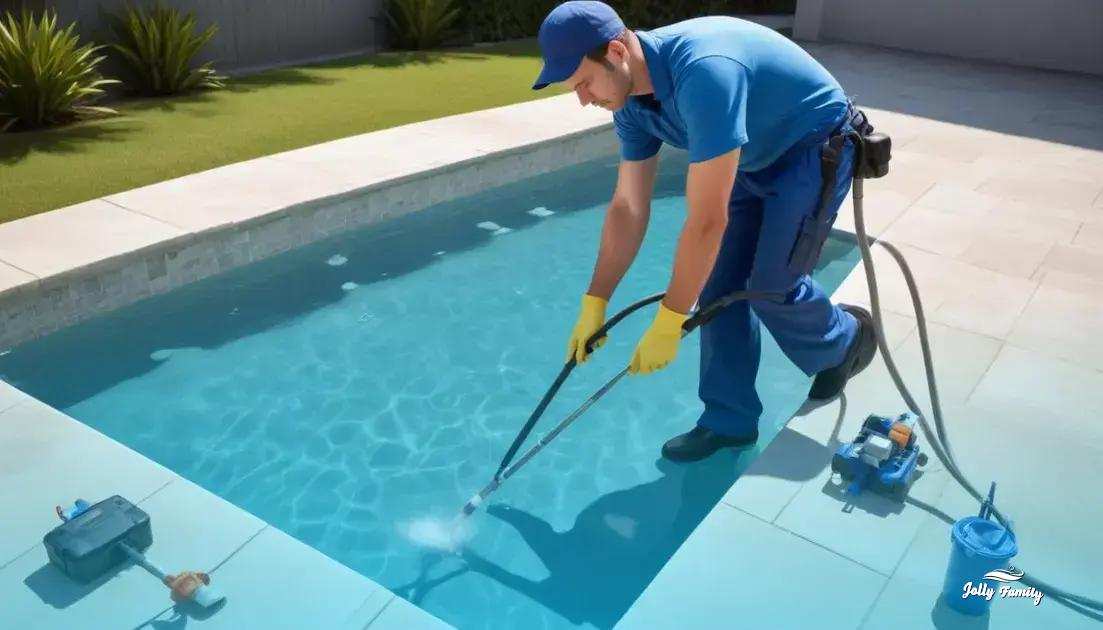

professional vs DIY pool cleaning: hiring a professional is best when you lack time, own complex systems, or want predictable maintenance and lower repair risk; DIY can save money if you follow strict weekly testing, correct chemical balance, and routine equipment care, but mistakes often lead to expensive repairs and safety issues.
professional vs DIY pool cleaning — which really saves you time and money? In Kissimmee, many pools need weekly chemical checks and skimming. Think of it like servicing a car: small fixes avoid big bills. If you’re unsure, Jolly Family can inspect your pool and explain the best path for your home.
cost comparison: upfront expenses, long-term repairs, and hidden fees
Before you choose, break down real costs for professional vs DIY pool care so money surprises don’t appear later.
Upfront expenses
DIY initial buys usually include a skimmer, brush, vacuum, test strips, and basic chemicals. Expect $100–$600 depending on quality. A one-time professional start-up often covers a visit, deep clean, and setup; many companies charge $75–$200 for the first service, or a monthly plan from $80–$200.
Long-term repairs and risks
Poor maintenance can cause costly damage: pump failures, corroded heaters, vinyl liner tears, and plaster wear. Typical repair ranges: pump replacement $300–$900, liner replacement $1,500–$4,000, replastering $3,000–$7,000. DIY mistakes like wrong chemical balance or vacuum damage increase these risks and often lead to higher long-term bills.
Hidden fees to watch
Both options can hide costs. For DIY, factor in replacement tools, extra shock treatments after algae blooms, and waste disposal. For pros, ask about service-call fees, parts and parts markups, travel or fuel surcharges, and seasonal reopening/closing charges. Also check whether a pro’s contract includes repairs or just routine service.
Simple math helps: add your projected annual DIY supply costs plus one estimated repair, then compare to a pro’s yearly service total. That comparison shows whether time saved and lower repair risk justify the price of hiring a professional.
safety and liability: insurance, proper handling of chemicals, and local codes
Pool safety and liability affect every maintenance task, whether you DIY or hire help. Small errors can cause injury, damage, or fines.
Insurance and liability
Confirm insurance before any work starts. Ask for a certificate that shows general liability and workers’ compensation. If a worker is injured or a repair causes damage, proper coverage protects you. Keep copies of the certificate and any service contracts.
- General liability covers property damage or third‑party injury.
- Workers’ compensation protects against on‑site injuries.
- Professional liability covers faulty repairs or bad advice.
Chemical handling and storage
Handle pool chemicals with care. Never mix chlorine with acids or other incompatible products. Always read the safety data sheet (SDS) and product labels. Wear gloves and eye protection, measure with proper tools, and add chemicals to water — not water to chemicals.
- Use gloves and goggles when measuring or pouring.
- Keep chemicals in a cool, dry, ventilated area away from children and pets.
- Store different chemical types separately to avoid reactions.
Local codes and permits
Check local codes before installing equipment or doing major repairs. Rules often cover pool fencing, gate self‑closure, alarm systems, backflow prevention, and wastewater discharge. Some repairs or installations require permits or certified installers. Missing permits can lead to fines and greater liability.
Practical steps to reduce risk
- Get written estimates and a clear service contract with scope and fees.
- Verify licenses and insurance, and keep copies on file.
- Take photos and save receipts for maintenance and repairs.
- Keep SDS sheets and an emergency contact list near the pool equipment.
- Train anyone who helps you on safe chemical use and basic first aid.
quality of results: water clarity, chemical balance, and equipment care
Clear water, steady chemistry, and well‑kept equipment are the signs of quality pool care. Small checks prevent big problems.
Water clarity
Look for sparkling, blue water and good circulation. Skim the surface daily and vacuum or brush walls weekly. Run the filter long enough each day for full turnover (usually 8–12 hours). If water becomes cloudy, check filtration, shock the pool, and inspect for algae.
Chemical balance
Test water at least twice a week. Keep pH near 7.2–7.6, free chlorine around 1–3 ppm, and total alkalinity at 80–120 ppm. Use cyanuric acid to stabilize chlorine if you have a lot of sun. Add chemicals slowly and follow product labels. Sudden swings in pH or chlorine cause eye irritation, staining, and algae.
Equipment care
Clean skimmer and pump baskets weekly. Backwash or clean filters per the manufacturer—typically every 2–4 weeks for sand/DE and monthly for cartridge filters. Check the pump for leaks or odd noises. Replace worn seals and monitor pressure gauges; high pressure often means a clogged filter.
Quick maintenance checklist
- Daily: skim and check water clarity.
- 2× per week: test pH and chlorine.
- Weekly: brush walls, clean baskets, inspect equipment.
- Monthly: deep clean filter or cartridge and inspect pump seals.
Whether you choose professional vs DIY pool cleaning, follow these steps to keep results high. Pros can spot issues early; DIY works if you keep a routine and test often.
time and convenience: scheduling, frequency, and what DIY typically misses
Time and convenience are often the main reasons people choose professional or DIY pool care. Small tasks add up fast, and routines matter.
Scheduling and frequency
Most pools need some attention every day and more work weekly. Daily quick skimming and checking clarity take 5–15 minutes. Weekly testing, brushing, and vacuuming take 30–90 minutes. Monthly filter checks and deeper cleaning add extra time. Professionals usually set a regular schedule, so you don’t have to remember each task.
What DIY typically misses
- Consistent testing: people skip days or read strips wrong.
- Proper shock timing after heavy use or storms.
- Filter performance issues like low flow or clogging.
- Small signs of equipment wear that later need big repairs.
- Seasonal tasks such as winterizing or reopening properly.
When convenience favors hiring a pro
- If you travel or use the pool often and lack time.
- If you have complex systems: salt, heaters, automation.
- If you want predictable bills and less worry about mistakes.
- If local codes or safety rules require certified work.
Time-saving tips for DIY owners
- Use a weekly checklist and set phone reminders.
- Invest in an automatic cleaner or pool timer to cut labor.
- Buy quality test kits and log results to spot trends early.
- Schedule a pro inspection once or twice a year to catch hidden problems.
making the decision: when to hire Jolly Family and what an inspection reveals
If you’re unsure, hire Jolly Family when problems repeat or you lack time for steady care. A pro inspection saves guesswork and finds hidden issues fast.
When to call
- Water stays cloudy after cleaning or shock.
- Algae returns often despite treatment.
- Pump or filter makes loud or odd noises.
- Visible stains, cracks, or unexplained water loss.
- You plan a sale, major repair, or season change.
- You have a complex system: salt, automation, or heater.
What an inspection reveals
- Chemical report: pH, chlorine, alkalinity, stabilizer levels and imbalances.
- Filtration check: flow rate, filter condition, backwash needs.
- Equipment health: pump seals, motor wear, heater and chlorinator status.
- Leaks and structure: visible cracks, liner wear, or plumbing leaks.
- Safety and code: fence, gate, alarm, and local compliance issues.
How findings are delivered
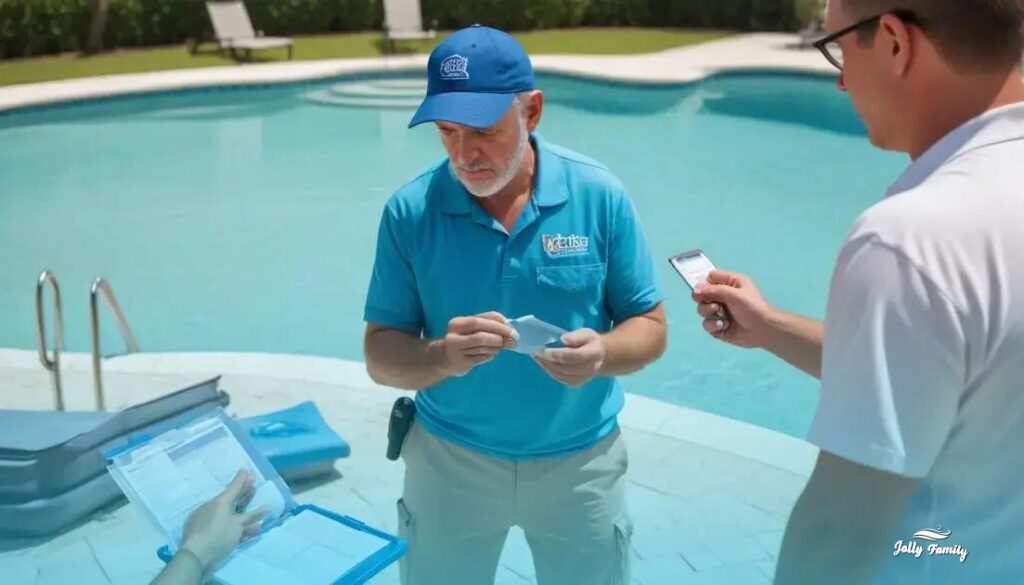
Expect clear results: photos, a simple checklist, and prioritized repairs. A good report shows what is urgent, what can wait, and estimated costs.
Using the inspection to decide
- Compare repair costs versus routine service plans.
- Ask about warranties and follow‑up checks.
- Schedule urgent fixes first to avoid bigger bills.
- If you value time and peace of mind, a regular pro plan may be smarter than occasional DIY fixes.
Making the right choice for your pool
Deciding between professional and DIY pool cleaning depends on your time, budget, and the complexity of your system. If you travel a lot or have heaters, salt systems, or automation, a pro can prevent costly mistakes.
If you prefer hands‑on care, a steady routine and proper testing make DIY viable and cheaper. Combine DIY chores with a yearly professional inspection to catch hidden problems early.
Always check insurance, get clear estimates, and prioritize urgent repairs. Start with an inspection to learn your pool’s needs and pick the option that gives you safety, savings, and peace of mind.
FAQ – professional vs DIY pool cleaning
When should I hire a professional instead of doing it myself?
Hire a pro if you lack time, see repeated algae or cloudy water, hear strange pump noises, or have complex systems like salt or heaters.
What does a professional inspection typically reveal?
An inspection shows chemical levels, filter and pump condition, leaks or liner wear, and safety or code issues with photos and a simple report.
How do costs compare between professional and DIY care?
DIY can be cheaper short term but may raise repair risk. Pros charge regular service fees but can prevent costly repairs and save time.
How often should I test and maintain my pool?
Test water two times a week, skim daily, brush and vacuum weekly, and check filters and baskets monthly.
Are pool chemicals dangerous and how should I store them?
Yes, chemicals can react or cause injury. Store them in a cool, dry, ventilated area, keep types separate, and use gloves and goggles when handling.
Will a professional fix everything during a routine visit?
Routine service covers cleaning and basic adjustments. Repairs or parts often cost extra; ask for a written estimate and check insurance before work begins.