

pool maintenance checklist for homeowners: test and log pH, free chlorine, alkalinity and stabilizer weekly; skim, brush and vacuum debris; clean or backwash filters monthly and inspect pump, valves and seals; follow seasonal opening/closing steps; check covers, fencing and rescue equipment; call a pro for persistent cloudiness, leaks or unusual pump noises.
pool maintenance checklist for homeowners can keep your pool safe and save on repairs — algae and imbalances often appear fast. Think of weekly checks like brushing teeth: small habits prevent big fixes. Start by testing pH and chlorine, skimming debris, and booking routine visits with Jolly Family for steady, local care.
Weekly checklist: test water, adjust chemicals, and skim debris
Start each week by testing pool water with a reliable kit. Check pH, free chlorine, total alkalinity, and stabilizer. Aim for pH 7.2–7.6, free chlorine 1–3 ppm, alkalinity 80–120 ppm, and cyanuric acid 30–50 ppm. Record results in a simple log or app so you can spot trends.
How to test and record
Collect a sample from elbow depth away from return jets. Use a liquid test kit or quality test strips and follow the instructions. Compare colors in natural light and write numbers immediately. Test again after heavy rain, pool parties, or warm spells.
Adjust chemicals
If results are outside targets, correct one factor at a time. To raise pH, add soda ash; to lower pH, use muriatic acid or sodium bisulfate. Raise alkalinity with baking soda; lower it slowly with acid additions while monitoring pH. Increase chlorine with granules or liquid chlorine; follow label dosing for your pool volume. When combined chlorine exceeds 0.5 ppm or water looks cloudy, apply shock treatment per product directions and keep swimmers out until levels are safe.
Skim, brush, and vacuum
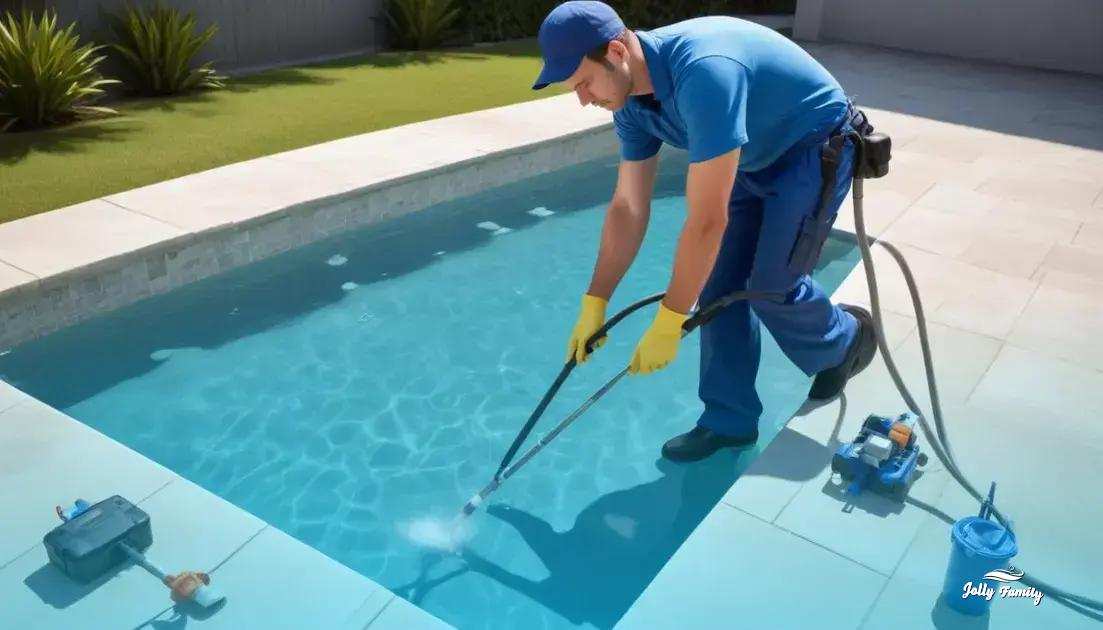
Skim the surface to remove leaves and debris; empty skimmer baskets weekly. Brush walls, steps, and tile lines to prevent algae buildup and improve circulation. Vacuum the floor as needed—manual or automatic—to remove settled dirt. Regular brushing means fewer chemical corrections later.
Filter and equipment checks
Run the pump 8–12 hours daily in warm weather or as needed for circulation. Check the filter pressure gauge each week; backwash sand/de filter when pressure rises about 8–10 psi over clean reading, or clean cartridges per manufacturer guidance. Inspect pump and skimmer baskets, clean hair and lint traps, and look for leaks, loose fittings, or odd noises.
Quick safety and log tip: keep water level near mid-skimmer, note any cloudy water or strong odors in your log, and always wear gloves and eye protection when handling chemicals. A short weekly routine saves time and prevents big repairs.
Monthly equipment care: clean filters, inspect pump and valves
Perform a monthly equipment check to keep the system efficient and avoid costly repairs. Turn off power at the breaker before opening any filter or pump housing and wear gloves and eye protection.
Filter cleaning by type
Sand filter: backwash until the return is clear, then set to rinse for about 30–60 seconds. Check the pressure gauge after cleaning and reset your “clean” pressure reading.
DE filter: backwash, open the tank, remove and gently rinse grids, and inspect for rips or tears. If grids are damaged, replace them. Add the correct amount of DE powder after backwashing following manufacturer directions.
Cartridge filter: remove cartridges, rinse with a hose, then soak in a cartridge cleaner if greasy or stained. Rinse thoroughly and allow to dry before reinstalling. Replace cartridges every 2–3 years or when pleats are damaged.
Pump inspection and common fixes
- Open and empty the pump and skimmer baskets; remove hair and debris.
- Check the pump lid and O-ring for cracks or hardening; replace damaged O-rings and lubricate lightly with silicone grease.
- Listen for unusual noises: grinding or high-pitched sounds may indicate worn bearings or a failing motor.
- Check for leaks at the shaft seal or unions. Small leaks can be tightened; persistent leaks may need seal replacement.
- Verify pump priming and proper flow after reassembly. If the pump loses prime, inspect suction lines and skimmer for blockages.
Valves, unions, and seals
Exercise multiport valves monthly to prevent sticking. Inspect valve handles, spider gaskets, and diverter seals for wear. Look for hairline cracks on unions and clamps and replace any brittle parts.
Ensure valves are in the correct operating position for filtering, backwashing, or circulation. Tighten unions hand‑tight plus a quarter turn—avoid over‑torquing.
Recordkeeping and simple metrics
Log the pressure gauge reading when the filter is clean and note the monthly reading. If pressure rises by about 8–10 psi over the clean reading, backwash or clean the filter. Track basket cleanings and any parts replaced.
Quick monthly items: empty baskets, clean or backwash filter as needed, inspect pump seals and O-rings, cycle valves, check for leaks, and log readings. Small monthly steps prevent bigger repairs and keep water clear.
Seasonal tasks for Kissimmee: opening, closing, and algae prevention
In Kissimmee, seasonal care keeps pools safe through hot summers and stormy months. Follow clear steps for opening, closing, and simple algae prevention to avoid big repairs.
Opening checklist
- Remove and clean the cover; let debris fall away from the pool edge.
- Reconnect pump and filter, then inspect for cracks, leaks, or brittle hoses.
- Fill to the mid‑skimmer level and run the pump for several hours to circulate fresh water.
- Test and record pH, free chlorine, total alkalinity, and cyanuric acid; correct one value at a time to reach targets.
- Shock the pool if algae or strong odors appear, brush walls and vacuum settled debris.
Closing checklist (when needed)
- If you close for travel or cooler weather, balance water first: pH 7.2–7.6 and proper alkalinity.
- Thoroughly clean skimmer and pump baskets, backwash or clean the filter, and lower the water slightly if heavy storms or high winds are expected.
- Add a winter dose of non‑foaming algaecide and cover the pool with a secure, well‑fitted cover.
- Store loose equipment and chemicals in a dry, shaded place; label containers and lock them away from children.
Algae prevention
- Maintain consistent chlorine: small daily doses or stabilizer levels prevent spikes that allow algae to grow.
- Brush walls and tile lines weekly to break algae attachment before it spreads.
- Keep circulation strong: run the pump longer during hot months and after heavy rain to reduce nutrient buildup.
- Remove organic debris quickly—leaves and grass feed algae. Use a skimmer and empty baskets often.
- Consider phosphate removers if algae recurs; test phosphates only if persistent growth appears.
Local tips for Kissimmee
After summer storms or heavy rain, recheck chemical levels and shock if chlorine is low. During hurricane season, secure pool furniture and consider a reinforced cover to prevent debris damage. If you travel for several weeks, ask a neighbor or pro to run weekly checks and log readings.
Quick metrics to log
Record pH, free chlorine, alkalinity, and filter pressure after each seasonal task. Small records show trends and help you act before algae takes hold.
Safety and water clarity: covers, fencing, and simple safety checks
Pool covers reduce debris and limit sun exposure that breaks down chlorine. Use a safety cover when the pool is not in use long-term, and a solar cover for daily heat and evaporation control. Store covers dry and check anchors or straps monthly.
Covers: quick checks
- Inspect for tears, loose anchors, or sagging water on the cover.
- Remove leaves and standing water promptly to protect the cover and water balance.
- When you remove a cover, run the pump and test water before anyone swims.
Fencing and access control
Fencing is your first line of defense. Install a fence at least 4 feet high with a self‑closing, self‑latching gate. Place latches out of a small child’s reach and lock the gate when not in use.
- Keep climbable objects like chairs and planters away from the fence.
- Consider a pool alarm or gate alarm for added security.
Water clarity and simple treatments
Clear water is safer and shows problems early. Maintain proper filtration and circulation, test chemicals weekly, and treat cloudy water quickly with shock or a clarifier. Brush tiles and vacuum to remove particles that make water murky.
- Check the filter pressure and clean baskets to keep flow steady.
- Use clarifier sparingly and follow label directions to avoid overuse.
Regular safety checks
Do a short safety walkaround weekly: confirm drain covers are secure, life ring or rescue hook is accessible, and chemical storage is locked and labeled. Remove toys from the pool after use to prevent children from reaching in unsupervised.
Simple weekly checklist: test water, inspect cover and anchors, check gate latch, clear skimmer baskets, confirm drain covers, and ensure rescue equipment is in place. These steps keep water clear and reduce the chance of accidents.
When to call Jolly Family: signs of trouble and preventive service plans
If you see persistent cloudy water, recurring algae, or sudden chemical swings, it may be time to call a pro. Jolly Family can diagnose problems faster and prevent expensive repairs.
Signs to call
- Cloudy or green water that won’t clear after shocking.
- Strong chlorine or chemical odors despite normal test readings.
- Pump making grinding, whining, or unusually loud noises.
- Filter pressure rising sharply or dropping to zero flow.
- Visible leaks, wet spots around equipment, or rapidly falling water level.
- Stains, persistent algae patches, or plaster chipping.
Emergency issues — call immediately
- Smoke or burning smell from the pump or electrical panel.
- Large, fast leaks you can’t control.
- Any sign of electrical sparking near pool equipment.
What preventive service plans usually cover
Most plans include routine visits for chemical balancing, filter cleaning or backwashing, equipment inspection, and minor part adjustments. Plans often offer seasonal opening/closing, priority scheduling, and discounts on parts or repairs.
- Weekly or biweekly water tests and adjustments.
- Monthly equipment checks and filter maintenance.
- Recordkeeping of readings and service actions.
- Priority response for members and reduced emergency fees.
How to choose the right plan
Compare response times, what’s included, and whether the company is licensed and insured. Ask for references, sample logs, and clear terms about extra charges. A good plan balances cost with regular visits and fast emergency help.
Prepare for the service visit
Before the technician arrives, have recent test logs, note any unusual changes, and take photos of the problem area if possible. Share pump pressure readings and any recent chemical additions. Clear the deck and secure pets for a smooth inspection.
Tip: regular preventive visits catch small issues like worn O‑rings, sticky valves, or falling cyanuric acid levels before they become costly. A short service plan pays off in fewer breakdowns and clearer water.
Final checklist to keep your pool clear and safe
Regular care keeps water clear and cuts repair costs. Do simple weekly tasks: test pH and chlorine, skim debris, brush walls, and empty baskets.
Each month check filters, clean or backwash, inspect the pump and seals, and exercise valves. Follow seasonal steps for opening and closing and treat algae early.
Do a quick safety walk weekly: check covers, gate latches, drain covers, and rescue gear. If water stays cloudy, you smell chemicals, see leaks, or hear strange pump noises, call a professional.
Keep a short log and set reminders for tests and maintenance. Small, steady actions protect your pool and make swimming safer and more fun.
FAQ – Pool maintenance checklist for homeowners
How often should I test my pool water?
Test at least once a week and after heavy rain, parties, or hot spells. Log results to spot trends.
What are the ideal chemical levels to aim for?
Keep pH 7.2–7.6, free chlorine 1–3 ppm, total alkalinity 80–120 ppm, and cyanuric acid 30–50 ppm.
When should I clean or backwash the filter?
Check filter pressure weekly. Backwash or clean when pressure rises about 8–10 psi above the clean reading, or follow the manufacturer’s schedule.
How can I prevent algae from forming?
Maintain steady chlorine, brush walls weekly, remove leaves and debris quickly, run the pump longer in hot weather, and shock if algae starts.
What simple safety steps should I follow at home?
Use a 4-foot fence with a self-closing, self-latching gate, keep covers and anchors in good shape, store chemicals locked, and keep rescue gear accessible.
When should I call a professional like Jolly Family?
Call if water stays cloudy or green, you smell chemicals, see leaks, hear strange pump noises, notice sharp pressure changes, or need seasonal opening/closing.