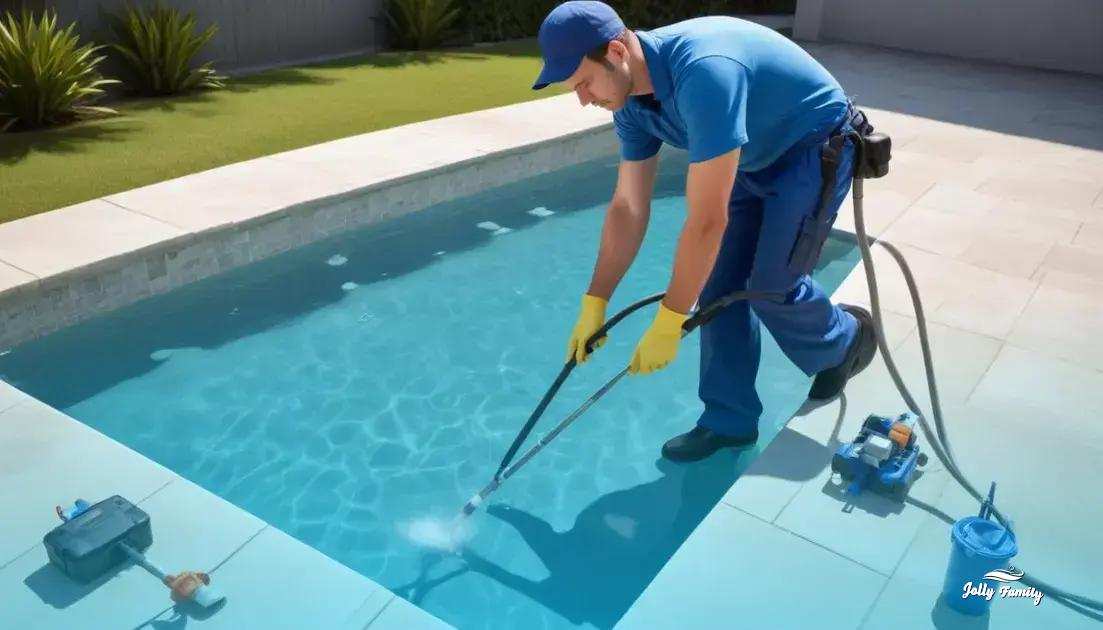

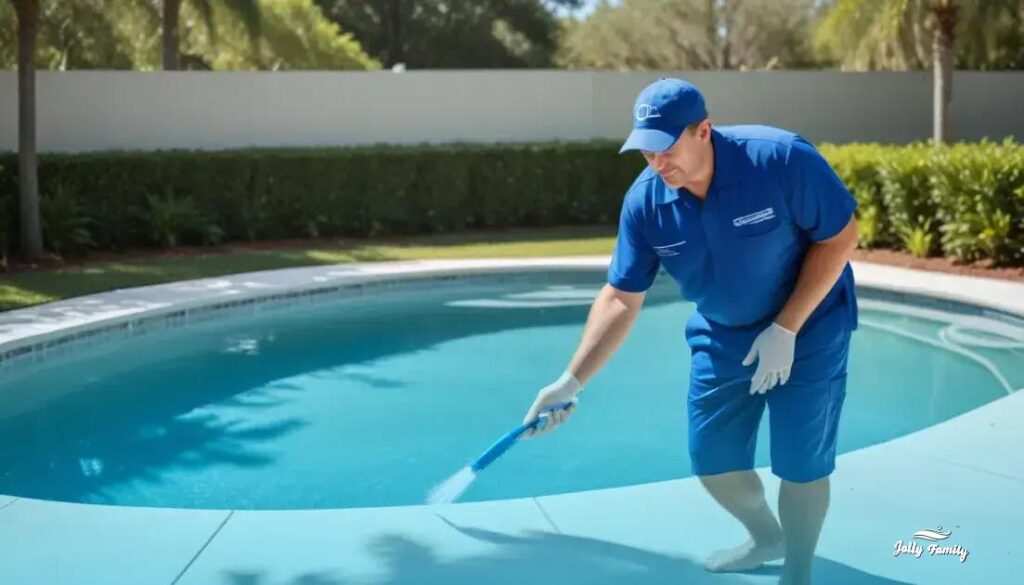
how pool service prevents algae growth: professionals test and balance sanitizer and pH, perform targeted shock and algaecide treatments, brush and vacuum surfaces, clean and backwash filters, ensure proper pump runtime and circulation, remove organic debris and monitor stabilizers, providing routine inspections and rapid corrective actions to stop algae before it spreads.
how pool service prevents algae growth — ever noticed a clear pool turn green after a few warm days? At Jolly Family, we combine routine checks, precise chemical adjustments and targeted brushing to stop algae before it spreads. Want to see how that plays out?
why algae appears and the common warning signs
Why algae appears — algae start when a few simple things line up: warm water, bright sunlight and nutrients like phosphates or organic debris. They spread faster if sanitizer levels drop, the pump or filter isn’t moving water well, or leaves and pollen sit in the pool. Even a short period of low chlorine after heavy use or rain can let algae gain a foothold.
Common causes
- Low sanitizer: chlorine or bromine below recommended levels allows algae to survive and grow.
- Poor circulation: dead spots near steps, corners, or returns don’t get treated water.
- Clogged filters: reduced filtration leaves fine particles and nutrients in the water.
- Sunlight and heat: warm, sunny days speed up algae reproduction.
- Organic load: leaves, grass, sunscreen and pollen add food for algae.
Warning signs to watch
- Slight green tint or shadow across the pool after a few warm days.
- Cloudy water that doesn’t clear after normal filtering.
- Green film or slippery feel on steps and walls when you touch them.
- Visible green spots, strands, or scum along the waterline.
- Sudden spike in chlorine demand when you test or frequent need to add chlorine.
- Surface staining or tiny colored spots on vinyl and plaster.
Quick checks you can do today
- Test free chlorine and pH with strips or a kit; keep chlorine in the recommended range.
- Inspect filter pressure and clean or backwash if pressure is high.
- Look for debris and remove it with a skimmer; brush walls and steps to dislodge early growth.
- Run the pump 8–12 hours to improve turnover, especially after heavy use or rain.
- Consider a phosphate test; high phosphate levels can fuel algae and may need a reducer.
- If signs persist, shock the pool or call a pro for an algae treatment to avoid staining and rapid spread.
Noticed a green tint after a hot weekend? Acting quickly with simple checks can stop algae from taking over and keep your pool ready to swim.
key professional maintenance steps that stop algae early
Pros stop algae early by following a clear checklist and acting fast. They remove food sources, restore sanitizer levels, and fix circulation before algae spreads.
core professional steps
- Test and balance water: measure free chlorine, pH, alkalinity and cyanuric acid. Adjust quickly to reach recommended ranges.
- Shock treatment: perform a chlorine shock to reach breakpoint chlorination when needed; use non-chlorine shock for routine oxidizing.
- Targeted algaecide use: apply a compatible algaecide after shocking or as a weekly preventive dose in warm months.
- Brush and vacuum: brush walls, steps and corners to dislodge early growth, then vacuum to waste if algae particles are present.
- Optimize filtration: backwash or clean filters, replace cartridges if worn, and ensure pump run time gives full turnover.
- Remove organic load: skim leaves and debris, clean skimmer baskets and tile lines to reduce nutrients that feed algae.
maintenance schedule and checks
- Daily or every service: test free chlorine and pH, skim surface, empty skimmer baskets.
- Weekly: shock as needed, brush entire pool, check filter pressure and backwash if required.
- Monthly: test phosphates and cyanuric acid, inspect pump, valves and return jets for proper flow.
- Seasonal: deep clean filters, inspect seals and plumbing, replace worn parts to prevent circulation failures.
when technicians escalate
- Persistent algae: use stronger algaecide blends, enzyme treatments, or multiple shock sessions until algae is controlled.
- Stains or heavy blooms: consider professional-level cleaning such as vacuum-to-waste, acid washing only when safe, and follow-up balancing.
- Equipment issues: repair or replace failing pumps, clogged lines or damaged filters to restore consistent turnover.
These professional steps focus on quick detection, targeted treatment and ongoing prevention to stop algae before it becomes a costly problem.
chemical balance, filtration and circulation: practical checks
Keep checks simple and regular to stop algae before it starts. Test water, watch the filter gauge and confirm strong returns. Small daily checks catch issues fast.
chemical balance quick checklist
- Free chlorine: aim for 1–3 ppm in most pools; raise after heavy use or rain.
- pH: keep between 7.2 and 7.6 for effective sanitizer action and clear water.
- Total alkalinity: 80–120 ppm to stabilize pH swings.
- Cyanuric acid: 30–50 ppm for outdoor pools to protect chlorine from sunlight.
- Calcium hardness: 200–400 ppm to prevent scale or etching.
filtration checks that matter
- Note the clean filter pressure and mark it. Backwash or clean when pressure rises 8–10 psi above that baseline.
- Inspect cartridges or DE grids monthly; clean or replace if clogged or damaged.
- Ensure the filter drain is closed and O-rings are lubricated to avoid air entry.
circulation checks and fixes
- Run the pump long enough for a full turnover: typically 8–12 hours daily in summer.
- Check return jets for even flow; dead spots near steps or corners need adjustment or extra jets.
- Clear skimmer baskets and pump strainer so water can move freely.
- If flow is low, check for air in the pump lid, a clogged impeller, closed valves, or a dirty filter.
simple actions after a problem
- If chlorine is low: boost free chlorine and re-test in a few hours.
- If filter pressure is high: backwash or clean the media, then recheck the pressure.
- If circulation seems uneven: open or service return valves, reposition eyeballs, and run the pump longer.
- After any correction, brush pool surfaces to free particles and let the filter remove them.
Routine, short checks and small fixes keep water balanced and moving — the best defense against algae growth.
how Jolly Family’s routine service prevents algae in Kissimmee pools
Jolly Family’s routine service for Kissimmee pools focuses on prevention, not just fixes. Technicians schedule timely visits that match the hot, sunny local climate and cut off algae before it takes hold.
weekly prevention checklist
- Full water test: free chlorine, pH, alkalinity and cyanuric acid measured and adjusted on the spot.
- Skim, brush, vacuum: remove debris, scrub walls and steps to dislodge early growth and let the filter catch particles.
- Filter and pump care: check pressure, backwash or clean cartridges, inspect seals and clear skimmer baskets.
- Targeted treatments: apply algaecide or shock only when needed to avoid overuse while keeping algae suppressed.
climate-aware measures for Kissimmee
- Manage sunlight impact with the right cyanuric acid level so chlorine lasts under strong sun.
- Increase pump runtime during hot spells for better turnover—typically 8–12 hours or more when needed.
- Use enzyme products to break down organic contaminants common after storms or heavy pollen days.
storm and heavy-use protocol
- After heavy rain or pool parties, the crew performs a quick test, skims debris, and boosts sanitizer to stop blooms.
- They run vacuum-to-waste when needed to remove contaminated water and prevent filter clogging.
- Technicians document any unusual phosphate spikes or rapid chlorine demand and act fast to remove food sources.
communication and homeowner support
- Each visit includes a short report: readings taken, actions performed and simple homeowner tips to maintain results between visits.
- Quick-response calls are available if green tint or slippery surfaces appear between scheduled visits.
- Technicians advise on small homeowner steps—brushing, skimming, and running the pump—that greatly reduce algae risk.
Consistent, climate-aware visits plus clear communication help keep Kissimmee pools clear and reduce the need for costly algae remediation.
simple homeowner checks between visits to avoid outbreaks
Quick, regular home checks stop algae before it spreads. Focus on testing, removing debris and keeping water moving.
daily checks
- Test free chlorine and pH with strips or a small kit; keep chlorine around 1–3 ppm and pH 7.2–7.6.
- Skim surface debris and empty skimmer baskets so water can flow freely.
- Run the pump long enough for good turnover—typically 8–12 hours in warm weather.
- Glance at the filter pressure gauge; a sudden rise often means it needs cleaning.
weekly tasks
- Brush walls and steps to dislodge tiny algae before it attaches.
- Vacuum any settled debris and clean or backwash the filter as needed.
- Consider a light shock after heavy use or if chlorine demand spikes.
after storms or parties
- Remove leaves and organic matter immediately to cut off algae food.
- Test water and boost sanitizer if levels dropped; shock if cloudiness or green tint appears.
- Run the pump longer and vacuum-to-waste when water holds a lot of contaminants.
tools to keep on hand
- Test strips or a simple test kit, a skimmer, a sturdy brush, and a basic vacuum hose.
- Small amounts of chlorine, pH increaser/decreaser and pool shock for quick corrections.
- A pressure gauge and a flashlight help spot filter or plumbing issues early.
when to call a pro
- If green tint or slippery surfaces persist after your checks and treatment.
- When filter pressure stays high after cleaning or flow from returns is weak.
- If stains, heavy blooms or repeated shocks are needed—professionals stop spread and protect surfaces.
Quick tip: five minutes a day checking strips, skimmers and the pump cuts the chance of a full algae outbreak.
Keep algae out with routine care
Regular pool service and simple homeowner checks stop algae before it spreads. Professionals test and balance chemicals, shock when needed, clean filters and fix circulation so water stays clear.
Daily skimming, weekly brushing, and running the pump reduce food and dead spots. After storms or heavy use, test and boost sanitizer quickly to prevent blooms.
Acting fast and keeping a steady maintenance routine cuts costly repairs and keeps your pool swim-ready. If green tint or slippery surfaces persist, contact a professional for a thorough treatment.
FAQ – Pool algae prevention and routine service
How often should my pool be serviced to prevent algae?
A weekly professional visit is ideal for prevention, plus daily quick checks at home (skim, test strips, run the pump 8–12 hours in warm weather).
Which chemical levels matter most to stop algae?
Watch free chlorine (1–3 ppm), pH (7.2–7.6), total alkalinity (80–120 ppm) and cyanuric acid (30–50 ppm) to keep sanitizer effective.
Can I treat algae myself or do I need a professional?
Small issues can be handled with shock, brushing and vacuuming, but persistent blooms, stains or equipment problems should be handled by a pro.
What early signs show algae is starting?
Look for a light green tint, cloudy water, green film on walls, slippery surfaces, visible spots or a sudden rise in chlorine demand.
How do filtration and circulation help prevent algae?
Good filtration removes particles and nutrients, and steady circulation prevents dead spots where algae can grow. Clean filters and proper pump runtime are key.
What should I do right after a storm or heavy pool use?
Skim debris, test and boost sanitizer, run the pump longer, brush surfaces and vacuum. If cloudiness or green tint persists, call a professional.