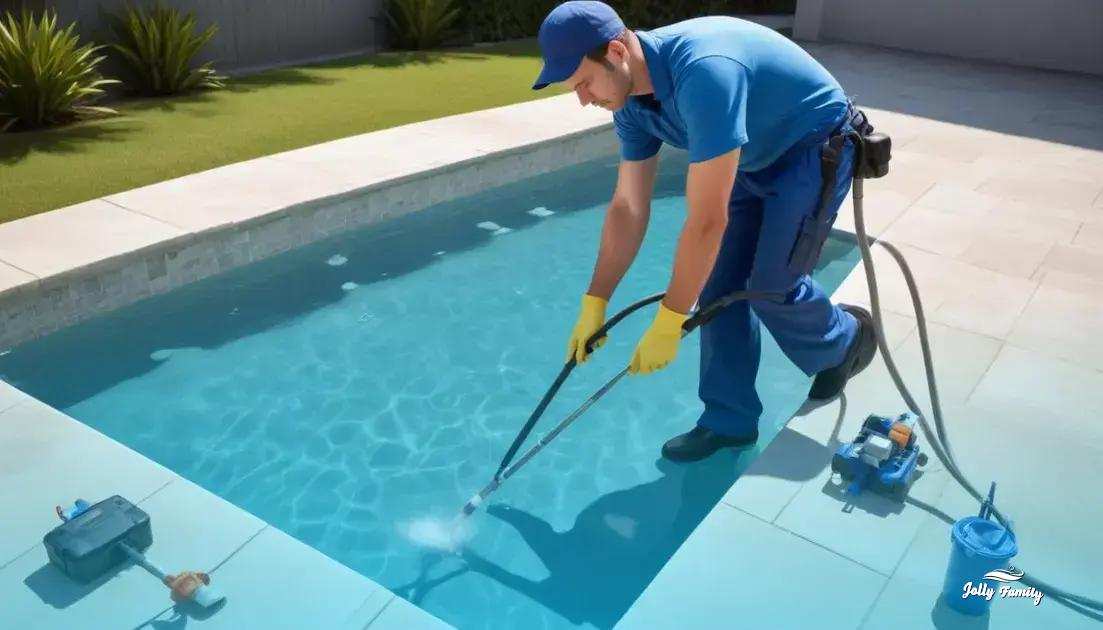

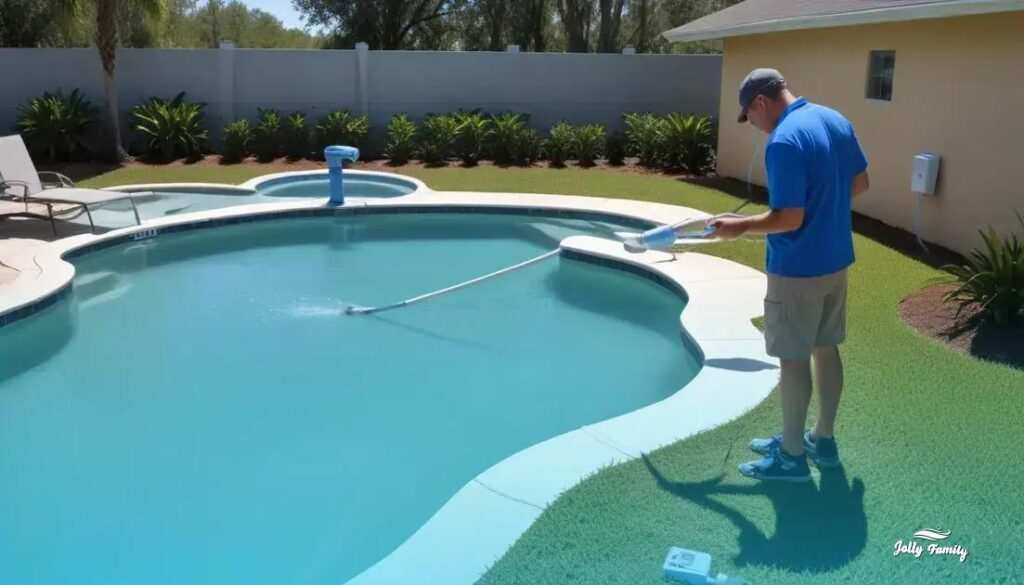
pool care responsibilities homeowners forget include emptying skimmer and pump baskets, monitoring filter pressure and cleaning or backwashing, maintaining correct chemical balance and shock routines, brushing and vacuuming surfaces, checking water level and seals, and inspecting drain covers and service records to prevent cloudy water, equipment failure, safety hazards, and costly repairs.
pool care responsibilities homeowners forget often start as a tiny stain or a noisy pump and turn into bigger headaches. Curious which quick checks stop problems early? At Jolly Family, we help Kissimmee homeowners spot and fix these issues before they cost time or money.
Common overlooked pool tasks that lead to cloudy water and higher costs
Skimmer and pump baskets
Dirty skimmer and pump baskets stop water flow and cause cloudy water fast. Empty baskets weekly or after heavy wind to keep the pump from working harder. Check baskets when the skimmer looks full of leaves and debris.
Filter pressure and cleaning
High pressure means the filter is clogged. Monitor the pressure gauge and clean or backwash the filter when pressure rises 8–10 psi above normal. Replace cartridge filters as recommended instead of waiting for failure.
Chemical testing and balance
Small swings in pH or sanitizer let algae grow and cloud the pool. Test water at least twice a week in hot weather and weekly otherwise. Keep free chlorine or bromine in range, and maintain pH around 7.2–7.6 for clear water.
Brushing, vacuuming and circulation
Debris and biofilm stick to walls and floors if not brushed. Brush surfaces and vacuum on a schedule; focus on corners and steps. Run the pump long enough each day for a full turnover—usually 8–12 hours in summer—to keep contaminants filtered out.
Equipment checks and water level
Leaks, low water, and blocked returns reduce cleaning power. Keep the water level at mid-skimmer and inspect hoses, seals, and o-rings monthly. Fix small leaks early to avoid pump damage and costly repairs.
Small, regular tasks add minutes each week but prevent cloudy water and higher bills.
What your filter and pump silently need (simple inspections to add)
A quick visual check of your filter and pump can prevent most issues. Look for leaks, odd noises, and reduced flow every week or after storms.
Monitor the pressure gauge
Keep a written baseline of the filter pressure when the system is clean. If pressure rises 8–10 psi above baseline, the filter needs cleaning or backwashing. A sudden drop can mean a pump suction problem or a leak.
Clean skimmer and pump baskets
Turn off the pump before opening the pump lid. Empty the skimmer and pump baskets of leaves and debris. Check baskets for cracks and replace if damaged; torn baskets let debris bypass the system.
Inspect seals, o-rings and the pump strainer
Look for water around the pump lid, union fittings, and motor shaft. Replace brittle o-rings and lubricate with pool-safe grease. Listen for grinding sounds that suggest a failing impeller or motor bearing.
Backwash, clean, or replace filters on schedule
Know your filter type: sand, cartridge, or DE. Backwash sand and DE filters when pressure is high; remove and rinse cartridge filters as recommended. Do not wait for failure—cleaning on schedule keeps flow steady and water clear.
Check flow rate and air in the system
Low return flow or sputtering returns often means air in the pump or a clogged line. Inspect return jets, suction lines, and the pump lid O-ring. Prime the pump carefully after any air exposure and verify adequate run time for a full turnover.
Small, regular inspections—pressure checks, basket cleaning, seal inspections, and timely filter maintenance—keep the pump efficient and help avoid costly repairs.
Chemical balance mistakes homeowners miss and quick test routines
Minor chemical mistakes can cloud water and damage surfaces. Test often and act fast when a reading is off.
Quick test routine
Test free chlorine and pH at least twice a week in summer and weekly in cooler months. Increase checks after heavy use or rain. Use a liquid test kit or a reliable digital meter for best accuracy. Record results so you notice trends.
Most common mistakes
- Ignoring pH: pH outside 7.2–7.6 reduces sanitizer action and irritates skin.
- Low alkalinity: alkalinity under 80 ppm lets pH swing quickly.
- Overstabilizing: cyanuric acid too high lowers chlorine effectiveness; keep it around 30–50 ppm for outdoor pools.
- Wrong shock timing: adding chlorine shock in direct sun wastes product—dose at dusk and run the pump after.
- Mixing chemicals: never combine products; always add each chemical separately to water.
Simple corrective actions
To raise pH, add soda ash slowly and retest after a few hours. To lower pH, use muriatic acid or a pH decreaser with care; add near a return jet and run circulation. Raise alkalinity with baking soda. When chlorine is low, use a measured shock dose and wait the recommended time before swimming. Always follow product directions and recheck levels before use.
Timing and verification
After dosing chemicals, wait and retest: quick adjustments can be checked in 4–6 hours; larger changes may need a full circulation cycle or next-day retest. Keep a log of doses and results to avoid over-correcting.
Tools and safety
Keep a quality test kit, spare reagents or strips, shock, pH up/down, and protective gloves and goggles. Store chemicals in a cool, dry place and never add water to chemicals. Use small, regular adjustments rather than large doses when possible.
Follow this routine after heavy use, storms, or when readings drift; small, consistent checks stop cloudy water and reduce repair costs.
Seasonal care many skip: shock treatments, circulation, and algae control
Many homeowners skip seasonal pool tasks and later face stubborn algae and long cleanups. A few timed steps — shock, extra circulation, and brushing — stop problems early.
When to shock
Shock the pool at opening in spring, after heavy bather load or storms, and whenever chlorine is low. Apply shock at dusk to limit sunlight loss. Follow product directions and calculate dose by pool volume. Keep people and pets out until levels return to safe ranges.
Prepare before shocking
Brush walls and floors first so the shock reaches hidden spots. Remove large debris, run the pump, and check the filter. Brushing before treatment helps prevent algae from reattaching to surfaces.
Circulation rules
Good circulation moves treated water through the filter. Aim for a full turnover each day—typically 8–12 hours in summer. After shocking, run the pump continuously for at least 8 hours or as the product label suggests. Poor flow lets algae survive and makes chemicals uneven.
Algae control steps
For visible algae: brush thoroughly, shock the pool, and use an appropriate algicide if needed. Vacuum dead algae to waste if heavy. Clean or backwash the filter after treatment to remove trapped spores and restore flow.
Seasonal checklist
- Spring: open carefully—clean debris, inspect equipment, shock, balance chemicals, and clean filters.
- Summer: test more often, run the pump longer, brush weekly, and shock after pool parties or storms.
- Fall: remove leaves, keep circulation when possible, and lower dose frequency as use drops.
- Winterizing (cold climates): follow local guidance—lower water, protect equipment, and treat before closing.
Simple schedule to follow
Test twice weekly in summer, brush 1–2 times weekly, empty skimmer baskets weekly, and schedule a shock after heavy use or when chlorine dips. Keeping a short log helps spot patterns before algae forms.
Safety checks and documentation: drains, covers, and service records
Inspect drains, covers, and service records regularly to reduce risk and prove maintenance. Focus on visible damage, loose fittings, and missing documentation.
Main drain and anti-entrapment
Check the main drain cover for cracks, missing screws, or movement. Replace broken covers immediately and only use covers that meet local safety standards. If your pool has a Safety Vacuum Release System (SVRS) or unblockable drain, test it per the manufacturer—usually monthly—or after any repair.
Pool covers and anchors
Inspect safety and automatic covers for tears, overloaded water, and corroded anchors. Remove standing water and debris, tighten or replace worn springs, and verify that automatic covers open and close smoothly. Do not allow children on a cover unless it is specifically rated for load-bearing.
Service records and logs
Keep a clear log of inspections, repairs, and chemical treatments. Record date, technician or company name, parts replaced, and photos of damaged items. Store receipts and serial numbers digitally so they are easy to share with inspectors or insurance.
Simple inspection checklist
- Weekly: quick visual of drain covers, skimmer lids, and cover condition.
- Monthly: test SVRS and tighten visible fittings; photograph any issues.
- After service or storm: update records, note repairs, and recheck anchors and covers.
- Annually: professional safety inspection and permit compliance review.
Emergency steps and compliance
Label the pool breaker and keep a shutoff procedure near the equipment. Have emergency numbers and a suction-release tool available. Follow local codes for drain designs and hire licensed technicians for electrical or suction repairs.
Clear records plus quick visual checks of drains and covers cut liability and help spot small problems before they become dangerous.
Keep your pool clear and safe
Small, regular checks stop big problems. Empty skimmer baskets, watch the pressure gauge, test chemicals, and brush surfaces each week or after storms.
Follow simple seasonal steps: shock when needed, run the pump long enough for a full turnover, and clean filters on schedule. These actions prevent cloudy water and costly repairs.
Keep a short service log with dates, readings, and repairs to spot trends and speed up fixes. Store photos and receipts for easy reference.
If you find leaks, broken drain covers, or damaged anchors, call a licensed technician right away. A little attention now saves time, money, and keeps swimmers safe.
FAQ – Common pool care questions homeowners forget
How often should I test pool water?
Test free chlorine and pH at least twice a week in summer and once a week in cooler months; test more after heavy use or storms.
What causes cloudy pool water and how do I fix it?
Cloudiness often comes from clogged filters, poor circulation, or chemical imbalance. Clean baskets, check filter pressure, balance chemicals, and run the pump longer.
How do I know when to clean or backwash the filter?
Clean or backwash when the pressure gauge reads about 8-10 psi above the normal baseline. Also follow the filter manufacturer’s schedule.
When should I shock the pool?
Shock at opening, after heavy bather loads or storms, and whenever chlorine is low. Apply shock at dusk and run the pump per product instructions.
What safety checks should I perform on drains and covers?
Inspect drain covers for cracks and missing screws, test SVRS monthly if present, and check pool covers and anchors for wear or standing water.
When should I call a professional?
Call a licensed technician for leaks, electrical issues, broken drain covers, persistent algae, or when repairs exceed basic maintenance skills.