
pool water turning green quickly indicates rapid algae growth from low free chlorine, poor circulation, high stabilizer or organic load; test free chlorine, pH, alkalinity and CYA, run the pump, brush and shock the pool, clean or backwash the filter, and call a professional if unchanged after 48 hours.
pool water turning green quickly is a frustrating surprise — warm weather, low sanitizer or a clogged filter often trigger it. Ever planned a swim and found a murky pool? Jolly Family, trusted in Kissimmee, shows quick checks and simple fixes you can try before calling professionals.
Why pool water turns green fast: algae, filtration, and chemical imbalances
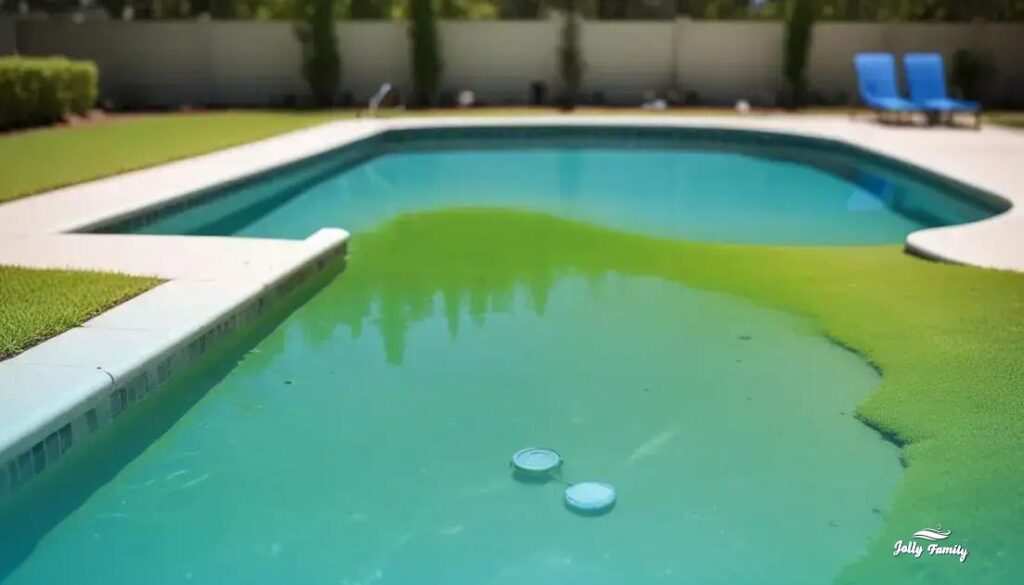
Green pool water often points to algae, but more than one problem can cause it. Identifying the real cause helps you fix it fast and avoid repeats.
Common causes
- Algae bloom: tiny plants grow quickly when sanitizer is low, water is warm, and sunlight is strong.
- Poor circulation or clogged filter: slow flow lets dead spots form where algae take hold.
- Low chlorine: without enough free chlorine, algae can double in hours.
- High pH or unstable alkalinity: incorrect pH makes chlorine less effective.
- Organic waste and phosphates: leaves, grass, and fertilizer feed algae growth.
How filtration and circulation fail
If the pump runs too little, water does not pass the filter enough times. A dirty or damaged filter lowers flow. Check the pump runtime and pressure gauge, and feel for weak circulation near ladders, steps, or corners.
C hemical imbalances to watch
Low free chlorine is the usual trigger; aim for the recommended ppm for your pool type. High pH (above 7.6) and low alkalinity can neutralize chlorine’s power. Also test cyanuric acid (stabilizer), as too much can lock chlorine in and reduce its effect.
Signs and quick checks
- Water shows a green tint or is cloudy.
- Walls or steps feel slippery or show green spots.
- Test strips reveal low free chlorine or high pH.
- Filter pressure is high or pump sounds strained.
Immediate diagnostic steps
- Use test strips or a kit for free chlorine, pH, alkalinity, and stabilizer levels.
- Run the pump 24 hours and brush all surfaces to free algae.
- Backwash or clean the filter if pressure is above normal.
- Skim and remove leaves, then vacuum settled debris.
- If chlorine is very low, boost with a shock treatment and recheck after circulation.
Quick home tests and what their results really mean
Home test kits give fast clues about why a pool turns green. The two common tools are test strips and liquid reagent kits. Strips are quick; liquid kits are more accurate. Knowing what each reading means helps you act fast.
How to take an accurate sample
- Collect water from elbow depth, away from returns and skimmers.
- Hold the strip or vial under water for the exact time the instructions say.
- Compare colors in shade, not bright sun; use the kit’s chart immediately.
- If using a liquid kit, add drops in a clean, dry vial and count changes precisely.
What the main results really mean
- Free chlorine (ideal 1–3 ppm for most pools): low readings let algae grow. If under range, shock the pool and run the pump.
- Combined chlorine (chloramines): any visible level means sanitizer is used up; shock to remove chloramines.
- pH (ideal 7.2–7.6): high pH reduces chlorine effectiveness; low pH can corrode equipment. Adjust slowly with acid or pH increaser.
- Total alkalinity (ideal 80–120 ppm): stabilizes pH. Very low causes pH swings; very high makes pH hard to change.
- Cyanuric acid (stabilizer) (30–50 ppm for outdoor pools): too high binds chlorine, lowering its effect; dilute with partial drain if extreme.
- Calcium hardness (ideal 200–400 ppm): very low can damage surfaces; very high causes scaling and cloudy water.
Common false readings and quick fixes
- Expired or wet strips give bad results—store kits dry and replace regularly.
- Testing right after adding chemicals gives misleading high readings—wait the recommended time.
- Cloudy water or heavy algae can hide true levels; brush, vacuum, and retest after circulation.
Quick action checklist based on results
- If free chlorine is low: boost with a measured shock, brush surfaces, and run the pump 24 hours.
- If pH is high: add small doses of muriatic acid or sodium bisulfate and retest after circulation.
- If alkalinity is high: lower it gradually with acid; avoid large single doses.
- If stabilizer (CYA) is too high: dilute by partial drain and refill.
- If tests show chlorine okay but water stays green: clean or backwash the filter, brush algae, and consider a clarifier or flocculant before vacuuming.
Regular quick tests twice a week during hot months catch problems early. Keep a log of readings to spot trends and act before green water takes hold.
Immediate actions to clear green water safely (step-by-step)
Act quickly and safely when your pool turns green. Use small, clear steps so you can swim again sooner.
Quick step-by-step guide
- Test the water: check free chlorine, pH, alkalinity, and stabilizer before adding anything.
- Remove debris: skim leaves and use a net to clear floating matter so chemicals work better.
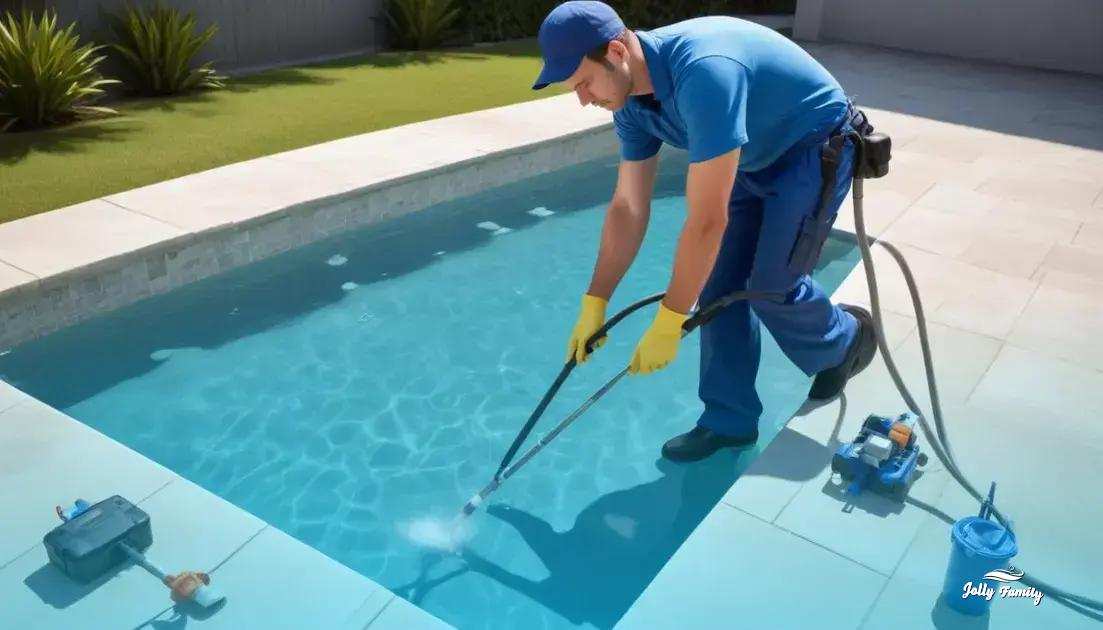
- Brush all surfaces: scrub walls, steps, and floor to break algae loose from the pool shell.
- Shock the pool: add a pool shock product per the label to raise sanitizer levels well above normal and kill algae. Wear gloves and eye protection.
- Run the pump continuously: keep the pump on 24–48 hours after shocking to circulate treated water through the filter.
- Clean or backwash the filter: clear the filter once pressure rises or after heavy algae load to restore flow.
- Vacuum or use flocculant: vacuum to waste if heavy debris settles, or use a flocculant to gather fine particles for easier removal.
- Consider an algaecide: after shock, a targeted algaecide helps prevent regrowth; follow product directions.
- Retest and rebalance: once water clears, test again for chlorine and pH and adjust to normal ranges before regular swimming.
Safety and timing tips
- Always follow chemical labels and local safety guidelines.
- Wait the recommended time after shocking before swimming.
- If water stays green after these steps, professional help may be needed to inspect equipment or perform a deep clean.
Preventive routine: schedules, equipment checks, and chemical balance for Kissimmee pools
Set a simple, regular routine to stop green water before it starts. In Kissimmee’s heat and rain, small checks save time and money.
Daily quick tasks
- Skim surface for leaves and debris so chemicals work better.
- Run pump at least 8–12 hours in cooler months, 12–24 hours in hot weather.
- Look for cloudy spots or green tint and note any changes in a log.
Weekly checklist
- Test free chlorine, pH, and alkalinity. Record results.
- Brush walls and steps to prevent algae cling.
- Empty skimmer and pump baskets to keep flow steady.
- Backwash or clean cartridge filters if pressure is 8–10 psi above normal.
Monthly and seasonal care
- Check cyanuric acid (stabilizer) monthly in summer; keep within recommended range for outdoor pools.
- Inspect pump seals, hoses, and visible plumbing for leaks or wear.
- Service the filter media per manufacturer schedule and replace worn parts before the high season.
- Before heavy rain season, lower water slightly and confirm cover fits to reduce debris.
Equipment and performance checks
- Read the filter pressure gauge each week; high pressure means cleaning is needed.
- Verify return jets point down and create good circulation in corners and steps.
- Listen for unusual pump noise—grinding or air sounds can cut flow and let algae grow.
- Keep a spare cartridge or basic repair kit for quick fixes.
Chemical balance targets and safe handling
- Free chlorine: aim 1–3 ppm for most pools; raise during hot weeks or after storms.
- pH: keep 7.2–7.6 so chlorine works well.
- Total alkalinity: 80–120 ppm to stabilize pH.
- Cyanuric acid: maintain recommended level for outdoor pools; too high reduces chlorine activity.
- Store chemicals in a cool, dry place and follow label safety: wear gloves and never mix products.
Record keeping and thresholds
Use a simple log or app to note dates, readings, and actions. If free chlorine drops repeatedly or pH swings more than 0.5 in a week, investigate circulation, filter function, and possible organic loading from nearby lawns or trees.
When to call Jolly Family: professional cleaning, long-term maintenance, and emergency service
Call a professional when simple fixes don’t clear the water or when safety and equipment are at risk. A quick decision can save time and money.
Signs you should call a pro
- Water stays green after 48 hours of proper shocking and filtration.
- Filter pressure stays high or flow remains weak after cleaning.
- Repeated pH or chlorine swings despite correct dosing.
- Visible algae stains, black spots, or slippery surfaces that won’t brush off.
- Suspected leaks, motor noise, or stopped pumps.
What professionals inspect and fix
- Full equipment check: pump, filter, valves, and seals.
- Advanced water testing for CYA, phosphates, and metals.
- Deep cleaning: filter media service, vacuuming to waste, and targeted algaecide treatment.
- Surface work: acid wash or spot treatment for tough stains when needed.
- Repairs or parts replacement like pump motors, pressure gauges, and plumbing fixes.
Emergency service situations
- Complete pump failure or electrical issues affecting circulation.
- Major leaks that lower water quickly or threaten landscaping.
- Large contamination events after storms or sewage runoff.
- If swimmers become ill or there’s a strong chemical odor, stop use and call a pro.
How to prepare for a service visit
- Note recent test results and actions you tried.
- Clear the area and give access to the pump and filter equipment.
- Have service records or equipment manuals ready if available.
- Ask for an itemized estimate and expected timeline before work starts.
Long-term care and maintenance plans
Consider a scheduled plan that includes monthly checks, seasonal tune-ups, and priority emergency response. Regular professional visits reduce major repairs and keep water safe for swim season. Ask about simple guarantees or follow-up checks after a green-water treatment.
Final steps to keep your pool clear
Green water usually means algae, low sanitizer, or poor circulation. Quick checks and simple fixes often solve it.
First, test the water and follow the results: remove debris, brush surfaces, shock if chlorine is low, and run the pump until the water clears.
Keep a routine: test twice a week in hot months, clean filters, run the pump daily, and log readings to spot trends early.
If water stays green after 48 hours or equipment shows problems, call a professional for a full inspection and deep cleaning.
Act fast and follow these steps to restore safe, swim-ready water quickly.
FAQ – common questions about pool water turning green quickly
Why did my pool water turn green so quickly?
Green water usually means algae growth from low chlorine, poor circulation, warm water, or extra organic matter like leaves and fertilizer.
How soon should I test the water after I see a green tint?
Test immediately for free chlorine, pH, total alkalinity, and stabilizer. Early results guide the right treatment steps.
Can I swim if the pool looks green?
No. Avoid swimming until sanitizer levels and clarity are restored and the label wait time after shock has passed.
What is the fastest safe method to clear green water?
Skim and brush, test and shock the pool per instructions, run the pump 24–48 hours, clean the filter, then vacuum or flocculate as needed.
How often should I test and run the pump to prevent green water?
Test twice a week in hot months, run the pump 8–12 hours in mild weather and 12–24 hours in heat, and clean baskets weekly.
When should I call a professional for help?
Call a pro if water stays green after 48 hours of proper treatment, filter or pump problems persist, you suspect leaks, or swimmers get sick.