
cloudy pool water problem solution: Diagnose by testing pH, chlorine and filter flow; adjust pH to 7.2–7.6, restore free chlorine to 1–3 ppm, clean or repair filtration, brush and vacuum, use clarifier or flocculant if needed, and call a professional if cloudiness persists beyond 48–72 hours.
cloudy pool water problem solution; is not always obvious — sometimes a filter tweak helps, other times chemistry needs rebalancing. Curious which fix fits your pool? At Jolly Family we guide Kissimmee homeowners through simple tests and clear steps so you know when to act and when to call a pro.
Quick checklist to diagnose cloudy pool water
Start with a quick scan of the pool: note color, debris, smell and whether cloudiness is uniform or patchy.
- Visual clues: green tint suggests algae; white or milky water often points to fine particles or high total dissolved solids.
- Circulation and filter: check the pump is running, skimmer and pump baskets are clean, and pressure gauge is normal. Backwash or clean cartridge if flow is low.
- Basic chemistry: test pH, free chlorine, and total alkalinity. Aim for pH 7.2–7.6, free chlorine 1–3 ppm, alkalinity 80–120 ppm. Record values before changing anything.
- Algae check: sweep walls and steps with a brush. Slime or green spots mean algae; cloudy water with green color needs brushing and shock treatment.
- Recent events: heavy bather load, rain, new plaster, or recent chemical additions often cause temporary cloudiness. Note timing to link cause and effect.
Quick on-site tests and next moves
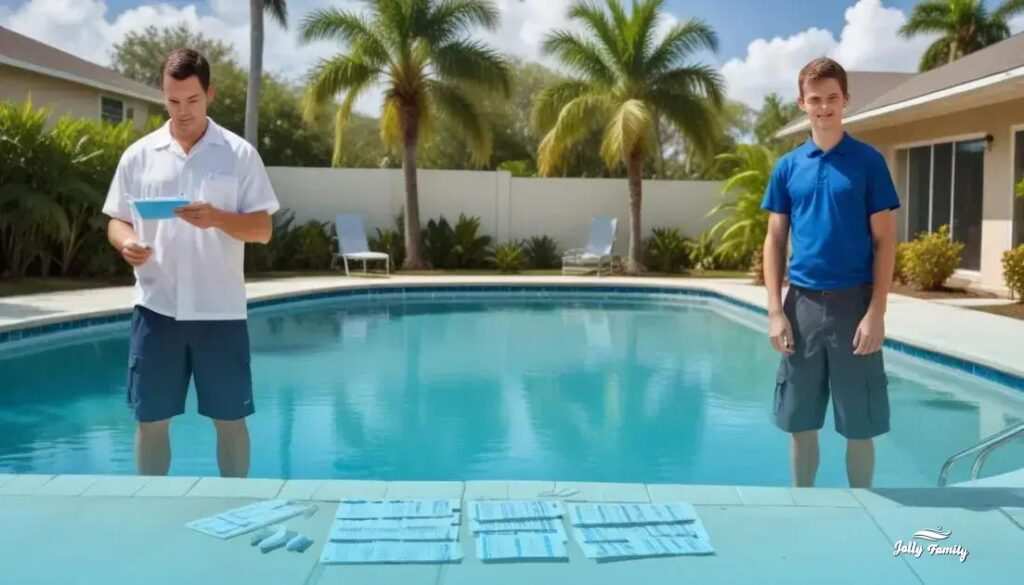
Use a test strip or liquid kit and a clear color chart. If pH is high, lower it before adding more chlorine. If chlorine is low, perform a shock. Run the filter continuously and vacuum any settled particles. If cloudiness persists after 24–48 hours, consider flocculant or a clarifier and recheck the filter for fine debris.
Keep notes of readings and actions. That makes it easier to spot patterns and decide if professional help is needed when the problem repeats or doesn’t clear after typical fixes.
Common causes: algae, chemistry imbalance, filtration issues
Algae growth, chemical imbalance, and filtration issues are the top causes of cloudy pool water. Each one has clear signs and simple checks you can do by hand.
- Algae: green, yellow, or black patches on walls or floor; slimy feel when you brush; water may look greenish or dull. Algae grows fast after heavy rain or poor sanitizer levels.
- Chemical imbalance: cloudy, milky water can come from high pH, low chlorine, high total dissolved solids, or imbalanced calcium hardness. Test kits reveal which value is off.
- Filtration and circulation: low flow, high filter pressure, or a clogged cartridge lets fine particles stay suspended. If the pump sounds weak or the filter hasn’t been cleaned, particles won’t be removed.
Simple checks to pinpoint the cause
Test free chlorine, pH, alkalinity, and hardness with fresh strips or a liquid kit. Look at the pump pressure gauge and watch water return flow. Brush small areas to see if particles release or algae smear. Note recent events like storms, heavy swimmers, or fresh plaster work.
If chlorine is low or pH is high, correct chemistry first: aim for pH 7.2–7.6 and free chlorine around 1–3 ppm. For algae, brush surfaces, shock the pool, and run the filter nonstop. For filter issues, clean or backwash the media, inspect the cartridge for fine debris, and check pump baskets.
When particles are very fine, use a clarifier or flocculant as directed, then vacuum or backwash. Keep a log of tests and actions so you can spot repeating causes and fix the root problem faster.
Step-by-step fixes you can do today to clear murky water
- Test the water first. Use a fresh test strip or liquid kit to check pH, free chlorine, and alkalinity. Write down the numbers before you change anything.
- Balance pH and alkalinity. If pH is above 7.6, add a pH reducer. If pH is below 7.2, add a pH increaser. Aim for pH 7.2–7.6 and alkalinity 80–120 ppm. Adjust slowly and retest after 4–6 hours.
- Clean skimmer and pump baskets. Remove leaves and debris so water can circulate freely. A clogged basket reduces flow and keeps particles suspended.
- Check and clean the filter. Backwash a sand or DE filter if pressure is high. Rinse a cartridge or replace it if it’s dirty. Proper filtration is key to clearing suspended particles.
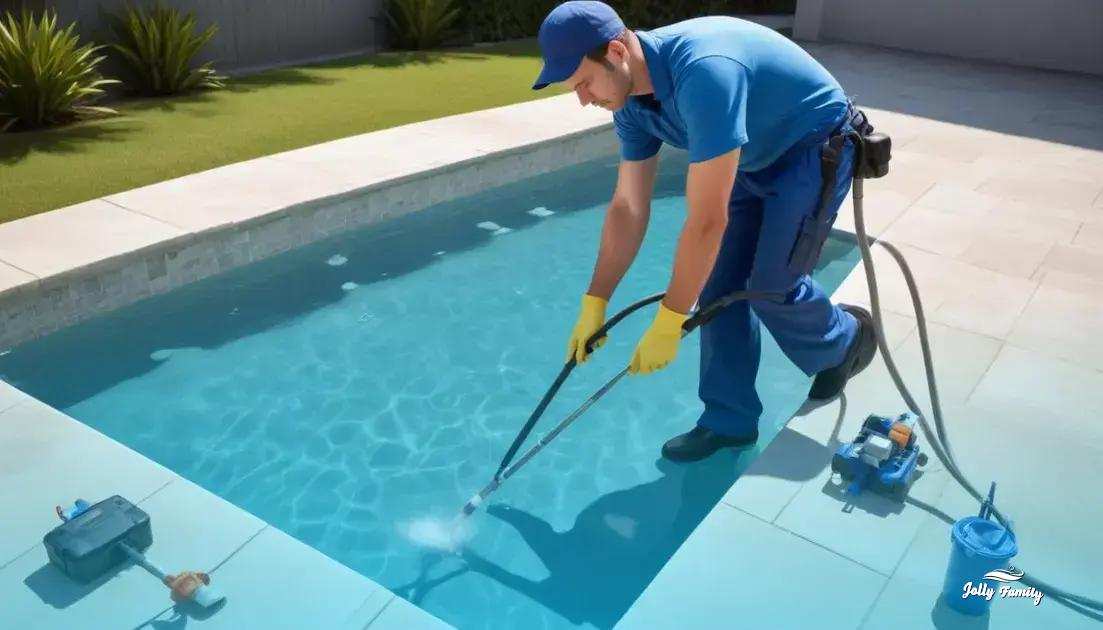
- Brush surfaces and vacuum. Brush walls, steps, and corners to free algae and particles. Vacuum to waste if your filter is overloaded or if you used a flocculant.
- Shock the pool if sanitizer is low or algae is present. Add a pool shock product per the label. For cloudy water with algae, brush then shock. Run the pump continuously after shocking.
When to use clarifier or flocculant
A clarifier helps the filter gather tiny particles so they are removed by normal filtration. Use clarifier when the filter is working well but the water stays hazy. A flocculant bonds particles into larger clumps that sink so you can vacuum them out. Use flocculant if clarifier and normal filtration don’t clear the water. Follow product directions carefully and vacuum to waste after flocculant treatment.
Run the filter continuously for at least 24 hours after treatment and check the pressure gauge. If pressure rises, clean the filter. Retest chemical levels after 24–48 hours and repeat steps only as needed.
Quick checks to speed clearing: reduce bather load, cover the pool if rain is forecast, and avoid adding too many different chemicals at once. Keep short notes of tests and actions so you can spot recurring problems.
Safety tips: wear gloves and eye protection when handling chemicals, keep children and pets away from treated water until levels are safe, and always store pool chemicals in a cool, dry place per the label.
When to call a professional: Jolly Family’s approach in Kissimmee
Call a professional when cloudiness does not clear after 48–72 hours of treatment or when you see persistent problems like large algae blooms, dark stains, strong odors, or repeated chemical swings.
- Persistent cloudiness despite proper pH and chlorine.
- Large or fast-growing algae that brushing and shock don’t fix.
- Visible stains on plaster or tile that won’t respond to normal cleaning.
- Equipment failure such as low pump flow, odd noises, or a filter that won’t clean.
- Suspected leaks or sudden unexplained water loss.
What a professional will do on site
- Full inspection: pump, filter, heater, skimmers, and visible plumbing.
- Accurate diagnostics: lab-grade water testing, pressure checks, and flow measurement.
- Clear treatment plan: recommended steps, timeline, and cost estimate.
- Targeted treatment: shock, algaecide, clarifier/floc, stain remover, or equipment repair.
- Follow-up and verification: retest water and confirm clarity before closing the job.
Jolly Family’s approach in Kissimmee focuses on local conditions: warm weather, heavy rain events, and high bather use. Technicians use regional experience to pick the right chemicals and timing. Expect fast response, licensed technicians, transparent pricing, and clear instructions for keeping the pool stable after service.
Typical timelines and costs vary by problem. Minor chemical rebalancing or filter cleaning can clear water in 24–48 hours. Major algae treatments, stain removal, or equipment repairs may take several days and cost more. Ask for an itemized quote and a follow-up visit to confirm results.
Safety and guarantees: professionals follow label directions, wear protection, and advise when it’s safe to swim again. Many services include a short warranty or a follow-up check to make sure the issue stays solved.
Preventive maintenance and routine tips for crystal-clear water
Test pool water at least twice a week with fresh strips or a liquid kit. Record pH, free chlorine, and alkalinity each time.
- Target ranges: pH 7.2–7.6, free chlorine 1–3 ppm, alkalinity 80–120 ppm.
- Daily: skim surface, empty skimmer and pump baskets, and check water return flow.
- Weekly: brush walls and steps, vacuum settled debris, and shock after heavy use or storms.
- Monthly: inspect pump, hoses, and seals; check calcium hardness and cyanuric acid levels.
Filtration and circulation tips
Aim to run the pump long enough for one full turnover of the pool water each day. In hot weather or with heavy bather load, increase run time. Backwash sand/DE filters when pressure rises 8–10 psi above baseline. Clean or replace cartridges per the maker’s schedule.
Use a clarifier to help the filter collect fine particles when filtration is working well. Use a flocculant only when needed and vacuum to waste after particles settle.
- Keep debris low: trim overhanging branches and use a cover during storms or long idle periods.
- Manage bather load: rinse swimmers and limit heavy use after chemical treatment.
- Store chemicals safely: cool, dry place in original containers, away from children and pets.
- Keep a maintenance log: note test results, chemicals added, filter cleanings, and unusual events to spot patterns quickly.
Calibrate or replace your test kit each season and schedule a professional inspection if equipment shows wear or problems repeat.
Simple wrap-up to keep water clear
Follow a quick checklist: test water, clean baskets, run the filter, and brush surfaces. Small steps often clear cloudiness within 48 hours.
Keep chemistry balanced: aim for pH 7.2–7.6 and free chlorine 1–3 ppm. Write down readings and actions so you can spot patterns.
Call a pro if cloudiness stays after 48–72 hours, if algae returns, or if equipment fails. A technician can run lab tests and fix filters or leaks.
With steady checks and simple fixes, most pools stay clear. Act early and the problem is easier and cheaper to fix.
FAQ – Cloudy pool water problem solution
What are the most common causes of cloudy pool water?
Cloudiness usually comes from algae growth, chemical imbalance (pH, low chlorine, high TDS), or poor filtration and circulation. Recent heavy rain or heavy bather load can trigger it too.
How long does it take to clear cloudy water?
Minor cloudiness can clear in 24–48 hours with proper testing, balancing, brushing, and continuous filtration. If it still clouds after 48–72 hours, further steps or pro help may be needed.
Is it safe to swim in cloudy pool water?
Not until you verify sanitizer and pH levels. Cloudy water can hide bacteria and contaminants. Wait until free chlorine and pH are in the safe range and the pool is visibly clear.
When should I use a clarifier vs a flocculant?
Use a clarifier when the filter works but tiny particles stay hazy—clarifier helps the filter collect them. Use a flocculant when particles are very fine and you need them to clump and sink so you can vacuum to waste.
How often should I test and maintain my pool to prevent cloudiness?
Test water at least twice a week. Daily: skim and empty baskets. Weekly: brush and vacuum. Monthly: inspect pump, filter, and check hardness and CYA levels.
When is it time to call a professional?
Call a pro if cloudiness persists after 48–72 hours, if large algae blooms recur, if equipment fails (low flow, odd noises), or if you suspect leaks or stubborn stains.