
pool water not safe for swimming: keep people out, test free chlorine and pH immediately, run filtration, shock if chlorine is low or chloramines are present, brush and vacuum to remove algae, and call a local professional if clarity or equipment problems persist to prevent illness and restore safe levels.
pool water not safe for swimming; notice cloudy color, unusual smell, or staining? You can take simple, quick checks and short-term fixes — or call a trusted team. With Jolly Family serving Kissimmee, a reliable family-owned company, you get hands-on help when the party or rental depends on safe water.
Early signs your pool water isn’t safe to swim
Look for clear, simple signs that the water may be unsafe to swim. These clues are easy to spot and should prompt a quick check before anyone gets in.
Visual signs
Cloudy or murky water reduces visibility and hides hazards. A green or brown tint often means algae. Dark streaks or fuzzy patches on walls and steps are usually algae colonies. Floating debris, scum lines on the surface, or stains on the pool floor also signal poor water quality.
Smell and physical reactions
A strong chemical odor or a sharp chlorine smell can mean the chemistry is off, not that there is extra clean chlorine. If swimmers report eye or skin irritation, coughing, or a metallic taste, avoid swimming until you test the water. Slimy surfaces and excessive foaming at the waterline are further red flags.
Quick checks you can do now
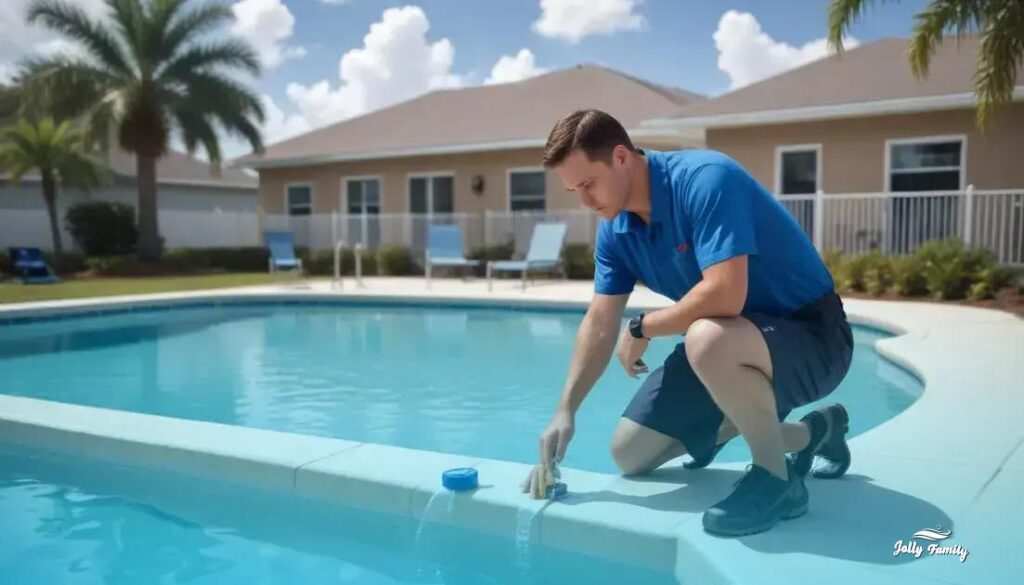
Use a test strip or a digital meter to check free chlorine and pH. If chlorine is very low or pH is outside 7.2–7.8, the pool may be unsafe. Look for poor circulation: dead spots, slow-return jets, or a clogged skimmer. If the filter is dirty or the pump isn’t running well, water quality drops fast.
When in doubt, keep people out until tests and simple fixes are done. Even small visible problems can hide bacteria or harmful algae. Regular checks and swift action reduce health risks and restore clear water faster.
Immediate safety steps: who swims, who stays out
Keep everyone out of the water until you verify the pool is safe. If anyone has red eyes, skin irritation, vomiting, or diarrhea, do not let them swim and seek medical advice if needed.
Who should stay out
Children under 5, older adults, pregnant people, and anyone with a weakened immune system should stay out until tests show safe levels. People with open wounds or recent illness should also avoid the pool.
Quick steps to take now
- Secure the area: put a safety cone or rope across the pool and keep nonessential people away.
- Check visibility and smell: if the water is cloudy, greenish, foamy, or smells unusually strong, do not let anyone in.
- Test the water immediately with test strips or a digital meter: check free chlorine and pH first.
- If chlorine is low or pH is outside 7.2–7.8, keep people out and follow treatment steps or contact a professional.
- Run the pump and filter continuously while you address the problem to improve circulation and filtration.
Practical precautions while you fix it
Keep towels and flotation devices ready but do not put them in the water. Supervise children closely at the pool edge. Consider having adults wear life jackets if brief, controlled entries are needed for testing equipment.
When limited swimming may be allowed
Only consider allowing healthy, unimpaired adults to swim for short tests when tests show correct chlorine and pH and the water clears. Avoid group or recreational swimming until clarity and chemistry are stable.
How to test and restore water balance: practical checks
Start by testing the water to find the exact problem. Accurate results guide the right fixes and keep you from over-treating.
Essential tests to run
- Free chlorine: should be about 1–3 ppm for most residential pools. Low levels allow bacteria and algae to grow.
- Combined chlorine (chloramines): keep under 0.2 ppm. Higher levels cause strong odors and eye irritation.
- pH: ideal range is 7.2–7.8. Low pH causes corrosion; high pH reduces sanitizer effectiveness.
- Total alkalinity: aim for 80–120 ppm to stabilize pH swings.
- Calcium hardness: typically 200–400 ppm; low hardness can etch surfaces, high hardness causes scaling.
- Cyanuric acid (stabilizer): for outdoor pools, keep around 30–50 ppm when using stabilized chlorine.
- Visibility and temperature: note cloudiness, color, and water temperature—these affect chemical behavior.
Step-by-step practical fixes
- Adjust pH first. To lower pH, add muriatic acid or sodium bisulfate in small doses and retest. To raise pH, add soda ash carefully.
- Fix total alkalinity if needed. Use baking soda (sodium bicarbonate) to raise alkalinity; lower it slowly with acid while monitoring pH.
- Restore sanitizer levels. If free chlorine is low, dose with chlorine shock (follow product instructions). For chloramine problems, perform a shock to reach breakpoint chlorination.
- Address algae and cloudiness. Brush surfaces, vacuum debris, and add an appropriate algaecide if algae are present. Continue shocking if needed.
- Clean and run filtration. Backwash sand/DE filters or clean cartridge elements. Run the pump 24–48 hours after treatment to circulate chemicals and clear particles.
- Retest frequently. Check chlorine and pH a few hours after treatment and again the next day. Ensure levels return to the safe ranges before resuming normal use.
Practical tips and safety
Always follow chemical label directions and wear basic protection like gloves and eye protection. Add chemicals to water, not water to chemicals. Keep people out of the pool while treating and until tests confirm safety.
When to call a professional
Seek help if cloudiness or algae won’t clear, if the pump or filter is failing, or if test results are inconsistent. A pro can diagnose hidden causes like poor circulation or broken equipment.
Routine maintenance to prevent unsafe water in Kissimmee
Keep your Kissimmee pool healthy with a simple, repeatable routine. Regular care stops small issues from becoming hazards and keeps water clear.
Weekly checklist
- Test water weekly for free chlorine, pH, and total alkalinity. Aim for chlorine 1–3 ppm and pH 7.2–7.8.
- Clean skimmer and pump baskets and remove surface debris to keep circulation strong.
- Brush walls and steps to prevent algae buildup and improve filtration.
- Run the pump at least 8–12 hours daily; increase runtime during hot weather or heavy use.
Monthly tasks
- Inspect and clean filters: backwash sand/DE systems or rinse cartridge elements as recommended.
- Test calcium hardness and cyanuric acid (stabilizer) and adjust to manufacturer ranges.
- Check return jets, pool lights, and visible plumbing for leaks or poor flow.
After rain or heavy use
Storms and parties introduce dirt and dilute chemicals. Test and rebalance right away, run filtration nonstop until water clears, and consider a quick shock if cloudiness or algae appear.
Preventive habits
Keep swimmers showered before entering, trim nearby plants to reduce debris, and use a routine algaecide in warm months. Consistent sanitizer and good circulation are the best defenses.
Record keeping and safety
Log test results and treatments so patterns are easy to spot. Store chemicals in a cool, dry place and always follow label instructions. Contact a pool pro if problems persist or equipment seems faulty.
How Jolly Family helps: reliable local pool cleaning and care
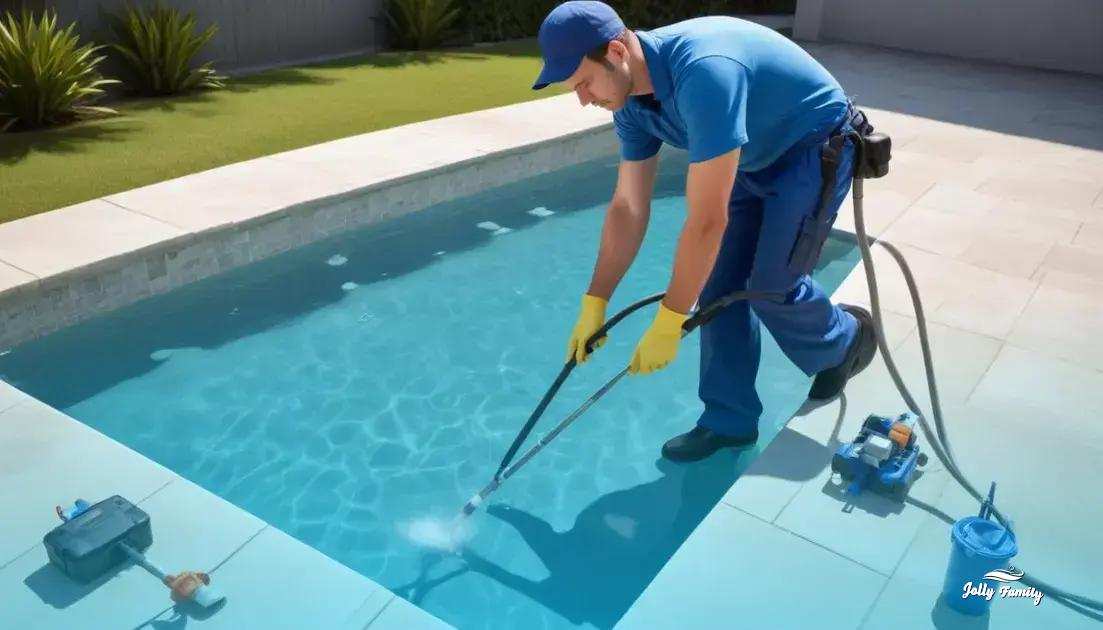
When pool water is unsafe, Jolly Family responds fast to test, treat, and restore safe levels. Technicians bring portable test kits and basic repair tools to fix most issues the same day.
Core services
- Water testing and balancing: on-site free chlorine, pH, alkalinity, and stabilizer checks with immediate dosing.
- Cleaning and algae control: brushing, vacuuming, skimmer and pump basket clearing, plus targeted algaecide when needed.
- Filter and equipment service: backwash or cartridge clean, pump checks, and small repairs to restore proper circulation.
- Routine plans: scheduled visits that keep chemicals stable and reduce the chance of unsafe water.
What to expect on a visit
A technician arrives with a clear checklist, tests the water, explains results in plain language, and performs the agreed fixes. Safety steps like keeping swimmers out and rerunning filtration are done immediately.
Benefits of hiring local pros
Local teams know climate patterns and common pool problems in the area. Jolly Family saves you time, prevents repeat issues, and leaves a short report so you can track progress.
When to call them
Contact Jolly Family if water stays cloudy after basic treatment, algae returns quickly, tests are inconsistent, or the pump/filter seems weak. Fast action reduces health risk and repair costs.
Take quick steps to protect swimmers
Pool water not safe for swimming; if you spot cloudiness, odd smells, or irritation, keep people out and test the water right away. Small fixes often restore safety fast.
Keep a simple routine: test weekly, run the pump daily, clean skimmers, and brush walls. These habits prevent most problems and make pools safer for everyone.
If water won’t clear or equipment looks faulty, call a local pro to diagnose and repair. Fast action saves time, money, and health risks.
FAQ – Pool water safety and basic maintenance
How can I tell if pool water is unsafe to swim in?
Look for cloudy or green water, strong chemical odors, visible scum or foam, and reports of eye or skin irritation. Those signs mean test the water before anyone swims.
If the pool smells strongly of chlorine, is it safe to swim?
Not always. A sharp chlorine smell can mean chloramines (combined chlorine) or poor chemistry. Test free chlorine and pH and avoid swimming until levels are correct.
What should I do immediately when I find unsafe water?
Keep everyone out, secure the area, test free chlorine and pH, run the pump and filter, and perform a proper shock or dosing as needed.
How often should I test and run my pool equipment?
Test water weekly for chlorine and pH, check alkalinity monthly, and run the pump 8–12 hours daily (more in hot weather or after heavy use).
When is it time to call a pool professional like Jolly Family?
Call a pro if cloudiness or algae won’t clear, tests are inconsistent, the pump or filter is not working properly, or you need a same-day safety fix.
Are pool chemicals safe to handle at home?
They can be if you follow label instructions: wear gloves and eye protection, add chemicals to water (not water to chemicals), store them dry and cool, and never mix different products.