
pool water chemistry issues Florida usually stem from sun-driven chlorine loss, high temperatures, heavy rain/runoff, bather load and poor circulation; test free chlorine, pH, total alkalinity and cyanuric acid regularly, correct one parameter at a time, shock when combined chlorine is high, and call a pro for persistent problems.
pool water chemistry issues Florida can turn a backyard oasis into a headache fast. Ever wondered why pools go green after a storm or why swimmers get itchy eyes? I’ll show simple tests you can do, quick fixes that often work, and when Jolly Family should step in to protect your water.
Common causes of pool water chemistry issues in Florida
Common causes of pool water chemistry issues in Florida often come from heat, sun and frequent storms that overwhelm sanitizer levels and filtration.
Sunlight and high temperature
Strong Florida sun breaks down free chlorine fast, so pools lose sanitizing power quicker than in cooler climates. Warm water also speeds algae growth and chemical reactions.
Rain and runoff
Heavy rain dilutes chemicals and can introduce organic debris, dirt and metals from roofs or yards. After storms, expect shifts in pH and chlorine demand.
High bather load and sunscreen
More swimmers add sweat, oils and lotions that consume chlorine and form chloramines, causing odors and eye irritation. Regular testing after heavy use helps prevent problems.
Poor circulation and dirty filters
Stagnant areas and clogged filters let particles and algae build up. Even with correct chemicals, poor flow reduces distribution of sanitizer and clarity.
Imbalanced pH, alkalinity and stabilizer
pH out of range reduces chlorine effectiveness; high total alkalinity makes pH hard to control. Incorrect cyanuric acid (stabilizer) levels can over-stabilize or leave chlorine vulnerable to sunlight.
Low or incorrect chlorine dosing
Using too little chlorine, or relying on old tablets, lets bacteria and algae grow. Test free chlorine and combined chlorine to spot sanitizer failure early.
Calcium and metals
Hard water or metal traces from well water and corrosion cause scale, cloudy water or staining. Treat with sequestering agents or adjust calcium hardness when needed.
Quick checks: test pH, free chlorine, alkalinity, cyanuric acid and calcium hardness after storms or heavy use. Keep a simple log and address one imbalance at a time to avoid overcorrection.
How to test your pool quickly: what to measure and why
Take a sample from about elbow depth, away from returns. Use a clean container and avoid touching the rim. This gives a true reading of pool water, not surface water.
Key parameters and why they matter
- Free chlorine: Aim for 1–3 ppm in residential pools. It kills bacteria and prevents algae; low levels let contaminants grow.
- pH: Keep between 7.2–7.6. pH outside this range reduces chlorine effectiveness and can irritate skin and eyes.
- Total alkalinity: Target 80–120 ppm. It buffers pH and helps keep readings stable.
- Cyanuric acid (stabilizer): In sunny Florida, keep 30–50 ppm for pools using outdoor chlorine so sunlight doesn’t destroy sanitizer too fast.
- Combined chlorine: Should be under 0.5 ppm. Higher levels mean chloramines and need shock treatment.
- Calcium hardness: Maintain 150–400 ppm depending on plaster or vinyl surfaces to prevent scaling or corrosion.
Quick test methods
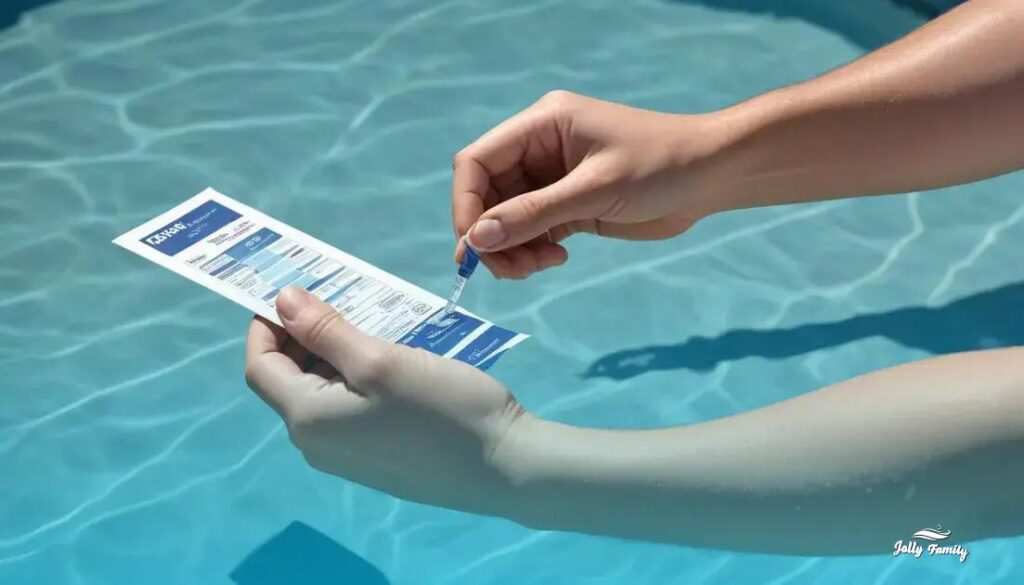
For a fast check, use test strips for free chlorine, pH and alkalinity. For accuracy, use a liquid drop kit or a digital meter for pH and chlorine. Test CYA and calcium weekly or after heavy rain.
Read strips at the time the manufacturer specifies. With a digital meter, rinse the probe, calibrate if needed, and dip at elbow depth for stable readings.
Fast fixes based on results
- Low free chlorine: Shock the pool or add liquid chlorine. Recheck in a few hours.
- pH high: Add pH reducer (muriatic acid or sodium bisulfate) in small doses and retest after circulation.
- pH low: Use soda ash to raise pH slowly and avoid overshooting.
- High alkalinity: Partially lower with acid and then adjust pH; do changes in steps.
- High CYA: Partially drain and refill the pool to dilute stabilizer if it’s over 80 ppm.
After storms or heavy bather load, test free chlorine and pH first. If combined chlorine is high or water is cloudy, shock and run the filter continuously.
Keep a simple log of readings and actions. Test at least twice a week in hot months and after large parties to catch issues early.
Practical chemical fixes for pH, chlorine, alkalinity and stabilizer
Start by testing water and note current levels for pH, free chlorine, total alkalinity and cyanuric acid. Change one parameter at a time and always retest after circulation.
Adjusting pH safely
If pH is above 7.6, add a pH reducer (muriatic acid or sodium bisulfate) in small doses. If pH is below 7.2, add soda ash slowly. Add chemicals around the deep end with the pump running and wait 4–6 hours before retesting.
Restoring chlorine levels
For low free chlorine, use liquid chlorine or granular shock to bring levels into the 1–3 ppm range. If combined chlorine (chloramines) is high or there’s strong odor, perform a shock treatment following product directions and run the filter continuously until readings stabilize.
Balancing total alkalinity
Raise alkalinity with sodium bicarbonate when it’s below 80 ppm; add in increments and retest. To lower high alkalinity, add acid in small amounts, then adjust pH as needed. Stable alkalinity helps keep pH from swinging.
Managing cyanuric acid (stabilizer)
Keep cyanuric acid (CYA) near 30–50 ppm for outdoor chlorine pools in sunny climates. If CYA is too high (above ~80 ppm), dilute by partially draining and refilling the pool. To increase CYA, add stabilizer per label and allow 24–48 hours of mixing before retesting.
Practical tips and safety
- Always follow product labels. Wear gloves and eye protection when handling chemicals.
- Pre-dissolve granular chemicals if the label requires it, and never mix different chemicals directly.
- Make small adjustments and allow full circulation (4–24 hours) before retesting to avoid overcorrection.
- After storms or heavy use, test free chlorine and pH first, then shock if combined chlorine or cloudiness appears.
Keep a simple log of readings and actions. Address the biggest imbalance first, wait for circulation, then move to the next parameter.
Dealing with algae, cloudiness and stains: step-by-step actions
Act fast when you see algae, cloudy water or stains. Quick, clear actions stop problems from getting worse and save time.
Initial checks and safety
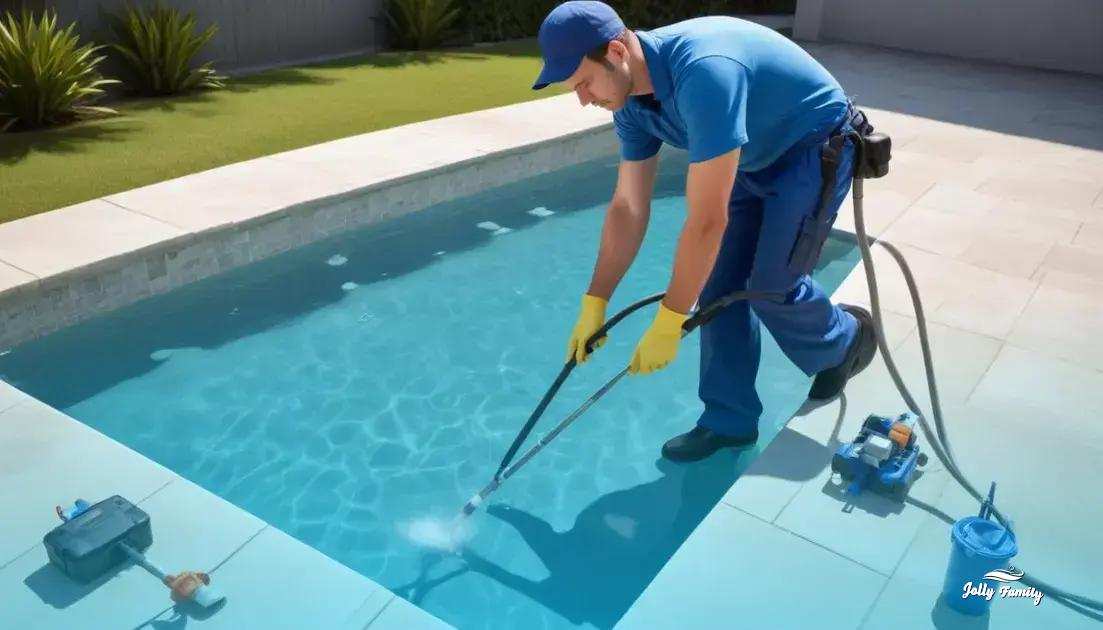
Test free chlorine, pH and alkalinity first. Wear gloves and goggles when handling chemicals. Inspect the skimmer and pump basket and clear debris to improve flow.
Step 1: remove algae
- Brush surfaces: Use a stiff brush on plaster or tile brush on tile. Break algae loose so chemicals can reach it.
- Shock the pool: Add a chlorine shock or non-chlorine shock per label. For heavy green algae, use a high-dose chlorine shock and repeat if needed.
- Run the filter: Keep the pump running 24 hours after treatment and vacuum or backwash as particles clear.
Step 2: clear cloudy water
- Filter maintenance: Clean or backwash filters. Dirty filters can’t clear fine particles.
- Use clarifier vs flocculant: Clarifier helps the filter catch tiny particles. Flocculant clumps particles to settle them for vacuuming to waste—use when water is very cloudy.
- Repeat testing: Test and adjust chlorine and pH while the filter runs to speed clearing.
Step 3: treat stains
- Identify the stain: Rust or brown (metals), dark black (cyanobacteria), orange/brown (iron or manganese), or tannin stains from leaves.
- Metal stains: Add a metal sequestrant and filter, or spot-treat with a metal remover. In severe cases, partially drain and refill.
- Organic/tannin stains: Use oxidizing shock and scrub. Repeat treatments and run the filter until the stain fades.
- Deep or old stains: Consider professional stain remover or acid-based spot treatment handled by a pro.
Practical tips to follow
- Address the biggest issue first (usually sanitizer or circulation).
- Make changes one at a time and wait 4–24 hours before retesting.
- Keep pH 7.2–7.6 for best sanitizer action.
- Keep a log of tests and actions to track progress.
When to call a professional — trusted local help from Jolly Family
Call a professional when simple home fixes fail or when equipment, safety, or persistent problems are involved.
Clear signs to call a pro
- Recurring imbalances: You correct chemicals but levels revert within days.
- Persistent algae or stains: Algae returns after shock, or stains don’t lift with standard treatment.
- Visible leaks or rapid water loss: Water level drops several inches a day or you see wet areas near equipment.
- Equipment failure: Pump or filter noises, loss of flow, heater or automation faults.
- Unknown metals or cloudiness: Dark staining or cloudy water after refills suggests metals or source-water issues.
- Electrical or structural concerns: Exposed wiring, cracked shell, or tile issues that could be unsafe.
What a professional usually does
- Perform full water analysis and run advanced tests for metals and CYA.
- Inspect pump, filter, heater and automation; test system pressure and flow.
- Locate leaks with specialized gear and recommend repair or injection fixes.
- Provide targeted treatments: metal sequestrants, acid washing, stain removers, or controlled drain-and-refill.
- Replace or repair equipment: motor, cartridge, sand or DE media, valves or automation components.
When safety or scale requires pros
Large chemical dosing, acid washing, major drain-and-refill, electrical repairs and structural fixes should be handled by trained technicians. These jobs need tools and permits that most homeowners don’t have.
Choosing a trusted local service
- Ask for license, insurance and local references.
- Request a written diagnosis and cost estimate before work begins.
- Look for providers that offer on-site water analysis and clear treatment plans.
- Check for service guarantees or follow-up testing after repairs.
- Keep records of tests and repairs to track recurring issues.
Local companies like Jolly Family often provide on-site water checks, clear estimates and scheduled service. If a problem stays after your attempts, call a pro to avoid wasted time and extra costs.
Final tips to keep your Florida pool healthy
Test your water regularly and keep a simple log of chlorine, pH, alkalinity and stabilizer. Small, steady steps beat big corrections and help water stay clear.
After storms or heavy use, test first, clean filters, and run the pump until levels stabilize. Shock the pool if combined chlorine is high or water is cloudy.
Handle chemicals with care, make changes one at a time, and wait for full circulation before retesting. This prevents overcorrection and keeps swimmers safe.
If problems return, equipment fails, or you see leaks and stubborn stains, call a trusted pro for a full diagnosis and repair. Getting help early often saves time and money.
FAQ – pool water chemistry issues Florida
How often should I test my pool water in Florida?
Test at least twice a week during hot months and always after storms or heavy use to catch issues early.
What should I check first after heavy rain?
Check free chlorine and pH first, clean skimmer and pump baskets, then run the filter and adjust chemicals as needed.
How can I get rid of green algae fast?
Brush the surfaces, apply a high-dose chlorine shock, run the filter 24 hours, and vacuum or backwash as the algae clears.
When should I shock my pool and which product is best?
Shock when combined chlorine is over 0.5 ppm, after heavy bather load, or if water is cloudy; use chlorine shock for algae and non-chlorine shock for routine oxidation.
What do I do if cyanuric acid (stabilizer) is too high?
Partially drain and refill the pool to dilute CYA; test again and repeat if levels remain above the recommended range.
When is it time to call a professional like Jolly Family?
Call a pro for recurring chemical imbalances, stubborn stains, persistent algae, leaks, equipment failures, or any electrical or structural concerns.