
Pool water clarity problems happen when filtration, circulation, or chemical balance fail; causes include clogged filters, low free chlorine, high pH or stabilizer, algae blooms, metals, and combined chlorine, so diagnose with visual checks and tests for free chlorine, pH, alkalinity, cyanuric acid, and metals, then clean and correct chemicals.
pool water clarity problems can turn a relaxing backyard into a headache—cloudy or green water, staining, or gritty floors. Want quick checks and safe fixes, plus when Jolly Family in Kissimmee should step in to keep your pool reliable? Read on and learn practical steps you can try today.
Common causes of cloudy, green, or hazy pool water
Many things can make pool water cloudy, green, or hazy. Spotting the cause helps you choose the right fix fast and avoid wasting chemicals.
Poor filtration and circulation
When the pump or filter is clogged or runs too little, tiny particles stay suspended and cloud the water. Check skimmer and pump baskets, clean or backwash the filter, and ensure the pump runs at least 8–12 hours daily. Restricted returns, closed valves, or air in the pump can also reduce flow and clarity.
Chemical imbalance
Low free chlorine, high pH, or unstable alkalinity lets contaminants multiply and reduces sanitizer strength. Test for free chlorine, pH, and alkalinity with a reliable kit. Adjust pH (7.2–7.6) and boost chlorine or shock the pool when needed. Very high cyanuric acid (stabilizer) can lock up chlorine and cause persistent cloudiness.
Algae growth
Green or hazy water often means algae are present. You may see green patches, slippery walls, or a faint musty smell. Brush surfaces, run filtration continuously, and apply an algaecide or chlorine shock. Early action avoids heavy blooms that require large chemical doses and long filter runs.
Combined chlorine and organic contaminants
Chloramines form when chlorine reacts with sweat, urine, sunscreen, and leaves, causing cloudy water and a chlorinated smell. Heavy bather load or poor circulation speeds this up. Use breakpoint chlorination (shock) or an oxidizer to remove combined chlorine and improve clarity.
Metals, debris, and environmental factors
Metals like iron or copper can tint water, while pollen, dust, or runoff add fine particles that cloud it. After storms, expect extra debris. Remove large debris, use a metal sequestrant if stains or discoloration appear, and consider a clarifier or flocculant for very fine particles that filters miss.
Use simple tests and visible clues: clear water will show the pool floor and steps sharply, while cloudy water hides detail. If basic steps don’t clear the water in 24–48 hours, the issue may need deeper filtration work or professional diagnosis.
How to diagnose clarity issues: tests and signs to check
Begin by observing the water and equipment closely. Look for color changes, loss of visibility, odors, or visible algae before testing.
Basic visual checks
- Visibility: can you clearly see pool steps and the floor? Poor visibility is a primary sign of clarity issues.
- Color and tint: green tint suggests algae; brownish or rusty color may signal metals.
- Surface and walls: streaks, slimy patches, or film on the surface point to algae or organic buildup.
- Smell: a strong chlorine odor can mean combined chlorine (chloramines), not excess free chlorine.
Tests to run
Use a reliable test kit or digital reader and record every value. Key tests include:
- Free chlorine: ideal 1–3 ppm. Low levels let contaminants grow.
- Combined chlorine (chloramines): should be <0.2 ppm. Higher levels cause cloudiness and odor; requires shock.
- pH: target 7.2–7.6. High pH reduces sanitizer effectiveness and can cloud water.
- Total alkalinity: aim 80–120 ppm. Very low or high alkalinity destabilizes pH and clarity.
- Cyanuric acid (stabilizer): ideal 30–50 ppm for outdoor pools. Too high binds chlorine and lowers its activity.
- Metals (iron/copper): presence can tint water; test if discoloration appears.
Equipment and flow checks
Clear water depends on proper circulation and filtration. Inspect these items:
- Skimmer and pump baskets: empty debris to restore flow.
- Filter pressure gauge: a steady high pressure above the normal range may mean the filter needs backwashing or cleaning.
- Pump run time: aim for 8–12 hours daily; more when fixing clarity problems.
- Return jets and valves: ensure returns are open and aimed to promote circulation; trapped air in the pump reduces flow.
How to collect and document results
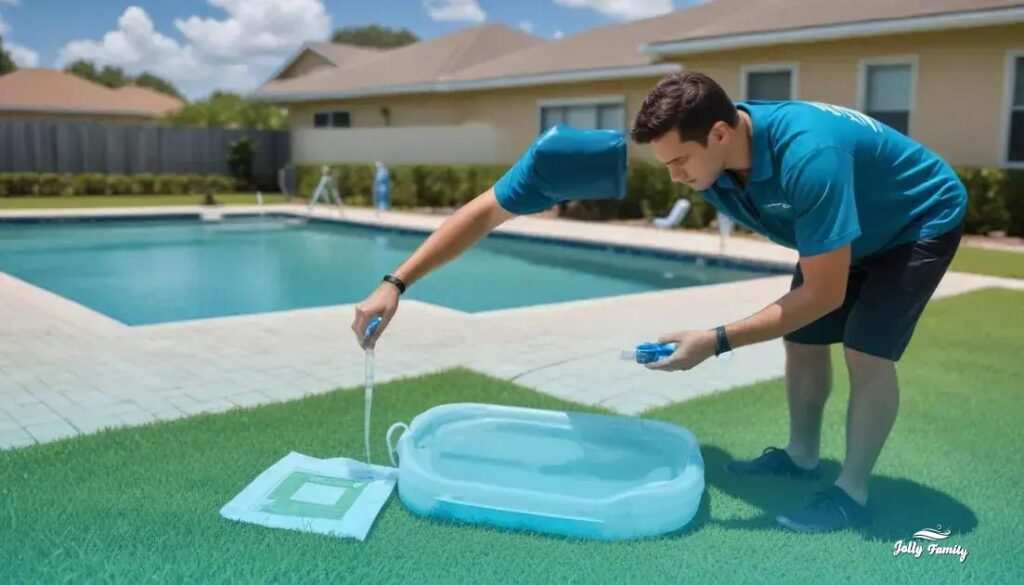
Take a sample about 12 inches below the surface from mid-pool and test immediately. Record values and the time of day. If results are unclear, repeat tests at different spots and compare. Consider taking a sample to a local pool store for a professional analysis.
Interpreting results and next steps
If tests show low free chlorine or high combined chlorine, perform a shock (breakpoint chlorination) and run the filter continuously until the water clears. Correct pH and alkalinity first if they are out of range—this restores sanitizer effectiveness. For metal stains, add a sequestrant and run filtration; for persistent turbidity, use a clarifier or flocculant and clean the filter. If clarity does not improve after 24–48 hours of proper testing and filtration, professional diagnosis may be needed.
Quick fixes you can try today: skimming, filtration, chemical balance
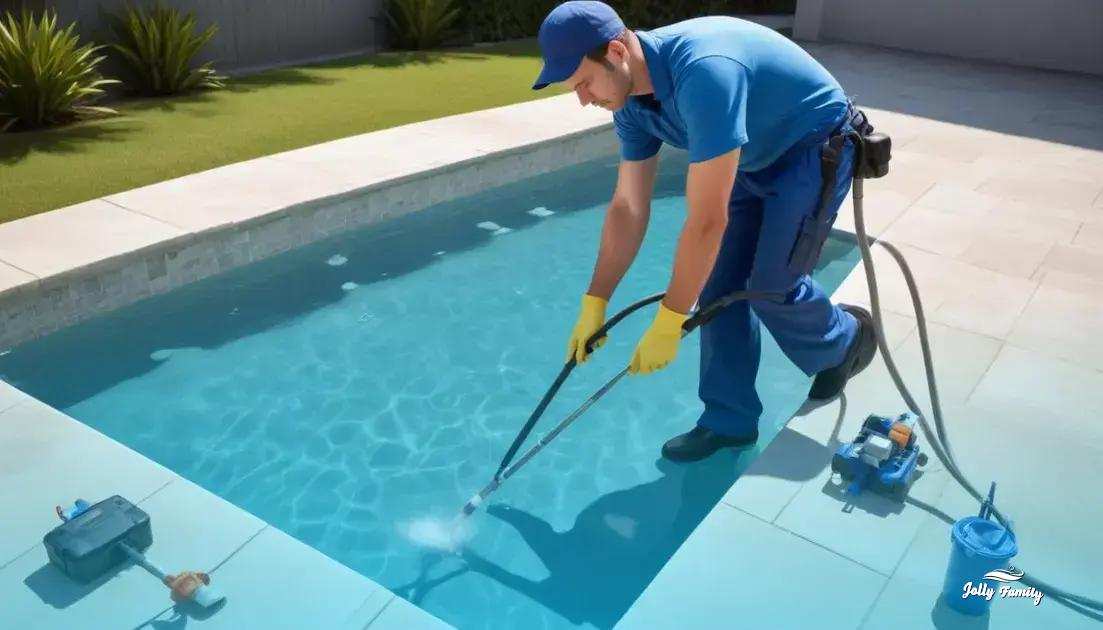
Remove visible debris first: use a leaf skimmer to scoop leaves and bugs, then empty the skimmer and pump baskets. Less debris lets the filter work faster.
Filtration quick actions
Run the pump continuously for at least 8–12 hours after any cleaning. Check the filter pressure gauge and backwash or clean the filter when pressure is higher than normal. For cartridge filters, remove and rinse cartridges or soak them if very dirty.
Aim the return jets to improve circulation and open all valves. If the pump is noisy or cavitating, check for air leaks at the suction side and tighten lids or clamps.
Chemical balance fixes
Test water before adding chemicals. Adjust pH to 7.2–7.6 first, then correct alkalinity if needed (usually 80–120 ppm). Low pH or wrong alkalinity makes sanitizers less effective.
If free chlorine is low, boost it to the normal range (1–3 ppm) and consider a shock treatment if combined chlorine is high or water smells. Follow product directions and aim to reach breakpoint chlorination when treating chloramines.
Use clarifiers and flocculants correctly
For light cloudiness, add a clarifier to help the filter collect fine particles. For heavy turbidity, a flocculant can clump particles so you can vacuum to waste. Always follow label doses and run filtration continuously after treatment.
Safety and testing
Wear gloves and eye protection when handling chemicals. Never mix products in the same container and add chemicals to water, not water to chemicals. Test water several hours after treatment and again the next day before swimming.
If visible clarity does not improve after 24–48 hours of skimming, filtration, and proper chemical dosing, repeat tests and consider professional help for deeper filtration or metal removal.
Preventive maintenance plan to keep water clear year-round
A steady maintenance routine prevents clarity problems and keeps your pool ready to swim. Small weekly steps cut down big fixes.
Weekly checklist
- Test water for free chlorine, pH, and alkalinity. Adjust as needed to hit normal ranges.
- Skim the surface and empty skimmer and pump baskets to keep filtration efficient.
- Brush walls and steps, then vacuum loose debris to prevent organic buildup.
- Run the pump at least 8–12 hours daily; increase runtime after heavy use or treatments.
Monthly tasks
- Backwash or clean the filter when pressure rises above the normal range, or clean cartridges thoroughly.
- Inspect pump, hoses, and seals for leaks or air entry that reduce flow.
- Check cyanuric acid and metal levels; add sequestrant for metals if discoloration appears.
Seasonal and event-based care
- Before high-use periods, shock the pool and confirm sanitizer levels are correct.
- After storms or heavy pollen, remove debris and run filtration continuously until clear.
- For winter or long idle periods, follow proper winterizing steps to protect equipment and water balance.
Record keeping and simple automation
Keep a log of tests, chemical doses, and equipment checks. Use a calendar or pool app to schedule tasks and set reminders. Consider an automated timer for the pump and a salt or chemical feeder to reduce variation.
Smart habits that prevent clarity issues
- Encourage showering before swimming to cut oils and lotions that form chloramines.
- Limit heavy bather loads or add extra filtration and shock after parties.
- Address small imbalances quickly—small corrections are easier and cheaper than large treatments.
If regular maintenance still leaves the water cloudy, document your tests and photos, then consult a professional for deeper filtration checks or specialized treatment.
When to call a professional: how Jolly Family helps Kissimmee pools
Call a pro when basic fixes don’t work or the problem repeats often. Persistent cloudiness after 24–48 hours, sudden metal tint, or a heavy algae bloom are clear signs you need help.
Signs you should schedule service
- Water stays cloudy or green despite skimming, shocking, and running the filter.
- Filter pressure stays high or the filter won’t clean after backwashing or cartridge cleaning.
- Visible stains on plaster or tiles that won’t lift with normal cleaners.
- Frequent chemical swings or very high cyanuric acid that you can’t correct.
- Equipment problems: noisy pump, air in the system, visible leaks, or broken timers.
How Jolly Family helps Kissimmee pools
Jolly Family provides a full diagnostic and targeted repairs. Technicians perform a professional water analysis, including metal tests and stabilizer levels, then recommend a clear plan. Services often include deep filter cleaning or media replacement, stain sequestration, algae remediation, and pump or heater repair.
They can also set up a tailored maintenance plan with scheduled visits, precise dosing, and filter checks to prevent future issues. For urgent problems, priority service and on-site troubleshooting speed up recovery.
What to prepare before a visit
- Have recent test results or test strips available, and note when the problem started.
- Take photos of water color, stains, and the equipment area.
- Know the pump and filter model if possible, and clear access to the equipment pad.
Documenting tests and actions you already tried helps the technician diagnose faster. If clarity issues continue after professional treatment, ask for a written plan that lists follow-up steps and expected timelines.
Keeping your pool clear is simpler than it seems
Regular checks, skimming, and steady filtration fix most clarity problems fast. Test water weekly and keep pH and chlorine in the right ranges.
Act quickly on green tints or heavy cloudiness: brush surfaces, shock the pool, and run the filter continuously until water clears. Use clarifiers or flocculants only as directed and never mix chemicals.
If water stays cloudy after 24–48 hours, or you notice stains or equipment faults, call a professional for a full diagnosis and targeted repairs.
Small habits—showering before swimming, removing debris, and keeping a log of tests and treatments—prevent big problems and help your pool stay clear year-round.
FAQ – Common questions about pool water clarity problems
What usually causes cloudy or green pool water?
Common causes include poor filtration or circulation, chemical imbalance, algae growth, metals or debris, and high combined chlorine (chloramines).
How do I test my pool to diagnose clarity issues?
Use a reliable test kit or digital meter to check free chlorine, combined chlorine, pH, total alkalinity, cyanuric acid, and metals. Take a mid-pool sample about 12 inches below the surface and record results.
How long should I run the pump to help clear cloudy water?
Run the pump continuously for at least 8–12 hours daily. For treatment after shocking or heavy debris, keep it running until the water clears—often 24–48 hours.
Can I use clarifiers or flocculants to fix cloudiness?
Yes. Clarifiers help the filter trap fine particles; flocculants clump particles so you can vacuum to waste. Always follow label directions and run filtration after dosing.
When is it time to call a professional for clarity problems?
Call a pro if water stays cloudy after 24–48 hours, if you see stains or metal tinting, if the filter won’t lower pressure, or if equipment shows leaks or failure.
What simple steps prevent clarity problems long-term?
Test weekly, keep pH 7.2–7.6 and chlorine in range, skim and brush regularly, empty baskets, run the pump daily, and encourage pre-swim showers to reduce contaminants.