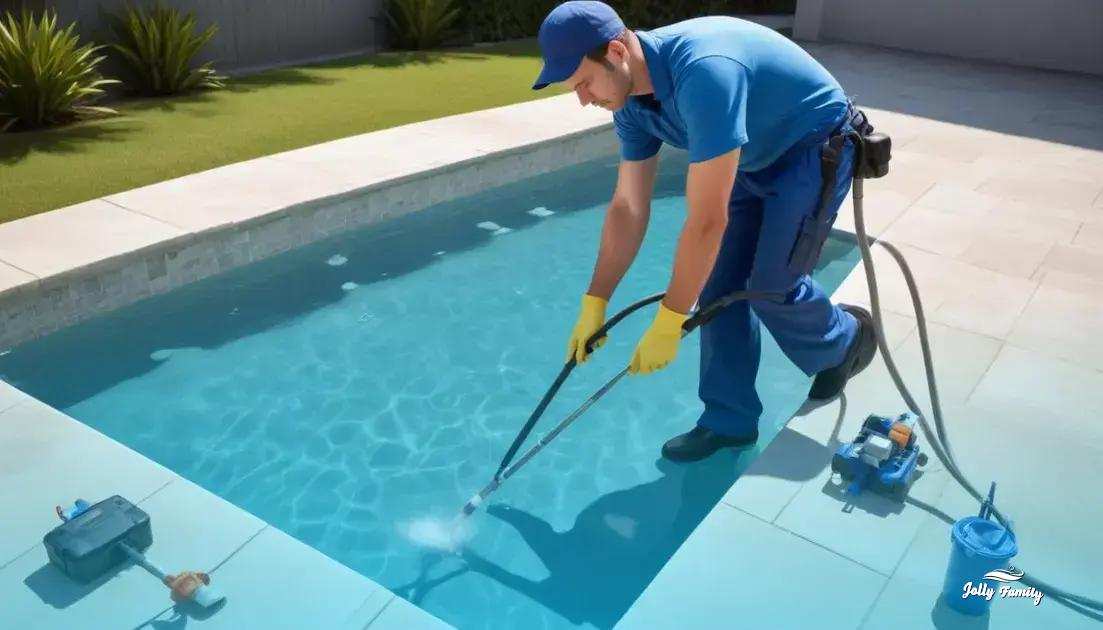

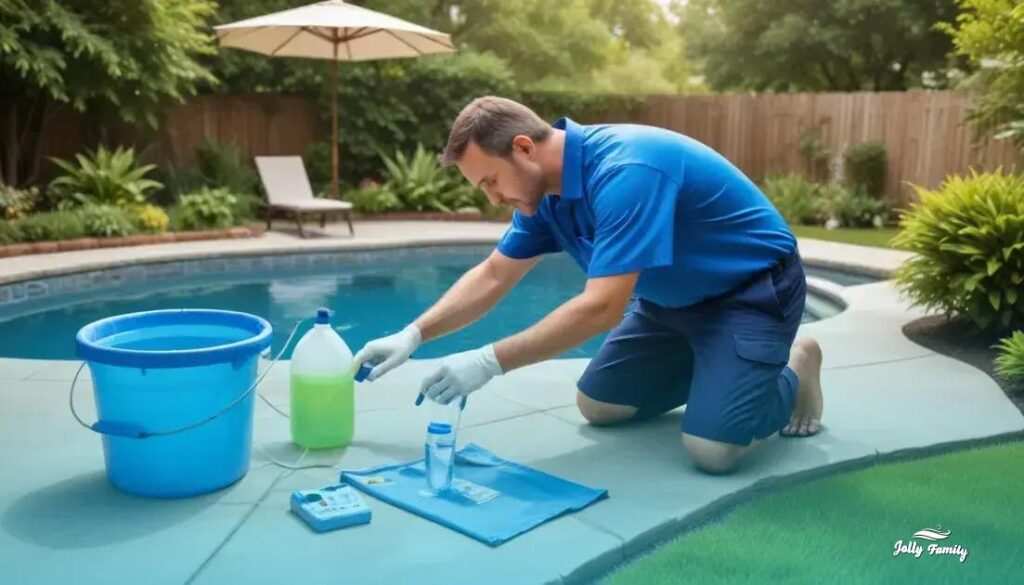
Pool services use essential chemicals such as chlorine, pH balancers, and algaecides to maintain clean and safe swimming environments by eliminating bacteria and preventing algae growth.
What chemicals do pool services use? You might be surprised by the range of substances involved in keeping your pool safe and clean. Let’s dive into the essentials behind effective pool maintenance!
Common pool chemicals explained
Understanding the common pool chemicals is essential for maintaining a safe and clean swimming environment. These chemicals help in balancing water and preventing problems such as algae growth and bacteria development.
Chlorine
Chlorine is the most widely used pool chemical. It effectively kills bacteria and other harmful organisms in the water. It can be added in various forms, including tablets, granules, and liquid.
pH Balancers
Keeping the water’s pH level in check is crucial. The ideal pH range for pool water is between 7.2 and 7.8. If the pH is too low, it can lead to skin and eye irritation. If it’s too high, it can reduce the effectiveness of chlorine.
Algaecides
Algaecides are used to prevent and treat algae growth. They are essential for keeping pools looking clear and preventing any dark spots that might appear. Regular use helps maintain a healthy pool ecosystem.
Stabilizers
Stabilizers, like cyanuric acid, protect chlorine from being broken down by sunlight. Adding stabilizers is necessary for outdoor pools to ensure that chlorine remains effective for longer periods.
Shock Treatments
Shock treatments are concentrated doses of chlorine or other sanitizers. They are used to quickly raise the chlorine level and eliminate contaminants. Shocking the pool regularly is important for maintaining water quality, particularly after heavy use or rain.
Importance of balancing water chemistry
The importance of balancing water chemistry in your pool cannot be overstated. Proper chemistry ensures a safe swimming environment and extends the life of your pool equipment.
Health and Safety
Maintaining balanced water chemistry helps prevent infections and irritations. When the pH levels are too low or too high, swimmers may experience skin rashes and eye irritation. Keeping the water balanced protects everyone who uses the pool.
Algae Prevention
A well-balanced pool is less prone to algae growth. High chlorine levels make the pool water more hostile to algae, while a balanced pH level ensures chlorine can do its job effectively. Regularly testing the water chemistry can help prevent cloudy water and unwanted algae.
Equipment Longevity
Improper water chemistry can cause corrosion and scaling on pool equipment. A balanced chemistry helps equipment function properly and last longer, saving you money on future repairs and replacements.
Clarity of Water
Clear water is essential for a pleasant swimming experience. Maintaining the right levels of chlorine, pH, and alkalinity will help keep the water sparkling clean, making your pool more inviting for everyone.
Cost Efficiency
Keeping your pool’s chemistry in check is cost-effective. It reduces the need for excessive chemicals and higher water bills due to evaporation. Balanced chemistry is a sustainable way to maintain your pool and avoid unnecessary expenses.
How to choose the right pool cleaning service
Choosing the right pool cleaning service is crucial for keeping your pool in top condition. Here are some key factors to consider when selecting a service.
Experience and Expertise
Look for a company with a solid track record and experience in pool maintenance. Experienced technicians will have the knowledge to handle a variety of pool types and problems.
Services Offered
Not all cleaning services offer the same treatments. Some might specialize in regular cleaning, while others provide repairs and chemical balancing. Be sure to select a service that offers what your pool specifically needs.
Customer Reviews
Reading customer reviews can give insight into the reliability and quality of a cleaning service. Check their website and other platforms for feedback from previous clients. This can help you gauge their reputation.
Licensing and Insurance
Ensure that the pool cleaning service has the necessary licenses and insurance. This protects you from liability in case of accidents during the cleaning process. It also indicates that they adhere to industry regulations.
Pricing Structure
Compare the pricing of different services. Look for transparency in pricing, with no hidden fees. While it can be tempting to choose the cheapest option, consider the overall value and quality of service you will receive.
Safety measures when using pool chemicals
When handling pool chemicals, safety should always come first. Taking proper precautions can protect you and your loved ones from accidents and health risks.
Read Labels Carefully
Always read the labels on chemical containers before use. They provide important information on handling, storage, and potential hazards. Following these instructions helps ensure safe usage.
Use Personal Protective Equipment
Wearing protective gear such as gloves, goggles, and masks is essential when handling pool chemicals. This equipment can prevent skin and eye irritations, as well as respiratory issues.
Store Chemicals Properly
Store pool chemicals in a cool, dry place out of reach of children and pets. Ensure that containers are tightly sealed and clearly labeled to avoid accidental exposure or misuse.
Mix Chemicals with Care
Never mix chemicals unless instructed. Certain combinations can produce hazardous reactions, which can lead to dangerous fumes or explosions. Always add chemicals to water, not the other way around, to prevent splashing.
Know Emergency Procedures
Be aware of emergency procedures in case of chemical spills or accidents. Keeping a supply of water, baking soda, and vinegar nearby can help in case of small spills. Know when to call emergency services for more serious incidents.
Tips for DIY pool maintenance
Keeping your pool in tip-top shape doesn’t always require a professional. Here are some valuable tips for DIY pool maintenance that can help you achieve a clean and inviting swimming area.
Regular Cleaning
Make sure to sweep and skim the pool regularly. Use a skimmer net to remove debris from the surface and a vacuum to clean the pool floor. This prevents build-up and keeps the water clear.
Monitor Water Levels
Check your pool’s water level frequently. Ideally, it should be at the midpoint of your skimmer. If it drops too low, it could cause your pump to run dry, leading to damage.
Test Water Chemistry
Testing your pool’s water chemistry is essential. Use test strips to check pH, chlorine, and alkalinity levels. Balancing these chemicals will keep your water safe for swimming.
Inspect Equipment Regularly
Keep an eye on your pool equipment, such as pumps and filters. Regular inspections can catch potential problems early, preventing costly repairs down the line.
Protect from Algae Growth
To combat algae, regularly add algaecide when necessary and ensure proper circulation of water. Keeping your water balanced and filtered will minimize algae growth.
In summary, maintaining your pool is essential for enjoyment and safety
By following the tips for DIY pool maintenance, you can keep your pool clean and inviting without the need for constant professional help. Regular cleaning, monitoring water levels, and testing water chemistry are simple yet effective ways to ensure your pool is safe for swimming.
Additionally, being mindful of safety measures when handling pool chemicals is crucial for protecting your loved ones. With the right approach, you can enjoy a beautiful pool all season long, making wonderful memories with family and friends.
Ultimately, a little effort and knowledge go a long way in achieving a well-maintained pool.
FAQ – Frequently Asked Questions about Pool Maintenance
How often should I clean my pool?
You should clean your pool at least once a week, skimming the surface and vacuuming the bottom regularly to keep it clear of debris.
What is the ideal water level for my pool?
The ideal water level for your pool should be at the midpoint of the skimmer to ensure proper circulation and filtration.
How do I test my pool water chemistry?
You can test your pool water chemistry using test strips or a liquid testing kit, which measures pH, chlorine, and alkalinity levels.
When should I add chemicals to my pool?
You should add chemicals to your pool after testing the water and determining what is needed to balance the chemistry, ideally in the evening when the sun is not too strong.
What are the safety measures for handling pool chemicals?
Always read labels carefully, wear protective gear, store chemicals properly, and never mix different chemicals without proper guidance.
Can I maintain my pool myself?
Yes, with the right knowledge and tools, you can perform DIY pool maintenance successfully, helping you save on costs while keeping your pool in great shape.