
Common pool water quality problems in Florida include algae growth, high pH levels, cloudy water, low chlorine levels, and debris accumulation, all of which require regular testing and maintenance to ensure a safe swimming environment.
Are you struggling with pool water quality problems Florida? Whether it’s cloudy water or high chemical levels, these issues can dampen your summer fun. Let’s dive into solutions that keep your pool sparkling clean.
common pool water quality issues in Florida
In Florida, common pool water quality issues can arise due to the state’s warm climate and high humidity. One frequent problem is algae growth, which can make the water green and murky. Algae thrive in warm water, especially if the pool isn’t properly sanitized.
Another major concern is high pH levels. When the pH is too high, it can cause skin irritation and reduce the effectiveness of chlorine, leading to more bacteria in the water. Regular testing is essential to keep pH balanced between 7.2 and 7.8.
Cloudy water is also a common issue. It may result from an imbalance of chemicals or poor filtration. If you notice cloudy water, check the filter, and ensure chemicals are at the proper levels.
Additionally, low chlorine levels can lead to unhealthy swimming conditions. Proper sanitation is crucial, especially during peak swimming seasons. Learn how to adjust your chlorine levels to avoid swimmer’s itch and other waterborne illnesses.
Lastly, leaf and debris accumulation can cause a variety of problems, including clogged filters and dirt buildup. It’s important to regularly clean the pool by skimming the surface and vacuuming the bottom to maintain clear and healthy water.
importance of regular water testing
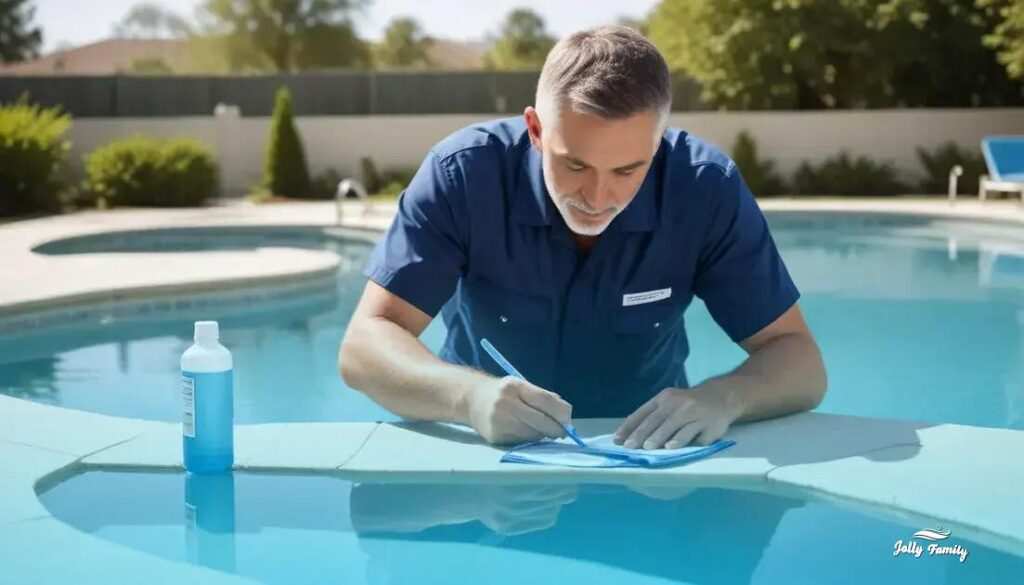
The importance of regular water testing cannot be overstated when it comes to maintaining a safe and enjoyable swimming pool. Testing the water at least once a week helps ensure that chemical levels are balanced, which is crucial for the health of swimmers.
Consistent testing helps identify problems like high chlorine levels, which can cause skin irritation, or low chlorine levels, which can lead to unhealthy water conditions. Catching these issues early allows for quick corrective actions.
Regular tests assess pH levels, alkalinity, and the presence of contaminants. Keeping pH in the ideal range (7.2 to 7.8) protects both swimmers and pool equipment from damage. Too high a pH can make chlorine less effective, while too low can corrode your pool surfaces.
Water testing can also inform you about algae blooms or bacteria that can thrive if the pool is not properly sanitized. Knowing the exact state of your pool water helps in taking preventive measures before issues escalate.
Using water test kits or digital testing devices makes this process simpler and more accurate. Make it a routine to test water levels regularly to ensure a safe swimming environment. By prioritizing regular water testing, you can keep your pool clean, safe, and ready for enjoyment all season long.
how to balance pool chemicals
Knowing how to balance pool chemicals is vital for keeping your swimming pool clean and safe. The key chemicals to monitor include chlorine, pH levels, and alkalinity.
First, test the water using a pool testing kit to get accurate readings. Start with the pH level, which should ideally be between 7.2 and 7.8. If the pH is too low, you can raise it by adding a pH increaser, typically sodium carbonate. If it’s too high, use a pH decreaser like sodium bisulfate to bring it down.
Next, check the chlorine levels. The ideal range for free chlorine is between 1.0 and 3.0 ppm (parts per million). If your levels are low, add a chlorine shock treatment to kill any bacteria or algae present. For high levels, running the pool’s filter can help reduce the amount of chlorine.
Finally, test for total alkalinity, which should be between 80 and 120 ppm. Alkalinity acts as a buffer for pH levels. If it’s too low, add an alkalinity increaser, and if it’s too high, use acid. This balance will help stabilize the pH levels over time.
Regularly adjusting and balancing these chemicals helps create a safer swimming environment, preventing issues like skin irritation and algae growth. Be sure to retest the water after making adjustments to ensure everything is within the ideal ranges.
tips for maintaining crystal clear water
To keep your pool water crystal clear, there are several important tips to follow. First, ensure that your pool’s filtration system is running efficiently. Run the filter for at least 8 to 12 hours a day, especially during peak swimming season, to help remove debris and contaminants.
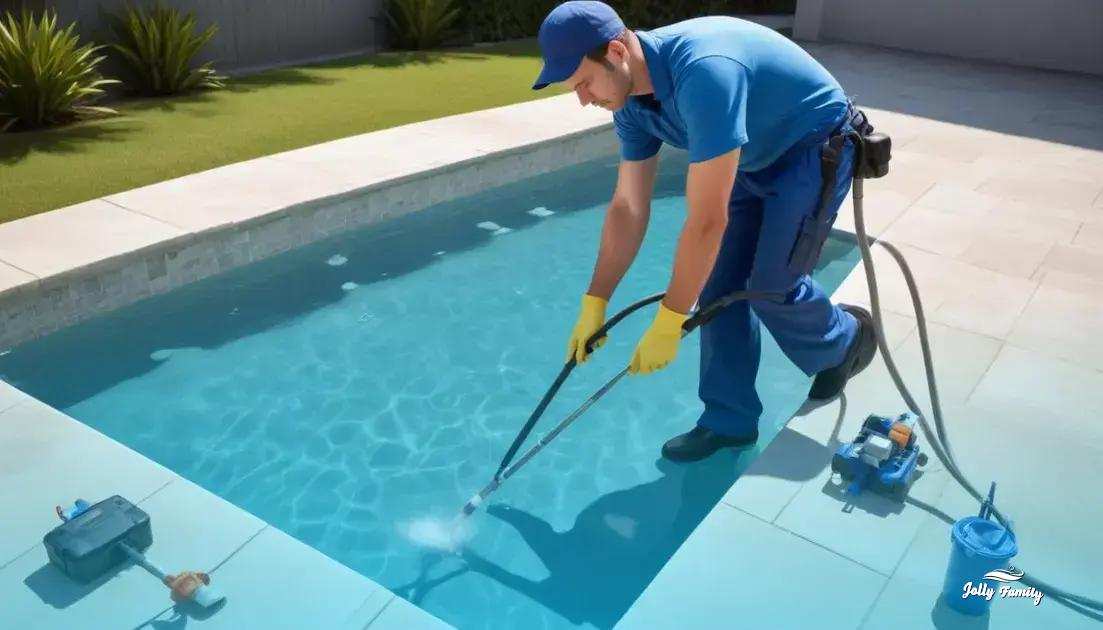
Regular cleaning is essential. Skim the surface daily to remove leaves and debris. Along with skimming, vacuum the bottom of the pool weekly to eliminate dirt that settles on the floor. For extra maintenance, brush the walls and tile to prevent algae buildup.
Monitor chemical levels at least once a week. Keep pH levels between 7.2 and 7.8, and ensure chlorine levels are between 1.0 and 3.0 ppm. If the water appears cloudy, consider performing a shock treatment to restore clarity by eliminating bacteria and algae.
Maintaining the proper water level is crucial too. Ensure the water level is high enough for the skimmer to function properly. If it’s too low, skimmers can pull in air, which can cause damage to the pump.
Lastly, use pool covers when the pool is not in use. Covers help reduce the amount of debris that can enter the pool and can also help maintain water temperature.
when to call a professional for pool problems
Knowing when to call a professional for pool problems can save you time, money, and headaches. If you notice any unusual signs in your pool, don’t hesitate to seek help.
One major indicator is persistent water clarity issues. If your water remains cloudy despite regular cleaning and proper chemical balancing, a professional can diagnose underlying issues with your filtration system or water chemistry.
Another reason to call a professional is algae growth that keeps returning even after treatment. A specialist can identify the type of algae and recommend the right treatments and preventive measures.
If you encounter equipment malfunctions, such as a broken pump or heater, it’s best to consult a professional. These systems can be complex and require trained technicians to fix them safely and efficiently.
Additionally, if you’re unsure about chemical balance or how to perform certain maintenance tasks, a pool technician can provide expert insights and services to keep your pool in optimal condition.
Lastly, major problems like leaks are not something to ignore. If you notice water loss that seems excessive, a professional can help locate and repair leaks that could lead to bigger issues down the line.
In conclusion, maintaining pool water quality is essential for safety and enjoyment
By understanding common problems and regularly testing the water, you can prevent many issues. Knowing how to balance chemicals, keep the water clear, and when to call a professional will help you enjoy a beautiful swimming pool.
Remember, proactive maintenance goes a long way in ensuring crystal-clear water and a healthy swimming environment for you and your family.
With these tips, you’ll be ready to tackle any pool challenges that come your way, making your pool a refreshing escape on hot days.
FAQ – Frequently Asked Questions About Pool Water Quality
How often should I test my pool water?
You should test your pool water at least once a week to ensure that chemical levels are balanced and safe for swimming.
What should I do if my pool water is cloudy?
If your pool water is cloudy, check the chemical balance and consider performing a shock treatment to eliminate any bacteria or algae.
When should I call a professional for pool problems?
Call a professional if you notice persistent water clarity issues, recurring algae growth, equipment malfunctions, or unexplained water loss.
What are the key chemicals to maintain in pool water?
The key chemicals to maintain are chlorine, pH levels, and total alkalinity. Keeping them balanced is crucial for pool health and safety.
How can I prevent algae from growing in my pool?
Prevention includes regular cleaning, maintaining chemical balance, and running the filter for adequate hours each day.
Is it necessary to cover my pool when not in use?
Yes, using a pool cover can help reduce debris and evaporation, making it easier to maintain water quality.