
Commercial pool water testing is a cornerstone of safe, welcoming, and compliant pool operations in Davenport.
For facility managers, hotel concierges, and community center coordinators, accurate water chemistry translates directly into guest satisfaction, reduced maintenance costs, and fewer closure days.
Over a decade of hands-on experience serving Davenport and surrounding Central Florida communities has shown that proactive water testing does more than protect swimmers; it preserves the investment in the pool, the credibility of the management team, and the trust of the local customers.
By combining practical testing routines with disciplined record-keeping and fast corrective actions, property owners can maintain sparkling water, outstanding uptime, and a reputation for reliability.
In this article, you’ll find actionable, specific best practices that align with the needs of commercial facilities, while keeping an eye on eco-friendly solutions and regulatory expectations.
Let’s translate chemistry into clear steps you can implement this week, using real-world approaches that reflect years of local experience and a commitment to quality.
Why Commercial Pool Water Testing Is Non-Negotiable in Davenport
In Davenport, commercial pools must meet stringent water quality standards to protect guests and staff.
Regular testing is not just a best practice; it’s a compliance obligation that reduces liability and protects property value.
When a facility ignores routine checks, hidden imbalances can escalate into irritation for swimmers, equipment wear, and costly repairs.
The payoff for disciplined testing is straightforward: consistent water quality, faster problem detection, and confidence for managers that operations stay on track even during peak seasons.
Regulatory Standards You Must Meet
Commercial pools in Florida typically rely on state-wide health codes and local regulations to govern sanitizer levels, pH balance, and water clarity.
Maintaining proper pH balance and free chlorine concentrations helps prevent eye and skin irritation and keeps bacteria under control.
It also minimizes the risk of corrosion or scaling that can damage filters and pumps.
Adhering to these benchmarks supports long-term asset protection and keeps your facility in good standing with inspectors.
Our approach blends practical experience with a proactive mindset.
Ten years in the Davenport market has taught us that steady testing rhythms reduce risk and surprise visits from health departments.
We emphasize transparent reporting and easy-to-audit records so managers can demonstrate compliance quickly if a question arises.
Safety and Guest Experience Benefits
Guest safety starts with a predictable water chemistry profile.
When sanitizer levels are consistently monitored, chlorine residuals remain within the target range, reducing the potential for irritants or unsafe water conditions.
A well-balanced pool also delivers clearer water, more stable temperature readings, and fewer maintenance surprises between service visits.
This translates into better guest experience, higher satisfaction scores, and stronger retention for facilities that rely on repeat usage.
From a maintenance point of view, stable chemistry reduces unnecessary chemical adjustments, wear on filtration equipment, and the frequency of backwashing.
Think of testing as a preventive discipline that protects both people and equipment, enabling a smoother operation across the entire pool ecosystem.
Economics of Proper Testing
Proactive testing lowers total ownership costs by catching imbalances before they require expensive remediation.
Corrective actions guided by reliable data minimize chemical waste and keep water treatment costs predictable.
In practice, this means fewer emergency interventions, less downtime, and more productive hours for staff and contractors.
A steady, well-documented testing program also strengthens vendor negotiations by providing clear performance benchmarks.
Key Parameters to Test Daily for Commercial Pools
Understanding the core measurements that drive water quality is essential for any Davenport commercial pool operation.
Daily tests establish a baseline that informs all maintenance decisions, from chemical dosing to filtration schedules.
By focusing on the right parameters and documenting variations, you can move from reactive fixes to proactive management.
pH Balance and Total Alkalinity: The Balance You Can’t Ignore
The pH level determines how effectively sanitizers work and how comfortable the water feels to swimmers.
The typical target is a narrow window that supports sanitizer efficacy and equipment longevity.
Simultaneously, total alkalinity acts as a buffer, stabilizing pH against sudden changes from splash activity, rain, or chemical additions.
When alkalinity drifts, even properly dosed sanitizers may become less effective, and the pool can experience cloudy water and corrosion risks.
For daily management, monitor both parameters together and schedule chemical adjustments accordingly.
If pH rises, you’ll often see a corresponding rise in alkalinity, requiring a calculated dose of acid and perhaps a buffering adjustment.
If pH falls, a base or pH increaser alongside alkalinity checks helps restore balance without overshooting.
Chlorine Management: Free vs Combined Chlorine
Free chlorine indicates the amount of active sanitizer available to neutralize pathogens.
Combined chlorine signals the presence of chloramines, which can cause odors, irritation, and reduced water clarity.
The goal is to maintain a healthy free chlorine level while keeping combined chlorine as low as possible.
In many commercial settings, a typical target range for free chlorine is 2-4 ppm, with an emphasis on minimizing persistent chloramines through appropriate turnover and aeration.
Daily monitoring helps you distinguish between a need for more sanitizer and the need for improved filtration or increased water circulation.
If combined chlorine values rise, it’s a cue to check for organic contaminants, adjust call for bather load management, or optimize backwashing frequency.
Calcium Hardness and Cyanuric Acid: Mineral Balance Matters
Calcium hardness protects plaster surfaces and reduces corrosion of metal components, but excessive hardness can cause scaling.
Cyanuric acid (CYA) stabilizes chlorine in outdoor pools but can reduce sanitizer effectiveness if levels become too high.
Striking the right balance is essential for long-term pool integrity and water clarity.
In practice, you’ll monitor calcium hardness against the pool’s material specifics and water source, and you’ll track CYA to ensure chlorine remains effective under sunlight.
If CYA climbs, you may need to dilute or adjust dosing strategies to maintain proper disinfection while avoiding cloudy water or scaling.
Best Practices for Sampling and Testing Methods
How you collect, process, and interpret samples has a significant impact on accuracy, repeatability, and actionability.
The goal is to create a reliable, repeatable routine that staff and contractors can follow without ambiguity.
Clear procedures reduce variability and help you make confident, timely decisions about chemical dosing and maintenance.
On-Site Test Kits vs Lab Analysis: Pros and Cons
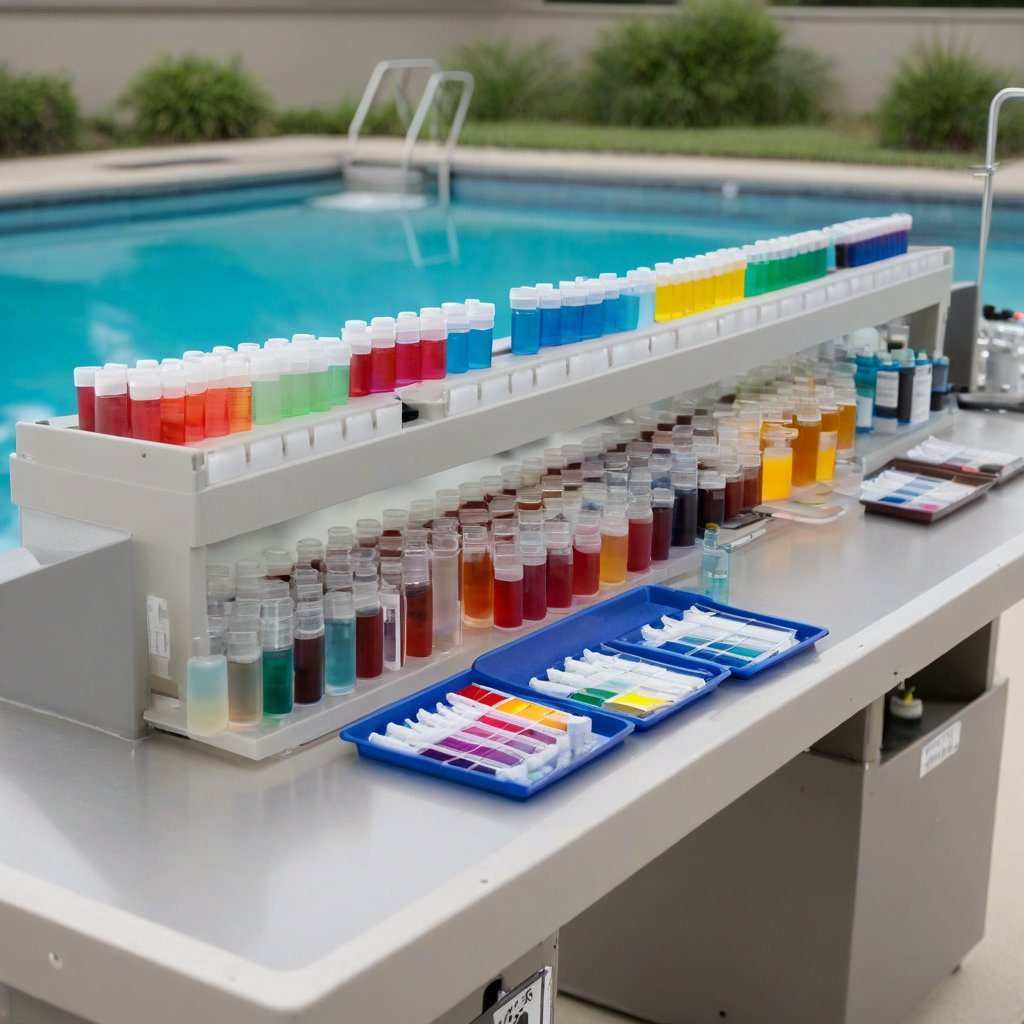
On-site test kits offer speed and convenience.
They enable daily decisions with immediate results, which is essential for high-traffic commercial pools.
For more complex or confirmatory analyses, lab testing provides higher accuracy and QA validation.
A balanced approach uses on-site testing for daily management and periodic lab checks to calibrate on-site methods and verify critical measurements.
Our experience shows that facilities benefit from a standardized on-site testing protocol paired with periodic third-party verification.
This combination supports robust pool water testing and reduces the likelihood of drift in readings.
Sample Collection Protocols for Consistency
Consistency starts with where you take the sample, how you collect it, and how soon you read the results.
Prefer sub-surface collection away from jets, ladders, or return lines to avoid microcurrents that skew readings.
Use clean, labeled containers, and measure at consistent times relative to chemical dosing and turnover cycles.
Implement a standard procedure: rinse the container, collect the sample, seal immediately, and read within the manufacturer-recommended time frame.
Document any deviations, such as recent backwashing or unusual pool usage, so your interpretation of results remains accurate.
Quality Assurance and Documentation
Quality assurance means more than accurate numbers; it means traceable actions and auditable records.
Maintain a centralized log with date, time, operator, pool area, test results, and any corrective actions taken.
Use digital tools when possible to create searchable histories, generate trends, and trigger alerts if readings deviate from target ranges.
In practice, a well-documented QA process helps in training new staff, benchmarking performance across properties, and providing transparent reports during audits.
It also supports the Jolly Family standard of professionalism and reliability that clients expect from a licensed and insured pool cleaning partner.
Operational Workflow: Scheduling, Records, and Accountability
Consistency in testing relies on a well-structured workflow.
The right cadence and visible accountability reduce gaps and ensure swift responses to anomalies.
A solid workflow aligns with maintenance cycles, staff shifts, and vendor partnerships, creating a reliable backbone for daily operations.
Daily, Weekly, and Monthly Routines
Establish a disciplined schedule for testing: daily checks on key parameters, weekly calibration of meters and reagents, and monthly reviews of trends and system performance.
This cadence supports stable chemistry and predictable maintenance needs.
It also provides a dependable framework for shift handoffs and contractor visits.
In Davenport, where peak usage can vary by season, timing tests around high-occupancy periods minimizes guest impact and ensures the water remains in high-quality condition during busy days.
Digital Logbooks and Audit Trails
Moving records to a digital logbook enhances accessibility and durability.
Digital entries enable trend analysis, quick reporting to supervisors, and easy sharing with health inspectors.
They also improve continuity when multiple technicians are involved or when service crews rotate.
We recommend tagging each entry with a pool area, sampling location, and the service window, plus a snapshot of the weather or recent operational changes.
This practice creates a rich audit trail that demonstrates a commitment to safety and quality—an important factor in local SEO and customer trust.
QA Roles and Contractor Coordination
Clear roles are essential.
Assign a dedicated QA point person responsible for reviewing test results, validating corrective actions, and ensuring the documentation is complete.
When multiple contractors are involved, standardized handoffs and shared reporting formats prevent miscommunication and accelerate issue resolution.
For facilities with complex environments—multiple pools, aquatic centers, or campus buildings—define escalation paths, response times, and weekly review meetings.
This transparency keeps expectations aligned and supports continuous improvement.
Responsive Action: Turning Test Results into Safe Water
Testing is only as valuable as the actions it informs.
The goal is to translate data into timely, safe, and cost-effective responses that preserve water quality and protect swimmers.
Step-by-Step Chemical Adjustments
Use a structured approach to dosing: verify the current readings, consult your dosing chart, and apply adjustments in small increments to avoid overshooting.
Prioritize one adjustment at a time to isolate the effect of each change.
Common sequences include correcting pH first, then alkalinity, followed by chlorine balance, and finally other minerals like calcium hardness or cyanuric acid.
Maintain a watchful eye on how changes interact with filtration turnover and the pool’s usage load.
Equipment Maintenance Triggers
Test results often reveal maintenance needs beyond chemical dosing.
Low turnover, clogged filters, or worn pumps reduce sanitization efficiency and can mask water quality problems.
Use test data to trigger maintenance tasks like backwashing on schedule, filter cleaning, or equipment calibration.
Automated alerts tied to test thresholds help ensure timely interventions, reducing the likelihood of stagnant water and costly emergencies.
Emergency Scenarios and Visitor Safety
In case of sudden anomalies—unexpected pH swings, rapid chlorine demand, or cloudy water—activate your emergency protocol.
This includes temporary pool closure, enhanced monitoring, and rapid communication with staff and guests.
Documentation of the incident, corrective actions, and follow-up testing is essential for safety and accountability.
Having a well-rehearsed plan minimizes risk and demonstrates a professional, safety-first culture that clients expect from a trusted partner like a licensed and insured pool cleaning service.
Sustainable and Community-Focused Practices
Efficiency, environmental responsibility, and community trust are increasingly central to commercial pool management.
Adopting sustainable practices improves operational metrics and aligns with broader corporate social responsibility goals, while also supporting cost control and compliance.
Eco-Friendly Chemicals and Green Cleaning
Wherever possible, choose eco-friendly water treatment products that deliver effective disinfection with a lower environmental footprint.
Many modern sanitizers and buffering agents offer improved compatibility with pool surfaces and reduced irritants for swimmers.
Eco-conscious cleaning extends to practices such as minimizing chemical over-application and using energy-efficient filtration strategies.
The result is a healthier pool environment and a more sustainable operation.
Water Conservation and Efficient Filtration
Efficient filtration and turnover strategies reduce water waste and energy usage.
Optimizing pump run times, scheduling backwashing during low-occupancy periods, and maintaining clean filters all contribute to water conservation and cost savings.
In Davenport, where outdoor pools contend with sun exposure and higher sanitizer demand, a balanced approach to filtration can noticeably improve turnover rates and water clarity while preserving resources.
Local Compliance and Community Trust
Communicating a commitment to safe water and responsible practices builds trust with guests and stakeholders.
Transparent reporting, adherence to local codes, and a focus on guest safety position facilities as reliable hubs for recreation.
It also supports local search visibility when communities value responsible pool management.
Our practice is to integrate community-minded approaches with rigorous testing, showcasing how responsible pool water management translates into real benefits for Davenport properties and their visitors.
Choosing the Right Partner for Davenport Commercial Pool Testing
Selecting the right partner for commercial pool water testing is a strategic decision that affects operational stability, guest satisfaction, and long-term asset health.
A well-chosen provider brings technical expertise, local knowledge, and a proven service framework that aligns with your facility’s needs.
What to Look for in a Provider
- Licensed and insured status to protect your facility and staff
- Local experience with Davenport and surrounding areas to understand climate and usage patterns
- Transparent reporting, digital record-keeping, and clear escalation procedures
- Comprehensive maintenance capabilities, including pool cleaning, water treatment, and equipment care
- Commitment to eco-friendly products and sustainable practices
With a partner that combines these elements, you gain reliable pool maintenance that aligns with your facility’s schedule and guest expectations.
A credible provider should also be able to demonstrate successful outcomes through case studies and client references.
Case Study: How a Local Team Prevented Outages
Consider a mid-size community pool in Davenport that faced recurrent sanitizer imbalance during peak season.
The provider implemented a structured daily testing routine, introduced digital logs, and coordinated with maintenance staff to adjust turnover cycles.
Within a few weeks, chlorine residuals stabilized, backwashing was optimized, and the pool remained open during the busiest months.
This is the kind of practical result that comes from disciplined testing, proactive maintenance, and a collaborative approach between the pool operator and the service team.
This example illustrates the impact of having a partner who understands the local context, communicates clearly, and executes with precision.
It also demonstrates the value of a vendor who can support Davenport commercial pool cleaning efforts with reliable, consistent water testing and maintenance.
Why Jolly Family Fits Davenport and Surrounding Areas
Jolly Family has spent a decade serving Davenport, Haines City, Poinciana, Saint Cloud, Kissimmee, Clermont, Celebration, Hunters Creek, Winter Garden, Windermere, and Orlando.
Our approach blends pool cleaning, pool service, and pool maintenance with a focus on high-quality water treatment and eco-friendly products.
We emphasize licensed and insured service, ensuring peace of mind for property managers and facility owners.
Through a combination of local knowledge, rigorous testing protocols, and a commitment to transparent communication, we help clients achieve consistent water quality, lower operational risk, and higher guest satisfaction.
If you’re evaluating providers for Davenport commercial pool cleaning and maintenance, consider how a partner’s operational discipline and EEAT-focused approach can translate into tangible improvements for your facility.
Próximos Passos Estratégicos
To elevate your commercial pool program in Davenport, start by documenting your current testing cadence, identified problem areas, and service gaps.
Then, align with a partner who can implement the recommended daily, weekly, and monthly routines, populate digital logs, and provide clear, actionable dashboards.
A strong collaboration between your management team and an experienced provider should deliver steady chemistry, improved uptime, and a safer swimming environment for your guests.
For facilities seeking a trusted, local expert in pool cleaning and maintenance, Jolly Family offers licensed and insured services with a proven track record across Davenport and nearby communities.
Reach out to discuss a tailored water testing plan that fits your property’s unique usage and requirements.
Frequently Asked Questions
Why is commercial pool water testing non-negotiable for Davenport facilities?
Regular testing protects guest safety, ensures regulatory compliance, and preserves property value. It helps catch imbalances early, reducing irritation, equipment wear, and costly repairs, while supporting consistent pool uptime. In Davenport, documented testing and timely corrective actions are part of responsible management.
What are the essential water chemistry targets for commercial pools in Davenport, Florida?
Key targets typically include pH 7.2–7.6, sanitizer residual of 2–4 ppm for chlorine (or 3–5 ppm for bromine), and total alkalinity in the 80–120 ppm range. Calcium hardness is usually kept around 200–400 ppm, with cyanuric acid at 30–50 ppm for outdoor pools to stabilize chlorine. Always align targets with local codes and the pool’s specific equipment.
How often should a Davenport commercial pool be tested and logged?
Core parameters should be tested daily, with checks at opening, during peak hours, and after heavy usage. Maintain a detailed log to track trends and demonstrate regulatory compliance. Regular documentation supports quick audits and smoother operations.
What testing methods or tools deliver reliable results for commercial pools?
Use calibrated digital meters and validated test kits for in-house testing, and consider periodic lab verification to confirm accuracy. Establish a consistent testing routine and calibrate instruments regularly. Choose methods that fit your facility’s size, turnover, and regulatory expectations.
How should managers translate test results into action on-site?
Set clear action thresholds and write standard operating procedures for when readings are out of range. Implement prompt corrective steps—adjust pH, replenish sanitizer, or perform a quick shock as needed—and log every action. This turns data into measurable, repeatable improvements.
What practical issues can proper testing help prevent in Davenport facilities?
Maintaining proper chemistry prevents swimmer irritation, cloudiness, and equipment wear, reducing the risk of unplanned closures. It also lowers maintenance costs and protects the facility’s reputation and guest trust. In short, good testing supports safety, uptime, and value.
What regulatory standards govern commercial pool testing in Florida and Davenport?
State health codes and local regulations dictate sanitizer levels, pH, water clarity, and mandatory record-keeping. Facilities must stay inspection-ready and maintain detailed documentation to prove compliance. Noncompliance can lead to fines, closures, and reputational damage.
How can facilities balance eco-friendly practices with strict testing regimes?
Adopt efficient turnover and dosing strategies to minimize chemical use, and consider eco-friendly sanitizers where appropriate. Use digital logs and energy-conscious equipment upgrades to reduce waste and support sustainability. By pairing responsible chemistry with measurement discipline, you protect people and the environment while staying compliant.