
Maintaining pool water that is safe, clear, and pleasant to swim in isn’t a one-and-done task.
It’s a careful routine that adapts to the Davenport climate, usage patterns, and water chemistry.
With a decade of hands-on experience serving Davenport and surrounding communities, Jolly Family has developed practical, human-centered methods to keep residential and commercial pools balanced, efficient, and eco-friendly.
This guide walks you through how often to test and balance pool chemicals in Davenport, including actionable steps, real-world tips, and how to partner with licensed professionals when the workload or conditions demand it.
Whether you’re a weekend swimmer or running a rental property, consistent testing is your best defense against cloudy water, algae, and equipment wear.
By following a structured schedule and understanding the why behind each test, you’ll save time, money, and headaches—while keeping your pool inviting all year long.
How Often to Test and Balance Pool Chemicals in Davenport: A Seasonal Guide
Seasonal changes dramatically affect pool chemistry, so your testing cadence should shift with the calendar.
In Davenport, warm months and high usage require more frequent checks, while cooler periods can ease the routine without sacrificing safety.
The core idea is simple: test for core parameters, adjust as needed, and re-test to confirm stability.
A disciplined approach creates steady water balance, protects equipment, and delivers a reliably inviting pool experience. Water balance, pH levels, free chlorine, and alkalinity are the anchors you’ll return to most often, regardless of season.
This is where your local partner’s guidance becomes invaluable, helping you tailor the cadence to your property type and climate.
In-Season Testing Frequency
During peak season, aim for regular checks on a weekly basis as a baseline.
If the pool sees heavy daily use or if you’ve had rain events that wash contaminants in, consider mid-week spot checks as a safeguard.
The goal is to keep pH in the safe range, prevent rapid chlorine loss, and maintain stable total alkalinity.
Quick adjustments after tests—especially post-swim parties or guest turnover—can prevent bigger issues later. Chlorine stability and CYA levels are also critical in this window to maintain effective sanitization without overshoot.
A consistent cadence reduces the chance of surprises on hot weekends and ensures weekly maintenance feels routine rather than reactive.
Practically, you’ll want to document each reading, note any adjustments, and re-test after a short interval.
This is where professional-grade test kits and digital logbooks become valuable tools.
For Davenport properties—whether a family pool, a vacation rental, or a community amenity—the emphasis is on reliability: predictable results, fewer cancellations due to water issues, and a pool that stays ready for daily use.
Off-Season Testing Frequency
Off-season care focuses on preventing scale formation, corrosion, and algae buildup when the pool is used less or when heat and rain patterns shift.
A practical approach is biweekly testing, with an occasional mid-month check if weather is unpredictable.
Keep an eye on calcium hardness and total alkalinity to guard against long-term damage to plaster surfaces and tiles.
Stable, balanced water now reduces the workload when the season returns and helps avoid a cliff-edge start-up period in spring.
The right cadence during these months also supports your equipment lifespan by avoiding corrosive or scale-forming conditions.
Seasonal rhythm isn’t a rigid rule—it’s a flexible framework.
In Davenport, your pool’s specific usage and surroundings will nudge these recommendations.
A trusted local service like Jolly Family can tailor the cadence to your property type, pool surface, and equipment setup, ensuring you’re neither over-serviced nor under-serviced.
Why Regular Water Testing Impacts Your Davenport Pool Maintenance
Regular testing is more than a routine chore; it’s the frontline of effective pool water treatment and the best way to safeguard your investment.
When you test consistently, you can catch imbalances before they escalate into cloudy water, algae blooms, or damaged equipment.
It also helps you maintain comfortable, safe swimming conditions for families, guests, and customers.
For Davenport homeowners and operators, this translates into fewer emergency calls, lower chemical waste, and a clearer path to long-term savings.
In practical terms, consistent testing reduces the risk of pH swings that irritate eyes and skin, minimizes how much chemical you need to add, and protects the integrity of surfaces and filters over time.
Safety and Comfort
Balanced water feels better on the skin, eyes, and hair.
It is less abrasive to swimsuits, and it preserves disinfectant effectiveness so you’re less likely to notice odors or irritation after a swim.
When free chlorine and pH stay within targets, swimmers enjoy a gentler experience and fewer after-swim inconveniences.
In Davenport’s climate, irregular weather can push these parameters off balance quickly, making regular testing an essential safeguard rather than a nice-to-have.
Equipment Longevity and Savings
Water that’s consistently out of balance accelerates wear on pumps, filters, and surfaces.
For example, high acidity can corrode metal components and degrade seals, while overly alkaline water can contribute to scale buildup that makes filtration harder and less efficient.
Regular tests help you keep calcium hardness in check and preserve filter efficiency, resulting in fewer repairs and lower energy use over the pool’s life.
Long-term savings come from avoiding chemical waste, reducing wear, and extending the life of your pool equipment and surface materials.
Best Practices for Testing Frequency by Pool Type in Davenport
Different pool types require slightly different cadences.
A single-family backyard pool will have different usage patterns, maintenance demands, and budget considerations than a small multi-unit complex or a commercial pool.
The core principles—consistent testing, accurate adjustments, and re-testing—remain the same, but the frequency and focus shift with your pool’s role and turnover.
As a local expert, Jolly Family tailors its guidance to your property type, delivering reliable results with eco-friendly products and certified expertise.
Below are practical frameworks you can adopt or adapt for Davenport’s varied pool landscape.
Residential Pools and Homeowners
For most residential pools, a practical baseline is weekly testing during warmer months and biweekly during cooler months.
Increase cadence when you’re hosting events or when the pool is heavily used in vacation seasons.
Focus tests on pH, free chlorine, and total alkalinity, while periodically monitoring calcium hardness and CYA to prevent long-term issues.
Maintaining a simple log helps homeowners spot trends, plan chemical purchases, and avoid last-minute scrambles before weekends.
Rental Properties and Community Pools
rental properties and community pools often experience higher and more variable usage.
In these scenarios, test frequency may rise to twice weekly during peak season, with weekly checks in shoulder periods.
Emphasize ORP (where applicable for sanitization control), chlorine stabilization, and surface protective measures.
A well-structured maintenance plan reduces guest complaints, protects caps and lids from chemical exposure, and keeps the pool ready for back-to-back reservations.
This is where a licensed, insured professional makes a tangible difference, ensuring consistent standards across turnovers.
Saltwater vs. Chlorine-Certified Systems
Saltwater pools have different balancing needs compared to traditional chlorine systems.
While both require careful monitoring of pH and alkalinity, salt systems often bring nuances in stabilizer levels and salt concentration that influence test frequency.
In Davenport, where climate and water conditions vary, testing cadence should reflect system type, equipment sensitivity, and maintenance history.
Adapting the routine to your system improves sanitization effectiveness and reduces equipment wear over time.
Key Tests You Must Run to Maintain Safe, Clear Water
Knowing which tests to run is as important as knowing how often to run them.
The core suite covers pH, free chlorine, total alkalinity, calcium hardness, cyanuric acid, and salinity (for saltwater systems).
Each test informs specific adjustments that keep the water safe, inviting, and gentle on skin and eyes.
In Davenport’s market, using a dependable testing method—whether digital meters or liquid test kits—helps you capture accurate readings and act decisively.
This section breaks down the essential tests and why they matter, along with practical targets you can apply today.
pH Levels and Total Alkalinity
Keeping the pH in the proper range minimizes eye irritation, maximizes chlorine effectiveness, and protects pool surfaces.
Total alkalinity acts as the “buffer” that stabilizes pH against daily fluctuations caused by rain, splash-out, and swimmer load.
Regularly tracking both helps you avoid dramatic swings that require aggressive corrections. Balance is more than a number—it’s a healthy window for comfortable swimming and for safeguarding equipment against corrosive or scaling conditions.
Free Chlorine and Cyanuric Acid (CYA)
Free chlorine is your main sanitizer, while CYA stabilizes chlorine to extend its effectiveness in sunlight.
The right relationship between these two keeps water safe without overexposing swimmers to chloramines.
In practice, maintain adequate CYA to preserve chlorine efficiency, but avoid excessive levels that reduce sanitizing power.
Regular testing supports steady disinfection and clearer water, particularly after heavy rainfall or pool party weekends.
Calcium Hardness and Calcium-Scale Risk
Calcium hardness levels influence surface integrity and scale formation.
Low CH can etch plaster and metal components, while high CH fosters scale buildup that clogs filters and reduces circulation.
Regular checks help you fine-tune adjustments with compatible chemicals and maintain long-term surface and equipment health. Balance now to prevent costly remediation later.
Additional Indicators: ORP and Salinity
For advanced systems, ORP provides real-time insight into sanitization effectiveness, while salinity (for saltwater pools) informs dosing and system performance.
These metrics complement the core tests and guide more precise maintenance decisions.
Keep in mind that not every pool uses ORP or Saltwater measurements, but when present, they can refine your balancing strategy and reduce guesswork.
Balancing Chemicals: Practical Steps Jolly Family Uses in Davenport
Balancing is where theory meets practice.
With decades of combined experience, Jolly Family translates chemistry into simple, repeatable routines that homeowners and property managers can follow.
The emphasis is on safe handling, precise dosing, and rapid verification through re-testing.
In Davenport, the approach blends efficient service, eco-friendly products, and a focus on long-term results.
Below is a practical, field-tested workflow you can adopt or adapt to your pool’s unique needs.
Step-by-Step Routine for a Balanced Pool
Step 1: Test key parameters (pH, TA, CH, free chlorine, CYA) and record results.
Step 2: Adjust pH and TA using approved pH balancers or TA increasers/decreasers as needed.
Step 3: Re-test and verify that adjustments achieved the target range.
Step 4: Confirm chlorine levels remain effective given CYA concentration.
Step 5: Perform a final check on CH and adjust if signs of scaling or corrosion appear.
Step 6: Document all actions and plan the next test window.
This routine creates a predictable rhythm that keeps water safe and surfaces protected.
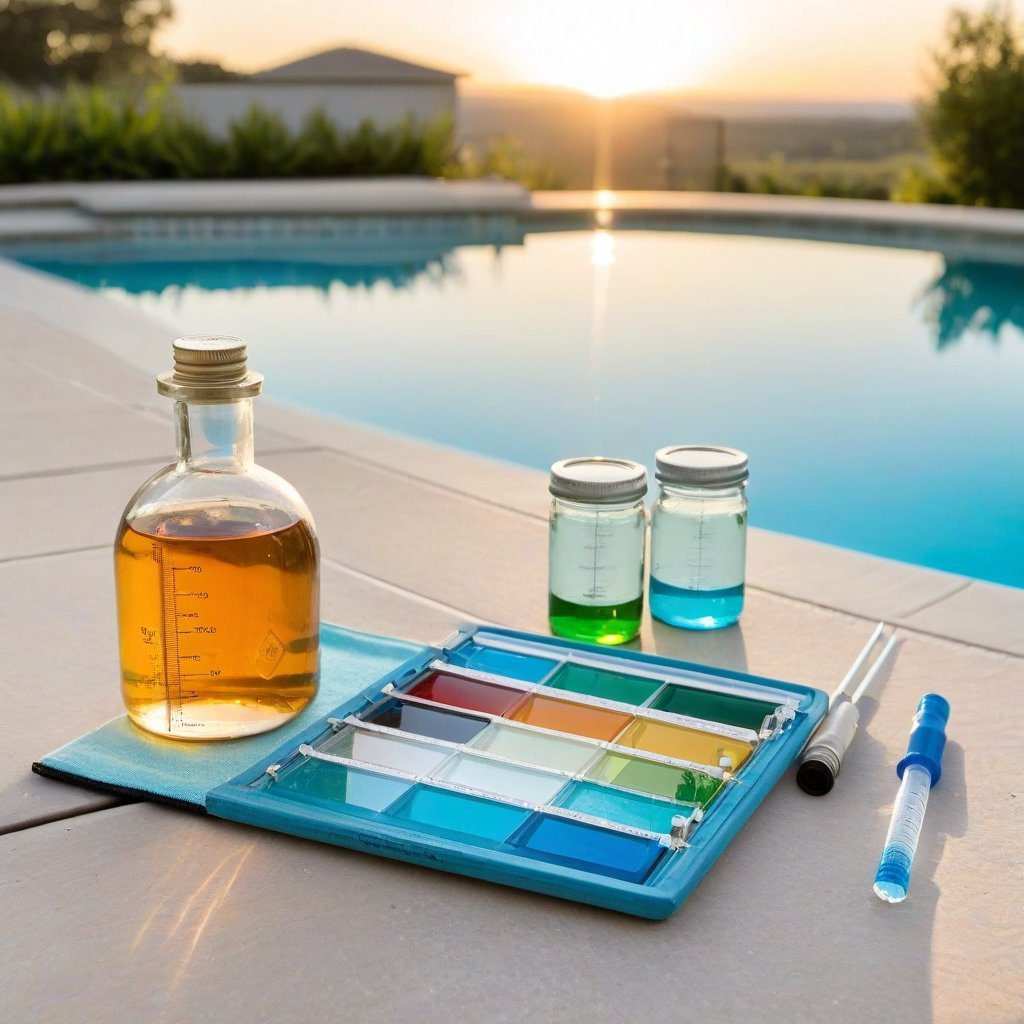
In practice, Jolly Family focuses on actionable steps: using test strips for quick checks, or optical digital testers for precision, and applying eco-friendly, locally available products to maintain balance with minimal environmental impact.
The result is consistent outcomes, fewer surprises, and a pool that stays ready for daily use.
For Davenport properties, this means less time diagnosing water issues and more time enjoying a sparkling, inviting pool.
Tools, Products, and Safety Tips
Equip yourself with a reliable test kit, proper protective gear for chemical handling, and clearly labeled storage containers.
Use eco-friendly pool products when possible to minimize environmental impact while preserving efficacy.
Keep a logbook—either digital or paper—so you can identify trends and adjust cadence as seasons change.
If you’re unsure about a product’s compatibility with your system, consult a licensed professional who can recommend safe, effective alternatives tailored to Davenport’s climate and water quality.
Case Study: A Davenport Family Pool Transformation
One local family faced persistent cloudy water and algae despite routine maintenance.
By adjusting their testing frequency during the summer, focusing on precise pH and TA balance, and re-testing after each chemical addition, they achieved clear water with steady chemical levels through the season.
The difference was not dramatic in a single day, but it was measurable over weeks: fewer algae episodes, better sanitizer performance, and a noticeable improvement in surface cleanliness.
This is a practical example of how consistent testing and balanced chemistry translate into real-world results for Davenport households.
Common Pitfalls and How to Avoid Them in Davenport Pool Care
Avoiding common missteps saves time, money, and frustration.
The most effective avoidance strategy is proactive planning—anticipating weather, usage patterns, and system differences before problems appear.
Below are frequent mistakes and how to sidestep them with practical, field-tested guidance you can apply right away in Davenport.
Pitfall #1: Overcorrecting pH or TA
Overcorrecting can cause oscillations that are harder to stabilize later.
Small, incremental adjustments followed by re-testing prevent big swings.
If pH drifts rapidly after a swimming event, reassess the buffering capacity of your TA and adjust gradually to regain balance.
This measured approach reduces chemical waste and protects surfaces from unnecessary exposure.
Pitfall #2: Ignoring CYA During Sun-Intense Months
High sun exposure can rapidly degrade free chlorine if CYA is too low or too high.
Maintaining appropriate stabilizer levels ensures chlorine remains effective in Davenport’s sunny days.
Regular checks of both chlorine and CYA prevent unsanitary conditions and ensure your sanitizer remains efficient through peak season.
Pitfall #3: Skipping Tests After Rainfall or Heavy Splash-Out
Storms and playground-style use introduce contaminants and change water balance quickly.
Testing after rainfall or heavy splash-out helps you catch shifts in pH, TA, and chlorine demand before they cause issues.
A short, targeted test after weather events keeps chemistry predictable and swim-ready.
Pitfall #4: Underestimating Saltwater System Nuances
Salt systems bring unique balancing considerations, including salinity levels and stabilizer interactions.
If you’re transitioning to or maintaining a saltwater setup, ensure your testing cadence reflects these specifics.
This reduces confusion, protects equipment, and maintains water quality with fewer surprises.
When to Call a Pro for Pool Cleaning and Maintenance in Davenport
Some water chemistry concerns are best handled by licensed professionals.
Persistent cloudiness, recurring algae, persistent odor, or recurring high chemical consumption are signals that a professional assessment may be warranted.
A qualified pool cleaning and maintenance service in Davenport brings diagnostic depth, safety compliance, and customized maintenance plans informed by years of hands-on experience.
Jolly Family, with its decade of local expertise, offers licensed and insured services, eco-friendly solutions, and a proven track record of improving water quality and pool performance for both residential and commercial clients across Davenport and neighboring communities.
Signs You Need a Pro
Repeated participation in water testing that yields inconsistent results, persistent staining, or frequent chemical additions despite routine maintenance are red flags.
If balancing feels more like trial and error than a controlled process, or if you’re managing a rental or multi-unit property with a tight schedule, a professional evaluation is smart.
A pro can identify hidden issues—such as hidden leaks, filtration problems, or equipment malfunctions—that typical home care might miss.
A reliable pro also provides ongoing monitoring and documentation to sustain water quality and reduce downtime.
What to Expect from a Davenport Pool Expert
A professional service should begin with a comprehensive water analysis, check equipment condition, review usage patterns, and tailor a maintenance plan to your property.
Expect clear recommendations, a transparent pricing structure, and a focus on safety, efficiency, and environmental responsibility.
The right partner will also offer ongoing support, pool water testing guidance, and actionable steps you can implement between visits to maintain balance and clarity.
Próximos Passos Estratégicos
To keep Davenport pools safe, efficient, and enjoyable, establish a practical testing cadence aligned with usage and climate, then back it up with targeted adjustments.
By maintaining regular checks on pH, free chlorine, total alkalinity, CYA, and key balance indicators, you’ll reduce costly issues and preserve equipment health.
If you prefer a proven, local partner, consider scheduling a professional assessment with Jolly Family, a licensed and insured team serving Davenport, Kissimmee, Celebration, and surrounding areas.
We bring eco-friendly products, reliable service, and 10 years of experience to every project, from small backyard pools to commercial facilities.
To start a conversation about your pool, contact us today and explore how we can optimize davenport pool cleaning and maintenance for your needs.
Ready to elevate your pool’s performance with a trusted local expert? Contact Jolly Family for licensed and insured pool cleaning and maintenance in Davenport and nearby communities.
We’ll tailor a testing and balancing plan that fits your property, usage, and goals, delivering clear water, healthier equipment, and greater peace of mind. Learn more about our services and schedule a consultation to get your pool season started on the right foot.
Frequently Asked Questions
How often should you test pool chemicals in Davenport throughout the year?
In Davenport’s climate, aim for a weekly test cadence during warm, high-use periods and ease to every 1-2 weeks in cooler months. Focus on core parameters—pH, total alkalinity, free chlorine, and calcium hardness—and re-test after making adjustments. This approach helps you maintain steady balance and reduce surprises.
What seasonality considerations affect Davenport pool chemical testing frequency?
Seasonal changes drive your testing cadence: hot, rainy summers demand more frequent checks, while cooler seasons allow a lighter routine without compromising safety. Plan for additional mid-week checks after heavy use or rain events. Keep your schedule flexible to match conditions for Davenport pool maintenance.
Which core pool parameters should you monitor most often when testing pool chemicals?
The core anchors are pH, free chlorine, total alkalinity, and calcium hardness. Keeping these in range helps swimmer comfort, prevents corrosion or scaling, and protects equipment. Re-test after any chemical adjustment to confirm stability.
How should you balance pool chemicals after testing?
If a test reveals an imbalance, adjust one parameter at a time and re-test before making a second change. Follow manufacturer guidelines and avoid overshooting to prevent new swings in pH or chlorine levels. Consistent, incremental balancing beats guesswork for Davenport pool balancing.
When should you involve licensed professionals for Davenport pools?
Consider professional help if tests keep showing unstable chemistry, you see persistent cloudiness, algae growth, or equipment issues. A licensed pool technician can tailor a season-specific cadence and handle complex balancing tasks. They can also assist with seasonal shutdowns or startups for Davenport properties.
What signs indicate you need to test and balance pool chemicals more frequently?
Cloudy water, strong chlorine odor, persistent pH drift, or frequent shocking are red flags. After heavy rainfall or heavy use, add a mid-week check to stay on top of changes. Regular follow-ups help prevent costly repairs from Davenport pool issues.
How can you implement a seasonal testing checklist for Davenport pools?
Create a calendar with a weekly baseline and plan mid-week checks during peak season. Add reminders for post-storm days and property usage spikes. Track results to spot trends and adjust the cadence as needed for Davenport pool maintenance.
Are there eco-friendly tips for testing and balancing Davenport pool chemicals?
Yes—aim for precise dosing, minimize over-correcting, and explore eco-friendly sanitizers if appropriate for your pool. Regular testing reduces chemical waste and extends equipment life. This approach supports more sustainable Davenport pool management.