
How professionals keep pools crystal clear: they maintain balanced chemicals (pH, free chlorine, alkalinity), ensure proper filtration and turnover, perform daily skimming and weekly brushing/vacuuming, use targeted algaecides or shock treatments when needed, and keep scheduled inspections and logs to catch issues early.
how professionals keep pools crystal clear; Ever wonder why some pools sparkle while others go cloudy? I’ve watched Jolly Family techs in Kissimmee run quick tests, tweak chemicals and fine-tune filters—simple moves that make a huge difference. Curious what they check first?
daily and weekly maintenance routines professionals follow
Daily tasks make the biggest difference in pool clarity. Pros skim the surface, remove visible debris, and glance at equipment every day. Quick checks catch small problems before they grow.
daily checklist
- Skim the surface and empty skimmer baskets to prevent clogging.
- Run the pump for the recommended hours to keep water moving.
- Test chlorine and pH with a strip or kit; adjust small doses as needed.
- Check water level and add water if it’s below the skimmer.
- Look for leaks, noises, or unusual pressure on the filter gauge.
weekly tasks
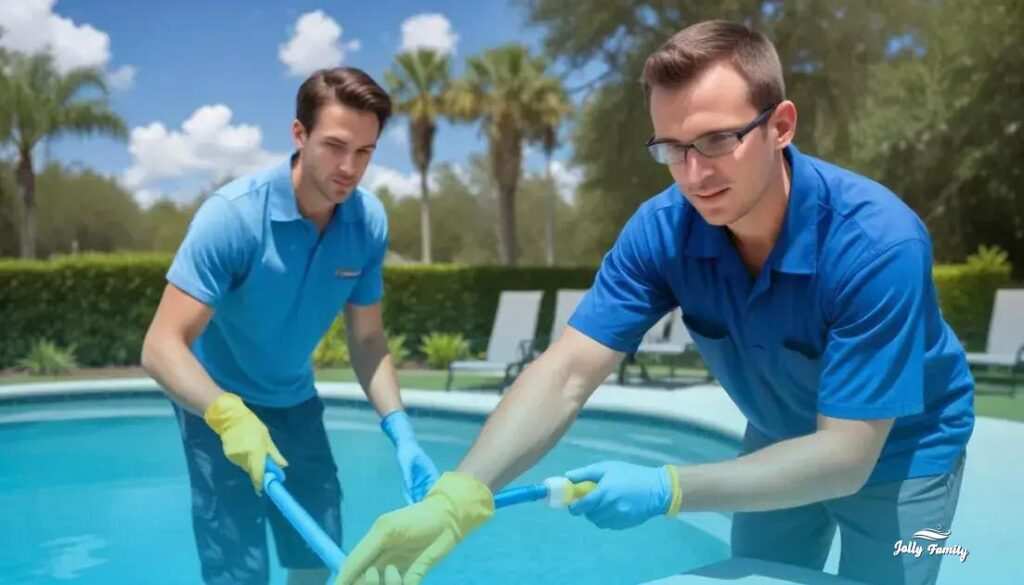
- Brush walls, stairs, and tiles to remove film and algae spots.
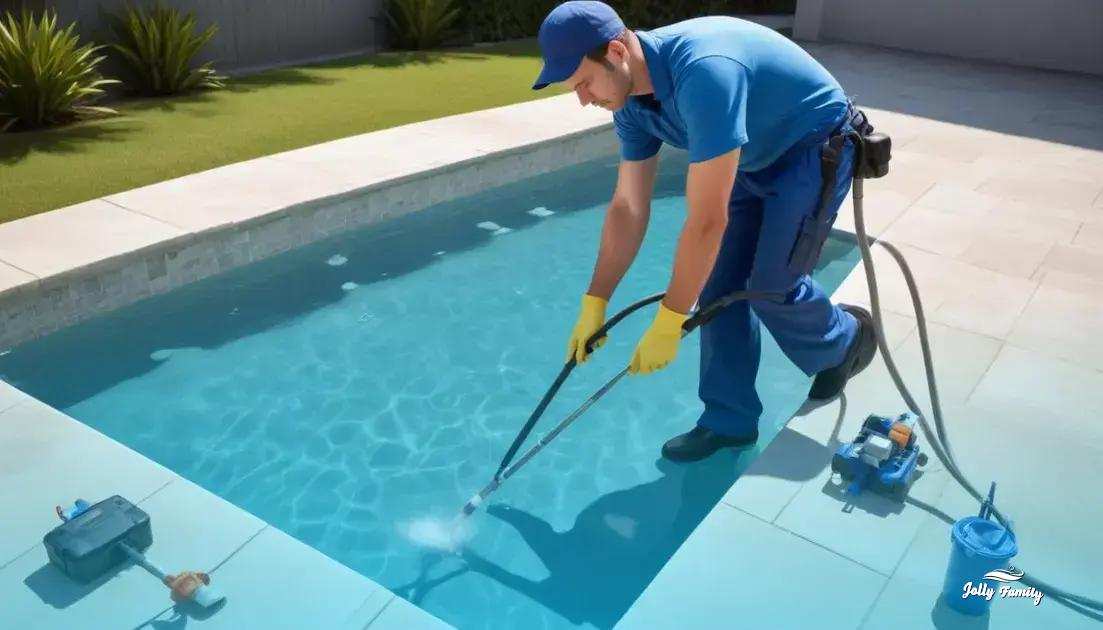
- Vacuum the pool or use an automated cleaner to clear settled debris.
- Backwash or clean the filter cartridge according to the system’s needs.
- Perform a full water test: chlorine, pH, total alkalinity, and stabilizer.
- Shock the pool if readings are off or after heavy use or storms.
- Add a preventive algaecide if your area is prone to blooms.
practical tips and quick fixes
- Keep a simple log of daily readings to spot trends.
- If the water is cloudy, check filter run time and cleanliness first.
- Make small chemical corrections rather than large doses at once.
- Store chemicals safely and label treatments on your log.
- Consistent short actions are better than rare intensive fixes; pros follow routines.
chemical balance: testing, key readings and adjustment steps
Regular testing keeps pool water safe and clear. Test before opening, after heavy use, and at least twice a week in summer. Simple checks guide every treatment.
key readings to watch
- pH: ideal 7.2–7.6. Low pH irritates eyes and corrodes equipment; high pH reduces sanitizer power.
- free chlorine: target 1–3 ppm for pools. Keeps bacteria and algae in check.
- total alkalinity: aim for 80–120 ppm. Stabilizes pH to avoid wild swings.
- cyanuric acid (stabilizer): 30–50 ppm for outdoor pools using chlorine. Too high lowers chlorine effectiveness.
- calcium hardness: 200–400 ppm to protect surfaces from scaling or corrosion.
how to test properly
- Collect water from mid-depth, 18–24 inches below the surface, away from returns.
- Use fresh test strips or a liquid kit; follow timing instructions exactly for color comparison.
- For precision, use a digital photometer for chlorine and pH.
- Record results in a log with date and time to spot trends.
adjustment steps and timing
- To raise pH: add sodium carbonate (soda ash) in small doses and run the pump. Wait 4–6 hours, then retest.
- To lower pH: add muriatic acid or sodium bisulfate carefully, pour near a return while circulating. Wait and retest after a few hours.
- To raise alkalinity: add sodium bicarbonate in measured amounts; retest after circulation.
- To lower alkalinity: gradually add acid in small doses and monitor pH; do not overcorrect at once.
- To raise chlorine quickly after heavy use or storms: shock with calcium hypochlorite or non-chlorine shock per label; avoid swimming until levels return to safe range.
- When adding chemicals, make small corrections, allow full circulation, then retest before adding more.
practical safety tips
- Always follow product labels and local regulations. Use gloves and eye protection when handling chemicals.
- Store chemicals in a cool, dry, ventilated area away from each other.
- Label doses in your log and note the time you added them.
- If readings stay off after proper adjustments, inspect filtration and consider professional help.
filtration and circulation: what pros check and when
Proper filtration and steady circulation remove particles and keep chemicals working. Pros check visible flow and equipment daily and inspect filters and pumps on a schedule.
daily checks
- Ensure the pump is running the scheduled hours and returns show steady flow.
- Empty skimmer and pump baskets to avoid reduced suction.
- Listen for unusual noises and watch for leaks or air in the system.
filter pressure and cleaning
Watch the pressure gauge: a rise of 8–10 psi over the clean baseline usually means it’s time to clean. For sand or DE filters, backwash until the sight glass runs clear. For cartridge filters, rinse and soak per manufacturer guidance and replace worn cartridges.
flow, turnover and run time
Turnover is the time needed to circulate all pool water once. Pros calculate turnover by pool volume divided by pump flow and set run time to achieve at least one full turnover daily, often more in warm weather.
valves, returns and circulation balance
Check multiport valves, automatic valves and return flow. Adjust return eyeballs to create good circulation along walls and pool floor. Clean hair and lint traps so they don’t starve the pump.
weekly and monthly tasks
- Backwash or clean filters as needed and inspect filter media for wear.
- Check pump strainer lid O-rings and lubricate to prevent air leaks.
- Verify pump and filter connections, look for vibration or loose fittings.
when to escalate
Call a pro if pressure stays high after cleaning, the pump won’t prime, or circulation patterns don’t improve. Persistent cloudiness after proper filtration usually signals a deeper issue.
preventing algae and cloudiness: targeted treatments and timing
Algae and cloudiness usually start where water is still or chemicals are weak. Pros focus on prevention: consistent circulation, regular brushing, and targeted chemicals before blooms appear.
timing for treatments
- Treat preventively in warm months or after heavy rain when algae risk rises.
- After storms or heavy bather use, test water and consider a quick shock treatment.
- Follow a seasonal plan: start the season with a deep clean and maintain weekly checks.
targeted products and when to use them
Use a regular algaecide weekly in high-risk areas. For visible green or black algae, choose a stronger, fast-acting algaecide and combine it with brushing. If algae keep returning, a phosphate remover can cut a main food source.
mechanical control and water clarity
Brushing removes algae from surfaces so chemicals can work. Run the filter longer after treatments to clear dead cells. Vacuum or use an automated cleaner to remove settled particles that cause cloudiness.
shock and follow-up
Shocking raises sanitizer quickly to kill algae and bacteria. After shocking, keep the pump running and retest until chlorine returns to safe levels. Do not add algaecide and shock at exactly the same moment—space treatments and follow label guidance.
practical prevention tips
- Keep water balanced: stable pH and proper chlorine make algae treatments more effective.
- Brush hard-to-reach areas like steps, corners, and shallow shelves weekly.
- Maintain filter efficiency—clean or backwash as needed after treatments.
- Log treatments and conditions to spot patterns and act early.
- If algae persist after proper routine care, call a pro for inspection and tailored treatment.
how Jolly Family keeps Kissimmee pools clear with scheduled care
Jolly Family keeps Kissimmee pools clear by following a strict scheduled care plan. Techs arrive on planned days, run checks, and make small fixes that stop big problems.
service cadence and core tasks
- Weekly visit: test chemicals, skim and brush, empty baskets, and run filter checks.
- Biweekly or monthly: deep-clean filters, inspect pump seals, and check circulation patterns.
- Seasonal actions: pre-storm adjustments, algae-prevention in warm months, and end-of-season deep clean if needed.
customized treatment plans
Each pool gets a tailored program based on size, usage, and local weather. Techs adjust chemical doses, run time, and cleaning frequency to match those factors. That focused care reduces chemical waste and keeps water stable.
monitoring and documentation
- Techs log readings and actions in a digital log during each visit.
- Photos and time-stamped notes document problem spots so trends are easy to spot.
- Clients can view schedules and recent service records through a simple portal or receive email updates.
quality checks and trained crews
Supervisors review logs and perform random audits. Crews follow checklists and use calibrated test kits to keep consistency. Ongoing training ensures that every tech knows how to spot early signs of trouble.
fast response and homeowner care
When a quick fix won’t do, Jolly Family schedules repairs or escalates to same-day service for safety issues. Techs explain treatments in plain language and note next steps so homeowners know what to expect.
Keep your pool crystal clear
Small, regular steps make a big difference. Test water often, keep chemicals balanced, run your pump for proper turnover, and brush and vacuum weekly.
Make small chemical adjustments instead of large doses, keep a simple log of readings, and clean filters on schedule. These habits stop cloudiness and algae before they start.
If problems persist, call a professional to check filtration and circulation. With steady care or a scheduled service plan, you’ll enjoy clear, safe water all season.
FAQ – Keeping pools crystal clear
How often should I test my pool water?
Test at least twice a week in summer and after heavy use or storms. More frequent checks help spot shifts early.
What are the most important chemical levels to watch?
Monitor pH (7.2–7.6), free chlorine (1–3 ppm), and total alkalinity (80–120 ppm). These keep water safe and clear.
How long should I run my pool pump each day?
Run the pump long enough for at least one full turnover of the pool volume. Warm weather may need longer run times.
What should I do to prevent algae and cloudiness?
Brush surfaces weekly, maintain proper sanitizer levels, use algaecide when risk is high, and clean filters after treatments.
When should I clean or backwash the filter?
Clean when the pressure gauge rises 8–10 psi above the clean baseline. Backwash sand/DE filters or rinse cartridges per manufacturer guidance.
When is it time to call a professional?
Call a pro if you have persistent cloudiness, high filter pressure after cleaning, pump won’t prime, or chemicals stay unstable.