
local pool maintenance company Kissimmee provides licensed, insured weekly service that maintains chemical balance, cleans and inspects equipment, responds to leaks and storm damage, documents readings, and offers transparent pricing and local references to keep residential pools safe, clear, and ready for use with predictable costs and timely repairs.
local pool maintenance company Kissimmee — looking for reliable weekly care that keeps your pool safe and guest-ready? I’ve seen how steady attention prevents surprises; Jolly Family specializes in hands-on maintenance for Kissimmee homes.
what routine pool maintenance includes: weekly checklist and benefits
Routine weekly care keeps your pool clear, safe, and ready to use. Focus on simple actions that prevent algae, equipment strain, and costly repairs.
Weekly checklist
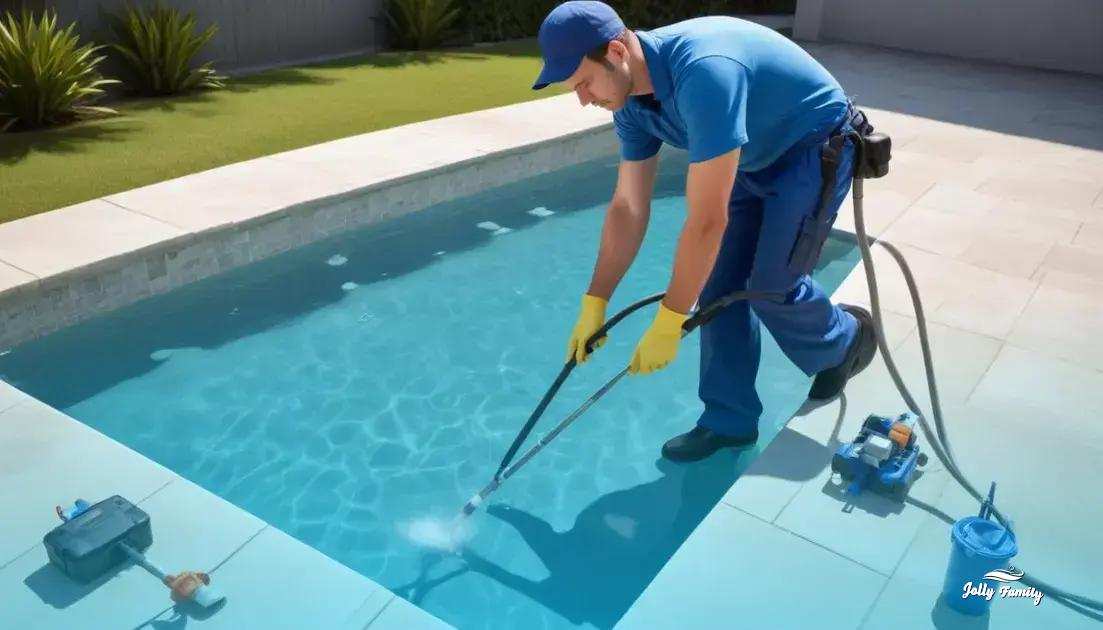
- Skim and remove debris: skim leaves and bugs from the surface to stop clogging and staining.
- Brush walls and steps: scrub tile lines and corners to prevent algae buildup.
- Vacuum or run automatic cleaner: remove settled dirt to improve filter efficiency.
- Test water chemistry: check pH (7.2–7.6), free chlorine (1–3 ppm), and total alkalinity (80–120 ppm) and adjust as needed.
- Shock when necessary: perform chlorine shock after heavy use or rain to clear contaminants.
- Clean skimmer and pump baskets: empty baskets so water flows freely and the pump stays cool.
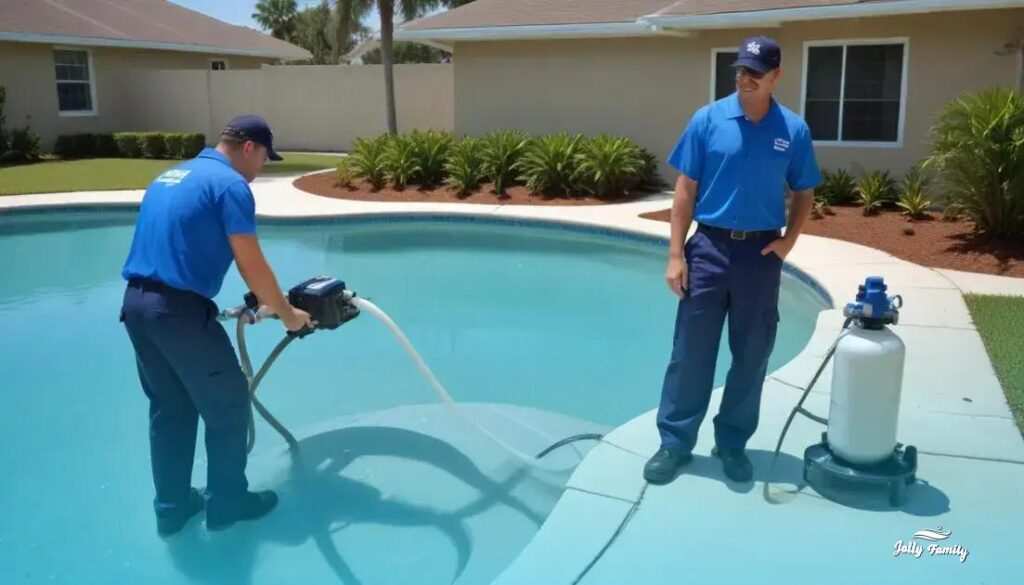
- Inspect filter and equipment: check pressure gauge, backwash or clean cartridge filters, and look for leaks or odd noises.
- Check water level and safety gear: maintain proper level for skimmer function and ensure ladders, covers, and drain fittings are secure.
- Record readings: write down test results and work performed to spot trends and plan maintenance.
Benefits of weekly maintenance
- Clear, healthy water: consistent chemical balance prevents cloudy water and skin irritation.
- Longer equipment life: clean filters and proper water chemistry reduce wear on pumps and heaters.
- Lower long-term costs: catching problems early avoids expensive repairs and chemical overuse.
- Safer swimming: well-maintained water and functioning safety gear reduce health and accident risks.
- Always guest-ready: regular upkeep keeps the pool attractive and usable for family and visitors.
Pro tip: keep a short log with dates and readings. In hot, humid Kissimmee weather, check chlorine after storms or heavy use to avoid algae flare-ups.
chemical balance and water testing explained for homeowners
Balanced water keeps your pool clear and safe. Test regularly and act quickly when numbers fall outside targets to avoid algae and equipment damage.
Core levels to test
- pH: ideal range 7.2–7.6. Low pH irritates eyes and corrodes metal. High pH causes cloudiness and scale.
- Free chlorine: aim for 1–3 ppm. This is the sanitizer that kills bacteria.
- Total alkalinity: target 80–120 ppm. It helps keep pH stable.
- Calcium hardness: keep between 200–400 ppm to avoid scaling or etching.
- Cyanuric acid (stabilizer): for outdoor pools keep 30–50 ppm to protect chlorine from sunlight.
How to test
- Collect water from elbow depth, a few inches below the surface. Avoid skimming the top.
- Use a liquid test kit (titration) for best accuracy. Test strips are faster but less precise.
- For chlorine, use a DPD reagent kit. Read results immediately and in good light.
- Digital meters can measure pH and temp quickly. Calibrate meters often.
How to adjust levels
- To lower pH or alkalinity, add muriatic acid or sodium bisulfate slowly and circulate for several hours.
- To raise pH, add soda ash (sodium carbonate) in small doses and retest after circulation.
- To raise alkalinity, add baking soda (sodium bicarbonate). Lowering alkalinity takes careful acid addition.
- Increase free chlorine with granular chlorine or liquid bleach. For fast clearing after heavy use, perform a chlorine shock.
- Raise calcium hardness with calcium chloride; lower by partially draining and refilling with softer water.
- Adjust cyanuric acid slowly; lower it by dilution if levels get too high.
Safety, timing, and logs
- Always add chemicals to water, never water to chemicals. Wear gloves and eye protection.
- Wait and retest after circulation—usually 4–6 hours. Some changes need 24 hours to settle.
- Keep a simple log of dates, readings, and actions to spot trends and avoid overcorrection.
When to call a professional
- If water stays cloudy despite correct readings, or algae returns quickly.
- When equipment shows leaks, odd noises, or pressure spikes.
- For big chemical swings after heavy storms or if you’re unsure how to balance safely.
equipment care, leaks and common issues Jolly Family fixes
Keep pool equipment in good shape to avoid costly repairs. Check visible parts weekly and act quickly when something sounds or looks wrong.
Equipment care basics
- Pump: empty skimmer and pump baskets, check the pump lid O-ring for cracks, and listen for unusual grinding or humming.
- Filter: monitor the pressure gauge. Backwash sand/DE filters when pressure rises 8–10 psi above normal. Clean or replace cartridges as needed.
- Heater and heat pumps: clear leaves and debris from the unit, inspect for error codes, and schedule annual service to keep efficiency high.
- Salt systems and chlorinators: clean the cell plates regularly to remove scale and test salt levels to prevent premature cell failure.
- Automation and valves: test timers, check actuators and valve positions, and keep control boxes dry and free of corrosion.
- Plumbing fittings: inspect unions, unions O-rings, and visible pipes for drips or cracks. Tighten loose fittings and replace brittle hoses.
Common issues Jolly Family fixes
- Low flow: often caused by clogged baskets, dirty filters, closed valves, or an air leak. Fix by cleaning, opening valves, and checking pump priming.
- Strange pump noises: bearings, debris, or cavitation are usual suspects. Turn power off before inspecting and replace worn parts.
- High filter pressure: means the filter is dirty or a valve is closed. Backwash or clean the filter and verify all valves are correct.
- Heater won’t start: can be due to low flow, ignition faults, or thermostat issues. Basic checks help, but heaters often need a trained technician.
- Salt cell problems: scale buildup reduces output. Cleaning the plates or replacing the cell restores function.
- Tile staining or scaling: from high calcium or pH. Balance water and use tile-specific cleaners.
Detecting and handling leaks
- Look for rapid water loss, wet spots near equipment, or pools of water under the pump as early signs.
- Perform a simple bucket test to confirm loss from the pool versus evaporation.
- Use a dye test for visible fittings and skimmers: turn off circulation and add dye near gaps to see movement.
- Check skimmer faceplates, return fittings, and pump seals first—these are common leak points.
- Underground or slab leaks need pressure testing and specialized tools. If you suspect an underground leak, call a professional leak detector.
When to call a technician
- Electrical issues, persistent leaks, or heater repairs—stop and call a pro to avoid danger.
- If equipment still runs hot, makes noise after basic fixes, or pressure stays abnormal.
- For complex plumbing, buried pipe repairs, or when you lack proper tools or experience.
- Keep a log of repairs, part replacements, and pressure readings to help technicians diagnose problems faster.
seasonal maintenance tips specific to Kissimmee climates
Kissimmee’s weather changes call for simple, seasonal adjustments that keep your pool healthy and lower repair costs.
Summer care (hot, high use)
- Test more often: check pH and free chlorine 2–3 times weekly during hot spells.
- Run circulation longer: aim for 8–12 hours daily to handle heavy bather load and heat.
- Watch for algae: brush tiles and steps regularly and treat at first sign of green or cloudy water.
- Protect salt cells and filters: clean salt cell plates and rinse filters more often to prevent scale in hard water.
Rainy season and storm prep
- Remove leaves and large debris immediately after storms to avoid clogged skimmers and filters.
- Shock and rebalance: after heavy rain or heavy use, shock the pool and retest within 24 hours.
- Secure loose items and raise small equipment off the ground when a tropical storm approaches. Follow local emergency guidance for major storms.
- If forecasted storms may flood the yard, check with a pro before altering water level; do not work on electrical equipment when wet.
Cooler months and dry periods
- Testing can be weekly rather than multiple times per week if use is low, but don’t skip checks after weather swings.
- Run the pump fewer hours when temperatures drop, but keep circulation to prevent stagnation.
- Watch for falling leaves and pollen in spring and fall — they add organic load that uses up chlorine.
Year-round care specific to Kissimmee
- Keep a short log: record readings, treatments, and unusual events to spot trends and avoid overcorrection.
- Protect equipment from humidity and pests; elevate small items to reduce flood risk and keep access paths clear.
- Use enzyme products or clarifiers as needed to reduce organic buildup common in subtropical yards.
- Schedule a professional inspection each season to check heaters, pumps, and buried plumbing before problems grow.
Quick pro tip: after any heavy rain or long heat wave, retest and adjust chemicals within 24 hours. Small, timely steps prevent big fixes later.
how to choose a reliable local service: questions to ask Jolly Family
- Are you licensed and insured? Ask for a license number and proof of liability and worker’s comp insurance.
- What exact services do you include? Confirm weekly tasks, chemical dosing, equipment checks, and any extra fees for repairs or parts.
- Can you share local references? Request recent Kissimmee customers with similar pools and check online reviews.
- How is pricing shown? Get a written estimate with clear rates for routine visits, one-time services, and parts.
- What is your emergency response? Ask about hours, same-day repairs, and after-hours contact procedures.
- Who will perform the work? Verify technicians’ training, background checks, and whether the same crew visits regularly.
- Do you offer guarantees or warranties? Learn terms for workmanship, parts, and how warranty claims are handled.
- How do you document maintenance? Prefer teams that keep logs of readings, chemicals added, and repairs for transparency.
How to verify answers
Call the license board or lookup the license online if available. Check insurance by asking for the carrier and policy dates. Talk to at least two references and note how long each has used the company.
What to look for in pricing
Choose clear, itemized quotes. Avoid vague monthly fees with hidden extras. Ask how often prices are reviewed and what triggers extra charges, like storm cleanup or major repairs.
Service reliability and response
Reliable companies keep scheduled visit windows and offer clear communication. Ask how they notify you of missed visits, urgent issues, or needed approvals for parts.
Warranties, parts, and replacements
Confirm whether replacement parts use OEM brands, who pays for shipping, and if techs get approval before ordering. Get warranty terms in writing.
Red flags to watch
- No written estimate or contract.
- Refusal to provide local references.
- Unwillingness to show insurance or license.
- Pressure to sign long-term contracts without trial period.
Final steps to keep your Kissimmee pool healthy
Regular care keeps water clear, equipment working, and costs down. Weekly tasks, balanced chemicals, and quick fixes for leaks stop small problems from growing.
Try these simple actions: skim and brush weekly, test pH and chlorine after storms, clean skimmer baskets, and keep a short log of readings and service. If you see fast water loss, strange noises, or heater trouble, call a pro.
Compare local companies, ask for licenses and references, and choose one with clear pricing and a maintenance log. With steady care or a trusted local team, your pool stays safe and ready for family fun.
FAQ – Local pool maintenance in Kissimmee
How often should my pool be serviced?
Most pools benefit from weekly service. Test chemicals more after heavy use, heat waves, or storms and adjust as needed.
What chemical levels should I track at home?
Keep pH 7.2–7.6, free chlorine 1–3 ppm, total alkalinity 80–120 ppm. Also monitor calcium hardness and cyanuric acid.
How can I tell if my pool has a leak?
Look for rapid water loss, wet ground near equipment, or pools under the pump. Do a bucket test and simple dye checks; call a pro for underground leaks.
When should I call a professional technician?
Call a pro for persistent cloudiness, strange equipment noises, heater or electrical issues, repeated algae, or suspected underground leaks.
What should I ask a local pool company before hiring?
Ask for license and insurance, exact services included, local references, clear pricing, emergency response times, and if they keep maintenance logs.
How does Kissimmee’s climate affect pool care?
Hot summers need more frequent testing and longer circulation; rainy season means post-storm shock and debris cleanup; cooler periods need less frequent checks but don’t skip them.