
pool algae keeps coming back when sanitizer levels, water balance, circulation, or filtration are inadequate, or when nutrients like phosphates and biofilm remain; regularly test and correct chlorine, pH, CYA and phosphates, brush and vacuum surfaces, run the pump for full turnover, and clean filters to stop recurring blooms.
pool algae keeps coming back — frustrating, I know. Have you shocked the pool and still seen green return? I ran field checks and share simple tests, quick fixes, and when to call Jolly Family for reliable routine care.
why pool algae keeps returning: common causes in Kissimmee
In Kissimmee, warm sun and still water make algae grow back quickly. Small issues add up and let the problem return.
Common causes
- Poor circulation: Dead spots near steps or corners let algae settle and grow.
- Low sanitizer levels: Chlorine that is too low can’t kill new algae fast enough.
- Imbalanced water: High pH or alkalinity reduces chlorine effectiveness and helps regrowth.
- Clogged or dirty filter: A weak filter can’t remove spores and debris that feed algae.
- Organic debris and sunlight: Leaves, pollen and bright sun create food and warmth for algae.
- Phosphates and nitrates: High nutrient levels from runoff or pool products feed algae blooms.
- Biofilm on surfaces: Slime on walls protects algae from chemicals and must be scrubbed away.
- Equipment issues: Timers off, a failing pump, or blocked skimmers let water sit and algae thrive.
Check these first: test chlorine and pH with a kit, run the pump longer, clean or backwash the filter, and brush surfaces hard. If algae returns after these steps, a targeted shock and phosphate test can show the next fix.
how water chemistry and circulation influence regrowth
Water chemistry and pump flow decide how fast algae bounces back. Small shifts let spores survive and grow.
Key chemistry targets
- Free chlorine: keep 1–3 ppm for pools; aim higher (2–4 ppm) on hot days.
- pH: stay between 7.2 and 7.6 so sanitizer works well.
- Cyanuric acid (stabilizer): 30–50 ppm prevents chlorine from burning off too fast.
- Total alkalinity: 80–120 ppm to keep pH steady.
- Calcium hardness: 200–400 ppm to protect surfaces and clarity.
- Phosphates: keep low—high phosphate feeds algae fast.
How imbalance lets algae regrow
When pH or alkalinity drifts, chlorine becomes less effective. Low free chlorine lets spores survive. High CYA can hide low active chlorine. That gap lets tiny algae colonies spread before you see green.
Circulation rules and fixes
- Run the pump enough: aim for one pool turnover per 6–8 hours in warm climates, often 8–12 hours daily.
- Check return jets: point them to create crossflow across shallow and deep ends to avoid dead spots.
- Clean skimmers and baskets: empty weekly so water can move freely.
- Monitor filter pressure: backwash or clean when pressure rises 8–10 psi over baseline.
- Inspect equipment: worn impellers, closed valves, or an old pump reduce flow and create quiet zones.
Quick checks and routine steps
Test free chlorine and pH daily during heat or after storms. Test CYA, alkalinity, and phosphates weekly. Brush walls and vacuum to remove biofilm that shields algae. After heavy use or rain, shock the pool and run the pump until clear. If algae returns, combine a targeted shock, brush, and filter clean to remove spores quickly.
inspection checklist: what to look for before treatment
Use this quick inspection checklist before any algae treatment to target the cause and avoid wasted effort.
basic safety and prep
- Clear the area: remove toys, floats, and cover so you can see all surfaces.
- Wear protection: gloves and goggles when handling shock or algaecide.
- Power check: ensure the pump and heater are on breakers and switches are accessible.
water tests to run
- Free chlorine and combined chlorine: measure both; low free chlorine is the usual culprit.
- pH: test and record—pH 7.2–7.6 keeps sanitizer active.
- Cyanuric acid (CYA): high CYA can hide low active chlorine.
- Total alkalinity and calcium hardness: note extremes that affect balance.
- Phosphates and temperature: high nutrients or warm water speed regrowth.
- Use two tools: a digital meter and test strips give quick cross-checks.
visual and surface checks
- Identify algae type: green (free-floating), mustard (yellow), or black—each needs different tactics.
- Look for biofilm: slimy patches or dull film on walls shelter algae from chemicals.
- Map the spread: note steps, corners, ladder areas, and shallow vs. deep end.
- Check tile and grout: hidden staining can signal long-term buildup.
equipment and circulation
- Pump run time: confirm daily hours; increase runtime during treatment.
- Filter status: check pressure gauge and clean or backwash if pressure is 8–10 psi over normal.
- Skimmer and pump baskets: empty debris so flow isn’t restricted.
- Return jets and valves: ensure returns create crossflow and no valves are accidentally closed.
- Cleaner and vacuum: verify hoses, heads, and suction before starting heavy vacuuming.
recent events and quick notes
- Record recent changes: heavy rain, pool parties, or new chemicals can explain sudden algae.
- Photograph problem areas: photos help track progress and explain issues to a pro.
- Prepare supplies: brush, vacuum, shock, algaecide, phosphate remover, filter cleaner, and gloves ready for the treatment.
practical treatments and weekly routines to stop algae cycles
Start by attacking algae fast and keeping water moving. Treating correctly now avoids repeat blooms.
immediate treatment steps
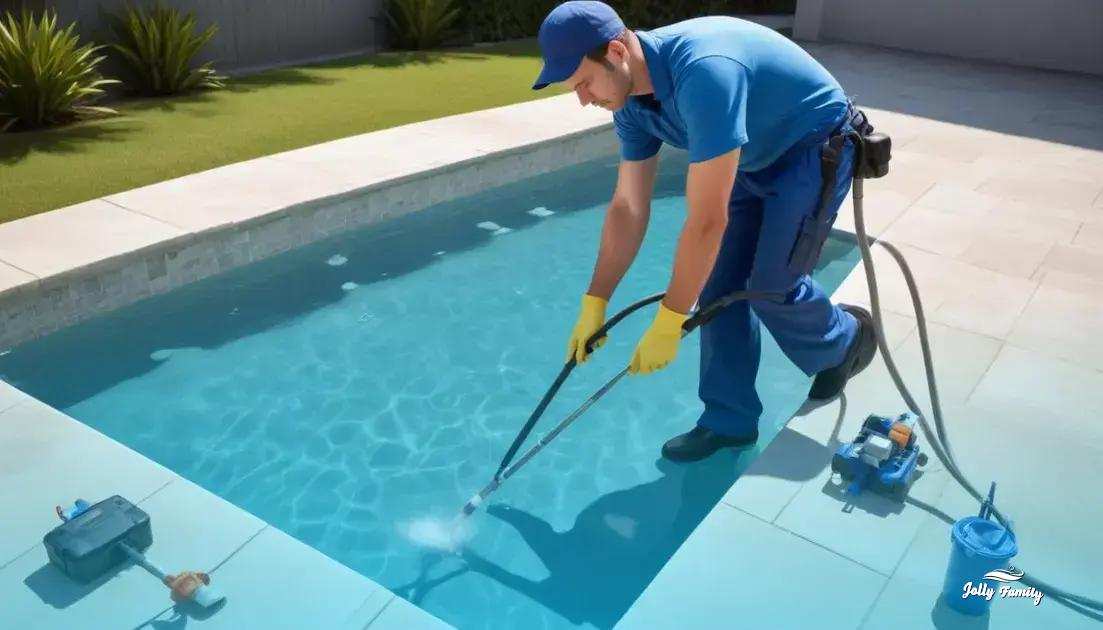
- Brush all surfaces: scrub walls, steps, and corners to break up biofilm and expose algae to chemicals.
- Test and balance: check free chlorine and pH first; get pH to 7.2–7.6 so sanitizer works well.
- Shock the pool: perform a shock treatment following product directions. For common green algae, raise free chlorine significantly for several hours to kill spores.
- Use an algaecide when needed: add a clarifying algaecide for mustard or to speed cleanup after shocking, following label doses.
- Run the pump continuously: keep filtration on during treatment to move chemicals and filter out dead algae.
treating specific algae types
- Green algae: respond well to shock, brushing, and good filtration.
- Yellow/mustard algae: needs brushing and a targeted algaecide; vacuum thoroughly after particles settle.
- Black algae: can cling to grout and often needs aggressive brushing and repeated localized treatments; a professional acid wash may be required for severe cases.
filter and equipment cleaning
- Backwash or clean the filter: remove trapped spores—clean cartridges or backwash DE/sand filters after treatment.
- Clean pump and skimmer baskets: debris blocks flow and lowers sanitizer contact time.
- Check pressure and flow: clean or replace worn parts that reduce turnover and create dead spots.
weekly routines to stop algae cycles
- Test free chlorine and pH: at least twice a week in warm weather; adjust to targets immediately.
- Brush twice weekly: keep surfaces scrubbed to prevent biofilm and hiding spots.
- Run the pump daily: aim for a full turnover each day or 8–12 hours run time in hot climates.
- Vacuum and remove debris: weekly vacuuming and emptying skimmer baskets reduce nutrients.
- Monitor CYA and phosphates: test monthly; lower high phosphates with a remover and keep CYA in recommended range.
- Shock after heavy use or storms: a quick shock prevents blooms from guest use or runoff.
practical tips and safety
- Follow product labels: dosages and safety instructions matter to avoid damage or injury.
- Store chemicals safely: keep in a cool, dry place and never mix incompatible products.
- Keep a simple log: record tests, run times, and treatments so you spot patterns if algae returns.
long-term prevention plan with local pros like Jolly Family
Set a steady plan with a local technician to keep algae from returning and to match care to your pool’s needs.
service plan components
- Routine visits: weekly or biweekly checks for water balance, sanitizer, and debris removal.
- Monthly tasks: test CYA, alkalinity, and phosphates; clean or inspect filters and baskets.
- Seasonal service: spring start-up and fall tune-up to prevent long-term buildup.
- On-demand support: quick response for storms, heavy use, or early signs of green water.
what professionals do on each visit
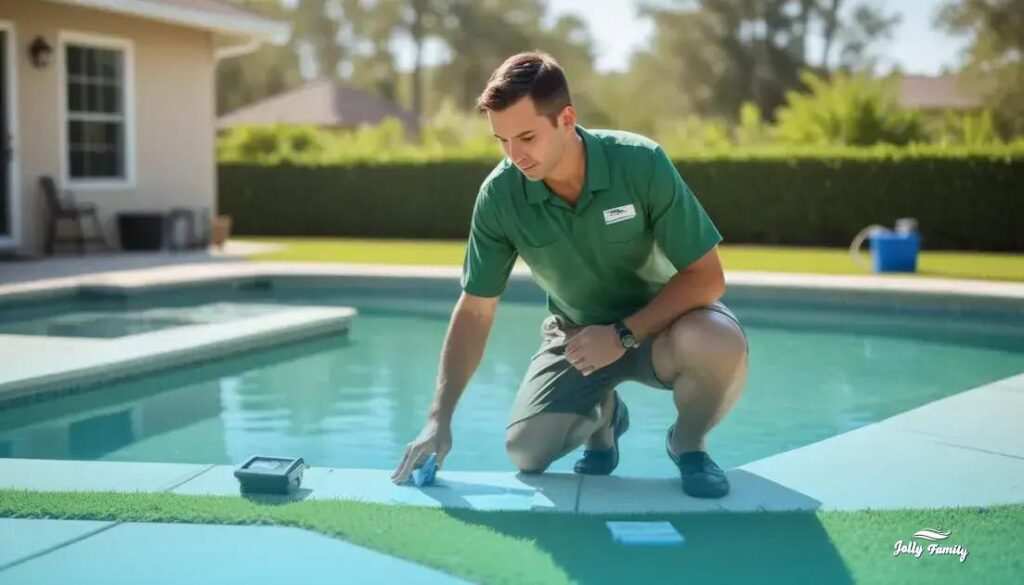
- Full water test: digital and strip tests with recorded results and action notes.
- Equipment check: pump, filter, valves, and return jets inspected and adjusted for good flow.
- Surface care: brushing, skimming, and targeted vacuuming to remove biofilm and spores.
- Targeted treatments: calibrated shocks, algaecide doses, and phosphate control only when needed.
seasonal checklist to prevent regrowth
- Spring: deep clean, balance water, and reset CYA after fill or heavy splash events.
- Summer: increase testing frequency, boost run time, and watch phosphate sources like runoff.
- Fall/winter: maintain sanitizer and remove organic debris before cooler, calmer months.
how to work with local pros effectively
- Share a log: give technicians recent test results and notes so treatments target the real cause.
- Agree on goals: discuss desired clarity, run times, and budget to set realistic maintenance levels.
- Ask for education: a short demo on testing and simple fixes helps you catch issues early.
- Confirm guarantees: ask about follow-up visits if algae returns after professional treatment.
Keeping algae away long-term is a mix of steady homeowner tasks and timely professional care. A local company can tailor visits, fix hidden problems, and free you from repeat outbreaks.
Keep algae away for good
Quick recap: test water, brush surfaces, run the pump, and clean the filter. Treat algae fast with shock and the right algaecide when needed.
Make simple weekly habits—test chlorine and pH, brush, and empty skimmers—to stop regrowth. Keep a short log to spot patterns early.
If algae keeps coming back, call a local technician to check equipment and set a long-term plan. Small, steady steps prevent big, messy problems.
FAQ – pool algae keeps coming back
Why does algae keep coming back in my pool?
Algae returns when sanitizer is low, water balance is off, circulation is poor, filters are dirty, or nutrients like phosphates are present.
How soon should I shock the pool when I see algae?
Shock as soon as you spot algae. Follow the product label, run the pump continuously, brush surfaces, and repeat treatment until the water clears.
How often should I test my pool water in hot months?
Test free chlorine and pH at least twice a week, or daily during heat waves or after storms. Check CYA and phosphates monthly.
Do phosphates really cause algae, and how do I lower them?
Phosphates feed algae if high. Remove them with a phosphate remover, reduce runoff, and keep skimmers and filters clean to limit nutrients.
What weekly routine helps prevent algae cycles?
Brush walls twice weekly, run the pump for a full turnover or 8–12 hours daily, empty skimmer baskets, test chlorine and pH, and vacuum debris weekly.
When should I call a professional technician?
Call a pro if algae returns after proper treatment, if you have black algae, persistent cloudiness, or suspected pump/filter faults. Pros can diagnose hidden issues and set a maintenance plan.