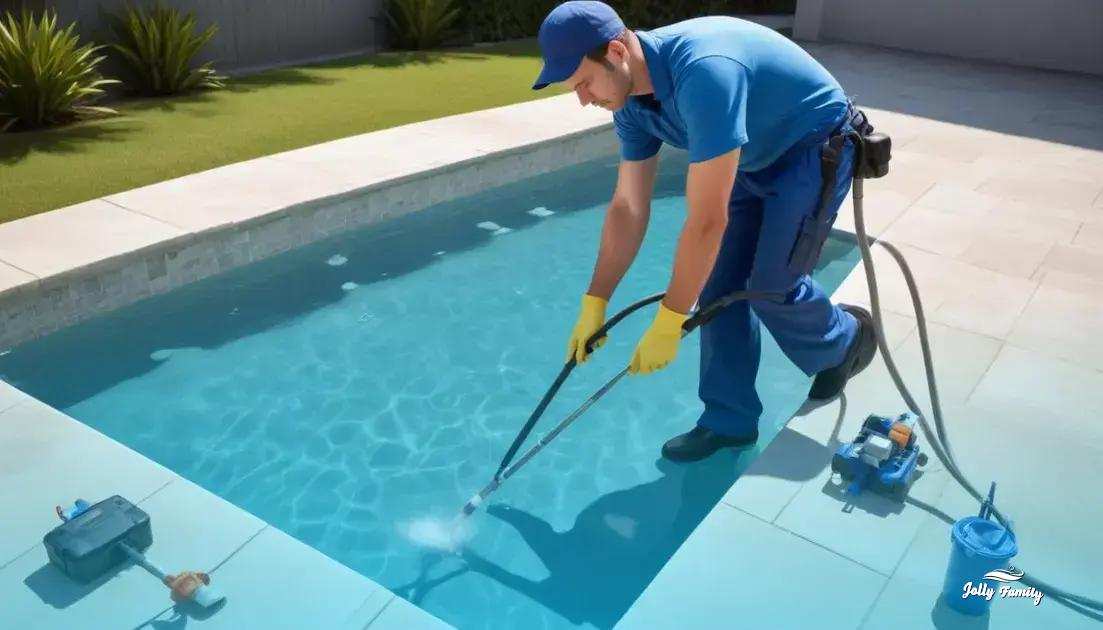

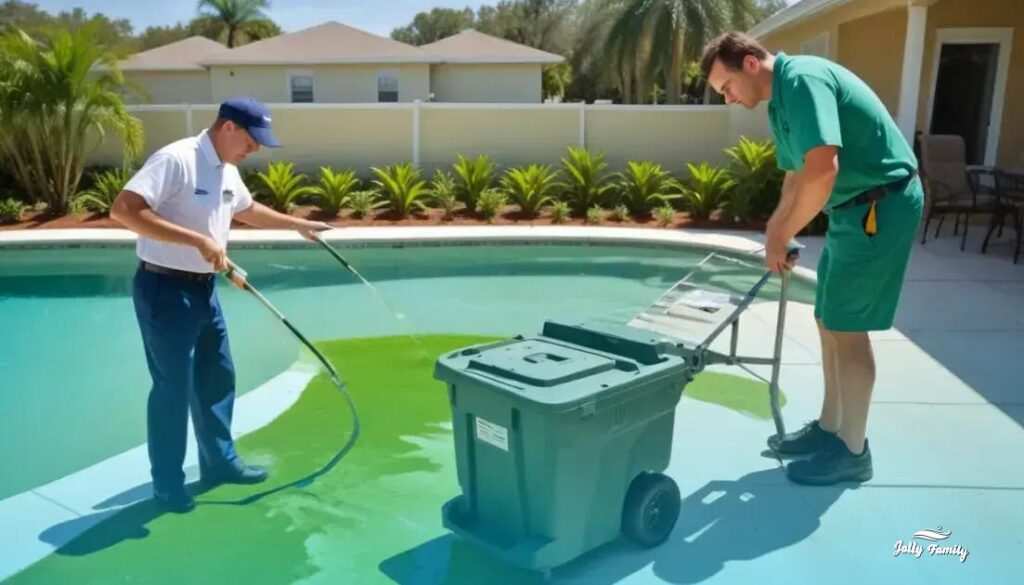
pool algae problem professional help: hire a licensed pool technician when algae persists after 72 hours, dark or rooted spots remain, outbreaks spread rapidly, or recurring blooms suggest hidden plumbing or nutrient issues; a pro will diagnose circulation and filtration failures, apply targeted chemical and mechanical treatments, and recommend repairs to prevent future infestations.
pool algae problem professional help; found green, cloudy or slimy water and not sure what to do next? I’ve seen this with Kissimmee homeowners: a few quick tests and the right sequence of steps can save time and money. Read on to learn practical actions, risks to watch for and when Jolly Family should take over the cleanup.
identify algae types and what each means for your pool
Knowing which algae is in your pool helps you pick the right treatment fast. Look at color, texture and where it grows to decide the next steps.
Green algae
Green algae is the most common. It makes water cloudy or gives the walls a fuzzy green tint. It floats when mild and coats surfaces when heavy.
- Cause: low free chlorine, poor circulation or a dirty filter.
- Quick treatment: brush surfaces, shock the pool with chlorine, run the filter 24–48 hours and vacuum dead algae.
- Tip: repeat brushing and filtering until water clears; still there after 3 days, consider professional help.
Yellow or mustard algae
Yellow/mustard algae looks like fine dust or pollen on steps and shaded areas. It often resists light chlorine doses and clings to rough surfaces.
- Cause: shaded walls, organic debris, low sanitizer in corners.
- Treatment: brush hard, use a targeted algaecide, vacuum and backwash. Consider a phosphate reducer if nutrients persist.
- When to call a pro: if it returns quickly or covers large areas despite treatment.
Black algae
Black algae appears as dark spots or clusters stuck to plaster or grout. It roots into the surface and resists normal chlorine levels.
- Cause: porous surfaces, scratches, and old plaster that shelter roots.
- Treatment: aggressively scrub with a metal brush, apply a specialized algaecide, then shock the pool with high chlorine. Multiple treatments may be needed.
- Pro advice: if spots stay after repeat treatments, a professional may need to acid-wash or perform resurfacing.
String and filamentous algae
String algae form long green threads or mats that float or attach to plants and ladders. They grow in low-flow zones.
- Cause: calm areas, low circulation and excess nutrients.
- Treatment: rake out large mats, brush, shock and improve circulation. Clean skimmer baskets and filters thoroughly.
Pink slime and biofilm
Pink slime is actually bacteria that forms a slippery, pinkish film on steps and tile. It can harbor algae and reduce sanitizer effectiveness.
- Cause: poor cleaning of toys, steps, and plumbing; warm water and low sanitizer.
- Treatment: scrub with a detergent or enzyme cleaner, shock the pool, and sanitize pool accessories. Clean filters and backwash.
For all types, keep a routine: test water weekly, maintain proper chlorine and pH, clean filters and brush surfaces. If algae returns frequently or covers large areas, a professional inspection can find hidden causes like plumbing dead zones or persistent nutrient sources.
fast-action steps you can take before calling a pro
If you spot algae, act quickly with simple steps that limit spread and improve water clarity while you wait for a pro.
Immediate safety and quick checks
- Test sanitizer and pH with a pool kit: free chlorine and pH must be in range before heavy treatment.
- Keep people and pets out until water is treated and balanced.
- Remove visible debris with a skimmer so chemicals can reach algae.
Treatment actions you can do now
- Brush all walls and steps vigorously to break algae mats and expose cells to sanitizer.
- Shock the pool using a high-dose chlorine shock per label directions; do this at dusk to reduce sunlight loss.
- Apply a targeted algaecide for stubborn yellow or black patches if shock alone is slow to work.
Filter and circulation fixes
- Run the pump 24–48 hours continuously after shocking to filter out dead algae.
- Clean or backwash the filter and empty skimmer baskets to restore flow and filtering capacity.
- Check returns and move jets to improve circulation in low-flow corners.
Cleaning and removal
- Vacuum dead algae after it settles; use waste mode if possible to avoid recycling clogs into the filter.
- Scrub spots with a brush or metal brush for black algae, then re-treat as needed.
- Sanitize pool toys, floats and ladders to stop recontamination.
Monitor progress and know when to call a professional
- Test water daily until clear; keep a short log of chlorine and pH readings and treatment steps.
- Take photos to track improvement—if algae returns or does not clear in 72 hours, consider pro help.
- Call a pro sooner for black algae that won’t budge, large outbreaks, plumbing dead zones, or if you suspect surface damage.
safe chemical treatments and when they work best
Choose safe chemicals based on the algae type and your water test. Use products as labeled and protect people and pets while treating.
Chlorine shock
Chlorine shock is the first line for most green algae. It raises sanitizer levels quickly to kill algae cells.
- When to use: visible green cloudiness or after heavy swimmer use.
- How to apply: follow the product label, add shock at dusk, and run the pump continuously.
- Aftercare: brush surfaces, vacuum settled algae, and test daily until clear.
Algaecides: types and best uses
Algaecides help prevent regrowth and treat stubborn patches. Pick the type for your problem.
- Polyquats and non-metal algaecides: good for mustard and general prevention; use after shocking.
- Copper-based algaecides: strong for green algae but may stain surfaces and pool liners if metals are present.
- Specialized products for black algae: these are stronger and often used with repeated brushing and shock.
Phosphate removers and clarifiers
Phosphates feed algae. If nutrients are high, a phosphate remover can reduce food for algae. Clarifiers bind tiny particles so filters can remove them.
- Use a phosphate remover when tests show persistent nutrient levels despite normal chemistry.
- Use clarifier after shock to speed clearing of cloudy water, then clean the filter.
pH, stabilizer and metal control
Correct pH makes chemicals work. Stabilizer (CYA) protects chlorine from sun but too much lowers effectiveness. Metals in water can react with some algaecides.
- Test and adjust pH before heavy treatment so chlorine works well.
- If stabilizer is very high, consider partial drain or professional advice.
- Use a metal sequestrant if tests show copper or iron to prevent staining when using metal-based algaecides.
Safety, timing and mixing rules
- Always read and follow the label. Manufacturer instructions trump general advice.
- Wear gloves and eye protection when handling concentrated chemicals.
- Never mix chemicals directly. Add one product at a time and allow the pump to circulate.
- Wait to swim until the product’s safe-to-swim range is reached, as the label indicates.
- Run the filter continuously after treatment and clean or backwash as needed.
If treatments fail after correct use, professional inspection can identify hidden causes like plumbing dead zones, very high stabilizer, or surface damage that standard products cannot fix.
when to call Jolly Family: signs a professional is needed
Jolly Family may need to step in when home treatments don’t solve the problem. Look for clear signs before calling a pro to save time and cost.
Algae that won’t clear after 72 hours
- If you followed shock, brushed, and ran the filter for three days with little change, the issue may be deeper.
- Document readings and photos to show the technician for faster diagnosis.
Black spots or deeply rooted patches
- Dark, stubborn spots that resist scrubbing often root into plaster or grout and need specialized treatment.
- Professionals can decide between repeat chemical treatment, acid washing, or resurfacing.
Large-scale outbreaks or rapid spread
- When algae covers most of the pool surface or returns within days, hidden nutrient sources or circulation failures may exist.
- Technicians inspect skimmers, jets, and plumbing to find dead zones that feed algae.
Persistent cloudiness or recurring problems
- Cloudy water after treatment can point to filter damage, clogged media, or high stabilizer levels.
- A pro can test stabilizer, metals and phosphates, and recommend steps like partial drain or filter service.
Staining, surface damage, or safety concerns
- Visible stains, liner discoloration, or slippery biofilm need careful handling to avoid worsening damage.
- If swimmers’ health or pets are at risk, or you smell strong chemical odors, call a professional promptly.
When in doubt, a quick inspection by a trained technician can pinpoint causes, prevent repeat work, and protect your pool investment.
routine maintenance plan to prevent future algae outbreaks
Build a simple, repeatable plan so algae never gets a foothold. Small habits prevent big cleanups.
Weekly testing and balance
- Test water weekly for free chlorine, pH, alkalinity and stabilizer (CYA).
- Adjust pH to 7.2–7.6 so chlorine works well.
- Keep free chlorine in the recommended range for your pool type.
Daily and circulation habits
- Run the pump daily long enough to turnover the pool 1–2 times (8–12 hours typical).
- Move return jets to boost flow in corners and steps where algae likes to hide.
- Skim and remove debris each day so chemicals reach all surfaces.
Cleaning and filter care
- Brush walls and steps at least once a week; more often if you see slime or pollen.
- Backwash or clean the filter on schedule and after algae treatment.
- Check skimmer baskets and pump strainer; clear them to maintain flow.
Targeted treatments and timing
- Shock after heavy use or storms to prevent organic load from feeding algae.
- Use a weekly or monthly low-dose algaecide as a preventive step in warm months.
- Test for phosphates and metals if algae recurs; treat with a phosphate remover or sequestrant when needed.
Recordkeeping and periodic inspections
- Keep a simple log of readings, treatments and pool conditions to spot trends.
- Inspect equipment quarterly: pump, filter, heaters and return lines.
- Schedule a professional inspection annually or when problems repeat; pros can find hidden dead zones or worn surfaces.
Consistent small actions—testing, circulation, brushing and filter care—are the best defense against future algae outbreaks.
Keep algae out with simple habits
Regular testing, brushing, and good circulation stop most algae before it starts. Act quickly when you spot growth and follow product directions.
If algae stays after 72 hours, dark spots appear, or equipment seems faulty, call a professional. A trained technician can find hidden causes and protect your pool.
Small, consistent care saves time and money. Keep a short log, stick to routine maintenance, and get help when needed.
FAQ – pool algae problem professional help
How quickly should I act when I spot algae?
Act as soon as you notice it: test chlorine and pH, keep people out, brush visible algae, and start shock treatment to limit spread.
Can I treat algae myself or should I call a professional?
You can handle small green outbreaks with proper shock and brushing, but call a pro if algae persists after 72 hours, if black spots remain, or if the outbreak is large.
How long before it’s safe to swim after treatment?
Follow the chemical label and test results; do not swim until free chlorine and pH are in the safe ranges shown on the product instructions.
What routine steps prevent algae from returning?
Test weekly, keep chlorine and pH balanced, run the pump for proper turnover, brush surfaces, clean filters, and shock after heavy use or storms.
Which chemicals work best for each algae type?
Use chlorine shock for green algae, polyquat or targeted algaecides for mustard, specialized treatments and heavy brushing for black algae, and phosphate removers if nutrients are high.
Can algae stain or damage my pool surfaces?
Yes. Deeply rooted black algae and metal reactions can stain or harm plaster and liners; persistent stains may need professional cleaning or resurfacing.