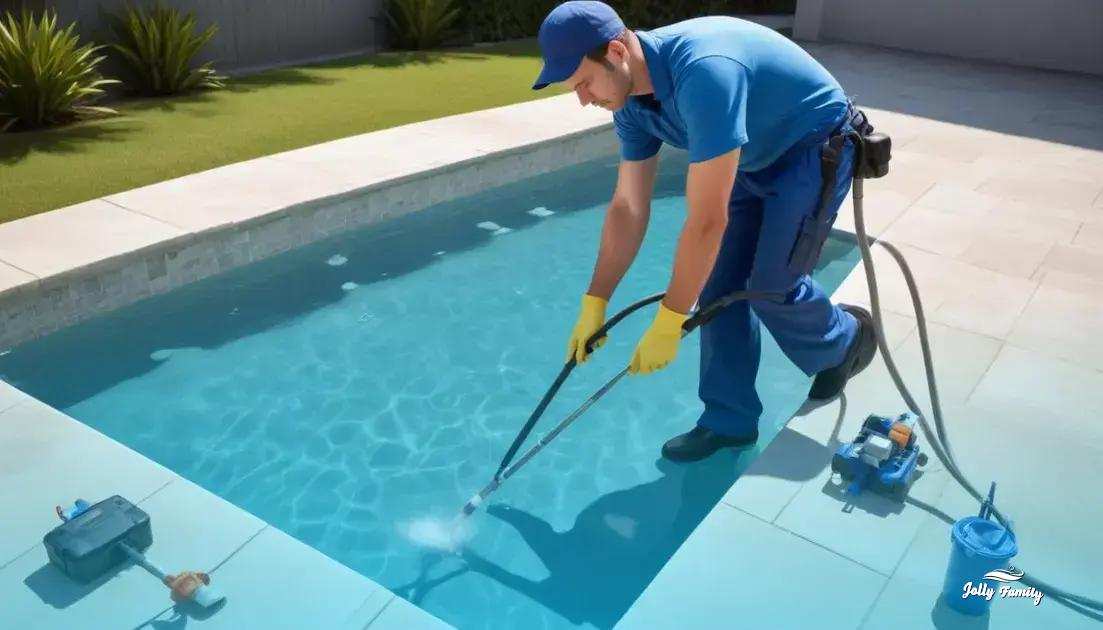

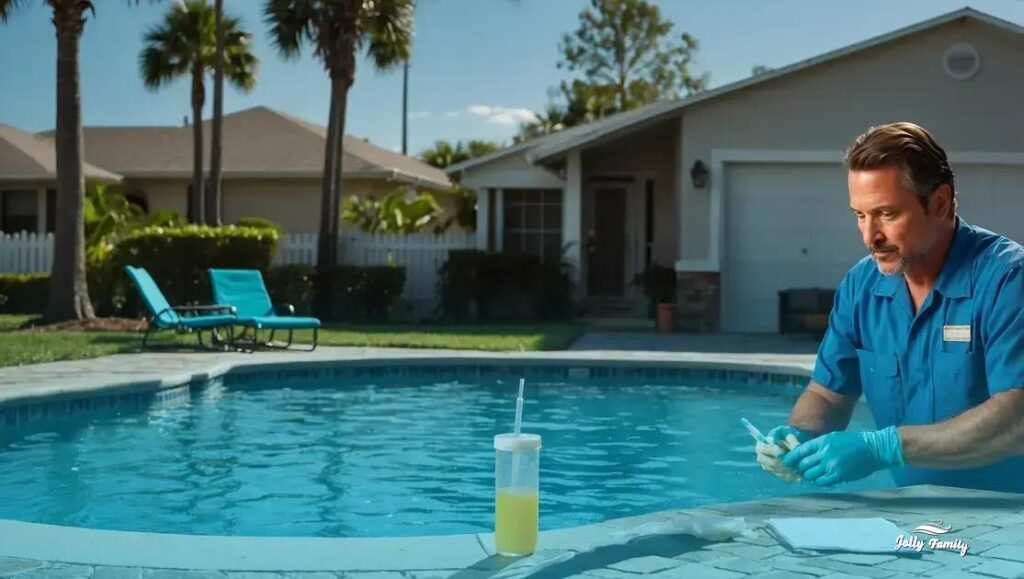
pool cleaning service for homeowners Kissimmee delivers year-round regular weekly maintenance, accurate chemical testing, filter and equipment care, and fast storm-response repairs to keep pools clear, safe, and swim-ready, with licensed local technicians, safety-focused inspections, transparent service reports, and predictable pricing.
pool cleaning service for homeowners Kissimmee — want a pool that’s always swim-ready without the stress? At Jolly Family, we combine reliable weekly care, simple testing and local know-how to keep your water clear and safe. Curious how a consistent routine changes everything?
assessing your pool: quick checks every homeowner should do
Start with a quick walk around the pool. Look at water clarity, surface debris, and the tile line. Small issues seen early are easier to fix.
Visual and safety checks
Scan the water for cloudiness, leaves, or a green tint. Check lights, ladders, and the pool deck for cracks or loose tiles. Make sure safety covers and alarms work.
Water level and temperature
Ensure the water sits near the middle of the skimmer opening. Too low can damage the pump; too high affects skimming. Note the water temperature — big shifts can change chemical needs.
Chemical quick test
Use test strips or a liquid kit once a week. Aim for pH 7.2–7.6 and free chlorine 1–3 ppm. Also check total alkalinity and sanitizer levels. Record results to spot trends.
Equipment and filter check
Look at the pump and filter while they run. Clear debris from skimmer and pump baskets. Check the filter pressure gauge: if pressure rises sharply above normal, clean or backwash the filter.
DIY fixes you can do now
- Skim the surface and empty skimmer baskets.
- Brush walls and steps to remove buildup.
- Adjust pH with a small dose of increaser or decreaser as needed.
- Add sanitizer if chlorine is low; follow product instructions.
When to call a professional
Contact a pro if water stays cloudy after 24 hours, equipment fails to start, you suspect a leak, or algae returns despite treatment. These problems often need specialized tools.
Keep a short log of checks and actions. A simple routine — daily glance, weekly chemical test, monthly equipment inspection — saves time and keeps your pool safe and swim-ready.
weekly maintenance checklist: brushing, skimming and vacuuming
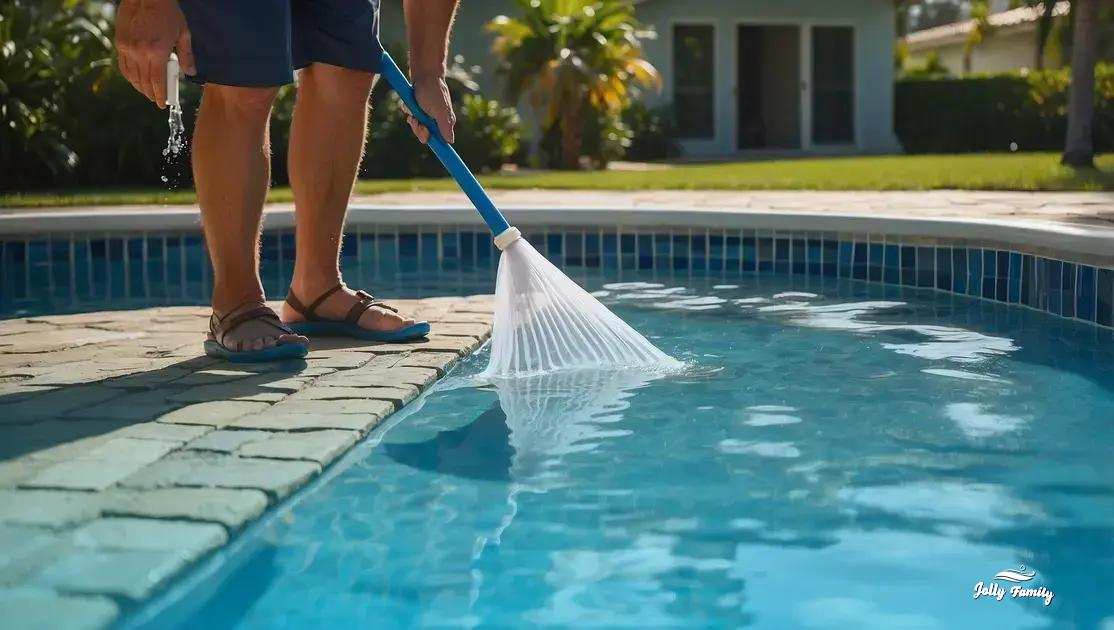
Follow a focused weekly routine: brush the walls, skim the surface, then vacuum the floor. These three steps remove buildup, prevent algae, and keep filters working efficiently.
Brushing: technique and timing
Brush all walls, steps, ladders and the waterline once a week. Use a brush that matches your pool surface: nylon for vinyl, stainless-steel for concrete, and a softer brush for pebble finishes. Work in short, overlapping strokes from top to bottom to loosen dirt and biofilm.
Skimming: quick surface cleanup
Skim the entire surface before vacuuming. Hold the net at a shallow angle and pull debris toward you in smooth passes. Empty the skimmer basket frequently to keep suction strong. For heavy leaf days, skim twice to avoid clogging the pump.
Vacuuming: manual and automatic options
For manual vacuuming, connect the vacuum head, hose and pole, then purge air from the hose before attaching to the skimmer. Move the head slowly in straight lines to avoid stirring sediment. For an automatic cleaner, run it while the pump is on, and still vacuum manually around tight corners and steps each week.
Checklist and schedule
- Skim surface: 5–10 minutes.
- Brush walls and waterline: 10–20 minutes.
- Vacuum floor: 20–40 minutes (depends on pool size).
- Empty skimmer and pump baskets after cleaning.
- Run filter for the recommended hours (typically 8–12 hours daily in warm climates).
Common issues and quick fixes
If water stays cloudy after vacuuming, check filter pressure and clean or backwash the filter. If algae returns, brush more often and shock the pool per product instructions. If suction is weak, inspect the skimmer and pump baskets for clogs and confirm the pump lid is sealed.
Safety and efficiency tips
Wear gloves and protective eyewear when handling chemicals. Clean tools after use and store them shaded to extend life. Keeping a short log of weekly tasks and notes helps spot patterns and makes maintenance faster over time.
chemical balance demystified: testing methods, ideal ranges and simple fixes
Test your pool water at least once a week and after heavy rain, hot weather, or many swimmers. Always collect a sample from elbow depth in a clean container to get accurate results.
Testing methods
Use simple test strips for quick checks. Dip a strip and compare colors to the chart. Liquid test kits give more precise results for pH and chlorine. Digital meters or photometers offer the best accuracy for serious pool care.
How to read results
Write numbers down each time. Look for trends, not a single reading. If a value is off, treat the pool and retest after the water mixes for several hours.
Ideal ranges to aim for
- pH: 7.2–7.6 — keeps water comfortable and chemicals effective.
- Free chlorine: 1–3 ppm — sanitizes and prevents algae.
- Total alkalinity: 80–120 ppm — buffers pH swings.
- Calcium hardness: 200–400 ppm — prevents corrosion or scaling.
- Cyanuric acid (stabilizer): 30–50 ppm — for outdoor pools to protect chlorine from sun.
Simple fixes and steps
- To lower pH or alkalinity: add measured doses of muriatic acid or sodium bisulfate. Add slowly and retest after mixing.
- To raise pH: use soda ash (sodium carbonate) in small amounts and retest.
- To raise alkalinity: add baking soda (sodium bicarbonate).
- To raise calcium hardness: add calcium chloride per product instructions.
- To lower high levels (alkalinity, calcium, cyanuric acid): dilute with fresh water if possible.
- To restore sanitizer quickly: do a chlorine shock following label doses and safety steps; wait and retest before swimming.
Safety and timing
Always wear gloves and eye protection when handling chemicals. Add chemicals to water, not water to chemicals. Allow the pump to run and wait the recommended time on the product before retesting or swimming.
Quick troubleshooting
Cloudy water can mean high alkalinity, dirty filter, or low chlorine. Scaling on tiles signals high calcium hardness or high pH. Recurring algae usually means low free chlorine or low cyanuric acid protection. Fix the likely cause, then shock and brush.
Keep a simple log of tests and actions. Small, regular steps keep chemistry stable and reduce big fixes later.
filter and equipment care: when to clean, replace or call a professional
Check the pool equipment pad weekly for leaks, odd sounds, or wet spots. Look for loose wires and wet soil around pipes.
Know your filter type
Most pools use sand, cartridge, or DE filters. Each needs different care. Sand: backwash when the pressure rises about 8–10 psi above the clean reading. Cartridge: rinse every 3–6 months and replace cartridges every 1–3 years depending on use. DE: backwash and add fresh DE after cleaning; inspect grids yearly.
When to clean or backwash
- Check the pressure gauge weekly. Clean or backwash when pressure climbs 8–10 psi over normal.
- After storms or heavy use, clean baskets and run an extra filter cycle.
- Empty skimmer and pump baskets weekly to keep flow strong.
Replacing parts and expected lifespan
- Pumps often last 5–10 years with proper care.
- Sand media typically needs replacement every 3–5 years; cartridges last 1–3 years based on load and cleaning.
- Replace cracked lids, worn O-rings, and brittle hoses as soon as you spot them.
Routine pump and heater care
Keep the pump basket clean and the lid O-ring lubricated. Watch for grinding sounds or loud humming; these often mean bearing or impeller trouble. Follow the heater maker’s service schedule and check vents and connections for blockages.
Signs you should call a professional
- Persistent leaks under the equipment pad or visible pipe damage.
- Pump will not prime after checking baskets and valves.
- Electrical trips, burning smells, or loud mechanical noises.
- Cloudy water that does not clear after filter cleaning and proper chemistry.
Maintain a short log and safety tips
Record dates of backwash, cartridge cleans, part replacements, and pressure readings. Turn off power before servicing electrical parts, and wear gloves and eye protection when handling filters or chemicals. A simple log helps you spot trends and know when to replace equipment.
preventing algae, stains and damage in Kissimmee’s climate
Kissimmee’s heat, sun and sudden storms make pools prone to algae, stains and surface wear. A few steady habits cut risk and keep repairs rare.
Keep sanitizer and stabilizer steady
Maintain free chlorine 1–3 ppm and pH 7.2–7.6. For outdoor pools, keep cyanuric acid (stabilizer) around 30–50 ppm to protect chlorine from sun loss. Test after heavy sun or many swimmers and adjust quickly.
Brush, clean and improve circulation
Brush tiles, steps and corners weekly to remove early biofilm. Run the pump long enough to turn over the pool water — typically 8–12 hours daily in hot months. Aim water returns to sweep water toward the filter, not trap dead zones.
Prevent and treat stains and metals
- Test for metals if water turns brown, red or blue-green. Use a metal sequestering agent when metals are present.
- For calcium scaling or white crust, lower pH slightly and use a scale inhibitor; if severe, partially drain and refill.
- Follow product labels and add sequestering agents before shocking to prevent metal staining during oxidation.
Control algae proactively
Shock the pool after heavy rain, large parties, or when chlorine falls below range. Many shocks advise raising free chlorine temporarily; follow label guidance. Use a phosphate remover if nutrients keep returning, and apply a targeted algaecide for recurring blooms.
Protect surfaces and equipment
Keep total alkalinity in the 80–120 ppm range to prevent pH swings that harm plaster or grout. Inspect tile grout and coping for chips; repair small damage early. Clean filters and baskets so chemical and mechanical systems can prevent buildup.
Quick actions after storms or long heat waves
Skim heavy debris, clean baskets, then test water within 24 hours. Backwash or clean the filter if pressure rises. If the pool clouds or shows algae signs, brush, shock and run filtration continuously until clear.
Log tests and treatments to spot patterns. Consistent, small steps are usually easier and cheaper than major stain or repair jobs.
choosing a local partner: what to expect from Jolly Family service

Hire a local company that gives clear, regular service and knows Kissimmee weather patterns. Expect plans that match your pool size and use.
service frequency and plans
Choose weekly or biweekly maintenance depending on use and season. A good provider offers tailored plans, seasonal tune-ups, and extra visits after storms.
transparent pricing and reports
Look for straightforward rates with no hidden fees. Expect a short service report after each visit with tests, actions taken, and recommended next steps. Photos on a tablet or app are a helpful proof of work.
qualified staff and safety
Technicians should be trained, licensed, and insured. Ask about background checks and ongoing training. Proper safety gear and clear handling of chemicals matter.
equipment care and repairs
The team should clean baskets, monitor filter pressure, and spot worn parts. Expect clear advice on repairs or replacements and options for parts and labor warranties.
customer support and guarantees
Check response times for questions and emergencies. A local partner often offers faster callbacks and on-site help. Some services include satisfaction guarantees or trial periods.
questions to ask before hiring
- Are you licensed and insured in Florida?
- Do you provide written service reports and photos?
- What is your emergency response time?
- Do you offer tailored plans and seasonal adjustments?
- Can you provide local references or reviews?
Expect clear communication, dependable visits, and documented care. These basics make a local partner like Jolly Family practical and reliable for Kissimmee homeowners.
Wrap-up: keep your pool swim-ready
Small, regular steps prevent big problems and keep your pool safe. Check water, skim, brush, and vacuum on a weekly rhythm and write down what you do.
Test chemistry regularly, run the filter daily, and clean baskets to maintain good circulation. Tackle minor issues quickly to avoid costly repairs.
If you see leaks, persistent cloudiness, or strange equipment noises, call a trained local technician for help. A nearby provider can respond faster after storms and provide clear service records.
Keep a short log, follow simple routines, and enjoy a clear, safe pool all year.
FAQ – Pool cleaning service for homeowners Kissimmee
How often should my pool be serviced in Kissimmee’s climate?
Weekly service is ideal in Kissimmee due to heat and debris; biweekly can work for low-use pools, but increase visits after storms or heavy use.
What does a standard weekly service include?
A typical visit covers skimming, brushing, vacuuming as needed, emptying baskets, testing chemistry, and a brief equipment check with a service report.
Can I do maintenance myself or should I hire professionals?
Homeowners can handle basic skimming and testing, but professionals ensure proper chemistry, filter care, and catch issues like leaks or failing pumps early.
What are signs I should call a pro right away?
Call a technician for persistent cloudiness, visible leaks, pump that won’t prime, strange noises, or recurring algae despite treatment.
How much does regular pool cleaning typically cost?
Costs vary by pool size and service level; expect weekly maintenance to be a set weekly fee and extra charges for repairs, chemicals, or one-time deep cleans.
Is it safe to handle pool chemicals at home?
Yes with care: wear gloves and eye protection, add chemicals to water (not water to chemicals), follow label instructions, and store products locked and shaded.