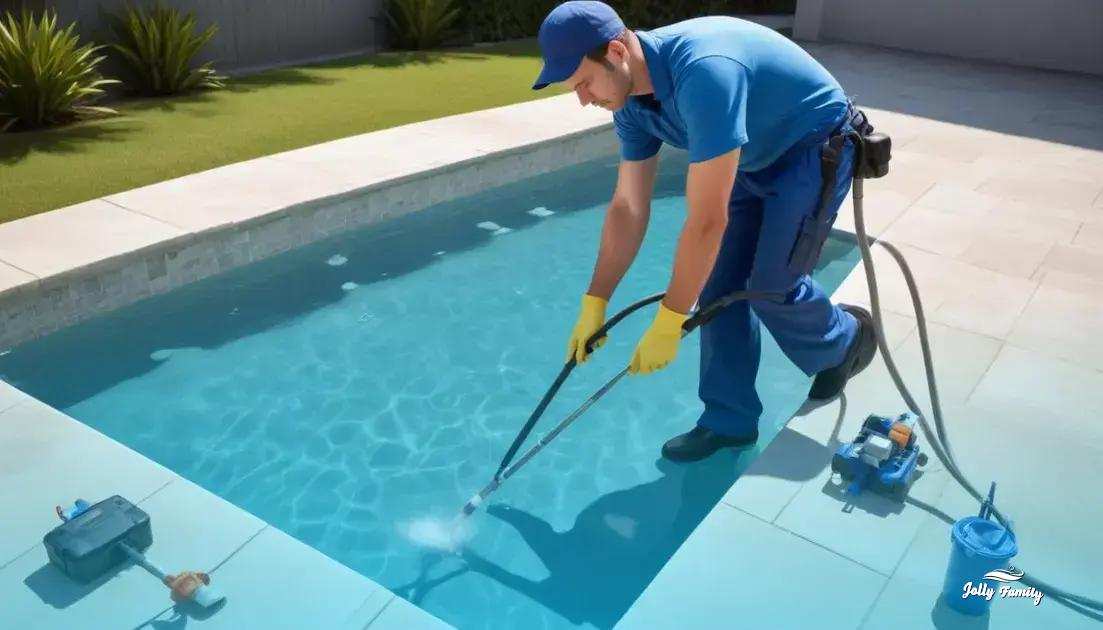

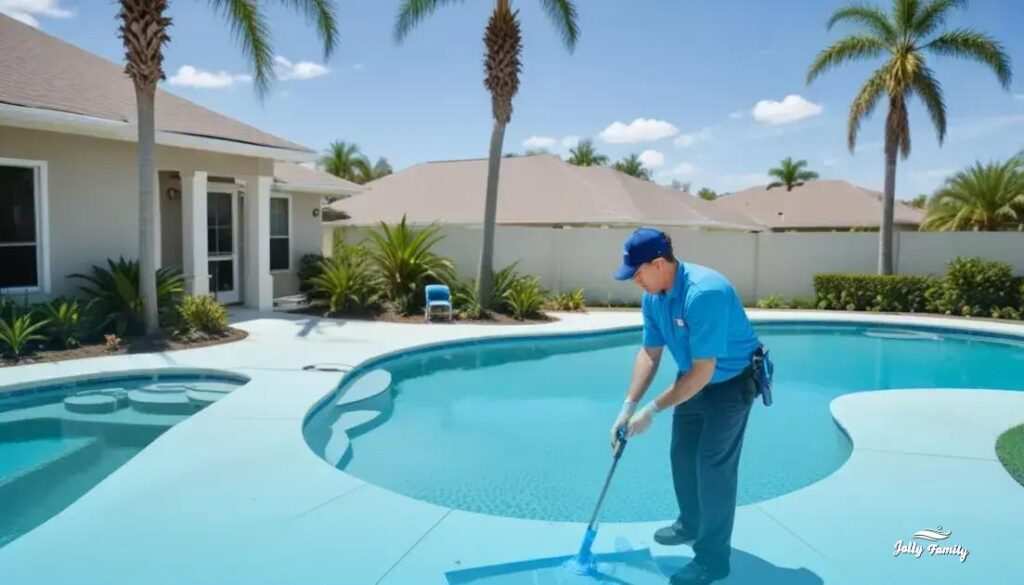
pool cleaning service Orlando area Kissimmee provides weekly professional skimming, vacuuming, filter maintenance, accurate water testing and chemical balancing, plus storm cleanup and documented visit reports to keep pools safe, clear and ready, extend equipment life, and deliver fast local response for homeowners and rental properties.
pool cleaning service Orlando area Kissimmee can save you time and headaches—especially if you host guests or have kids. Curious which checks matter most? At Jolly Family, we focus on consistent care that keeps pools safe, clear and ready to use.
what a full pool cleaning service includes
A full pool cleaning service includes routine and technical tasks that keep water safe, clear, and ready to use.
- Skimming and debris removal: remove leaves, insects and surface dirt every visit to prevent clogging and staining.
- Brushing and tile cleaning: scrub walls and waterline to stop algae and calcium buildup.
- Vacuuming: manual or automatic vacuuming to clear settled debris from the pool floor and steps.
- Filter and basket maintenance: clean or backwash filters and empty skimmer and pump baskets to restore proper flow.
- Water testing and chemical dosing: measure pH, chlorine, alkalinity and stabilizer; add precise chemicals to balance the water.
- Equipment inspection: check pumps, heaters, timers and valves for leaks, unusual noise or low pressure.
- Algae prevention and shock treatments: apply targeted treatments when needed to remove and prevent blooms.
- Documentation and recommendations: provide a visit report with actions taken and suggested repairs or upgrades.
Chemical balance and testing
Technicians test water with handheld kits or digital meters. They aim for a safe range: pH near 7.4 and free chlorine at the recommended level. Small, frequent adjustments work better than large doses. Regular testing prevents eye irritation, corrosion and algae.
Equipment inspection and maintenance
Inspecting the pump, filter and heater reveals issues early. Technicians watch for low flow, high filter pressure, worn seals and loose fittings. Simple fixes—cleaning a cartridge or tightening a union—often stop bigger failures.
Cleaning frequency and scheduling
Most pools benefit from weekly service in warm months and biweekly checks in slower seasons. High use or heavy foliage may require more frequent visits. A consistent schedule keeps chemicals steady and equipment healthy.
Seasonal and specialty services
Opening and closing a pool involves draining lines, balancing water, and protecting equipment from cold or storm season. Specialty work can include stain removal, acid washing, or deep algae treatment when routine cleaning isn’t enough.
Clear communication is part of a quality service: expect a brief report, safety notes, and any recommended follow-ups after each visit.
how often to schedule cleanings for Kissimmee pools
In Kissimmee, how often you schedule pool cleanings depends on use, weather and nearby trees. Adjust the plan to avoid big swings in water quality.
Typical schedules
- Weekly: best for busy family pools, rental properties, or pools near heavy foliage.
- Biweekly: works for low-use pools in calm yards during mild months.
- Daily checks: useful during heat waves, heavy use, or right after pool parties.
Factors that change frequency
- Weather: hot, rainy, or windy periods raise cleaning needs quickly.
- Use level: frequent swimmers and pets add oils and debris.
- Surroundings: palm trees, oaks, or construction increase leaf and dust load.
- Equipment condition: older filters or weak pumps may need more frequent attention to keep water clear.
Event-driven and emergency visits
Schedule a service after heavy storms, deep algae blooms, or large gatherings. A targeted visit for vacuuming and shock treatment stops problems from getting worse.
Practical tips to keep schedules effective
- Start with weekly cleanings for the first month to stabilize chemistry, then adjust.
- Ask your technician for a short visit report to track trends and avoid surprises.
- Keep a light maintenance routine between visits: skimming and a quick chemical check helps space out full services.
Clear scheduling tailored to your pool and property saves money and keeps water safe and inviting year-round.
chemical balance, testing and treatment explained simply
Testing and balancing pool water is simple when you follow a clear order and use the right tools.
Basic targets to know
- pH: aim for about 7.2–7.6 to protect skin, eyes, and equipment.
- Free chlorine: keep 1–3 ppm for regular use; higher after heavy use or algae.
- Total alkalinity: maintain 80–120 ppm to stabilize pH swings.
- Calcium hardness: target roughly 200–400 ppm to avoid scale or corrosion.
- Cyanuric acid (stabilizer): 30–50 ppm for outdoor pools to protect chlorine from sunlight.
Tools and testing methods
Use test strips, liquid reagent kits, or a digital meter. For best accuracy, test a sample taken a few inches below the surface in a clean cup. Digital meters give precise pH and chlorine readings; reagent kits show color changes you compare to a chart.
Step-by-step adjustment order
- Test the water and record values.
- Adjust total alkalinity first with sodium bicarbonate if low.
- Correct pH next: add pH increaser (sodium carbonate) or pH decreaser (sodium bisulfate) in small doses.
- Balance calcium hardness if needed to prevent scaling or corrosion.
- Add chlorine or shock last to reach the right sanitizer level.
Treatments explained simply
Shock treatment uses a high dose of chlorine (or non-chlorine shock) to remove contaminants and clear cloudy water. Algaecides help prevent stubborn growths. Clarifiers and enzymes assist filters by clumping fine particles for easier removal.
Safety and timing
Always follow label instructions and wear gloves when handling chemicals. After a chlorine shock, wait until free chlorine drops below safe swim levels before allowing bathing—often 8–24 hours depending on the product and dose.
Practical tips
- Make small adjustments and retest after a few hours instead of large doses at once.
- Test weekly in normal conditions and more often after storms, heavy use, or heat waves.
- Keep a log of readings to spot trends and catch issues early.
preventive maintenance: filters, pumps and equipment checks
Preventive maintenance keeps pool systems running and stops small problems from becoming costly repairs.
Filter care
- Clean skimmer and pump baskets weekly to keep flow steady and protect the filter.
- Backwash sand or DE filters when the pressure gauge rises about 8–10 psi above normal. For cartridge filters, remove and rinse every 1–3 months.
- Inspect filter media for tears, clogs, or DE residue; replace media or cartridges when worn.
Pump and motor checks
- Listen for unusual noise or vibration—these often mean worn bearings or imbalanced impellers.
- Check for leaks around the shaft seal, unions and fittings. A small drip can signal a failing seal.
- Feel the motor housing; it should be warm, not hot. Excess heat can indicate overload or poor ventilation.
- Confirm proper priming: the pump should fill quickly and show steady suction at the skimmer.
Other equipment inspections
- Test heater operation and look for corrosion on heat exchangers or gas fittings.
- Operate valves and timers to ensure they switch smoothly; lubricate O-rings and replace cracked valves.
- Verify automation controllers and salt systems read correctly and react to commands.
- Check pool lights, circulation jets and return fittings for leaks or damage.
When to schedule professional service
- Hire a pro for electrical faults, motor replacements, major leaks, or if you suspect a cracked pump housing.
- If filter pressure stays high after cleaning, call a technician to inspect deeper issues like collapsed laterals or clogged lines.
- Keep warranty and service records; many manufacturers require certified techs for certain repairs.
Practical tips and safety
- Keep a simple log: date, pressure reading, chemical notes and visible issues. Trends help catch problems early.
- Store basic spares: O-rings, union gaskets, pump lid O-ring, and a cartridge or small DE supply.
- Always turn off power at the breaker before opening equipment. Wear gloves and eye protection when handling parts or chemicals.
Regular checks—weekly baskets, monthly visual inspections, and seasonal professional tune-ups—extend equipment life and save money.
safety checks and seasonal tips for family pools
Keep family pools safe with regular checks and simple seasonal actions that prevent accidents and costly damage.
Daily and weekly safety checks
- Fence and gate: ensure the perimeter fence is intact and the self-closing, self-latching gate works every week.
- Alarms and covers: test pool alarms and inspect safety covers for tears or loose anchors.
- Drain covers: verify main drains and skimmer covers are secure to reduce entrapment risk.
- Rescue gear: keep a life ring, reaching pole and a floatation aid near the pool and within easy reach.
- Clear deck: remove toys and trip hazards; wet surfaces should have traction mats or non-slip treatment.
Supervision and household rules
Always designate a responsible adult to watch swimmers. Post and follow simple rules: no running, no diving in shallow areas, and no swimming alone. Teach children basic water safety and how to call for help.
Emergency readiness
- First-aid kit and CPR: keep a stocked kit nearby and have at least one person trained in CPR.
- Phone access: ensure a phone is close to the pool for emergencies and program local emergency numbers.
- Record keeping: note safety checks, alarm tests and any incidents to spot patterns and improve safety.
Seasonal tips — summer
In hot months, increase water testing and run the pump longer to handle heavy use. Store sunscreen and glass-free zones near the pool. Consider extra shade and hydration stations for children.
Seasonal tips — storm and hurricane prep
- Secure loose furniture and equipment. Remove or tie down lightweight items that could blow into the pool.
- Disconnect electrical components at the breaker if advised, and protect the equipment pad from standing water.
- After storms, wait for debris to settle, then test water and inspect for damage before allowing swimming.
Seasonal tips — cooler months
Maintain circulation and chemistry even in mild winters to prevent algae. Use a pool cover when not in use to limit debris and evaporation. For rarer freezes, follow manufacturer guidance to protect pipes and equipment.
Small, consistent safety steps—weekly checks, clear rules, and seasonal prep—keep family pools enjoyable and reduce risks all year.
choosing a reliable local partner: why Jolly Family stands out
Pick a local partner who proves reliability with records, clear communication, and quick response when issues arise.
What to look for
- Local experience: technicians familiar with Kissimmee weather, algae patterns, and common equipment issues.
- Insurance and certification: proper liability insurance and industry training protect you and your property.
- Transparent pricing: clear estimates, written scopes, and no hidden fees.
- Background-checked staff: safety and trust matter when techs enter your home.
- Fast response and emergency care: same-day or next-day options reduce damage after storms or equipment failure.
- References and reviews: local homeowner feedback shows real performance over time.
Service features that add value
- Digital visit reports with photos so you can track work and spot trends.
- Maintenance plans tailored to your use level and yard conditions.
- Warranty or satisfaction guarantees for repairs and major services.
- Clear scheduling and reminders to keep chemistry steady and equipment healthy.
Why Jolly Family stands out
Jolly Family focuses on fast communication, local knowledge, and consistent documentation. Technicians arrive with calibrated test kits, spare parts for common fixes, and a short visit report that shows actions taken. They offer flexible plans for busy families, rentals, and seasonal care.
Questions to ask before hiring
- Do you carry insurance and can you show proof?
- Will I receive a written estimate and a visit report?
- How do you handle emergency calls after storms?
- Can you provide local references or recent job photos?
Choosing a provider with clear answers, local experience, and visible records reduces surprises and keeps your pool safe and ready to use.
Keep your pool safe and ready year-round
Regular cleaning, proper chemical balance, and preventive maintenance make a big difference. Aim for weekly service during heavy use and test water often to avoid surprises.
Check equipment, clear debris, and follow safety steps like secure fencing and rescue gear. Small actions now can prevent costly repairs later.
Choose a reliable local partner who documents visits, responds quickly after storms, and knows Kissimmee conditions. Consistent care keeps water clear, family-friendly, and ready to use.
FAQ – pool cleaning service Orlando area Kissimmee
How often should I schedule pool cleanings in Kissimmee?
Weekly service is best for busy family pools and rental properties; biweekly can work for low-use pools in mild seasons.
What does a full pool cleaning service include?
A full service usually covers skimming, brushing, vacuuming, filter and basket cleaning, water testing and chemical balancing, and equipment inspection.
How do you treat algae and cloudy water?
Technicians use shock treatments, algaecides, and clarifiers as needed, then run filtration and vacuuming until the water clears.
What should I do after a storm or heavy rain?
Schedule a post-storm visit for debris removal, water testing and possible shock treatment to prevent contamination and algae growth.
How much does pool cleaning typically cost in the area?
Cost varies by pool size and service level; expect higher rates for frequent visits, specialty treatments, or urgent repairs—ask for a written estimate.
How do I choose a reliable local provider?
Look for local experience in Kissimmee, insurance and certifications, transparent pricing, background-checked staff, and clear visit reports or references.