
pool filter not keeping water clean often means clogged or damaged media, poor circulation, or imbalanced chemistry; check skimmer and pump baskets, record pressure, clean or backwash the filter, replace worn cartridge/sand/DE, and call a technician if pressure stays high, sand/DE appears in returns, or clarity doesn’t improve.
pool filter not keeping water clean? That cloudy water often points to clogged media, poor circulation, or chemistry off-balance. Think of the filter as the pool’s lungs — if it coughs, the whole system suffers. Below I show quick checks you can run and when Jolly Family should step in.
symptoms: how to tell your pool filter not keeping water clean
If your pool filter not keeping water clean, look for easy-to-spot clues: cloudy water, particles that never clear, or a greenish tint from algae.
Also notice the equipment: a high pressure reading, weak return flow, or constant need to backwash are red flags the filter isn’t doing its job.
Common signs to check
- Cloudy or hazy water even after shocking and balancing chemicals.
- Debris in the skimmer or on the pool bottom that returns quickly after cleaning.
- Small green patches or slippery surfaces—early algae growth.
- Persistent chemical smell or chloramine odor despite normal chlorine levels.
- Filter pressure higher than normal—typically about 8–10 psi above the clean baseline.
- Weak flow from return jets or uneven circulation around the pool.
- Need to backwash or clean the filter far more often than usual.
- Stains or discoloration on walls and steps that don’t respond to brushing.
Quick checks you can do right away
- Empty the skimmer and pump baskets; trapped leaves and hair can block flow instantly.
- Note the pressure gauge reading before and after cleaning baskets; if it stays 10 psi higher, the filter media may be clogged.
- Turn the pump off, then on, and watch the return jets—weak or sputtering flow suggests a circulation or pump issue.
- Brush visible algae and run the pump continuously for 24 hours; if cloudiness persists, the filter may be failing to trap fine particles.
- Check for visible damage: torn cartridge pleats, cracked laterals in sand/DE tanks, or DE visible on return as a whitish residue.
- If you still see poor clarity after these checks and chemistry is balanced, consider professional inspection or media replacement.
common causes: cartridge, sand and DE filter problems
Cartridge filters often fail when pleats trap fine debris or become damaged. If the cartridge looks dark, clogged, or has torn pleats, it will let particles pass through. Worn seals can also allow unfiltered water to bypass the media.
Cartridge causes and fixes
- Clogged or damaged pleats: remove and rinse with a hose; soak in a filter cleaner if oily residues persist; replace every 2–3 years or sooner if torn.
- Worn O-rings or seals: inspect, lubricate with silicone grease, and replace cracked rings to stop bypass.
- Improper seating: ensure the cartridge is installed correctly and the housing is tightened to maintain proper flow.
Sand filter causes and fixes
Sand filters can stop trapping debris when the sand compacts or water channels down a path of least resistance. Channeling and old, glassy sand reduce filtration efficiency.
- Channeling: caused by uneven flow or packed sand; backwash thoroughly and inspect flow patterns.
- Hardened or old sand: replace sand every 5–7 years or if grains have fused.
- Broken laterals or standpipe: open the tank and check for cracked parts; replace damaged laterals to prevent sand in the pool.
DE filter causes and fixes
DE filters catch very fine particles but rely on the correct amount of powder and intact grids. Low DE, torn grids, or missed backwashing will drop clarity quickly.
- Insufficient DE charge: add the proper DE after backwash following the manufacturer’s dosage.
- Torn or clogged grids: remove, rinse, and inspect; replace grids with ripped cloth or permanent damage.
- DE visible in returns: white powder in return water indicates damaged grids or incorrect assembly.
Shared causes across filter types
- Poor circulation or pump issues: clogged pump baskets, a failing impeller, or air in the system reduce flow and strain the filter.
- Imbalanced water chemistry: high solids, phosphates, or wrong pH can overload filter media and encourage algae.
- Irregular maintenance: follow a set cleaning and backwash schedule instead of waiting for visible problems.
step-by-step troubleshooting you can try before calling a pro
Start with quick checks you can do yourself to rule out simple problems and save time.
Step-by-step checklist
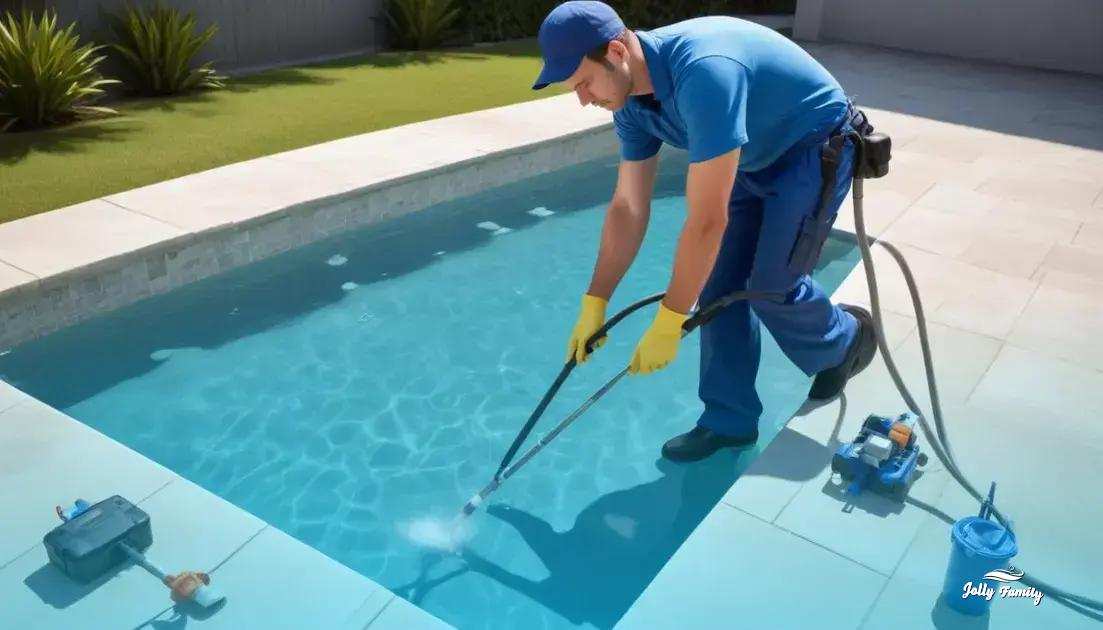
- Turn off the pump and clear the skimmer and pump baskets of leaves and hair.
- Record the pressure gauge reading, then clean baskets and restart. If pressure stays 8–10 psi above the clean baseline, the filter may be clogged.
- Inspect return jets: weak or sputtering flow after restart points to circulation or pump issues.
- Backwash or clean according to filter type: backwash sand/DE until clear; rinse and use cleaner for cartridges.
- Check for visible damage like torn cartridge pleats, DE powder in returns, or sand in the pool—these show internal failure.
- Test water chemistry and correct chlorine, pH, and alkalinity. Unbalanced water can overwhelm the filter.
- Run the pump 24 hours after cleaning and chemical fixes; watch pressure and clarity for changes.
- Look for air leaks: bubbles at the skimmer, a noisy pump lid, or losing prime reduce filter efficiency.
- Replace worn parts or media—cartridges, DE, or sand—if cleaning doesn’t restore flow and clarity.
- Keep notes of readings and steps you tried so a technician can diagnose faster if needed.
Tools and supplies to have ready
- Pressure gauge, screwdrivers, and a hose for rinsing.
- Pool test kit, chlorine shock, and algaecide.
- Replacement O-rings, silicone grease, cartridge cleaner, or DE powder.
- Gloves, towels, and a small bucket for parts.
when to call Jolly Family: professional inspection and maintenance in Kissimmee
If you still have cloudy water, repeated algae, or filter pressure stays high after basic checks, it’s time to call a pro. In Kissimmee’s warm climate, problems can worsen fast.
When to call Jolly Family
- Cloudiness or algae that returns after shock and brushing.
- Filter pressure remains 8–10 psi above baseline despite cleaning.
- Sand, DE powder, or cartridge pieces appear in the pool.
- Weak or uneven return flow after pump and basket cleaning.
- Visible pump leaks, loud pump noise, or loss of prime.
- Repeated chemical imbalance or unclear test results.
What the professional inspection includes
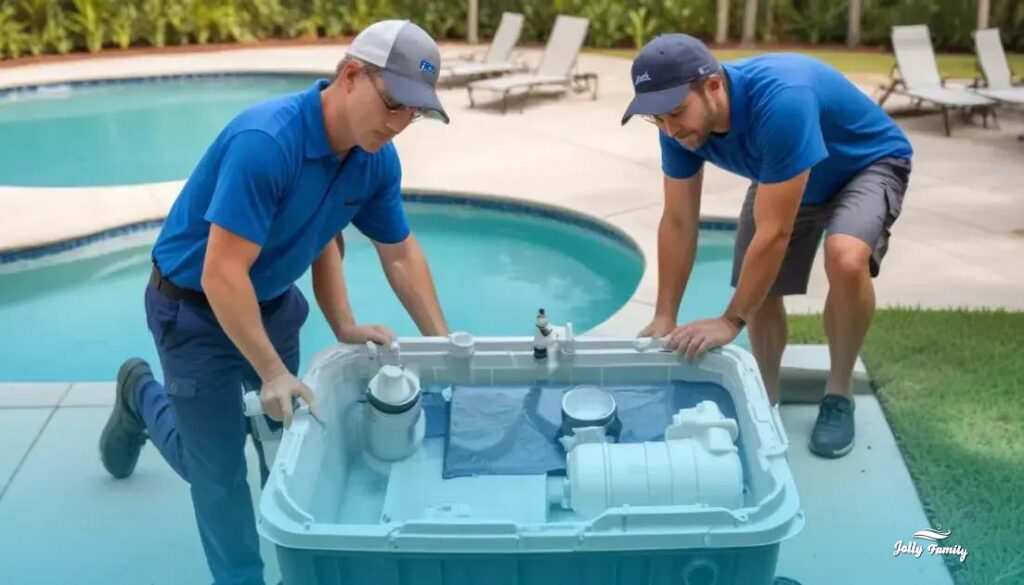
A technician will test water chemistry, check pump and skimmer baskets, read the pressure gauge, and open the filter to inspect media and internal parts. They also look for cracked laterals, torn cartridges, and worn seals.
Benefits of professional maintenance
- Faster diagnosis: pros spot hidden issues like air leaks or broken laterals.
- Proper media handling: correct DE charging, sand replacement, or cartridge swaps.
- Longer equipment life: small repairs prevent big failures.
- Peace of mind: fewer surprises during peak season in Kissimmee.
How often to schedule
Ask about an inspection at the start of the swim season and again mid-season. Many owners benefit from monthly or bimonthly maintenance when algae risk is high.
How to prepare for the visit
- Clear paths to equipment and remove pool covers.
- Have recent chemical test results or notes on what you tried.
- Secure pets and ensure access to outdoor power and water.
- Be ready to discuss any odd noises or recent changes to equipment.
If the issue is urgent—major leaks, visible sand in the pool, or failing pump—call right away. A quick professional check can save time and money.
preventive routine: simple habits to keep water clear long term
Simple, regular checks stop small issues from becoming big problems. Follow a short routine so your pool stays clear long term.
Daily and weekly habits
- Skim and empty baskets: remove leaves and debris from the skimmer and pump basket at least once a week, more often after storms.
- Brush and check visible surfaces quickly; brushing prevents algae from gaining a foothold.
- Test basic chemistry: check chlorine and pH with strips or a test kit twice a week until stable, then weekly.
- Run the pump long enough to achieve one pool turnover per day—typically 8–12 hours, adjusted for pool size and climate.
Monthly and seasonal tasks
- Inspect the filter and pressure: note the normal pressure and clean or backwash when it reads about 8–10 psi higher than baseline.
- Deep clean cartridges or backwash sand/DE once a month or as needed after heavy use.
- Replace media on schedule: cartridges every 2–3 years, sand every 5–7 years, and grids as they wear.
- Shock and phosphate control: shock after heavy bather load or rain and treat phosphates if algae keeps returning.
Small habits that prevent big problems
- Keep plants and trees trimmed to reduce debris and clogging.
- Use a cover when the pool is idle to cut pollen and sunlight that feed algae.
- Keep a maintenance log of pressure readings, chemical changes, and cleaning actions to spot trends early.
- Address odd noises, air in the system, or persistent cloudiness quickly—these often signal mechanical or circulation issues.
Consistent, simple care saves time and money. Small weekly steps and scheduled media care help your filter work efficiently and keep water clear without constant fixes.
Conclusion
pool filter not keeping water clean can usually be fixed with simple checks, regular care, or timely professional help.
Use the troubleshooting steps, keep a steady maintenance routine, and replace media when worn. Note pressure readings and any debris you find.
Calling a technician is wise when problems repeat, pressure stays high, or sand/DE appears in the pool.
Small, regular actions prevent big repairs and keep your water clear and safe all season.
FAQ – pool filter not keeping water clean
What are the first signs my pool filter isn’t working?
Cloudy water, particles that don’t settle, small algae patches, weak return flow, or pressure about 8–10 psi above your normal reading.
How do I find the clean baseline pressure?
Clean baskets and filter, run the pump for a day, then record the pressure. Use that number as your normal baseline.
How often should I clean or backwash the filter?
Empty skimmer and pump baskets weekly. Backwash sand/DE or clean cartridges when pressure rises about 8–10 psi above baseline.
When should I replace cartridges, sand, or DE grids?
Replace cartridges every 2–3 years, sand every 5–7 years, and change DE grids if torn, permanently clogged, or showing DE in the return water.
Can water chemistry issues make filtering worse?
Yes. Unbalanced pH, low chlorine, or high solids can overwhelm the filter and promote algae. Balance chemicals before assuming a filter failure.
When is it time to call a professional?
Call a pro when pressure stays high after cleaning, sand/DE or cartridge pieces appear in the pool, the pump is noisy or losing prime, or problems repeat despite routine care.