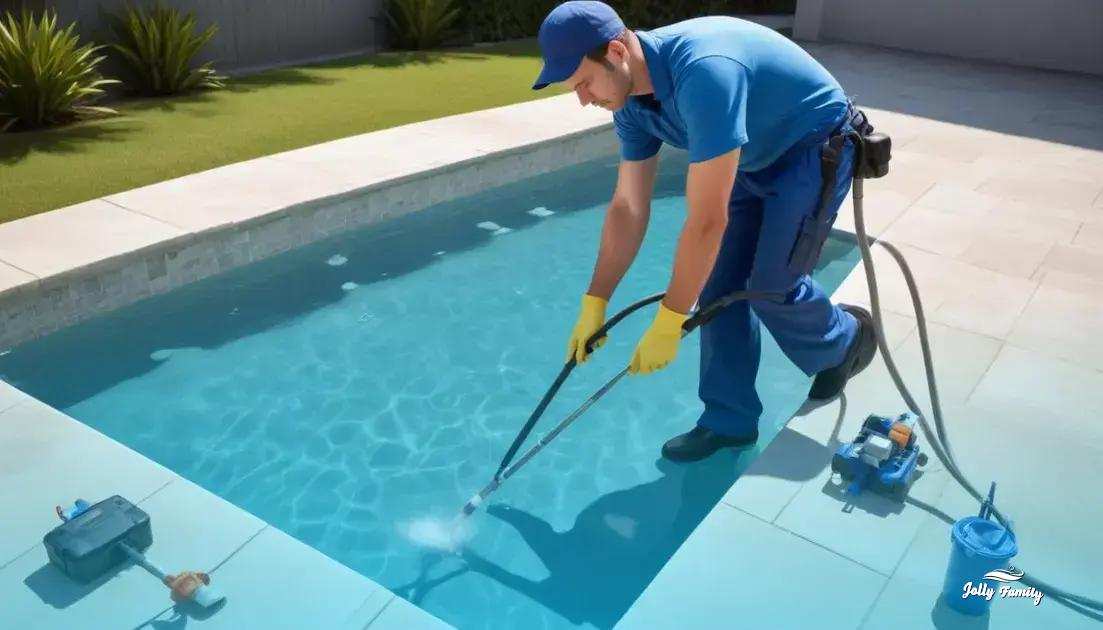


To prevent your pool from getting dirty too fast in Florida heat, maintain chemical balance, perform regular cleaning, and call a professional if issues like persistent algae or cloudy water arise.
Pool gets dirty too fast in the Florida heat is a common complaint among homeowners. Have you ever noticed how quickly debris and algae can turn your inviting oasis into a murky mess? Let’s dive into how to keep your pool sparkling clean!
The impact of Florida’s heat on pool cleanliness
The Florida heat can significantly affect pool cleanliness. High temperatures lead to rapid evaporation, which can concentrate pool chemicals and create an imbalance. Regular maintenance is essential to avoid problems.
Higher Water Temperatures
As temperatures soar, pool water heats up, creating a perfect environment for algae and bacteria to thrive. Keeping your water temperature in check is vital for clean and clear water.
Increased Debris and Contaminants
The summer winds can blow leaves, dirt, and other debris into your pool. Additionally, increased use of your pool by family and friends brings in body oils, sunscreen, and other contaminants, compromising pool hygiene.
Evaporation and Chemical Balance
Florida’s sunny weather leads to higher evaporation rates. This process can decrease water levels, resulting in an increase in the concentration of chemicals, which can affect pool sanitation. Regularly checking and adjusting chemical levels is crucial.
Importance of Regular Cleaning
Establishing a routine for skimming, vacuuming, and brushing your pool helps to combat the effects of heat. Make sure to clean your filters and check for any obstructions regularly to ensure clear water.
Using Pool Covers
Consider using a pool cover when the pool isn’t in use. This simple step can help to keep debris out, reduce evaporation, and maintain water temperature, making it easier to keep your pool clean.
Common causes of murky pool water
Murky pool water can be frustrating. Understanding the common causes behind this issue helps maintain a clean pool. Below are several factors that lead to cloudy water.
Chlorine Imbalance
If the chlorine levels in your pool are too low, it can result in algae growth and cloudy water. Regularly testing your pool’s chemical levels will help to ensure proper sanitation.
Algae Growth
Warmer temperatures and sunlight can promote algae blooms. If you notice green or brown tint in your water, that’s a sign of algae. To prevent this, use algaecides and ensure your pool is sanitized regularly.
Dirt and Debris
Leaves, dirt, and other debris can accumulate, clouding the water. Skimming the surface and vacuuming the bottom of your pool at least once a week can significantly improve clarity.
Filtration Issues
A malfunctioning filter is a leading cause of murky water. If your filter is clogged or not working properly, it can’t effectively remove impurities. Check and clean your filter regularly to ensure it’s operating efficiently.
pH Imbalance
Keeping the pH level of your pool balanced is essential. A pH level that is too high or too low can cause cloudiness. Aim for a pH level between 7.4 and 7.6 for optimal clarity and comfort.
Best practices for regular pool maintenance
Regular pool maintenance is crucial for keeping your pool clean and safe. Following best practices ensures that your pool remains an inviting oasis throughout the summer.
Consistent Testing of Water Chemistry
Testing your pool water at least once a week is essential. Check the levels of pH, chlorine, and alkalinity regularly. Adjusting these levels helps to prevent algae growth and keeps the water safe for swimming.
Skimming and Vacuuming
Daily skimming of the surface removes leaves and debris before they sink. Vacuuming should be done at least once a week to keep the pool floor clean. Use a manual or automatic pool cleaner for best results.
Brushing the Walls and Steps
Brush the walls and steps of your pool weekly to prevent dirt and algae buildup. Pay special attention to corners and cracks where debris can hide. This simple step keeps your pool looking pristine.
Cleaning the Filter
A clean filter is vital for clear water. Check and clean your pool filter regularly, ideally every month. Depending on the type of filter, the cleaning process may vary, so follow the manufacturer’s instructions.
Maintaining Water Levels
Keep an eye on your pool’s water level, especially during hot weather. High evaporation rates can lower the water level quickly. Add water as needed to maintain the proper balance, which helps the filtration system work effectively.
Choosing the right pool cleaning products
Choosing the right pool cleaning products is essential for maintaining a clean and healthy swimming environment. With many options available, knowing what to look for is important.
Understanding Your Pool Type
Before selecting cleaning products, consider the type of pool you have. Above-ground and in-ground pools may require different products. Additionally, the material of the pool surface (vinyl, fiberglass, or plaster) can influence your choices.
Importance of Chemical Balance
Maintaining the proper chemical balance is key. Look for chlorine-based sanitizers for disinfection. Stability of pH, alkalinity, and calcium hardness should also be checked with test kits. These ensure your pool is safe for swimming.
Choosing the Right Algaecide
Algaecides help prevent algae growth. Choose one that suits your pool type and follow the instructions carefully. A good algaecide can eliminate existing algae and prevent future blooms.
Effective Cleaning Tools
In addition to chemicals, proper cleaning tools are essential. Look for skimmers, brushes, and vacuum cleaners designed for your pool type. Automatic pool cleaners can save time and ensure thorough cleaning.
Checking for Compatibility
Always check that cleaning products are compatible with your pool’s materials. Some products might damage vinyl liners or certain plaster finishes. Consulting a professional or the product’s instructions can help prevent damage.
When to call a professional for help
Knowing when to call a professional for pool maintenance can save time and prevent further issues. Here are some signs that indicate it might be time to seek expert help.
Persistent Algae Growth
If you notice that algae keeps returning despite regular cleaning and sanitizing, it might be time to call a professional. They can identify the root cause and recommend stronger treatments.
Cloudy or Green Water
Water that remains cloudy or green after you’ve tried to treat it could indicate a serious chemical imbalance or a filtration problem. Professionals can perform detailed tests and provide the necessary solutions.
Frequent Equipment Issues
If your pool equipment, like pumps or filters, fails frequently or makes strange noises, it’s a sign that something is wrong. A professional can diagnose and fix mechanical issues effectively.
Knowledge of Local Regulations
Pool maintenance might be subject to local regulations. If you’re unsure about compliance or need an inspection, a professional will be familiar with local laws and can ensure everything is up to standard.
Inexperienced with Chemical Balancing
If you’re uncomfortable balancing chemicals in your pool or lack knowledge about the necessary ratios, it’s safer to let a professional handle it. Incorrect measurements can lead to health hazards.
In summary, maintaining a clean and safe pool is essential for enjoyment
Understanding the factors that affect pool cleanliness, such as the Florida heat, helps prevent murky water. Regular maintenance practices, including water testing, skimming, and using the right cleaning products, ensure your pool remains inviting.
Knowing when to call a professional can save you time and trouble, allowing experts to handle more complex issues like persistent algae or equipment malfunctions. By taking these steps, you can enjoy your pool all season long without worry.
FAQ – Frequently Asked Questions about Pool Maintenance
How often should I test my pool water?
You should test your pool water at least once a week to ensure the chemical levels are balanced and safe for swimming.
What are the signs of a clogged filter?
Signs of a clogged filter include slow water circulation, cloudy water, and increased pressure on the filter gauge. If you notice these signs, it’s time to clean or replace your filter.
How can I prevent algae growth in my pool?
To prevent algae, maintain proper chlorine levels, keep pH balanced, and regularly brush and vacuum the pool surfaces.
When should I call a professional for pool maintenance?
You should call a professional if you face persistent algae issues, cloudy water that won’t clear up, or if your filtering system is malfunctioning.
What cleaning tools are essential for pool maintenance?
Essential tools include a skimmer for removing debris, a vacuum for cleaning the pool floor, and a brush for scrubbing the walls and steps.
Are there any eco-friendly products for pool maintenance?
Yes, there are eco-friendly pool cleaning products available, such as non-toxic algaecides and natural enzymes that help maintain water clarity without harsh chemicals.