

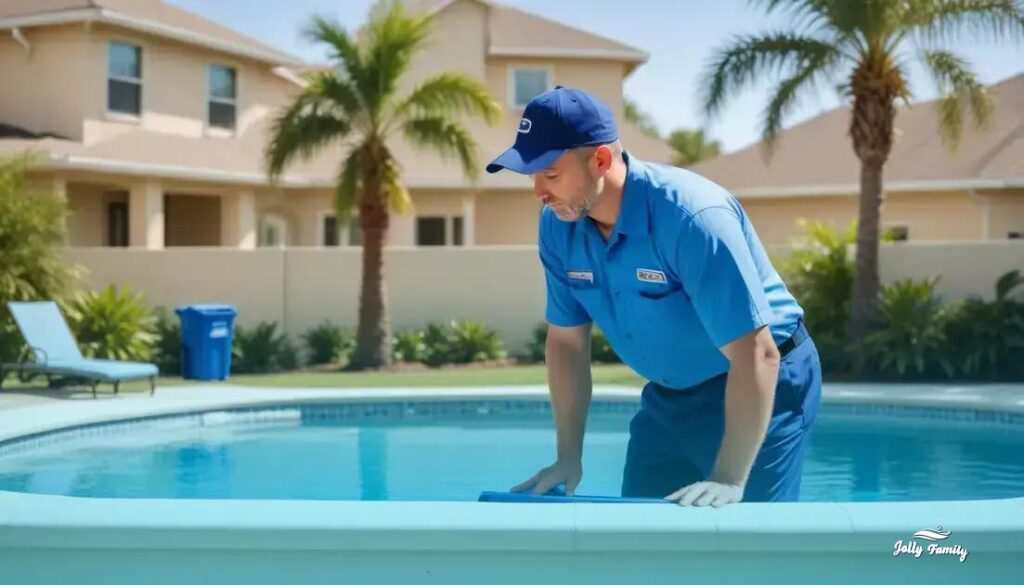
pool maintenance cost per month Kissimmee typically ranges from $30–$250+ depending on pool size and type; expect $75–$160 for most in-ground pools, with monthly drivers including routine chemicals, visit frequency, equipment condition, and seasonal weather—budget a small monthly reserve for repairs.
pool maintenance cost per month Kissimmee can vary—ever wondered why neighbors pay differently? With Jolly Family, you get a clear monthly breakdown, real examples, and simple tips to spot extra charges or savings.
Typical monthly costs in Kissimmee: breakdown by pool size and type
Costs vary a lot with pool size and type. Small, medium, and large pools need different amounts of chemicals, pump runtime, and occasional repairs. In Kissimmee, warm weather raises chemical use in summer.
Cost ranges by pool size
Typical monthly ranges: above-ground pools: $30–$60; small in-ground (up to ~15,000 gallons): $75–$120; medium in-ground (15k–25k gallons): $100–$160; large pools (over 25k gallons): $150–$250+. These figures include routine chemicals and a basic service visit schedule.
How pool type changes monthly costs
Chlorine pools need regular chemical top-ups. Salt systems cut weekly chlorine buys but require a salt cell replacement every few years. Vinyl liners may need patching less often than concrete repairs, but liner replacement is costly when needed. Salt systems: lower monthly chemical costs but higher long-term parts cost.
What a typical monthly bill covers
Most monthly service plans include testing water, adding chemicals, skimming, cleaning filters, and one to two equipment checks. Pay attention to what is listed: chemicals, labor, equipment use, and minor repairs. Major part replacements are usually extra.
Seasonal and local factors in Kissimmee
Hot months and heavy rain increase chemical and backwash needs. Algae risk rises in summer, pushing costs up. If you heat the pool, expect $50–$200 extra monthly depending on heater type and use. Electricity for pumps adds to bills if runtimes are long.
Quick examples to estimate your bill
If you hire weekly service for a medium in-ground pool, expect about $100–$160 monthly. Do-it-yourself owners might spend $30–$70 monthly on chemicals but must budget for yearly equipment replacements. For rentals or heavy use, add a buffer of 20–40% for extra treatment and repairs.
What affects your monthly bill: chemicals, labor, repairs and seasons
Several clear factors drive your monthly pool bill: chemicals, labor, unexpected repairs, and seasonal weather. Understanding each one helps you predict costs and avoid surprises.
Chemicals and water care
Chemical use depends on pool size, user load, and water balance. Warm Kissimmee weather increases evaporation and sanitizer demand. Chlorine pools need regular bleach or tablet top-ups; salt systems lower weekly chlorine buys but require occasional cell cleaning or replacement. Algae outbreaks or pH swings quickly raise chemical spending.
Labor and service plans
How often a technician visits affects the bill. Weekly service costs more than biweekly or monthly plans, but frequent visits reduce costly issues. Standard service typically covers testing, dosing, skimming, and filter checks. Ask what labor is included to compare quotes accurately.
Repairs and equipment
Major items—pump motors, filters, heaters, and salt cells—drive big one-time expenses. Routine wear like seal leaks or small motor issues can add to monthly averages when amortized. Budget for parts by setting aside a monthly reserve for equipment replacement.
Seasonal effects in Kissimmee
Hot, humid summers boost chemical use and algae risk. Heavy rains dilute chemicals and can clog filters, increasing backwash frequency. Storms may cause damage that spikes costs suddenly. Cooler months lower some expenses but don’t eliminate routine maintenance.
Practical ways to predict and lower costs
Monitor pump runtime and set timers to efficient hours. Keep filters clean to reduce chemical demand. Test water weekly and adjust chemicals in small steps to avoid overcorrection. Compare service plans for clear itemized lists and consider DIY tasks to lower labor charges. A small monthly reserve for repairs makes bills easier to manage.
How Jolly Family calculates costs and what services are included
Jolly Family sets monthly fees from clear parts: pool size, visit frequency, and services included. This helps you see where money goes and avoid surprises.
Pricing components
- Base service fee: a fixed monthly amount that covers routine labor and basic supplies.
- Visit frequency: weekly, biweekly, or monthly visits change labor costs and chemical use.
- Chemical charge: covers sanitizer, pH adjusters, and shock; higher use raises this line item.
- Equipment reserve: a small monthly amount set aside for future part replacements like pumps or salt cells.
What a standard plan includes
Most Jolly Family standard plans list these items: water testing and balancing, skimming and brushing, filter checks and backwash as needed, dosing chemicals, and a basic equipment inspection. Major part replacements are usually billed separately.
Extras and one-time charges
Expect extras for repairs, deep cleans, heater service, salt-cell replacement, and emergency calls after storms. Seasonal services like start-up or winter prep may also be separate.
Example monthly estimate
For a medium in-ground pool with weekly service Jolly Family might calculate: base fee $40 + weekly labor $30 + chemicals $20 + equipment reserve $10 = $100 per month. Heavy use or repairs will raise that number.
How to verify a fair quote
- Ask for an itemized quote that lists chemicals, labor, and included visits.
- Check whether repairs and parts are extra and ask about warranty on work.
- Compare plans by service frequency, not just price.
- Request references or recent invoices for similar pools.
Keeping a simple written estimate and a small monthly reserve helps you avoid surprise bills and makes comparing providers easier.
Ways to lower monthly costs: preventive care and seasonal maintenance tips
Small routine steps can cut monthly pool costs. Focus on prevention, smart equipment use, and seasonal checks to avoid big repair bills.
Test water and keep balance
Test water at least once a week. Keep chlorine, pH, and alkalinity in range to avoid algae and corrosion. Adjust chemicals in small doses. Shocking after heavy use or storms prevents costly treatments later.
Optimize pump runtime and filtration
Run the pump enough to meet turnover but avoid extra hours. Set timers to run during off-peak energy times if possible. Clean or backwash filters on schedule; a clean filter reduces chemical use and strain on the pump.
Use a cover and control debris
A pool cover cuts evaporation, debris, and chemical loss. Use skimmers and leaf nets after storms. Reducing leaves and dirt lowers cleaning time and chemical demand.
Simple preventive equipment care
- Inspect seals, hoses, and fittings monthly for leaks.
- Clean salt cells and check heater and pump mounts.
- Keep a small parts reserve for common items like O-rings and cartridges to avoid emergency service trips.
Seasonal tips for Kissimmee
In hot months check water more often and be ready to shock after heavy rain. Before storm season secure loose covers and trim trees. In cooler weeks shorten pump runtime slightly but keep chemistry stable to prevent long-term issues.
Compare service plans that list labor, chemicals, and extras. Do simple tasks yourself when comfortable and save professional visits for inspections and repairs.
Choosing DIY or professional maintenance for homes and short-term rentals
Deciding between DIY and professional maintenance depends on time, skill, and how the pool is used. Short-term rentals need steady reliability; private homes may tolerate more DIY tasks.
Pros and cons at a glance
DIY: lower monthly cash outflow but more time and risk of mistakes. Professional: higher cost yet predictable results, warranty on work, and less downtime after problems.
Cost and time comparison
Estimate monthly chemical and supply costs for DIY, then add an hourly value for your time. Professionals bundle labor and testing into one fee. For rentals with fast guest turnover, the cost of one missed treatment can exceed a month of pro service.
Practical DIY checklist
- Test water weekly and log results.
- Keep stock of essentials: sanitizer, pH adjuster, shock, and basic tools.
- Set pump timers and clean filters on schedule.
- Know when to call a pro: heater failure, major leaks, or persistent algae.
Requirements for short-term rentals
Guests expect a clean, safe pool. Use a documented maintenance log, quick-response plan, and a backup service for emergencies. Include pool care expectations in your listing rules and ensure insurance and liability cover service gaps.
How to choose a pro
Ask for itemized plans, response times, references, and whether supplies are included. Check for clear policies on repairs and storm calls. A good provider offers scheduled visits plus fast emergency support for rentals.
Mixing approaches works well: handle simple weekly tasks yourself and keep a pro for inspections, repairs, and busy rental periods. That balance can lower costs while keeping the pool guest-ready.
Final tips to manage monthly pool costs in Kissimmee
Keep a simple schedule of weekly water tests and routine cleaning to prevent costly problems later.
Match service level to pool use — short-term rentals usually need professional care, while homeowners can combine DIY tasks with regular inspections. Set aside a small monthly reserve for parts and seasonal spikes.
Compare itemized quotes, limit pump runtime, and use a pool cover to cut chemical and energy use. Small, consistent steps often save the most over time.
FAQ – Pool maintenance cost per month in Kissimmee
What is a typical monthly cost for pool maintenance in Kissimmee?
Typical monthly costs range widely: above-ground $30–$60, small in-ground $75–$120, medium $100–$160, large $150–$250+. Exact price depends on size and service level.
Which factors most affect my monthly pool bill?
Main drivers are chemicals, labor/visit frequency, equipment condition, and seasonal weather like heat or heavy rain.
Are chemicals usually included in a service plan?
Some plans include basic chemicals; others list them as a separate line item. Always ask for an itemized quote to be sure.
Can I save money by doing maintenance myself?
Yes—DIY can cut monthly costs for routine tasks like testing and skimming. But rentals and busy pools often need professional service for consistency and liability.
How often should a technician service a short-term rental pool?
Weekly service is recommended for short-term rentals to keep water safe and guest-ready, and to avoid costly emergency fixes.
How much should I set aside for repairs and equipment replacement?
Set a small monthly reserve—about $10–$30 or 10–20% of your typical bill—to cover parts like pumps, seals, or salt cells and avoid surprise expenses.