
pool maintenance for first time homeowners: perform weekly water tests (free chlorine 1–3 ppm, pH 7.2–7.6), skim and brush, empty skimmer and pump baskets, check filter pressure and run the pump 8–12 hours daily as needed, log results, and contact a professional for persistent chemistry or equipment problems.
pool maintenance for first time homeowners can feel confusing — where to begin and what really matters? I’ve helped new owners in Kissimmee with Jolly Family and share simple, doable steps you can start this week.
understanding your pool: essential parts and quick weekly checks
Identify the main parts you’ll use most: the pump circulates water, the filter removes debris, the skimmer catches leaves, and the heater or chlorinator controls temperature and sanitation when present.
Keep simple tools on hand: a test kit or digital tester, a pool brush, a telescopic pole with skimmer net, and a vacuum. Knowing where the equipment pad is located helps you spot leaks or unusual noises quickly.
Quick weekly checks
- Water level: Ensure it sits halfway up the skimmer opening; add water if low.
- Skim and empty baskets: Remove leaves from the skimmer and pump baskets to keep flow steady.
- Test water chemistry: Check free chlorine (aim for 1–3 ppm), pH (aim for 7.2–7.6), and total alkalinity (aim for 80–120 ppm).
- Inspect filter pressure: Note the gauge reading; if pressure rises 8–10 psi above clean baseline, backwash or clean the filter.
- Brush and vacuum: Brush walls and steps, then vacuum loose debris to prevent stains and algae.
- Run time and equipment check: Verify the pump runs the recommended hours (usually 8–12 hours) and listen for odd sounds or leaks.
If a test shows low chlorine or high pH, treat immediately with the right chemicals following label directions. When unsure, take a quick water sample to a local pool store for guidance.
water chemistry made simple: testing, balancing and spotting issues
Regular testing is the foundation of clear, safe pool water. Aim to test free chlorine and pH at least 2–3 times a week, and check total alkalinity, calcium hardness, and stabilizer weekly. Use test strips, a liquid kit, or a digital meter—pick one you find easy and stick with it.
Testing methods and quick tips
- Test strips: Dip, wait the recommended seconds, and compare colors; they’re fast but less precise.
- Liquid (drop) kits: More accurate for pH and chlorine; follow the exact drop counts and read results in good light.
- Digital testers: Best for precise readings; rinse probes and calibrate per instructions.
- Sample technique: Collect water from elbow depth away from return jets for a true sample.
Key ranges to target
- Free chlorine: 1–3 ppm for routine sanitation.
- pH: 7.2–7.6 to protect skin, eyes, and equipment.
- Total alkalinity: 80–120 ppm to stabilize pH swings.
- Calcium hardness: generally 200–400 ppm to avoid corrosion or scaling (check pool finish).
- Cyanuric acid (stabilizer): 30–50 ppm for outdoor pools to protect chlorine from sun.
Balancing steps (simple order)
- Test water and record numbers.
- Adjust total alkalinity first if it’s outside range; use alkalinity increaser or sodium bisulfate per label.
- Set pH after alkalinity is stable: add pH increaser (sodium carbonate) or pH decreaser (sodium bisulfate or muriatic acid) in small doses and retest.
- Correct calcium hardness if needed—use a calculator and slow additions or professional help for large changes.
- Set stabilizer level for outdoor pools, then maintain free chlorine with daily dosing or an automated feeder.
Common issues and fixes
- Low chlorine: Add chlorine or shock the pool; check for high cyanuric acid that can reduce effectiveness.
- High pH (cloudy water, scaling): Add pH decreaser gradually and brush surfaces.
- Cloudy water: Test chemistry, run filter longer, and use a clarifier if chemistry is balanced.
- Algae: Shock at the labeled rate, brush surfaces thoroughly, and maintain chlorine for several days.
- Stains or scale: Address hardness and pH, use specific stain removers if needed, or call a pro for heavy buildup.
When shocking, follow product directions and keep swimmers out until chlorine returns to the safe range. Always add chemicals to water (not water to chemicals), measure precisely, store products dry and cool, and wear gloves and eye protection. If readings confuse you, bring a sample to a local pool store or consult a technician.
cleaning routine: skimming, brushing, vacuuming and filter care
Keep a simple weekly cleaning routine to prevent buildup and reduce chemical use. Spend 15–30 minutes on skimming, brushing, and quick vacuuming to stop leaves and dirt from settling.
Skimming and basket care
Use a fine-mesh skimmer net to remove leaves and bugs from the surface. Empty the skimmer and pump baskets every few days or whenever flow drops. A full basket reduces circulation and strains the pump.
Brushing tips
Brush walls, steps, and ladders at least once a week to dislodge algae and dirt. Use a brush that matches your pool finish (nylon for plaster, stainless for tile). Brush in sections so you cover the whole pool over several minutes.
Vacuuming efficiently
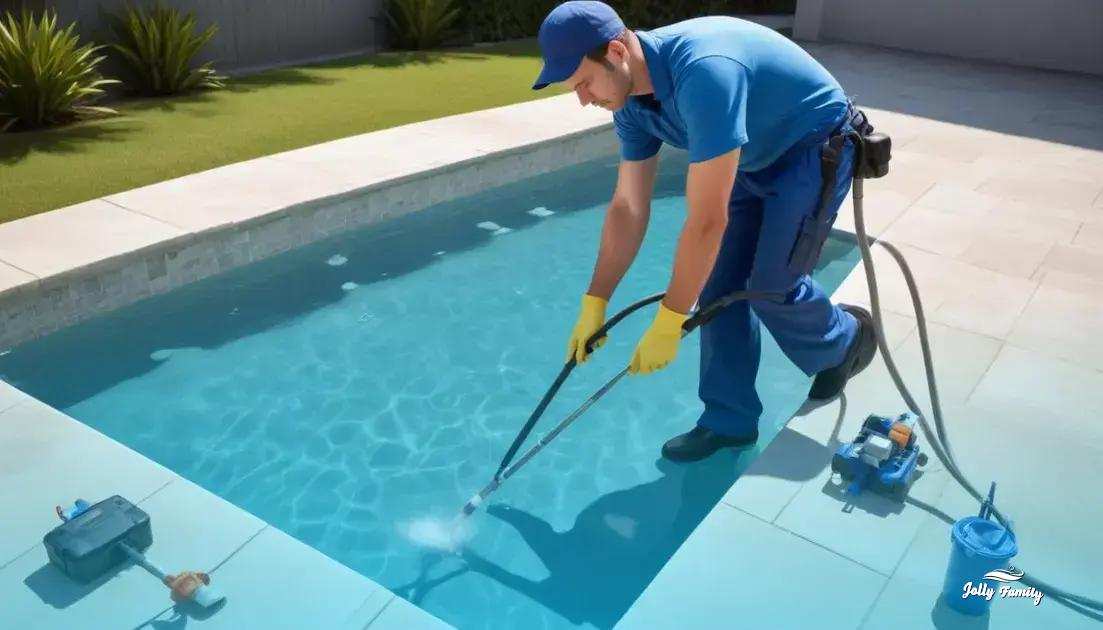
Vacuum after brushing to pick up loosened debris. For small debris, a manual vacuum on a telescopic pole works well. For larger pools, consider an automatic cleaner but still run a manual pass occasionally to reach corners.
Filter care
Check filter pressure weekly and note the clean baseline. If pressure rises 8–10 psi above baseline, backwash sand or DE filters, or clean cartridge filters per the manufacturer. Rinse cartridges with a hose and deep-clean them monthly.
Quick maintenance checklist
- Daily: skim if lots of debris.
- 2–3 times weekly: test water chemistry and skim.
- Weekly: brush, vacuum, empty baskets, inspect pump and filter pressure.
- Monthly: deep-clean cartridge or backwash, inspect equipment for wear.
Work with the pump off when cleaning baskets or the filter housing. Keep tools clean and store chemicals safely. If heavy debris or stains persist, schedule a professional clean to avoid damage.
seasonal adjustments and troubleshooting common first-time problems
Seasonal changes require small but important adjustments to keep your pool safe and running. Tweak run time, chemical doses, and cover use based on heat, rain, and cold.
Preparing for summer
- Inspect equipment: Check pump, filter, and skimmer for leaks or wear.
- Deep clean: Brush walls, vacuum, and clear baskets before heavy use.
- Balance water: Aim for pH 7.2–7.6 and free chlorine 1–3 ppm before opening.
- Increase circulation: Run the pump longer (often 8–12 hours) on hot days to handle extra bather load and debris.
- Protect from sun: Check cyanuric acid (stabilizer) for outdoor pools; keep it near 30–50 ppm.
Preparing for winter or slowing use
- Lower water level slightly below the skimmer if recommended for your pool type.
- Clean and shock: Remove debris, balance chemicals, and apply a shock to reduce algae risk.
- Winterize plumbing: Blow out lines or use pool-safe antifreeze where local freezes occur; follow manufacturer steps for pumps and heaters.
- Cover and store: Install a cover and store removable gear in a dry place to avoid damage.
- Follow local advice: Cold-climate steps differ from warm regions—check regional guidance.
Troubleshooting common first-time problems
- Cloudy water: Often due to poor filtration or unbalanced chemistry. Clean filters, run the pump longer, and test chemicals. Use clarifier only after chemistry is corrected.
- Algae: Brush surfaces, shock at the labeled rate, and maintain sanitizer for several days. Improve circulation and clean filters.
- Poor flow or pump won’t prime: Check that skimmer and pump baskets are empty, look for closed valves, and ensure the pump lid seal is intact. If air stays in the system, inspect suction lines for leaks.
- High filter pressure: Clean or backwash the filter when pressure is 8–10 psi above baseline. Replace DE or cartridge media if worn.
- Leaks or sudden water loss: Check visible fittings, the pump, and the equipment pad. Small losses may be evaporation—use a bucket test to compare.
- Chemical smell or eye irritation: This can signal combined chlorine. Test and shock the pool, then retest before swimming.
- Stains or scaling: Test for high calcium or metals. Adjust pH and hardness, and use targeted stain removers if needed.
Quick safety and record tips
- Always add chemicals to water, not water to chemicals.
- Wear gloves and eye protection when handling chemicals.
- Wait for chlorine and pH to return to safe ranges before swimming.
- Keep a log: Record test results, treatments, and equipment notes to spot trends and catch problems early.
If a problem persists after basic fixes, take a water sample to a pool store or call a technician to avoid damage or wasted time.
how Jolly Family supports new homeowners with reliable Kissimmee service
Jolly Family provides clear, friendly pool care for new homeowners in Kissimmee. We focus on simple steps so you feel confident about your pool every week.
what we do on the first visit
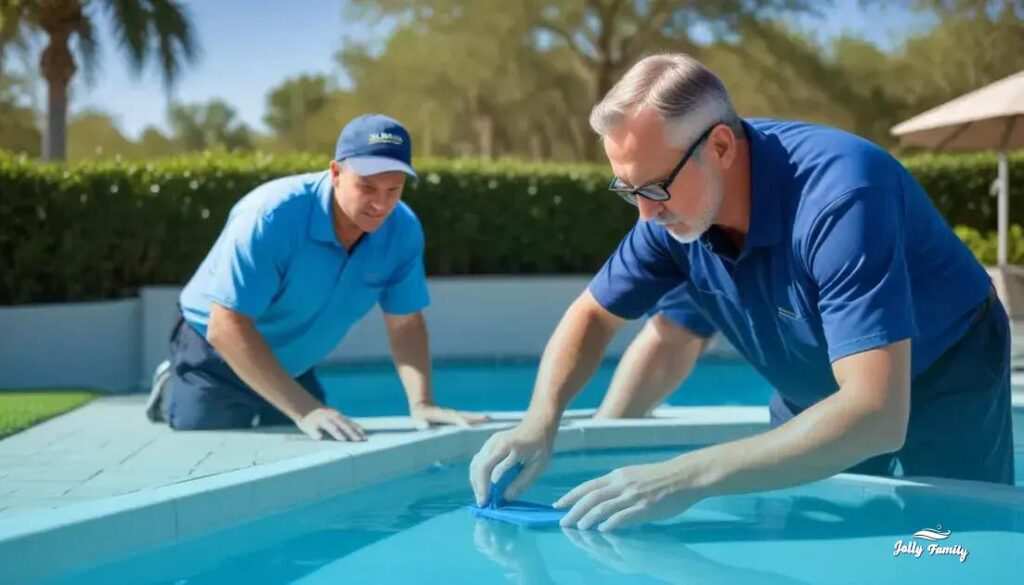
We perform a full equipment check, record baseline water chemistry, and clean visible debris. Expect a short walkthrough where we point out the pump, filter, and skimmer and explain basic safe actions you can take.
support and training for homeowners
After the visit we give a one-page cheat sheet and a quick demo: how to use test strips, where to add chemicals, and how to spot a leak. New owners often appreciate a short video link or a follow-up call for questions.
service plans and transparency
- Weekly maintenance: cleaning, testing, and filter checks with photo updates.
- Biweekly or monthly plans: for lower-use pools or seasonal needs.
- One-time services: openings, closings, or stain and algae treatments.
- All plans include clear pricing, a written estimate, and no hidden fees.
fast response and local expertise
We know Kissimmee weather patterns and common local issues like algae after heavy rains. Our team offers fast responses for urgent problems and recommends simple fixes you can do until we arrive.
quality and peace of mind
Technicians are licensed and background checked. We document each visit with photos and test results so you can track trends over time. If an equipment issue needs repair, we explain options and costs before work begins.
Keep your pool log, ask for a sample test if unsure, and use our guidance to reduce surprise repairs. For new homeowners, steady care and clear communication make pool ownership easier.
Final tips for new pool owners
Keep it simple: test water, skim, brush, vacuum, and check the filter every week. These basic tasks prevent most problems and keep water safe.
Adjust for the season, log your test results, and follow chemical labels. Wear gloves and eye protection when handling products, and never add water to chemicals.
Start with a short checklist and ask a local pro if you’re unsure. Small, regular steps save time and money and make pool ownership enjoyable.
FAQ – pool maintenance for first-time homeowners
How often should I test my pool water?
Test free chlorine and pH 2–3 times a week; check alkalinity, calcium hardness, and stabilizer once a week.
What are the safe target ranges for chlorine and pH?
Aim for free chlorine 1–3 ppm and pH 7.2–7.6 to protect swimmers and equipment.
What is the easiest weekly cleaning routine?
Spend 15–30 minutes skimming, emptying baskets, brushing walls, and quick vacuuming to prevent buildup.
How do I know if my pump or filter needs attention?
Watch filter pressure; if it’s 8–10 psi above baseline, clean or backwash. Also listen for odd noises and check for reduced flow.
How should I adjust care for seasonal changes?
Increase pump runtime and circulation in hot months, deep-clean before heavy use, and lower water and winterize plumbing in cold climates.
When should I call a professional?
Call a pro if problems persist after basic fixes, for major equipment repairs, or if you’re unsure about chemical adjustments.