
pool maintenance for short term rentals Orlando area requires weekly professional checks, same-day turnover water testing, documented chemical logs and photos, rapid storm or emergency response, and clear guest-safety protocols to ensure safe water, reduce liability, and maintain five-star reviews.
pool maintenance for short term rentals Orlando area; keeping pools guest-ready between turnovers can be a headache — have you run into cloudy water or last-minute fixes? At Jolly Family, we help hosts set simple, reliable routines that reduce stress and keep guests happy.
Ideal service schedule for short-term rentals
For short-term rentals, plan a weekly service as the default. Weekly visits keep water clear and chemicals balanced between guests.
Weekly routine
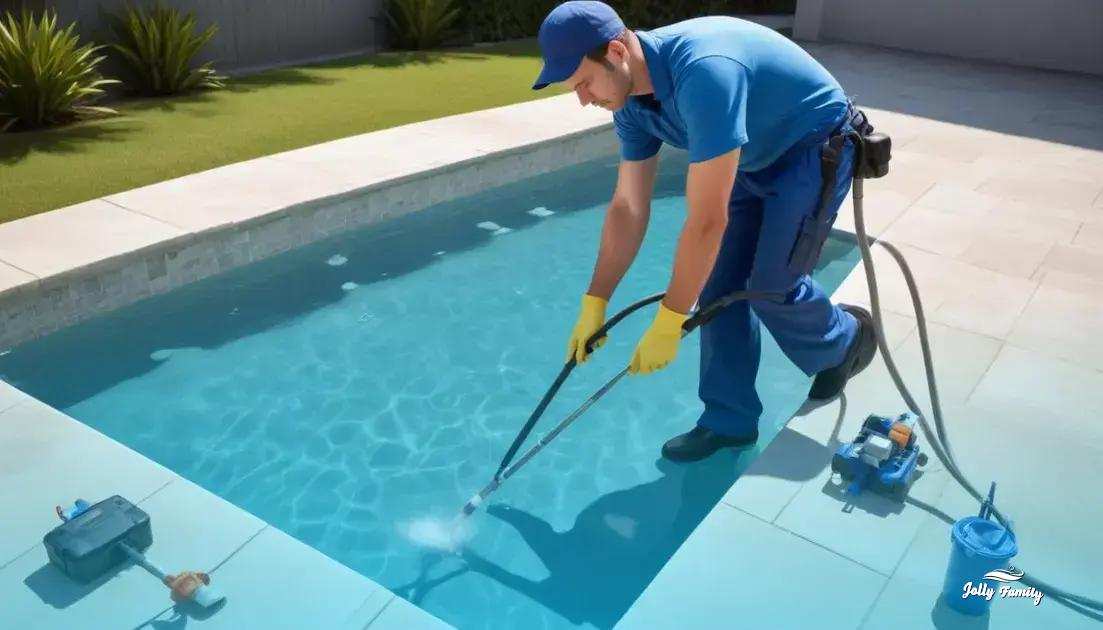
On each weekly visit, the technician should skim the surface, brush walls, and vacuum debris. Test and record chlorine, pH, alkalinity, and sanitizer residuals. Backwash or clean the filter when pressure is high. Inspect pump, heater, and visible plumbing for leaks or noise.
Turnover day protocol
On turnover days perform a same-day check before guest arrival. Test water and correct chemical levels within four hours if needed. Do a quick clear-and-skim, wipe tiles, and ensure pool temperature and lights work. Leave a photo or short report for the host showing the pool is guest-ready.
Post-storm and high-use adjustments
After heavy rain or heavy guest use schedule an extra visit. Storms add debris and affect chemistry. High bather loads lower sanitizer and raise contaminants. A shock treatment or extra filtration run can prevent cloudy water and algae.
Emergency response and spare parts
Agree on a response window for issues like cloudy water, pump failure, or major leaks. Aim for a 4–24 hour response depending on severity. Keep common spares on hand: pump seal, cartridges, and basic tools. Document emergency visits with timestamped photos.
Coordination and automation
Sync pool service with housekeeping to avoid access conflicts. Share a weekly schedule and entry codes. Consider smart sensors for remote temperature and chemical alerts. Use digital checklists and photos to keep hosts informed and speed up decisions.
Quick checklist for hosts:
- Weekly pro visit with chemical log
- Same-day turnover check before guest arrival
- Extra visit after storms or heavy use
- Agreed emergency response window and contact
- Shared access and digital reports
Chemical balance and fast water recovery between guests
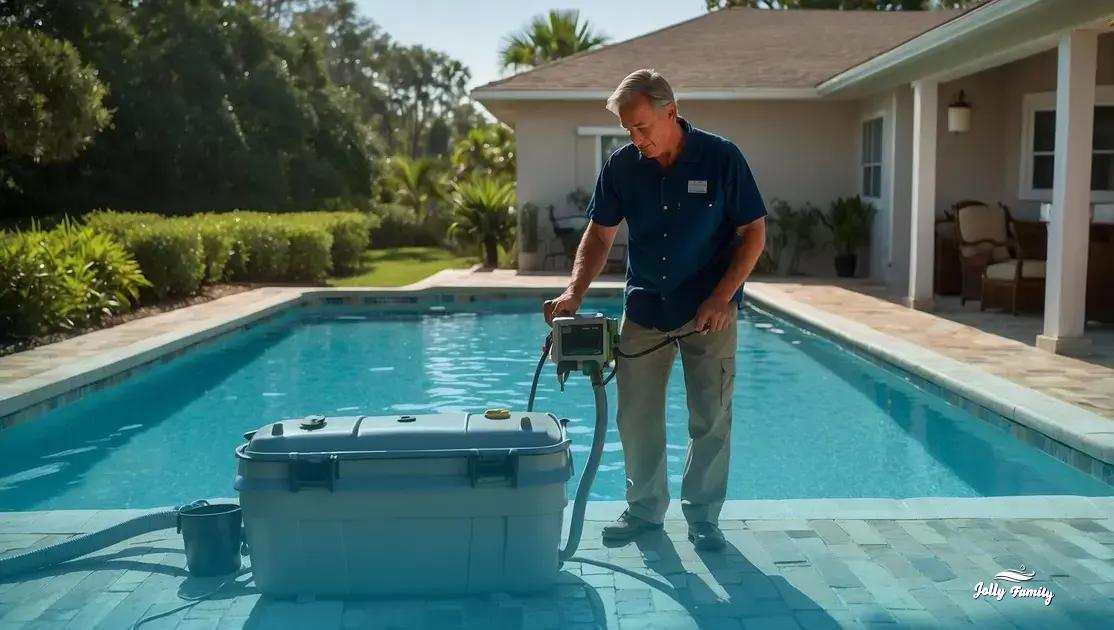
Keep water safe and clear between guests by focusing on quick chemical checks and fast corrective actions. A simple routine saves time and avoids last-minute cancellations.
Daily test targets
Test free chlorine, pH, and total alkalinity every turnover. Aim for free chlorine 1–3 ppm, pH 7.2–7.6, and alkalinity 80–120 ppm. Check cyanuric acid (stabilizer) monthly; ideal range is 30–50 ppm for outdoor pools.
Fast shock and recovery protocol
If chlorine is low or water looks dull, perform a shock treatment using a non-stabilized chlorine source. Broadcast the shock evenly, then run the pump and filter continuously until the pool clears. For most cases, a 4–8 hour circulation with filtration and skimming brings water back to guest-ready condition.
Clear water tactics
Use a clarifier to speed particle removal and a flocculant only when you can vacuum settled debris to waste. Backwash or clean filters after heavy use to restore flow. Replace or rinse cartridge filters if pressure rises or flow slows.
Enzymes and organics
Products with enzymes break down body oils and lotions, reducing cloudiness and lowering chlorine demand. Add enzyme treatments weekly or after high bather loads to cut recovery time.
Equipment and monitoring
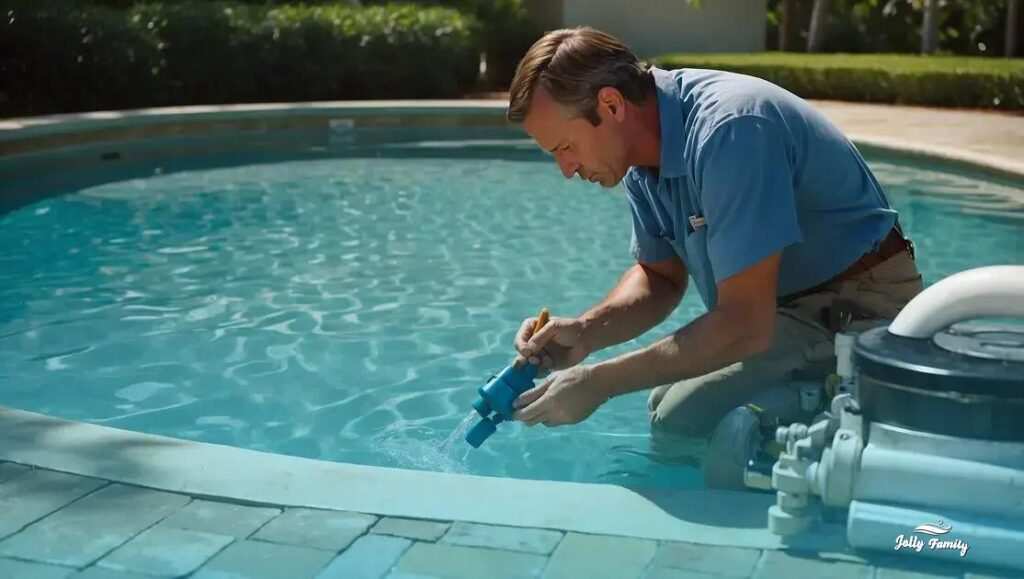
Keep a calibrated digital tester or colorimeter for fast, accurate readings. Inspect pump, filter, and chlorination equipment daily. Consider remote sensors for pH and temperature alerts between visits.
Guest safety and timing
Never allow guests in the pool while free chlorine is above recommended levels from shocking. Document test results and time of treatment with photos. Communicate expected recovery windows to housekeeping so arrivals are coordinated.
Quick checklist:
- Test chlorine, pH, alkalinity at turnover
- Shock if needed, run filter 4–8 hours
- Use clarifier or enzymes for fast clarity
- Clean or backwash filter after heavy use
- Record results and notify host or cleaner
Turnover cleaning checklist used by Jolly Family pros
- Arrival and access: arrive at scheduled time, confirm entry code or lockbox, secure gates after entry.
- Safety first: wear gloves and eye protection, keep chemicals closed, mark wet areas if needed.
- Skim and remove debris: skim surface, empty skimmer and pump baskets, clear leaves from the pool area.
- Brush walls and tiles: brush waterline, steps, and corners to remove scum and prevent stains.
- Vacuum as needed: vacuum visible debris or run the automatic cleaner; vacuum to waste if you used a flocculant.
- Test and record chemistry: use a calibrated digital tester to measure free chlorine, pH, and alkalinity; log values and any adjustments.
- Adjust chemicals quickly: add chlorine, pH up/down, or shock when required and note safe re-entry times for guests.
- Filter and pump check: read filter pressure, backwash or clean cartridges if flow is low, and listen for unusual pump noise.
- Inspect equipment and fittings: check lights, heater, ladders, handrails, and visible plumbing for leaks or damage.
- Deck and furniture tidy: wipe tiles, remove debris from the patio, straighten furniture and ensure pathways are clear.
- Photo proof and short report: take timestamped photos of the pool and equipment, and leave a brief note confirming guest-ready status for the host.
- Coordinate with housekeeping: confirm cleaner arrival after chemicals reach safe levels and share the service log.
Quick timing targets
Aim to finish a standard turnover check within 60–90 minutes. If you shock the pool, allow at least 4 hours before guest use; minor chemical fixes can clear in 1–2 hours with good filtration.
Emergency protocol and spares
If you find cloudy water, pump failure, or leaks, notify the host immediately and aim for a 4–24 hour response window based on severity. Carry common spares like pump seals, O-rings, and a spare cartridge to speed repairs.
Standard documentation to keep:
- Date and time of service
- Chemical readings and treatments
- Technician initials and photos
- Notes on equipment issues and recommended repairs
Preventing stains, algae and equipment failures
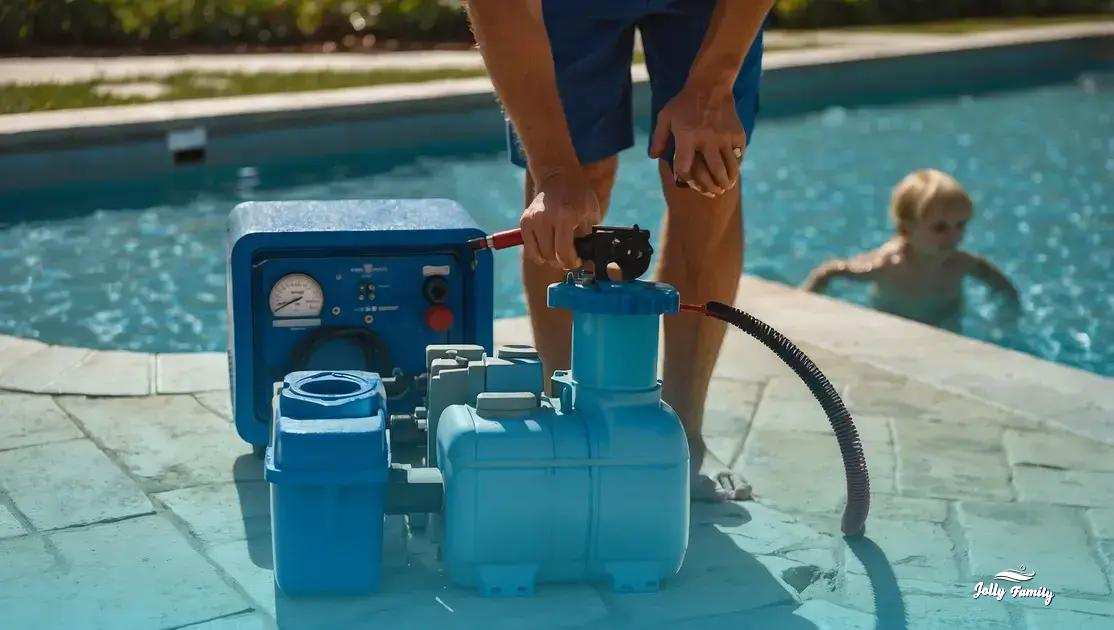
Preventing stains, algae, and equipment failures starts with steady care and quick fixes when you spot a problem. Small tasks now save time and money later.
Keep water balanced
Test chemistry at each service. Aim for pH 7.2-7.6, free chlorine 1-3 ppm, and alkalinity 80-120 ppm. Stable water reduces scale, metal staining, and algae growth.
Clean tiles and surfaces
Brush the waterline and steps weekly to stop scum and mineral buildup. Use a non-abrasive tile cleaner for calcium deposits and a metal sequestrant for copper or iron stains. Address stains early to avoid deep etching.
Fight algae fast
Maintain sanitizer levels and add a weekly algaecide in warm months for extra protection. If algae appears, shock the pool, brush thoroughly, and run filtration until clear. Remove dead algae by vacuuming or backwashing.
Maintain filters and circulation
Clean or backwash filters when pressure rises 8-10 psi above baseline. Low flow allows contaminants to settle and stains to form. Run the pump long enough after treatments to pass all water through the filter several times.
Inspect equipment regularly
Check pumps, seals, valves, heaters, and skimmers each visit. Look for leaks, odd noises, or reduced flow. Replace worn O-rings and tighten fittings before small issues become failures.
Plan for prevention and spares
Keep common spares on hand: pump seals, O-rings, filter cartridges, and a multi-tool. Schedule professional inspections every 6-12 months and document repairs to spot recurring faults.
Quick prevention checklist:
- Test and record chemistry at every service
- Brush waterline and tiles weekly
- Use algaecide and shock as needed
- Clean or backwash filters when pressure rises
- Inspect pump, seals, and plumbing each visit
- Keep spare parts and a repair log
Safety protocols, guest-ready documentation and liability tips
Clear safety protocols protect guests and reduce host risk. Use simple, visible rules and keep proof of regular checks to show you acted responsibly.
Essential safety gear
Keep a lockable pool gate, life ring, reaching pole, and a working pool alarm. Store a first aid kit and a buoyant throw rope near the pool. Check gear monthly and replace worn items.
Guest rules and documentation
Post concise pool rules where guests will see them and include a short version in the guest guide. Note no running, no diving, and the chemical re-entry time after treatments. Provide emergency contacts and the property address for responders.
Service logs and photo proof
Keep a digital log of each pool service with timestamps, test results, and photos of equipment. A dated photo after every turnover shows the pool was guest-ready and helps resolve disputes quickly.
Liability reduction tips
Maintain regular professional inspections and keep receipts for repairs. Consider umbrella liability insurance and check local Florida regulations. Encourage CPR-trained staff or list nearby trained responders. When in doubt, consult a lawyer for contract wording or waivers.
Communication and arrival timing
Tell guests expected recovery windows after chemical treatments and confirm housekeeping schedules so no one accesses the pool too early. Leave a brief note or digital confirmation when the pool is safe.
Quick host checklist:
- Visible pool rules and emergency contacts
- Life ring, reaching pole, lockable gate, pool alarm
- Digital service log with timestamps and photos
- Regular inspections and recorded repairs
- Liability insurance review and professional advice
How to choose local Kissimmee pros and what to expect
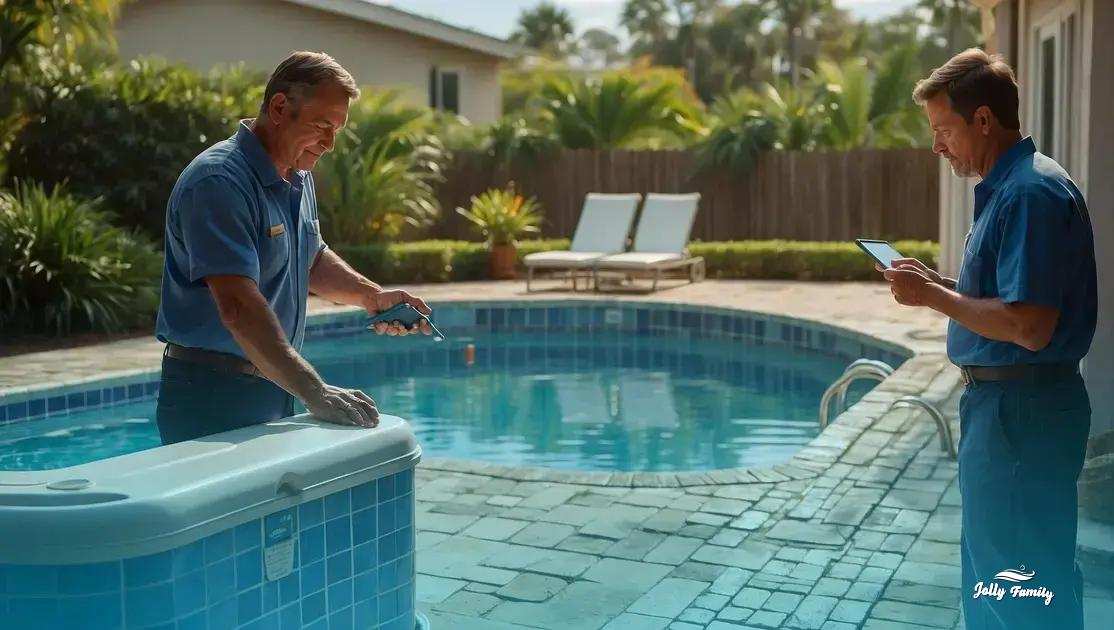
Hire local pros who know Kissimmee weather, pool types, and the timing needs of short-term rentals. Ask clear questions and expect written proof of skills and coverage.
What to check before hiring
- License and insurance: verify business license and general liability. Request proof of insurance that names the property when possible.
- Experience with rentals: prefer teams who handle turnovers, same-day checks, and guest communication.
- References and reviews: call recent hosts or read detailed reviews that mention reliability and response time.
- Availability and response time: confirm emergency windows (4–24 hours) and weekend coverage.
- Clear pricing: get written rates for weekly service, turnover checks, shock treatments, and emergency visits.
- Background checks: if technicians enter the property, ask whether the company screens staff.
What a solid service agreement includes
A good contract spells out the schedule, entry method, chemical protocols, response times, and billing. It should require photo reports and logged chemistry readings after each visit and list who pays for parts versus labor.
Reporting and communication
Expect digital reports with timestamps, test results, and photos after every turnover. Clear communication about safe re-entry times and any recommended repairs keeps hosts informed and reduces disputes.
Red flags to avoid
- No proof of insurance or license.
- Vague or verbal-only pricing.
- Refusal to provide references or service logs.
- Slow or no emergency response plan.
- Technicians without identification or poor on-site safety practices.
What to expect after hiring
Start with an initial inspection to set baselines for chemistry and equipment. Then expect weekly service with a logged checklist, same-day turnover checks, and documented emergency visits. Discuss seasonal plans for heavy-use periods and storm response.
Quick host checklist:
- Verify license and insurance before work begins
- Get written pricing and a service agreement
- Require photo reports and chemistry logs
- Confirm emergency response times and spare-part policy
- Agree on access, codes, and coordination with housekeeping
Final steps to keep your vacation pool guest-ready
Regular, documented pool care prevents problems and keeps guests happy. Weekly checks, turnover tests, and storm visits cut issues and claims.
Follow the checklists: chemistry logs, photo proof, and a clear service agreement. Share schedules with housekeeping and set an emergency response plan.
Hire local pros who know Kissimmee and Orlando weather, and require insurance and reports. Small investments in service save time and reduce liability.
Start with a clear plan today. Consistent care means fewer headaches and better reviews for your rental.
FAQ – Pool maintenance for short-term rentals in the Orlando area
How often should a pool be serviced for a short-term rental?
Weekly service is the standard, with a same-day turnover check before guest arrival and extra visits after storms or heavy use.
How long after shocking the pool can guests swim?
Wait until test results show safe levels. Most shocks clear in 4–8 hours with good filtration, but always test chlorine and pH before guest use.
What chemistry levels should I expect at each turnover?
Aim for free chlorine 1–3 ppm, pH 7.2–7.6, and total alkalinity 80–120 ppm; record readings after every service.
What should a solid service agreement include?
It should list schedule, entry method, chemical protocols, response times, pricing for parts vs labor, and require photo reports and chemistry logs.
What is a reasonable emergency response time from a pool pro?
A 4–24 hour window is common: 4 hours for major failures (pump down, leaks), and up to 24 hours for less urgent issues. Confirm specifics in writing.
How can I reduce liability and keep guests safe at my rental pool?
Post visible rules, provide safety gear (life ring, reaching pole, lockable gate), keep digital service logs with photos, maintain insurance, and coordinate re-entry times with housekeeping.