
pool maintenance safety for families requires daily skimming, regular chemical testing and balancing, secure four-sided fencing, functioning alarms, stored rescue gear, and CPR-trained caregivers to reduce drowning risk and chemical hazards while ensuring clear documentation and timely professional service for complex repairs.
pool maintenance safety for families matters most when kids and guests use the pool. Want simple checks that cut risk and keep water clear? Jolly Family explains easy routines and when to call a local pro so you can relax more and stress less.
daily and weekly maintenance checklist for family pools
- Skim and remove debris: use a leaf skimmer to clear the surface and remove toys or floats. Do this every morning or after windy weather.
- Check water clarity and level: water should be clear and sit at the mid-skimmer level. Add water if it is low to keep the pump primed.
- Empty skimmer and pump baskets: clear leaves and grit to keep flow steady and avoid strain on the pump.
- Run the pump for the recommended hours each day (commonly 8–12 hours) to filter the entire volume. Adjust by season and pool size.
- Quick sanitizer check: use test strips for free chlorine and basic pH daily when the pool is in heavy use.
- Secure the area: make sure gates are latched, alarms active, and toys are off the deck when not in use.
Weekly maintenance
- Test and balance water: measure pH (target 7.2–7.8), free chlorine (1–3 ppm), and total alkalinity. Adjust chemicals as needed.
- Shock the pool after heavy use, storms, or if combined chlorine is high. Follow product directions and wait the recommended time before swimming.
- Brush walls, steps and corners to remove algae and film. Focus on shaded and shallow areas.
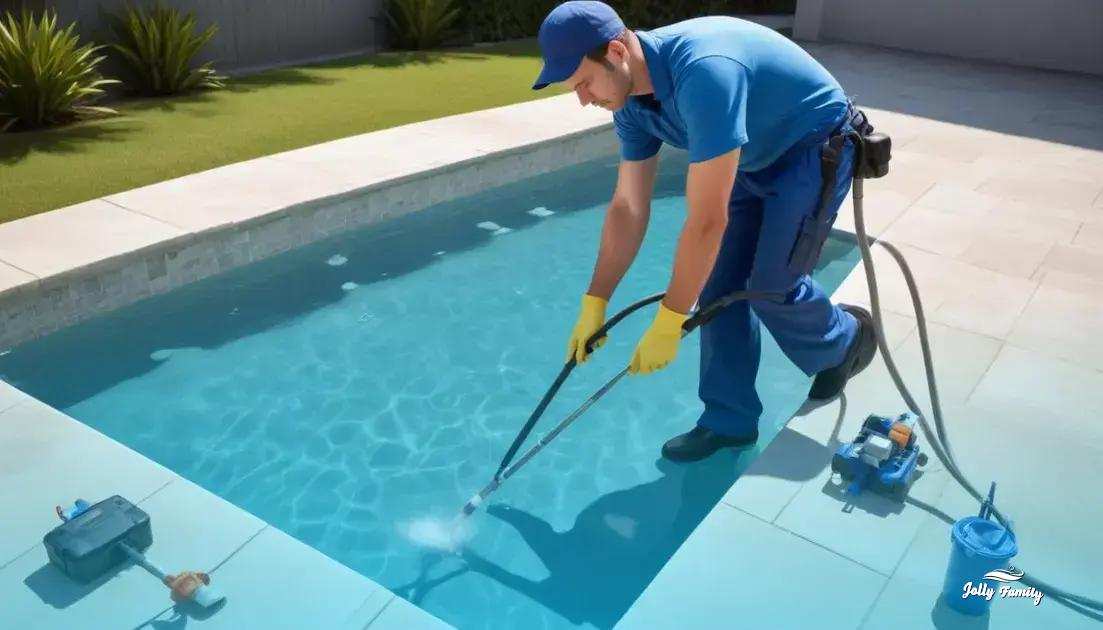
- Vacuum or use an automatic cleaner to remove settled debris from the floor.
- Clean or backwash the filter if pressure is high or the filter manufacturer recommends it.
- Inspect equipment visually: pumps, hoses, skimmer lids, and lights. Note leaks, odd noises, or loose fittings.
Practical safety tips
Keep pool chemicals in a cool, dry locked cabinet away from children. Never mix chemicals. Wear gloves and eye protection when handling strong chlorine or shock.
Keep a small first-aid kit, life ring and reaching pole near the pool. Teach older children basic water safety and where rescue gear is stored.
Log your checks in a simple notebook or app. Record dates, test results and any repairs. This makes spotting trends and planning service easier.
Set reminders for weekly tasks. Short, regular care prevents big problems later and helps keep the pool safe and fun for the whole family.
chemical handling and water balance: safe routines for homes
- Never mix different chemicals. Keep each product in its original container and use one at a time.
- Always wear gloves and eye protection when handling powders or concentrated liquids.
- Work outdoors or in a ventilated area and keep children and pets far away while dosing.
- Use dedicated measuring tools—do not reuse kitchen cups or spoons.
- Store chemicals locked and dry, away from heat and direct sunlight.
Handling and storage
Store chlorine, shock, acids and algaecides separately. Keep lids tightly closed and place containers on a shelf above floor level. Note any “incompatible” warnings on labels (for example, acids and chlorines). If a spill occurs, isolate the area and follow the product’s emergency instructions.
Balancing pH and sanitizer
- Target levels: pH 7.2–7.8, free chlorine 1–3 ppm, total alkalinity 80–120 ppm.
- Test water before adding anything. If pH is high, add a pH reducer in small doses; if low, add a pH increaser slowly.
- After adding chemicals, run the pump and retest after 1–4 hours. Adjust again only if needed.
- When shocking, follow label doses and wait the recommended time before swimming—usually until chlorine returns to safe range.
Safe dosing and measuring
Know your pool volume before calculating doses. Read product directions and measure precisely. When adding a dry product, broadcast it evenly around the deep end while the pump runs, unless the label says to pre-dissolve. For liquids, pour slowly into the skimmer or deep end with the pump on.
Always add chemical to water, not water to chemical. This prevents violent reactions and splashes.
Emergency and disposal
- If skin or eyes are exposed, rinse with water for at least 15 minutes and seek medical help if irritation persists.
- If inhaled or ingested, call emergency services and have the product label or container details ready.
- For small spills, use absorbent material and dispose per local hazardous-waste rules; never pour concentrated chemicals down storm drains.
Keep a simple log of tests and doses. Regular, small corrections are safer than large, rushed changes. Clear labels, safe storage, and careful measuring protect your family and keep the pool balanced.
safety barriers, alarms and fencing that actually reduce risk
- Four-sided isolation fencing: install a fence that separates the pool from the house and yard. Aim for at least 4 feet tall with vertical slats close enough to prevent climbing.
- Self-closing, self-latching gate: the gate should close on its own and latch out of a small child’s reach. Check the latch action every week.
- No climb features: avoid handholds, horizontal rails, or nearby objects kids could use to climb over the fence.
Safe covers and barriers
Use a rigid safety cover or professionally installed mesh cover when the pool is not in use. These covers provide a physical barrier that supports weight and reduces accidental falls. A cover alone is helpful, but best used together with fencing and alarms.
Alarms that add a layer of protection
- Gate and door alarms: alert adults if a child opens the gate or an exterior door leading to the pool area.
- Surface wave and submersible alarms: detect unexpected splashes or a person entering the water.
- Wearable alarms: useful for very young swimmers or children who are near the water often; they alert when submerged.
Alarms can reduce response time but should never replace supervision. Choose devices that are easy to test and maintain.
Maintenance and routine checks
- Test gate latches and alarm batteries monthly.
- Inspect fencing for gaps, rust, or loose posts and fix problems immediately.
- Keep landscaping trimmed so hiding spots and climbing aids are removed.
- Store ladders and furniture away from the fence.
Installation and compliance
Have fences and alarms installed by a qualified professional and confirm local code requirements. Keep manuals and receipts for warranties and inspections. Layered protection — fence, cover, alarm, and supervision — gives families the best chance to reduce pool risk.
emergency readiness: CPR, rescue gear and what to practice
- Essential rescue gear: keep a life ring with rope, a reaching pole, a rescue tube or throw bag, a backboard, an AED, a stocked first-aid kit, a whistle, and a charged phone near the pool. Store everything in a single, easy-to-reach spot.
CPR and training
- Get certified: take a hands-on CPR and first-aid course for adults and children. Practice on a manikin so skills feel natural.
- Know the basics: if someone is unresponsive and not breathing, call emergency services first, then start CPR. For adults, hands-only CPR is acceptable until help arrives. For infants and children, trained rescuers should give rescue breaths as taught in class.
- Refresh skills regularly. Aim to retake courses or do refreshers every 12–24 months.
Practical rescue rules
- Do not enter the water unless trained. Use a reaching pole or throw rope first.
- If you must enter to rescue, shout for help, keep your face out of the water, and bring the victim to shore quickly and safely.
- When the person is out of the water, check breathing and pulse. Begin CPR if there is no normal breathing.
Practice drills
- Run short monthly drills: simulate a fall, time how long it takes to call for help, reach the victim, and start rescue steps.
- Assign roles: caller, rescuer with pole, person retrieving AED, and adult supervisor who coordinates. Rotate roles so more than one person can act confidently.
- Record times and problems, then fix gaps—move gear closer, change storage, or update emergency contacts.
After an incident: replace or service used gear, clean and dry manikins and equipment, document what happened, and consider a quick refresher class. Caring for emotional stress matters—offer support to family members and get professional help if needed.
hiring reliable help: choosing a local service like Jolly Family
Look for a local company with clear credentials and a steady local presence. Ask for a business license, proof of insurance, and worker background checks before hiring.
- Check references: request recent customer names and call them. Ask about reliability, quality, and how problems were handled.
- Get a written estimate: the quote should list services, frequency, materials, and any extra fees. Avoid vague promises.
- Confirm insurance and licensing: this protects you if a worker is hurt or equipment is damaged.
Service terms and guarantees
Review the service contract for start date, cancellation rules, and a clear scope of work. Prefer companies that offer a short trial service or satisfaction guarantee so you can evaluate performance.
- Emergency response: ask how quickly they respond to urgent problems and if after-hours help costs extra.
- Background checks and training: confirm staff are trained in safety, chemical handling, and equipment care.
- Communication plan: agree on how they report visits, test results, and repairs—email, app, or paper log.
Comparing local options
Read online reviews and local group recommendations. Compare at least two estimates and note who answers questions clearly and on time.
Value over lowest price: cheap service can cost more later if maintenance is missed or done poorly. Choose a reliable local team—like a neighborhood firm such as Jolly Family—that shows proof of work and good reviews.
Keep important items on file: contract, insurance proof, service schedule, and receipts. This makes disputes rare and helps protect your family and pool investment.
Keep your family safe around the pool
Pool maintenance safety for families starts with simple, regular actions that cut risk. Small routines—skimming, testing water, and checking equipment—prevent bigger problems later.
Use layered protection: a secure fence, working alarms, and a safety cover. Store chemicals away from children, follow dosing rules, and wear protection when handling products. Practice rescue drills and keep life-saving gear and a charged phone nearby.
When hiring help, pick licensed, insured local pros and get a written estimate. Log tests and repairs, set reminders, and review service records so care stays consistent.
Pick one easy step today—start a weekly checklist or sign up for a CPR class. Small changes keep the pool fun, lower stress, and protect the people you love.
FAQ – pool maintenance safety for families
How often should I test pool water to keep my family safe?
Test sanitizer and pH daily during heavy use and at least twice weekly otherwise. Log results and adjust chemicals promptly to keep levels in the safe range.
What is the safest way to store and handle pool chemicals at home?
Keep chemicals locked in a cool, dry place, in original containers. Always wear gloves and eye protection, never mix products, and use dedicated measuring tools.
Do pool fences and alarms really prevent accidents?
Yes—layered protection like a four-sided fence, self-closing gate, and alarms reduces risk. They add time for an adult to respond but do not replace supervision.
What emergency gear should be kept near the pool?
Keep a life ring with rope, a reaching pole, a stocked first-aid kit, an AED, and a charged phone near the pool. Store gear in one easy-to-reach spot and check it regularly.
Should I hire a local pool service or do maintenance myself?
Hire a licensed, insured local service for complex tasks or if you lack time and experience. Get written estimates, check references, and choose value and reliability over the lowest price.
How can my family practice water safety without causing alarm?
Run short monthly drills with assigned roles, practice calling for help, and rehearse using rescue gear. Take a CPR class together so everyone knows basic life-saving steps.