
Pool maintenance stress for homeowners can be reduced with a simple routine: test and record chlorine, pH, and alkalinity weekly; skim and empty baskets daily; brush and vacuum weekly; run the pump 6–8 hours, clean filters monthly, and call a professional for persistent cloudiness, rapid water loss, or unusual equipment noises.
pool maintenance stress for homeowners shows up as cloudy water, missed chemicals, and surprise repairs. Curious how to cut time and worry? I’ll share simple weekly checks and when to call Jolly Family so your pool stays a calm, safe spot.
Common causes of pool maintenance stress and how they start
Most pool problems start small: a missed test, a clogged skimmer, or a short run time for the pump. These slip-ups often lead to cloudy water, algae, and surprise repairs.
Algae growth
Algae begins when sanitizer drops and water warms. It can appear as green, yellow, or black patches. Signs:
- Water turns green or patchy
- Slippery pool walls or rough spots
- Increased filter load
Quick fix: shock the pool, brush surfaces, and keep sanitizer levels steady.
Chemical imbalance
pH, chlorine, and alkalinity drift when tests are skipped or after heavy rain and sun. Imbalance irritates skin, causes scaling, and reduces sanitizer power.
- Cloudy water or cloudy surface
- Stinging eyes or faded swimsuits
- Hard water spots or scale
Tip: test water weekly and adjust with small doses. Aim for stable ranges rather than big swings.
Poor circulation and filtration
Blocked pumps, closed valves, or dirty filters create dead zones where water doesn’t move. Stagnant spots let debris and algae take hold.
- Pump runs loudly or loses prime
- Low pressure or high filter pressure
- Cloudy water despite correct chemicals
Routine: run the pump 6–8 hours a day, clean skimmer baskets, and backwash or clean filters as needed.
Debris and organic load
Leaves, grass, and sunscreen add organics that eat up chlorine. Left on the surface or floor, they stain and fuel algae.
- Floating leaves or sludge on the bottom
- Smelly water after heavy use
- Sudden chlorine drop after storms
Preventive step: skim daily, vacuum weekly, and use a pool cover when not in use.
Equipment failure and leaks
Small leaks, worn seals, or failing heaters and salt cells often start quietly. If ignored, they cause bigger damage and higher bills.
- Unusual noises from the pump
- Rapid water level drop
- Persistent pressure or flow problems
Action: inspect equipment monthly and call a pro at the first odd sound or steady leak.
A quick weekly checklist to cut time and uncertainty
- Test and record: use test strips or a liquid kit to check free chlorine, pH and total alkalinity. Write results down. Aim for chlorine 1–3 ppm, pH 7.2–7.6, alkalinity 80–120 ppm.
- Skim and empty baskets: remove leaves and debris from the surface. Empty skimmer and pump baskets to keep flow steady.
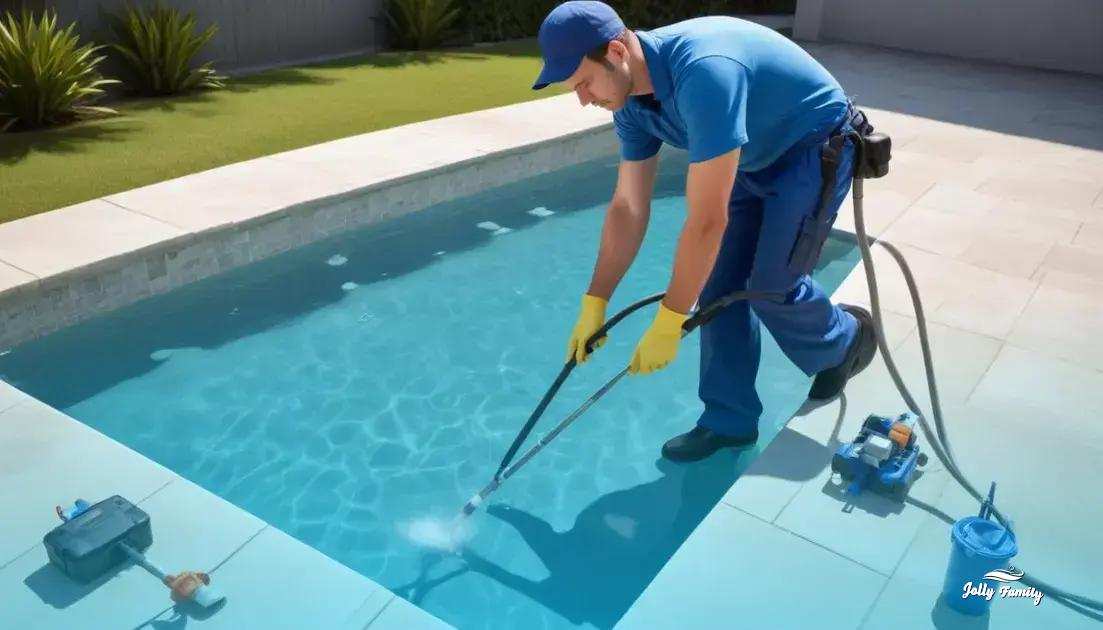
- Brush and spot-vacuum: scrub walls, steps and tile to stop biofilm. Vacuum visible dirt once a week or after heavy use.
- Check pump and filter: listen for odd noises, confirm the pump is primed, and note filter pressure. Clean or backwash when pressure is 8–10 psi above normal.
- Adjust chemicals in small doses: add sanitizer or pH adjusters in measured amounts. Retest after 30–60 minutes and avoid big swings.
Quick timing guide
- Daily: skim and visually inspect water.
- Weekly: test water, brush, empty baskets, vacuum if needed, and run pump 6–8 hours.
- After storms or heavy use: retest, shock if chlorine is low or water looks cloudy.
- Monthly: deep-clean filters, inspect seals and equipment for leaks.
When to call a pro: persistent cloudy water despite correct chemistry, rapid water loss, strange pump sounds, or electrical issues. A quick service visit can prevent costly repairs.
Log and simplify: keep a short checklist by the pump or on your phone. Small, steady steps each week cut time and reduce surprise fixes.
Easy water and chemical checks anyone can do safely
Wear basic safety gear before handling anything: gloves and eye protection. Keep children and pets away while testing and adding chemicals.
Tools and quick checks
Use simple tools: test strips, a liquid test kit with vials, or a digital meter. Test for free chlorine, pH, and total alkalinity every week. Add CYA (stabilizer), calcium hardness, or salt checks monthly or for specific systems.
How to use test strips and liquid kits
- Test strips: dip fully into 6–12" of water, remove, wait the time on the package, then match colors to the chart.
- Liquid kits: fill the vial to the mark, add the reagent drops as directed, swirl, and count drops or compare color to the chart.
- Always take results from water away from skimmers, returns, or ladders for a true reading.
Key ranges and simple fixes
- Free chlorine: 1–3 ppm. If low, add measured chlorine or shock for big drops.
- pH: 7.2–7.6. If high, add a pH reducer (muriatic acid or sodium bisulfate). If low, add soda ash slowly.
- Total alkalinity: 80–120 ppm. Raise with baking soda in small doses; lower with pH reducer if needed.
- Cyanuric acid (outdoor pools): 30–50 ppm; too low means chlorine burns off; too high weakens chlorine action.
Make adjustments in small amounts, wait 30–60 minutes, and retest. Avoid large swings by correcting gradually.
Safe chemical handling
Never mix different chemicals. Always add chemicals to water, not water to chemicals. Store dry chemicals closed, upright, and away from heat. If using granular products, pre-dissolve if the label recommends.
When to call a pro: if results are confusing, water stays cloudy after correction, or you see equipment issues. Basic, regular testing prevents most surprises and keeps your pool safe.
Preventive habits that reduce repairs and long-term costs
Small, regular actions cut big repair bills. Start with simple habits you can keep up each week and season.
Simple weekly habits
- Test and adjust: check chlorine, pH, and alkalinity weekly and fix small drift quickly.
- Skim and empty baskets: remove debris daily and clear skimmer and pump baskets to keep flow steady.
- Brush high-risk spots: scrub steps, corners, and tile to stop buildup before it hardens.
Monthly and seasonal tasks
- Clean or backwash filters monthly, or when pressure climbs 8–10 psi above normal.
- Inspect pool equipment for leaks or worn seals; tighten fittings and replace small parts before failure.
- Winterize or shock-treat before long off-seasons to prevent algae and freeze damage.
Equipment care that saves money
- Run the pump the recommended hours for your pool size; too little runtime causes stagnation, too much wastes energy.
- Keep a clear space around the pump and heater so they cool properly and avoid overheating.
- For salt systems or chlorinators, follow manufacturer cleaning steps to extend cell life.
Landscape and user habits
- Trim trees and plants to reduce leaf load and organic debris.
- Ask swimmers to rinse off lotions and sunscreens to lower chemical demand.
- Use a pool cover when the pool is idle to cut evaporation, chemical loss, and debris entry.
Record keeping and professional help
- Keep a simple log of test results, chemical doses, and maintenance dates to spot trends early.
- Schedule an annual professional inspection for plumbing, electrical, and heater checks.
- Call a pro at the first sign of persistent cloudiness, rapid water loss, or strange equipment noises.
These steady habits prevent small issues from growing into costly repairs and make pool care predictable and less stressful.
When to call local pros: how Jolly Family keeps pools worry-free
When to call a pro
- Cloudy water that won’t clear after 24–48 hours of correct chemistry and filtration.
- Pump makes grinding, rattling, or squealing noises.
- Filter pressure stays high even after cleaning or backwash (about 8–10 psi above normal).
- Steady or rapid water loss that emptying the pool won’t explain.
- Heater, salt cell, or chlorinator shows errors or won’t run properly.
- Visible cracks, persistent stains, or sudden drop in circulation in parts of the pool.
What pros check first
- System diagnosis: pump, motor, valves, and electrical connections for safety and performance.
- Filter and flow: clean cartridges, inspect sand or DE grids, and measure system pressure.
- Water analysis: full chemical panel beyond basic tests to find hidden imbalances.
- Leak and structure scan: look for plumbing leaks, return fittings, and shell issues.
- Equipment life and parts: evaluate seals, bearings, and cells that may need repair or replacement.
How Jolly Family keeps pools worry-free
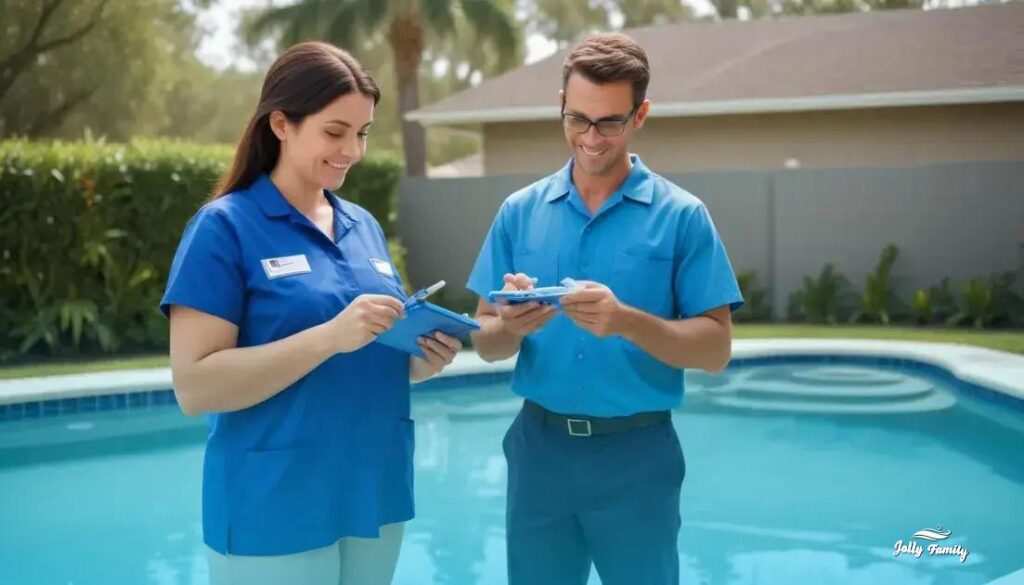
- Fast inspection: trained technicians arrive with test kits and basic parts to diagnose problems fast.
- Clear estimates: you get a simple written plan with repair options and costs before work starts.
- Routine plans: scheduled visits for testing, cleaning, and seasonal prep to prevent breakdowns.
- On-site fixes: common pump, filter, and minor plumbing repairs done during the visit when possible.
- Follow-up testing: confirmation that chemistry and flow are stable after service.
How to act when a problem starts
- Turn off electrical equipment if you smell burning or see sparks; then call a pro.
- Take photos or a short video of odd noises, leaks, or error lights to speed diagnosis.
- Note recent changes: heavy storms, big pool parties, or new chemicals added.
- Keep a short log of test results and actions taken so the technician can spot trends quickly.
What to expect on a service visit
A technician will run a quick safety check, test water, inspect equipment, and explain the issue in plain language. Ask about estimated costs and timing before any major repairs. If parts are needed, a pro can schedule return service or arrange a replacement that fits your budget.
Keeping your pool simple and stress-free
Small, steady steps stop big problems. Test water weekly, skim daily, and run the pump the right number of hours to keep water clear.
If chemicals or circulation look off, make small adjustments, wait 30–60 minutes, and retest. Always handle chemicals safely and never mix products.
Call a professional for persistent cloudiness, leaks, strange pump noises, or electrical issues. A timely service visit often prevents costly repairs.
Start a short log this week with test results and actions taken. Consistent care saves time, money, and stress so you can enjoy your pool more.
FAQ – Common questions about pool maintenance stress for homeowners
What should I test each week to reduce pool stress?
Test free chlorine, pH, and total alkalinity weekly. Record results and adjust in small doses to keep levels stable.
How many hours should I run my pool pump daily?
Run the pump 6–8 hours daily for most backyard pools. Adjust runtime based on pool size and local conditions.
What are quick signs I should call a professional?
Call a pro for persistent cloudy water, rapid water loss, loud or grinding pump noises, or electrical/heater faults.
How can I safely handle pool chemicals at home?
Wear gloves and eye protection, add chemicals to water (not water to chemicals), store products dry and cool, and never mix chemicals.
What simple habits prevent algae and costly repairs?
Skim daily, brush high-risk spots weekly, keep filters clean, trim nearby trees, and use a cover when pool is idle.
How do I keep maintenance stress low with simple records?
Keep a short log of test results, chemical doses, pump runtimes, and service visits to spot trends and catch issues early.