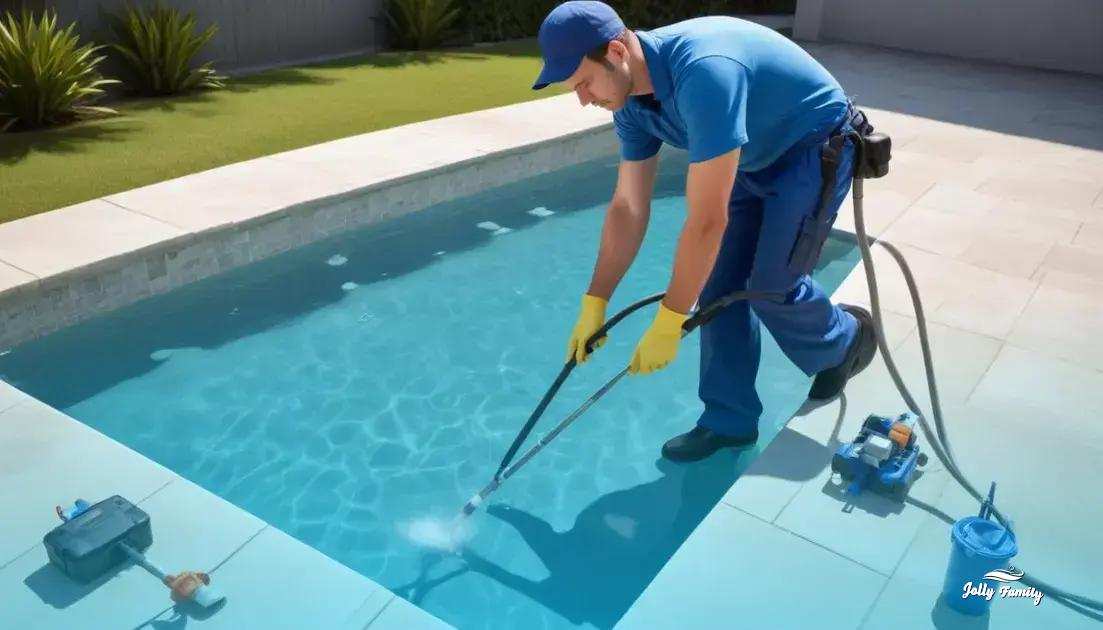

pool maintenance tips for Florida weather: test water 2–3 times weekly, maintain free chlorine 1–3 ppm and cyanuric acid 30–50 ppm, run the pump 8–12 hours daily, brush and skim twice weekly, shock after heavy rain or parties, and call a professional for persistent algae or equipment failure.
pool maintenance tips for Florida weather; Hot days, sudden storms and humidity change how pools behave in Kissimmee. Curious which simple routines actually prevent algae and cloudy water? I’ll share practical steps and explain when Jolly Family should be your long-term partner.
Understanding Florida climate effects on pools
Florida’s hot sun, sudden storms and high humidity change how pools behave. These conditions speed up chemical loss, increase evaporation and raise algae risk, so simple routines matter.
Heat and intense sun
Strong sunlight breaks down free chlorine quickly and raises water temperature, which increases chemical demand. Keep chlorine at 1–3 ppm and cyanuric acid (stabilizer) around 30–50 ppm to protect chlorine from UV. Run circulation longer on hot days to keep water moving and distribute chemicals.
Rain, storms and runoff
Heavy rain dilutes chemicals and can lower pH. Storm runoff brings leaves, pollen and organic debris that feed algae. After significant rain, test the water and rebalance alkalinity and chlorine. If the pool looks cloudy or smells, perform a shock treatment and remove debris with a skimmer.
Humidity and algae growth
High humidity and warm nights let algae thrive. Maintain a consistent chlorine residual and brush pool surfaces regularly. Brush walls and steps at least twice weekly and vacuum or backwash filters when pressure rises to prevent visible blooms.
Equipment wear and chemical balance
Salt systems, heaters and metal fittings corrode faster in coastal humidity. Clean skimmer baskets weekly, inspect the pump and filter for leaks, and replace worn parts quickly. Monitor pH (ideal 7.4–7.6) to protect equipment and swimmer comfort.
Practical checklist for Florida conditions
Test water 2–3 times per week in hot months and after storms. Shock weekly or after heavy rain and high bather load. Run the pump 8–12 hours daily (more in extreme heat). Remove debris daily, brush twice weekly, and backwash or clean the filter when pressure rises 8–10 psi above normal. Call a professional if algae persists, equipment fails, or chemical readings fluctuate wildly.
Quick weekly and monthly maintenance checklist for Kissimmee
- Test water 2–3 times weekly: check free chlorine (1–3 ppm), pH (7.4–7.6), and total alkalinity (80–120 ppm). Record results each time.
- Skim and remove debris daily: clear leaves, pollen and insects to stop stains and lower chemical demand.
- Brush walls and steps twice weekly: focus on shady corners and tile line to prevent algae buildup.
- Run circulation 8–12 hours daily: increase runtime during heat waves or after heavy use to distribute chemicals.
- Empty skimmer and pump baskets weekly: clogged baskets reduce flow and strain equipment.
- Shock after heavy rain or parties: add shock and retest after 24 hours to restore sanitizer levels.
Monthly checklist
- Clean or backwash filter: backwash sand/DE filters or clean cartridge filters when pressure is 8–10 psi above normal.
- Inspect equipment: check pump seals, hoses and heater for leaks or corrosion—replace parts showing wear.
- Test stabilizer and hardness: check cyanuric acid (30–50 ppm) and calcium hardness monthly and adjust to prevent scaling or corrosion.
- Service salt system or chlorinator: clean salt cell if buildup appears and test output to keep sanitizer consistent.
- Deep clean and vacuum: vacuum the floor, scrub tile line and treat any stubborn stains or small algae spots.
Troubleshooting tips
If chlorine keeps dropping, pH swings wildly, or water stays cloudy after treatment, inspect the filter and pump first. Persistent algae after brushing and shocking usually means poor circulation or a tired filter. Call a pro if equipment is noisy, leaks appear, or chemical readings jump up and down.
Balancing chemicals in heat and after heavy rain
After hot days or heavy rain, always test the water first. Quick testing shows chlorine, pH and alkalinity so you know what to fix.
Test before you add anything
Use test strips or a liquid kit and record results. Normal targets are free chlorine 1–3 ppm, pH 7.4–7.6 and total alkalinity 80–120 ppm. After storms, test again because rain can dilute sanitizers and change pH.
Adjust pH and alkalinity
If pH is high, add acid slowly (muriatic acid or sodium bisulfate) in small doses and retest after circulation. If alkalinity is low, raise it with sodium bicarbonate. Work in steps: change one parameter at a time and wait a few hours, then retest.
Restore chlorine with shock
Heat and storms increase chlorine demand. If free chlorine is low or water looks cloudy, perform a shock treatment. Use a pool shock product per label and aim to raise sanitizer enough to clear contaminants—commonly to at least 5 ppm after shocking. Run the pump and retest the next day before swimming.
Filter, circulation and debris removal
Clean skimmer and pump baskets, brush surfaces and vacuum debris after rain. Backwash or clean the filter when pressure reads 8–10 psi above normal. In hot weather, increase pump runtime to improve chemical distribution and prevent dead spots where algae can start.
Preventive checks and safety
- Check cyanuric acid monthly and keep it around 30–50 ppm so chlorine lasts longer in strong sun.
- Inspect equipment for leaks and corrosion, especially in humid, coastal areas.
- Always add chemicals to water, not water to chemicals, and wear gloves and eye protection. Follow product labels and wait until readings return to safe levels before using the pool.
Preventing and handling algae blooms and cloudy water
Algae and cloudy water usually show a quick drop in sanitizer or poor filtration. Fast action stops spread and keeps cleanup short.
Prevention: simple daily habits
- Maintain sanitizer: keep free chlorine at 1–3 ppm and cyanuric acid near 30–50 ppm to protect chlorine from sun.
- Run circulation: operate the pump 8–12 hours daily, more during heat, to avoid dead spots where algae start.
- Brush and skim: brush walls and tile line twice weekly and skim debris daily to remove algae food sources.
- Keep filters healthy: backwash or clean when pressure rises 8–10 psi above normal and replace cartridges per manufacturer guidance.
Treating visible algae
When you see green, black or yellow growth, act in steps. Brush surfaces to break mats, then test water. If free chlorine is low, perform a shock treatment to raise chlorine to at least 5 ppm. For heavy blooms add a labeled algaecide after shocking and run the pump continuously until the water clears. Vacuum or backwash only after algae particles settle or are removed—otherwise you can push algae into the filter.
Clearing cloudy water
Cloudiness often comes from fine particles, dead algae, or a tired filter. First clean skimmer baskets and check filter pressure. If the filter can’t clear the water, backwash or clean cartridges. Use a clarifier or a flocculant to clump particles so the filter or vacuum can remove them. Avoid repeated chemical overdoses—fix filtration, then treat chemically if needed.
Safety and testing
- Always test after treatment and wait until chlorine and pH are in safe ranges before swimming.
- Wear gloves and eye protection when handling shock and algaecide; add chemicals to water, never water to chemicals.
When to call a pro
If algae returns after proper shocking and filtration, the filter is failing, or stains and scale appear, call a professional. Persistent problems may need a deep clean, phosphate reduction, or equipment repair to stop repeats.
When to call Jolly Family: pro maintenance and emergency tips
Call Jolly Family when problems are urgent or you can’t make the pool safe. They handle equipment failure, leaks, major algae and storm damage quickly.
Emergency situations—call right away
- Pump or motor stops and the pool has no circulation.
- Rapid water loss (several inches per day) or wet areas near equipment.
- Strong chemical odors, sparks, or visible electrical issues at the equipment pad.
- Large algae bloom or sewage-like smell that causes skin or eye irritation.
- After a storm if filters are clogged, lines are broken, or water is dangerously cloudy.
What Jolly Family will do on arrival
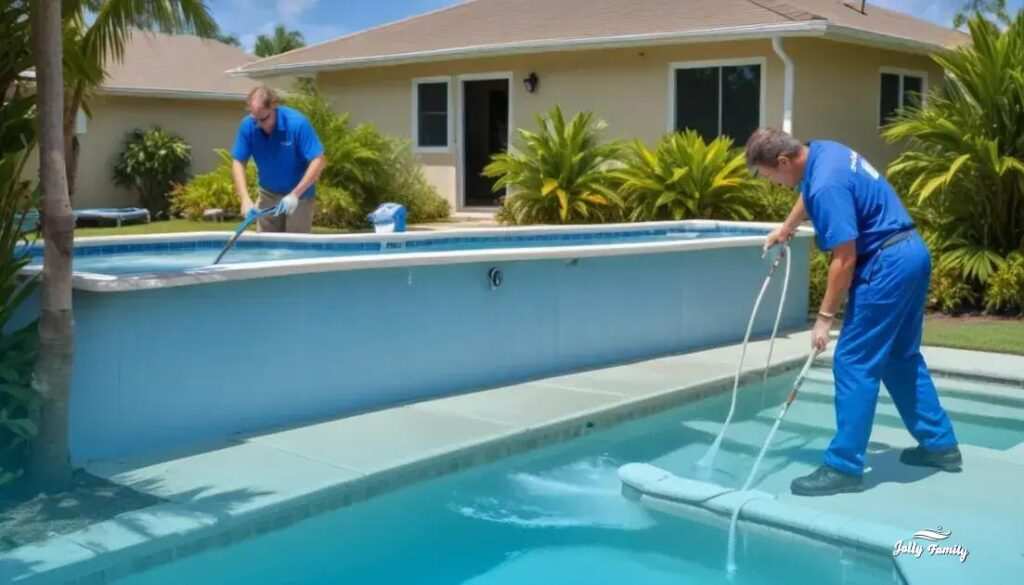
Technicians will assess the scene, test water, inspect equipment and give clear repair options. Expect a quick diagnosis, an estimate and a timeline. For emergencies they can make temporary fixes to restore safety, then schedule full repairs.
What to have ready
- Recent water test results or photos of test strips if you have them.
- Pictures of the equipment nameplate or model numbers.
- Access instructions, gate codes and a safe place to park the service truck.
- Your availability and a contact phone number for fast updates.
Preventive pro services to schedule
- Monthly tune-ups to check pump, filter, heater, and automation.
- Filter deep clean and pressure checks to keep circulation strong.
- Salt cell cleaning or chlorinator service to maintain sanitizer output.
- Pre-storm inspections to secure equipment and reduce damage risk.
Quick safety tips while you wait
- Do not swim if chemicals are out of range or water is cloudy.
- Turn off pool power at the breaker if the pump is making sparks or smells hot.
- Keep kids and pets away from equipment and standing water.
- Do not mix chemicals or add large doses without pro advice.
Final checklist to protect your pool
Following these pool maintenance tips for Florida weather keeps water clear, prevents algae, and extends equipment life. Simple routines like testing, skimming, and running the pump make a big difference.
Test water 2–3 times weekly, brush twice weekly, shock after heavy rain or parties, and clean filters when pressure rises. Act quickly on cloudy water or algae to avoid larger cleanups.
If you see leaks, pump failure, persistent algae, or wide chemical swings, call a professional. Regular service and prompt repairs save time and money. Always wait until chemical levels are safe before swimming.
FAQ – pool maintenance tips for Florida weather
How often should I test my pool water in Florida?
Test water 2–3 times per week in hot months and after storms or heavy use. Check free chlorine, pH and alkalinity and record results.
What should I do right after heavy rain or a storm?
Skim debris, test and rebalance chemicals, shock if chlorine is low, clean skimmer baskets, and backwash or clean the filter if pressure rises.
How can I prevent algae in warm, humid weather?
Keep free chlorine 1–3 ppm, cyanuric acid 30–50 ppm, run the pump 8–12 hours daily, brush surfaces twice weekly and remove debris daily.
Why is my pool cloudy and how do I clear it?
Cloudiness can come from fine particles, dead algae, or a weak filter. Clean baskets, check filter pressure, backwash or clean cartridges, then use clarifier or flocculant and vacuum.
How long should I run my pool pump in Florida?
Run the pump 8–12 hours daily as a baseline. Increase runtime during heat waves, busy days, or after storms to improve circulation and chemical distribution.
When should I call a professional like Jolly Family?
Call a pro for pump or motor failure, rapid water loss, persistent algae, large chemical swings, electrical issues, or after major storm damage.