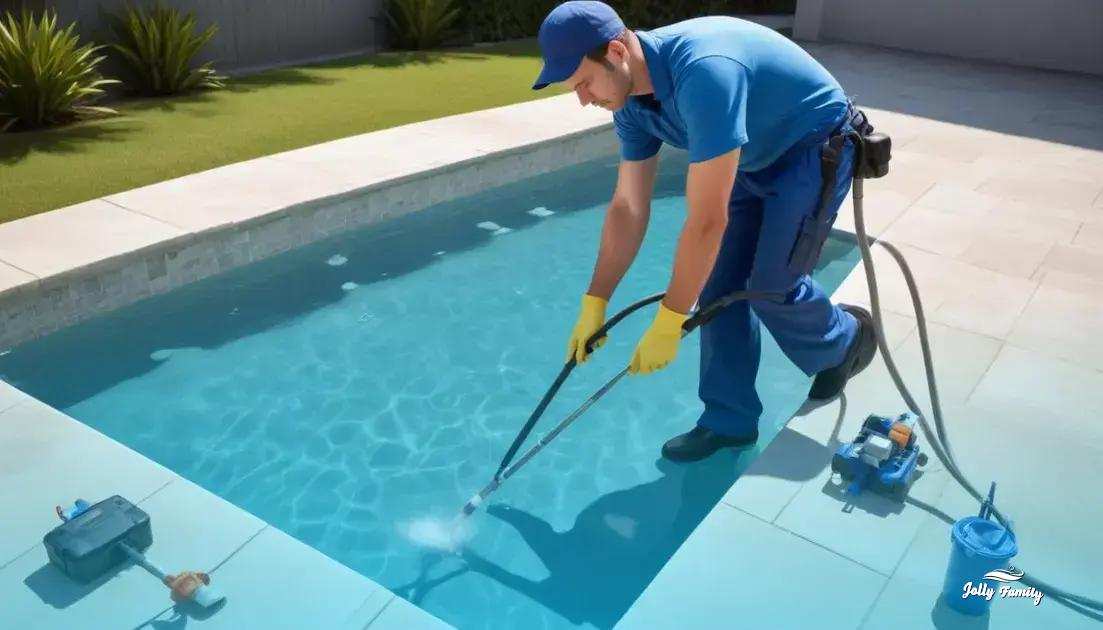

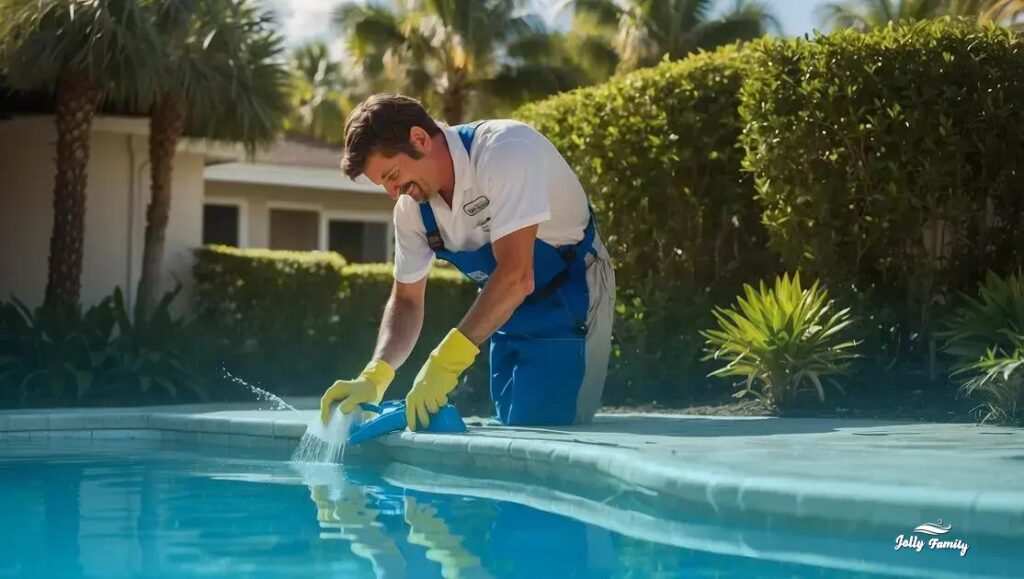
pool service near me Kissimmee FL provides licensed, insured local technicians who perform weekly inspections, precise water chemistry balancing, filter and pump maintenance, stain and algae treatment, and fast post-storm response, with written visit reports and transparent pricing to keep your pool safe, clear, and swim-ready year-round.
pool service near me Kissimmee FL can feel confusing—who to call, which problems to fix first? At Jolly Family, we show up on time, diagnose issues clearly and keep your pool safe and ready for family use.
what a full pool service includes
A full pool service covers every routine task needed to keep your pool safe, clean, and ready to swim. Technicians follow a clear checklist so problems are caught early and costs stay low.
Inspection and equipment check
Technicians inspect pumps, heaters, timers, and skimmers. They look for leaks, loose fittings, and weird noises. A quick equipment check prevents breakdowns and keeps circulation strong.
Water testing and chemistry
Water is tested for pH, free chlorine, total alkalinity, and stabilizer. Results guide dosing so water stays balanced. Balanced water protects surfaces, equipment, and swimmers.
Cleaning and debris removal
Services include skimming the surface, vacuuming the floor, and brushing walls and tile lines. Removing leaves and dirt prevents stain build-up and clogged filters.
Filter and pump maintenance
Technicians clean or backwash filters, check pressure gauges, and inspect pump baskets. Proper filter care improves water clarity and extends equipment life.
Stain, algae and shock treatments
If algae or stains appear, targeted treatments are applied. Shock dosing and algaecide remove contaminants fast. Technicians explain the steps taken and follow safety ratios.
Repairs, safety checks and reporting
Minor repairs like replacing seals or testing electrical safety devices are handled on site or scheduled. After each visit you get a brief report describing actions, readings, and next steps.
Ask for a clear service schedule and pricing so you know what to expect each visit. Regular care saves money and keeps your pool inviting all year.
how often your pool needs professional care in Kissimmee
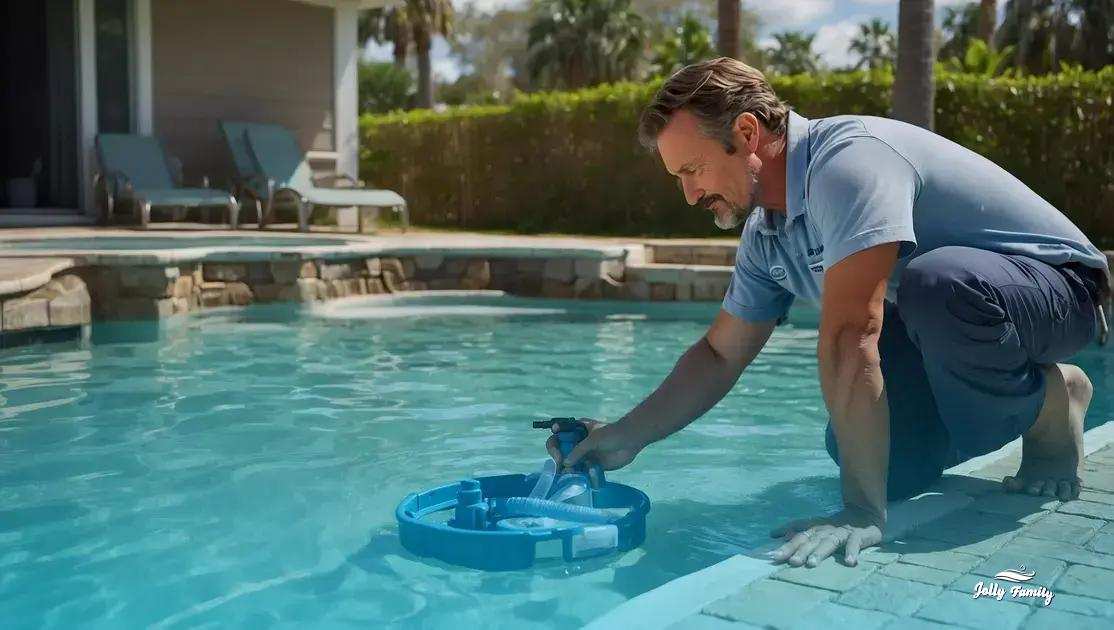
Frequency depends on pool use, weather and equipment. In Kissimmee’s hot, humid climate with frequent storms, many pools need more than monthly checks.
Key factors that change service frequency
- Usage: Lots of swimmers or parties require more frequent testing and cleaning.
- Weather: Heavy rain and wind bring debris and change chemistry fast.
- Surroundings: Trees, pets and landscaping increase leaves and contaminants.
- Equipment age: Older pumps and filters may need inspections more often.
Recommended schedule for Kissimmee pools
- Weekly: Test pH and chlorine, skim surface, empty skimmer and pump baskets, adjust chemicals.
- Every 2 weeks: Vacuum, brush walls and tile line, check filter pressure and backwash if needed.
- Monthly: Inspect pump, heater and automation, clean cartridges or perform deeper filter service.
- After storms or heavy use: Shock the pool, remove debris, and run a full chemistry check within 24–48 hours.
Signs you need extra visits
- Cloudy or green water
- Rapid pH or chlorine swings
- Visible algae or stains
- Low circulation or abnormal pump noises
- Recurring filter clogging
How to set a tailored plan with your provider
Ask for a written schedule that matches your pool size, usage and local conditions. Request brief visit reports with readings and actions. Choose a provider who offers emergency callouts after storms and adjusts frequency seasonally to keep costs predictable and water safe.
common water problems and how we fix them
Common pool water issues are easy to spot and fix when you know what to check. Problems like cloudy water, algae, pH swings, stains, scaling, and chlorine odor each need a specific approach.
Cloudy water
Cloudiness often comes from poor filtration, tiny particles, or imbalanced chemistry. Start by testing free chlorine, pH and alkalinity. Clean or backwash the filter, vacuum visible debris, and run the pump longer.
- Quick fix: Brush walls, vacuum, and shock the pool if chlorine is low.
- If persistent: Use flocculant or clarifier and filter until water clears.
Green algae or cloudy green water
Green water means algae growth. Treat immediately to avoid stains and heavy filtering work.
- Shock the pool with a high dose of chlorine following label directions.
- Apply an algaecide appropriate for the algae type.
- Brush surfaces hard and vacuum dead algae to waste if possible.
pH swings and chemistry imbalance
pH below 7.2 or above 7.8 causes eye irritation, scaling, and poor sanitizer performance. Aim for pH 7.2–7.6, free chlorine 1–3 ppm, and alkalinity 80–120 ppm.
- Raise pH with soda ash (sodium carbonate).
- Lower pH with muriatic acid or sodium bisulfate in small doses.
- Adjust total alkalinity first, then fine-tune pH.
Stains and metal discoloration
Brown, red, or rusty stains often mean iron, copper or manganese in the water. Metals enter from source water, corroding parts, or algaecide use.
- Test for metals and use a sequestering agent to hold metals in solution.
- For heavy staining, use a metal-specific stain remover and follow safety directions.
- Consider filling with treated water or using a metal filter if source water is high in metals.
Scaling and high calcium
Scaling appears as white crust or cloudy water when calcium hardness is too high. Aim for calcium hardness 200–400 ppm for most pools.
- Lower hardness by diluting with fresh water when feasible.
- Use scale inhibitors to protect heaters and surfaces.
- Maintain balanced pH and alkalinity to reduce scale formation.
Chlorine odor and combined chlorine
A strong chlorine smell usually means combined chlorine (chloramines) are present. That’s a sign sanitizer is used up or circulation is poor.
- Shock the pool to break chloramines and restore free chlorine.
- Improve circulation and run the filtration system longer.
- Ensure proper chlorine levels and remove contaminants like sweat and cosmetics.
Always follow product labels and wear protective gear when handling chemicals. Ask your service provider for a written action plan and regular testing to prevent repeat problems.
jolly family approach: inspections, chemistry, and preventive care
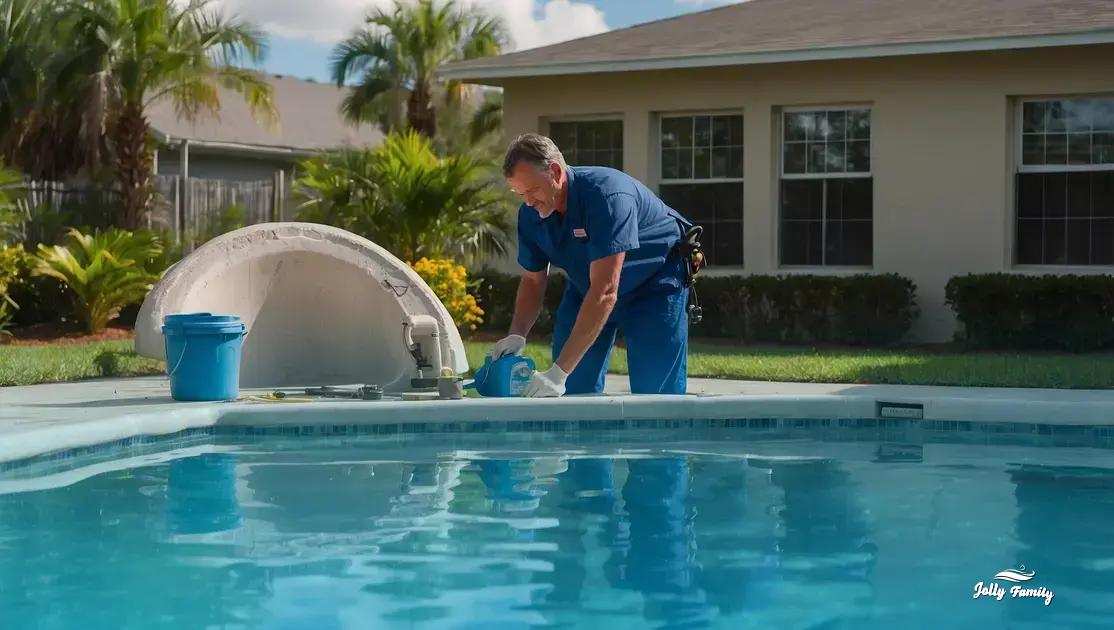
Jolly Family follows a clear routine: careful inspections, exact chemistry control, and planned preventive care to keep your pool reliable and safe.
Inspection process
Technicians perform a full walkaround and equipment check. They examine pumps, filters, heaters, valves, and visible plumbing for leaks or wear. Simple findings are fixed on the spot; bigger issues are scheduled with clear cost estimates.
- Equipment check: pressure gauges, pump baskets, skimmer condition, and filter housings.
- Leak and safety check: look for loose fittings, electrical faults, and deck hazards.
- Documentation: short notes or photos recorded each visit so trends are visible.
Chemistry management
Water is tested with fast, reliable tools and adjusted to safe ranges: pH 7.2–7.6, free chlorine 1–3 ppm, alkalinity 80–120 ppm. Technicians dose chemicals in measured steps and re-test to confirm balance.
- On-site testing: digital meters and test strips for quick, accurate readings.
- Corrective actions: shock for chloramines, algaecide for algae, and sequestering agents for metals.
- Record keeping: logs of readings and treatments help prevent repeat issues.
Preventive care plans
Plans are customized by pool size, usage, and Kissimmee weather. Regular maintenance reduces costly repairs and keeps water inviting year-round.
- Weekly: skim, empty baskets, test chemistry, and adjust chemicals.
- Monthly: deep clean, backwash or clean filters, inspect seals and motors.
- Seasonal tune-ups: heater checks, automation testing, and parts replacement as needed.
Communication and follow-up
After each visit you receive a concise report with readings, actions taken, and recommended next steps. Emergency or post-storm responses are available so small problems don’t become big ones.
Ask for a plan that lists tasks, frequency, and transparent pricing to match your needs and budget.
what to expect during a routine visit (checklist)
- Arrival and safety check: technician confirms appointment, secures area, and inspects deck and electrical access for hazards.
- Quick visual audit: note water level, clarity, visible debris, and any cracks, leaks, or unusual wear.
Chemistry testing and adjustment
Tests include pH, free chlorine, total alkalinity, and cyanuric acid using a digital meter and test strips. Technicians add chemicals in measured steps and re-test until levels are balanced. Aim for pH 7.2–7.6 and free chlorine 1–3 ppm.
Cleaning tasks
- Skim and remove debris: clear surface leaves and floating trash to prevent filter clogs.
- Brush and vacuum: scrub walls, tile line and steps, then vacuum to waste or into the filter as needed.
- Empty baskets: clean skimmer and pump baskets for good circulation.
Filter and pump inspection
Check filter pressure gauges, look for leaks, and evaluate pump noise and seals. Perform backwash or clean cartridges when pressure is high. Proper filter care improves water clarity and saves energy.
Minor repairs and safety items
Small fixes like replacing an O-ring, tightening fittings, or securing loose covers are handled on site. If a bigger repair is found, the technician documents the issue and provides a clear estimate and timeline.
Reporting and next steps: the visit ends with a concise report showing readings, chemicals added, tasks completed, and recommended follow-ups. Schedule adjustments are suggested based on weather, pool use, and equipment condition to keep service predictable and effective.
how to choose a reliable local pool service in Kissimmee
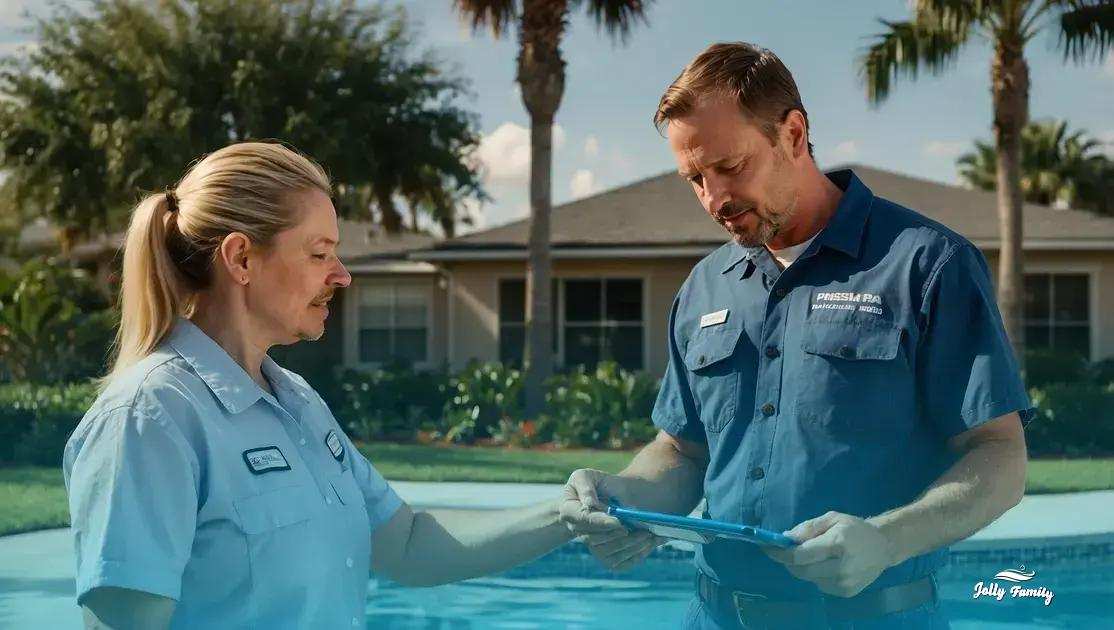
Choose a reliable local pool service by checking credentials, communication, and proven experience in Kissimmee’s heat and storms.
Must-check credentials and protections
- License and insurance: confirm state or local licensing and ask for general liability and worker’s comp certificates.
- Certifications: look for certified pool operators (CPO) or manufacturer training on pumps and heaters.
- Bonding: bonded companies offer extra protection against theft or damage.
Local experience and references
Ask for recent customer references in Kissimmee. A good provider can share examples of storm response, algae outbreaks, and seasonal tune-ups they handled nearby.
- Online reviews: read multiple platforms for patterns, not single ratings.
- Speak to neighbors: local word-of-mouth reveals reliability and punctuality.
Services, pricing and transparency
Compare written service plans that list tasks, frequency, and clear prices. Avoid vague contracts—good companies provide detailed checklists and itemized invoices.
- Flat-rate vs. per-visit: choose what matches your budget and pool needs.
- Free estimates: a quality company inspects before quoting and explains recommended fixes.
Response time and guarantees
Ask about emergency or after-storm response and average arrival times. Check for satisfaction guarantees or warranties on repairs and parts.
Communication and reporting
Reliable providers send visit reports with readings, chemicals used, and photos of issues. Expect clear communication, a single point of contact, and easy scheduling.
Red flags to avoid
- No proof of insurance or unwillingness to provide references.
- Pressure to buy unneeded equipment or large upfront payments without contract details.
- Unclear pricing, poor communication, or late arrivals without notice.
Ask questions, compare at least two local companies, and pick one that offers clear paperwork, quick communication, and proven local experience to protect your pool and budget.
Keep your Kissimmee pool safe and worry-free
Regular professional care prevents costly repairs, keeps water clear, and protects your family. In Kissimmee’s heat and storms, routine visits catch problems early.
Choose a local, insured service that provides clear reports, predictable schedules, and fast storm response. A simple plan can save time and money.
Test results, honest communication, and preventive repairs keep your pool ready for use all year. Ask for a written estimate and a customized maintenance plan.
Ready to simplify pool care? Contact a trusted local provider for a free estimate and keep your pool inviting and safe.
FAQ – Pool service in Kissimmee, FL
How often should I schedule professional pool service in Kissimmee?
Weekly service is common in Kissimmee because of heat and storms. Some pools with low use may move to every two weeks, but storm or heavy use calls for extra visits.
How much does regular pool service usually cost?
Cost varies by pool size, frequency and services. Expect plans billed weekly or monthly; ask for a written quote that lists tasks and any extra repair fees.
Should I hire a licensed and insured pool company?
Yes. Always verify state/local licenses, liability insurance and worker’s comp to protect your home and avoid responsibility for accidents or damage.
Are pool chemicals safe when handled by a service tech?
Yes, when handled by trained technicians. Pros use measured dosing, proper PPE, and follow label instructions. Never mix chemicals yourself and store them safely.
What will a routine visit include?
A routine visit normally covers water testing and balancing, skimming, brushing, vacuuming, emptying baskets, and checking pump and filter performance, plus a short report.
What should I do after a storm or sudden algae?
Contact your provider for a post-storm inspection. Expect debris removal, a full chemistry check, shock treatment if needed, and filter cleaning or backwash to restore water quality.