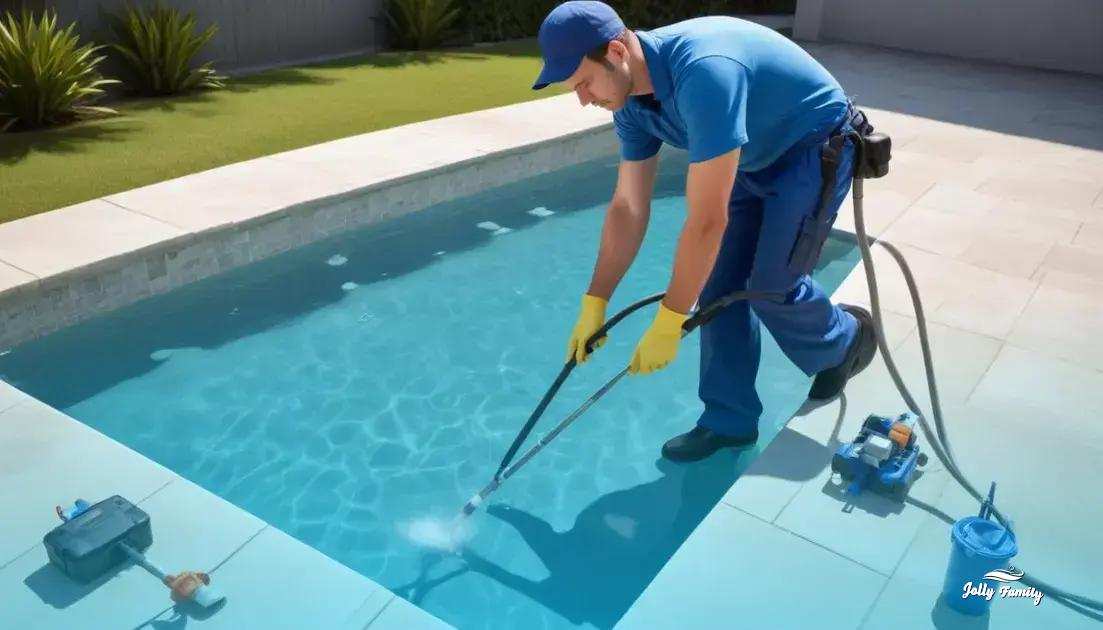


Cloudy pool water after cleaning can result from poor filtration, imbalanced chemicals, and debris accumulation; regular maintenance, chemical testing, and thorough cleaning are essential to ensure crystal-clear water.
Pool water not clear after cleaning can leave you puzzled and disappointed. Many factors can be at play, and addressing them is crucial for maintaining your pool’s beauty. Have you ever wondered what could be causing that cloudy appearance?
Identifying common causes of unclear pool water
Identifying the common causes of unclear pool water is essential for maintaining a clean and inviting swimming environment. Often, it is not just one factor but a combination that leads to cloudy water.
Filtration Issues
One of the primary reasons for unclear pool water is malfunctioning filtration systems. If the filter is dirty, clogged, or inefficient, it may not effectively remove dirt and debris from the water. Regular cleaning of the filter is crucial for optimum performance.
Imbalanced Chemicals
Another significant factor is chemical imbalances. The pH level should ideally be between 7.2 and 7.8. If the pH is too high or too low, it can affect the clarity of the water. Additionally, inadequate levels of chlorine or other sanitizers can lead to algae growth, contributing to cloudiness.
Water Circulation
Poor water circulation can also cause clarity issues. Stagnant water can allow particles to settle, leading to a murky appearance. Ensuring that water is circulating properly helps keep it clear by distributing chemicals evenly and filtering out contaminants.
Environmental Factors
Consider environmental factors like leaves, dirt, and debris. When these elements enter the pool, they can contribute to a gloomy look. Regular skimming and cleaning around the pool area can mitigate this issue.
Other Potential Causes
Finally, some less common causes to consider include high levels of dissolved solids, algae infestations, or even cloudy water from newly filled pools. If you’re experiencing persistent issues, testing the water with a quality testing kit can provide valuable insights.
How filtration system issues affect water clarity
Understanding how filtration system issues affect water clarity is crucial for maintaining a clean pool. The filtration system is designed to remove dirt, debris, and contaminants, ensuring the water remains clear and safe for swimming.
Types of Filters
There are several types of filters, including sand, cartridge, and diatomaceous earth (DE). Each type works differently but aims to keep the pool water clean. If these filters are not functioning correctly, you may notice a decline in water quality.
Clogged Filters
A common issue is clogged filters. When debris accumulates, it hinders water flow, preventing the filter from doing its job. Regular cleaning and replacement of filter media are essential to avoid this problem.
Old or Worn Filters
If filters are too old or worn out, they might not trap particles effectively. Replacing old filters can dramatically improve water clarity, ensuring that even small particles are filtered out.
Insufficient Water Flow
Another factor that affects filtration is insufficient water flow due to pump issues. If the pump is not operating at the right level, it can lead to poor circulation, allowing contaminants to remain in the pool longer.
Backwashing and Maintenance
For sand and DE filters, backwashing is an important maintenance task. Backwashing cleans the filter by reversing the flow of water, helping to remove build-up and ensure efficient filtration.
By addressing these filtration system issues, you can significantly improve the clarity of your pool water, ensuring a more enjoyable swimming experience.
The role of pH and chemical balance in water clarity
The role of pH and chemical balance in water clarity is vital for keeping your pool sparkling clean. Maintaining the right chemical levels not only ensures clear water but also promotes a safe swimming environment.
Importance of pH Levels
The ideal pH level for pool water should be between 7.2 and 7.8. If the pH is too low, the water can become acidic, leading to corrosion of pool equipment and surfaces. Conversely, if it’s too high, it can cause cloudy water and reduce the effectiveness of chlorine.
Chlorine and Sanitizers
Chlorine is essential for sanitizing the water and eliminating harmful bacteria. For optimal clarity, the chlorine level should be maintained between 1 and 3 parts per million (ppm). Regular testing is necessary to ensure that chlorine levels are neither too high nor too low.
Alkalinity and Stabilizers
Additionally, total alkalinity serves as a buffer for pH levels. It should be kept between 80 and 120 ppm. Proper alkalinity helps stabilize pH and prevents drastic fluctuations that can lead to water clarity issues. Stabilizers can also be added to minimize the loss of chlorine due to sunlight exposure.
Impact of Imbalance
A chemical imbalance can lead to problems such as algae growth and cloudy water. To prevent this, it is essential to regularly monitor and adjust chemical levels. Utilizing a quality testing kit can help you accurately measure pH, chlorine, and alkalinity.
Routine Maintenance
Incorporating regular testing into your pool maintenance routine is crucial. Adjust chemicals accordingly and add them gradually to avoid shocks. Maintaining balanced chemistry ensures that your pool remains clear and safe for everyone.
Importance of regular maintenance for clear pool water
The importance of regular maintenance for clear pool water cannot be overstated. A consistent maintenance routine is key to keeping your pool clean, safe, and inviting for swimmers.
Consistent Cleaning
Regularly skimming the surface of the pool helps remove leaves, bugs, and debris that can cloud the water. The more frequently you clean, the less chance these contaminants have to sink and create further cleaning challenges.
Filter Maintenance
Maintaining your pool’s filter is essential. Cleaning or replacing filter cartridges and backwashing sand filters according to the manufacturer’s instructions ensures your filtration system works effectively. Neglecting filter maintenance can lead to clogged systems, resulting in murky water.
Balancing Chemicals
Regularly testing and balancing the pool’s chemicals helps prevent algae growth and cloudy water. Aim to check the chemical levels at least once a week, adjusting as necessary to keep pH, chlorine, and alkalinity in the optimal ranges.
Scheduled Water Changes
Changing a portion of the water periodically helps reduce the concentration of dissolved solids and contaminants. Aim to replace about 10% to 20% of the water every few weeks to maintain clarity.
Seasonal Maintenance Tasks
In addition to regular weekly tasks, seasonal maintenance is important for overall pool health. This includes thorough cleaning, checking equipment for any wear and tear, and preparing the pool for different weather conditions.
By committing to a routine of regular maintenance, you can ensure that your pool remains a clean and refreshing oasis for you and your guests.
Tips for troubleshooting and resolving water clarity problems
Tips for troubleshooting and resolving water clarity problems are essential for maintaining a beautiful swimming pool. If you notice your pool water is cloudy or discolored, follow these steps to identify and fix the issue.
Test Water Chemistry
Start by testing the water chemistry using a pool test kit. Check the pH, chlorine, alkalinity, and stabilizer levels. Make sure the pH is between 7.2 and 7.8 and chlorine levels are between 1 and 3 ppm. Imbalances can lead to cloudy water.
Inspect the Filtration System
Next, examine your filtration system. Ensure it is clean and functioning properly. Clean or replace the filter as needed, and make sure the pump is running efficiently. Poor filtration can lead to debris buildup, which affects clarity.
Shock the Pool
If the water remains cloudy despite proper chemical levels, consider shocking the pool. This process involves adding a higher dose of chlorine to eliminate contaminants and algae. Follow the instructions on the shock product for the correct dosage.
Clean the Walls and Floor
Sometimes, suspended particles can cling to the walls and floor. Use a pool brush and vacuum to clean these surfaces thoroughly. Removing surface debris will help improve overall water clarity.
Check for Algae Growth
Keep an eye out for any signs of algae growth, such as a green tint or slimy surfaces. If algae are present, you may need to use an algaecide along with the chlorine shock. Regular brushing and vacuuming can also help prevent algae from taking hold.
Regular Maintenance Practices
Maintaining a routine cleaning schedule can prevent many water clarity issues. Regularly skim the surface, vacuum the pool, and check chemical levels at least once a week. Consistency in maintenance is key to crystal-clear water.
Maintaining Clear Pool Water is Essential
Keeping your pool water clear and inviting takes regular effort and attention. By understanding the common causes of cloudy water and following proper maintenance tips, you can easily ensure a safe and enjoyable swimming environment.
Regularly testing your water, maintaining your filtration system, and addressing any issues promptly are crucial steps in this process. With a proactive approach, you can keep your pool sparkling clean, ready for fun and relaxation.
Remember, a little maintenance goes a long way in preserving the beauty and safety of your pool space!
FAQ – Frequently Asked Questions About Pool Water Clarity
What causes cloudy pool water?
Cloudy pool water can be caused by several factors, including poor filtration, imbalanced chemicals, and debris accumulation.
How often should I test my pool water?
You should test your pool water at least once a week to ensure proper chemical balance and clarity.
What should I do if my pool is still cloudy after shocking it?
If your pool remains cloudy after shocking, check the filtration system, clean the pool surfaces, and ensure proper water circulation.
How can I prevent algae growth in my pool?
Regularly maintaining the chemical balance, cleaning the pool, and using an algaecide can help prevent algae growth.
Is regular pool maintenance really necessary?
Yes, regular pool maintenance is crucial for ensuring clear, safe water and prolonging the life of your pool equipment.
What can I do to improve water clarity quickly?
To quickly improve water clarity, test and adjust the chemical levels, clean the filter, and ensure proper circulation.