
professional pool cleaning service Kissimmee FL provides weekly maintenance, water balancing, filter and equipment inspection, algae prevention, and storm prep to keep pools safe, extend equipment life, and reduce costly repairs; choose a licensed provider offering documented visits, chemical handling, and clear pricing for reliable year‑round care in Kissimmee’s climate.
professional pool cleaning service Kissimmee FL keeps your backyard swim-ready in a subtropical climate that speeds algae and chemical shifts. Think of weekly service like a tune-up for your pool: small checks now avoid big repairs later. Curious which checks Jolly Family runs on every visit? Read on.
how weekly cleaning prevents costly repairs
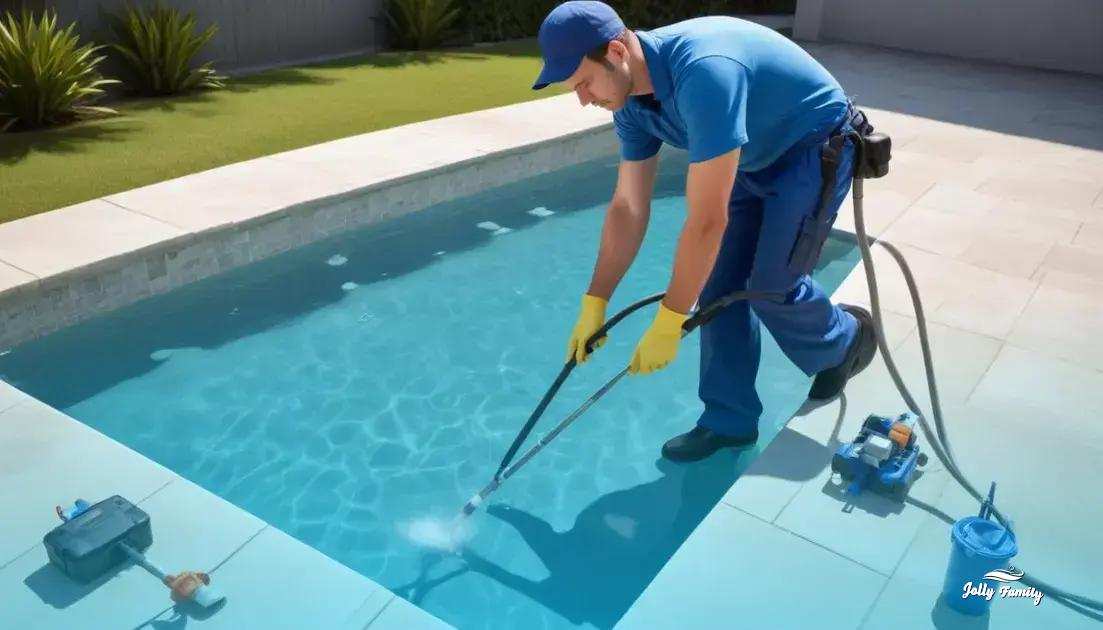
Regular weekly cleaning stops small problems before they grow into expensive repairs. Technicians remove leaves and debris, test water, and check equipment so issues are found early.
preventing algae and surface damage
Leaves, pollen, and sun-driven heat make algae grow fast in Kissimmee. Brushing walls and skimming the surface each week keeps algae from forming and reduces the need for aggressive chemical treatments or plaster repairs.
protecting pumps, filters, and plumbing
Clogged skimmers and dirty filters force pumps to work harder. Weekly vacuuming and filter maintenance reduce strain, lower energy use, and cut the chance of costly motor or plumbing failures.
keeping chemical balance and water clarity
Consistent testing and small adjustments of pH, chlorine, and alkalinity prevent corrosion, staining, and cloudy water. Balanced water also extends the life of liners, heaters, and pool finishes.
Weekly visits often include visual inspections of heaters, timers, and seals. Finding a small leak or a worn belt early avoids emergency service calls and major replacements.
Minor weekly fees beat big one-time repairs. A steady maintenance log helps plan upgrades and shows when parts need replacement, saving money over time.
chemistry explained: maintaining safe, balanced water
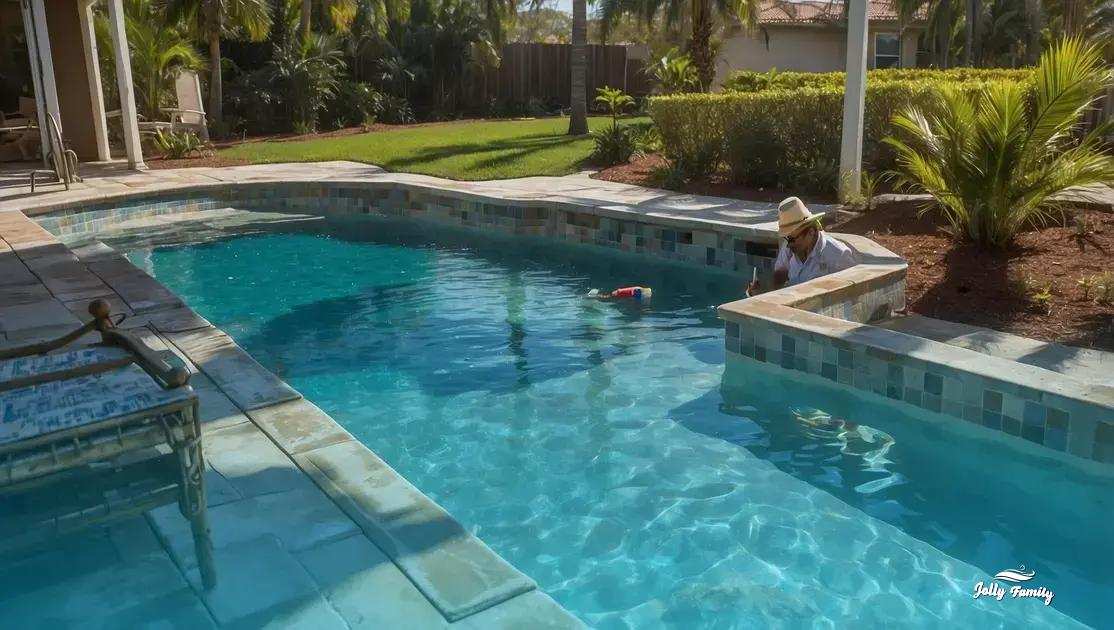
pH, chlorine, and alkalinity are the core of safe pool water. Keep levels in range to prevent irritation, corrosion, and algae.
key levels to test
- pH: 7.4–7.6 keeps water comfortable and chlorine effective.
- Free chlorine: 1–3 ppm for regular pools; raise to 3–5 ppm after heavy use or storms.
- Total alkalinity: 80–120 ppm to stabilize pH.
- Cyanuric acid (stabilizer): 30–50 ppm for outdoor pools to protect chlorine from sunlight.
- Calcium hardness: 200–400 ppm to avoid scaling or etching of surfaces.
how to adjust levels
To raise pH, add soda ash; to lower it, use muriatic acid or sodium bisulfate. Increase alkalinity with baking soda. Add chlorine or shock to raise free chlorine quickly. Lower cyanuric acid mainly by partial draining and refill. For calcium hardness, use calcium chloride to raise levels. Always follow product instructions and wait the recommended time before swimming.
testing routine
Test at least weekly and after heavy rain, parties, or hot spells. Use a reliable liquid test kit or a digital meter for best accuracy. Keep a log of readings and treatments to spot trends before they cause damage.
common problems and quick fixes
Cloudy water often means low chlorine or clogged filters—shock the pool and clean filters. Algae growth signals low sanitizer; shock and brush surfaces. Rapid pH shifts point to low alkalinity—raise alkalinity slowly and retest.
safety tips
Store chemicals in a cool, dry place away from children. Never mix chemicals directly; add chemicals to water, not water to chemicals. Wear gloves and eye protection when handling products and keep treatments timed and measured.
what Jolly Family checks on every visit
On every visit, Jolly Family follows a clear checklist so problems are found early and pools stay swim-ready.
surface and structural care
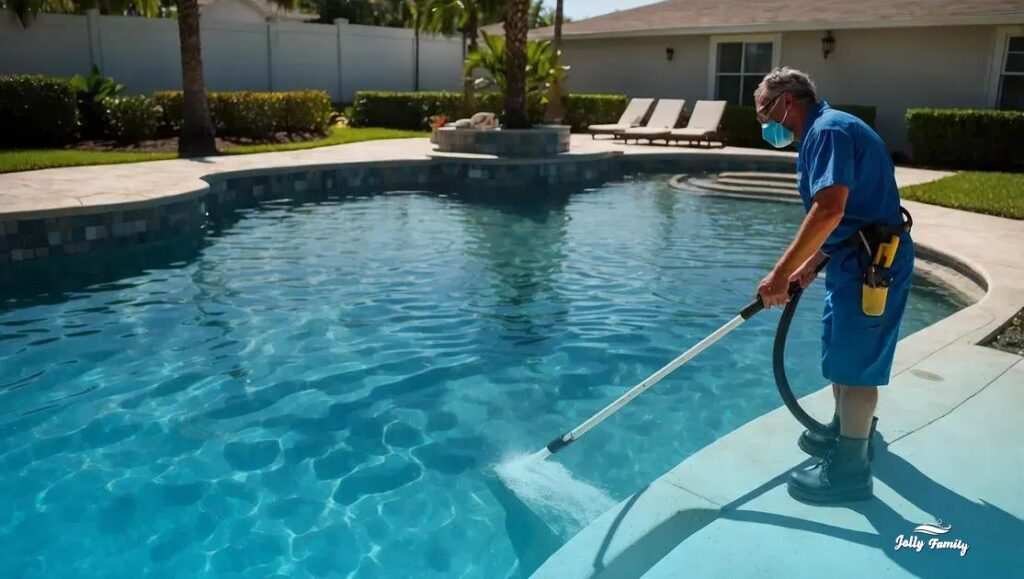
Technicians skim leaves and debris, brush walls and tile, and vacuum the floor. They inspect the waterline, steps, drains, and visible plaster or liner for stains or damage.
water testing and treatment
Technicians test pH, free chlorine, total alkalinity, cyanuric acid, and calcium hardness. They add small, measured chemicals to correct levels and note when a shock treatment or partial refill is needed.
equipment inspection
They check pump operation, filter pressure, skimmer baskets, return jets, valves, and heater function. The tech listens for odd noises, looks for leaks, and cleans or backwashes filters when pressure is high.
safety checks and minor repairs
Staff verify pool lights, ladders, handrails, covers, and fence gates. They tighten fittings, replace worn seals if safe to do so, and flag anything that needs a licensed repair.
documentation and recommendations
Each visit ends with a logged report of readings and actions. Technicians photograph issues, suggest parts or upgrades, and communicate urgent concerns to the owner.
troubleshooting common problems: algae, cloudy water, stains
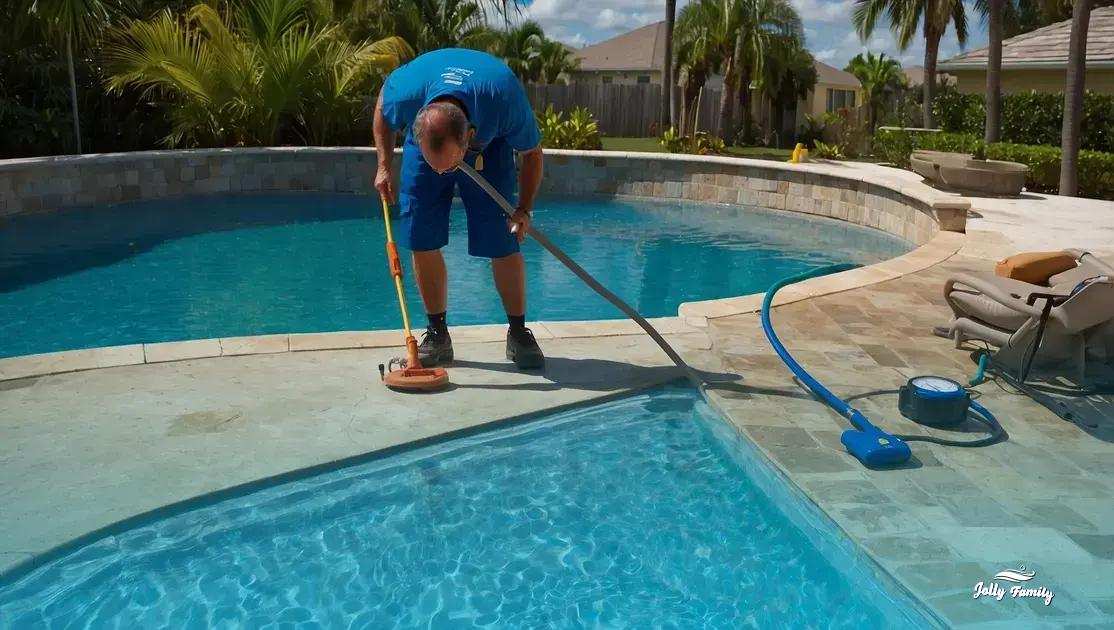
Algae, cloudy water, and stains are common pool problems. Spotting the cause fast saves time and money.
algae: identify and treat
Green water or slimy walls usually mean algae and low sanitizer. Start by brushing all surfaces, then test chlorine and pH. If chlorine is low, shock the pool and run the pump for 24 hours. Clean or backwash the filter after treatment. For stubborn black or yellow algae, repeat shock treatments and use a specialized algaecide or call a professional.
cloudy water: quick fixes
Cloudiness often comes from poor filtration, low sanitizer, or high phosphates. Check and clean the filter, test and adjust chlorine and pH, and run the pump longer. Use a clarifier or flocculant for fine particles, then vacuum settled debris. If water stays cloudy after these steps, test for high combined chlorine or filter failure.
stains: types and removal
Stains can be organic (leaves), mineral (iron, copper), or from algae. Try brushing and treating with the right chemical first. For metal stains, use a metal sequestrant or a neutralizing agent. Organic stains often lift after proper sanitizing and brushing. Deep or widespread stains may need a professional cleaning or surface treatment.
immediate action checklist
- Skim and brush affected areas.
- Test free chlorine, pH, alkalinity, and cyanuric acid.
- Shock the pool if sanitizer is low.
- Clean or backwash the filter and run the pump continuously.
- Use algaecide, clarifier, or sequestrant as needed.
when to call a pro
Contact a professional if problems persist after basic treatment, if you see repeat stains, or if equipment shows odd noises or leaks. A trained tech can diagnose tough algae, check pump and filter health, and perform safe stain removal.
routine vs one-time service: choosing the right plan
Routine service is regular care that keeps a pool healthy. One-time service fixes a specific problem or prepares a pool for special needs. Knowing the difference helps you save time and money.
what routine service includes
Most weekly or biweekly plans cover skimming, brushing, vacuuming, testing and balancing chemicals, emptying skimmer baskets, and checking equipment. Routine care prevents issues and keeps the pool ready to use.
when one-time service makes sense
Choose a one-time visit for deep cleaning, stain removal, heavy algae treatment, equipment repair, or seasonal openings and closings. These jobs need extra time or special chemicals that are not part of standard visits.
how to choose the right plan
- Assess your use: busy pools benefit from routine care.
- Consider location: hot, humid areas like Kissimmee need more frequent checks.
- Check your equipment: older systems may need more attention.
- Budget for long-term savings: regular maintenance often costs less than emergency repairs.
cost and value
Routine plans charge a steady fee and include basic parts of care. One-time services vary by job size and materials. Think of routine service as prevention—small monthly costs can avoid big repair bills.
questions to ask a provider
- What exactly is included in routine visits?
- Are chemicals and parts extra?
- How do you document each visit?
- Do you offer emergency calls or discounts for bundled services?
Use these points to compare plans and pick what fits your pool, season, and budget.
safety and seasonal care for Kissimmee pools
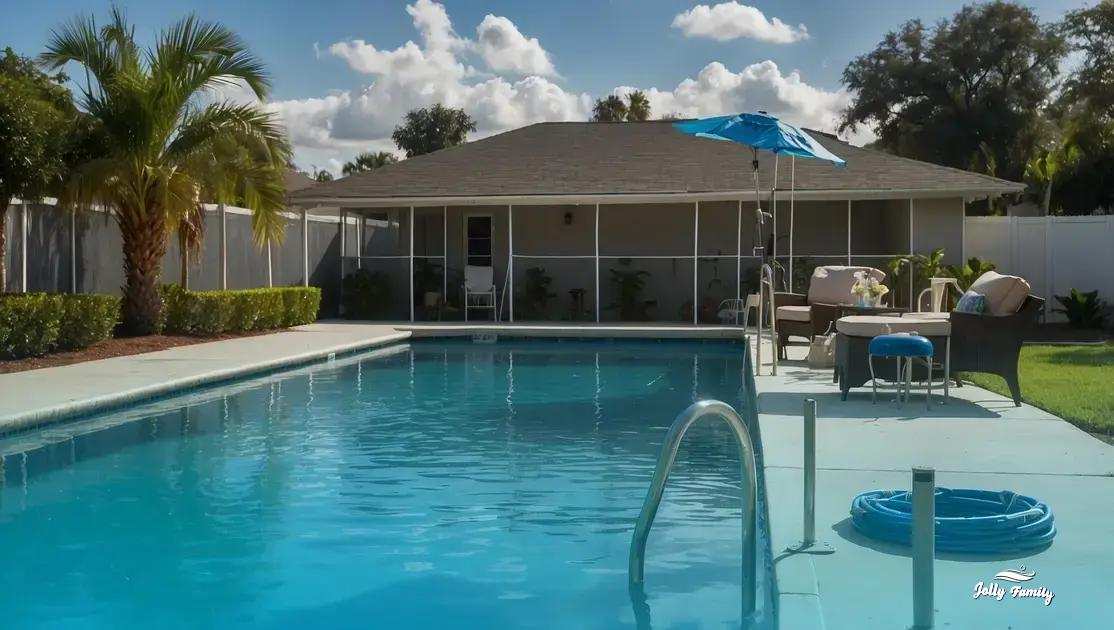
In Kissimmee, safety and seasonal care mean planning for heat, heavy rain, and occasional storms. Keep barriers, rescue gear, and regular maintenance in place year-round.
safety basics
- Secure barriers: maintain a self-closing gate and a fence that meets local codes.
- Keep life-saving gear handy: life ring, reaching pole, and a phone near the pool.
- Remove toys and floats when not in use to prevent child access and false alarms.
- Supervise children and non-swimmers; consider pool alarms and CPR training for household members.
storm and hurricane prep
Move furniture, umbrellas, and loose items indoors. Follow your service provider’s guidance before switching off equipment; do not fully drain an in-ground pool. Secure or remove covers as recommended and document equipment condition with photos.
seasonal maintenance tips
- Summer: test water weekly, run the pump longer, clean filters more often, and watch stabilizer levels in bright sun.
- After heavy rain or storms: test and adjust chemicals, shock if needed, and inspect for debris or clogged skimmers.
- Cooler months: keep a regular check of water balance and run equipment periodically; service heaters before the cold season if used.
chemical handling and storage
Store chemicals in a cool, dry place away from children. Never mix products. Add chemicals to water, not water to chemicals, and wear gloves and eye protection when handling treatments.
when to call a professional
Contact a licensed technician for electrical problems, suspected leaks, major storm damage, or installations like automatic covers and heaters. Professionals can safely secure equipment and restore proper operation.
Keep your pool swim-ready and worry-free
Regular care can prevent small issues from turning into big, costly repairs. Weekly checks for debris, balanced water, and healthy equipment often save time and money.
Simple steps like testing pH and chlorine, cleaning filters, and brushing surfaces make a big difference. Preparing for storms and storing chemicals safely also protects your pool and family.
Choosing a routine plan that fits your use and climate in Kissimmee can keep your pool clear and safe year-round. If problems persist or you spot leaks or odd noises, call a professional to diagnose and fix them.
Start with one inspection or a trial visit to see the value of steady maintenance—small, regular actions usually lead to fewer surprises and more swim days.
FAQ – Pool cleaning in Kissimmee, FL
How often should I schedule professional pool cleaning in Kissimmee?
Weekly service is best in Kissimmee’s heat and humidity, especially for busy pools. Biweekly can work for low use, but check after storms or heavy use.
What does a routine visit usually include?
A routine visit typically covers skimming, brushing, vacuuming, testing and balancing chemicals, emptying skimmer baskets, and inspecting pumps and filters with a service log.
How much does professional pool cleaning cost?
Costs vary by pool size, frequency, and condition. Routine plans charge steady fees and often cost less over time than one-off emergency repairs—ask for a written estimate.
Can regular service really prevent major repairs?
Yes. Regular checks catch clogs, leaks, and equipment strain early. Balanced water and clean filters reduce corrosion, stains, and costly motor or surface failures.
What should I do after heavy rain or a storm?
Remove debris, test and adjust chemicals, run the pump, and shock the pool if needed. Call a pro if you see damage, persistent cloudiness, or equipment issues.
Are pool chemicals included and are they handled safely?
Many providers include standard chemicals in routine visits; major treatments may cost extra. Professionals store and apply chemicals safely—never mix products and always use gloves and eye protection.