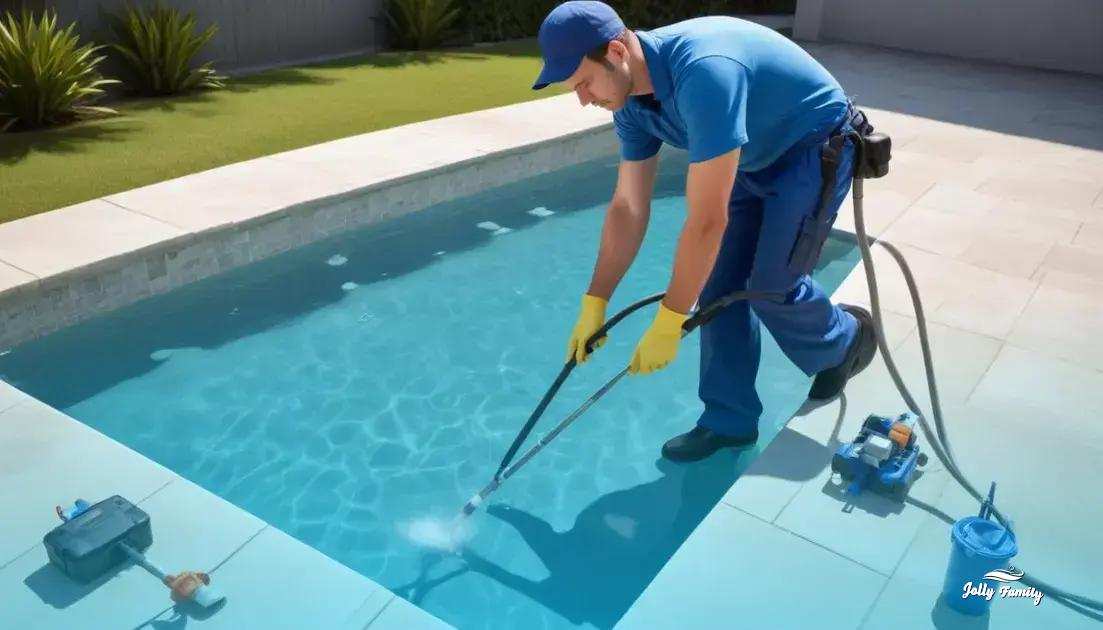


Professional pool water balancing service calibrates pH, alkalinity, sanitizer, calcium hardness, and stabilizer to prevent corrosion, scaling, algae, and equipment failure, using accurate tests, timed chemical applications, filtration management, and documentation to restore safe swim conditions quickly and extend pump, heater, and surface lifespan.
professional pool water balancing service can keep your backyard pool clear and safe without surprise repairs. Ever wondered which numbers matter most? I’ll share practical signs to watch for and how a reliable local team like Jolly Family handles routine balance and follow-up, so you can relax and enjoy the swim season.
how water balance affects pool safety and equipment life
Balanced water keeps swimmers safe and helps equipment last longer. Small chemistry changes can cause big problems fast.
Key water chemistry factors
pH should stay near 7.2–7.8. Low pH corrodes metal parts and irritates skin and eyes. High pH reduces sanitizer power and causes scaling.
Total alkalinity acts as a buffer. Aim for about 80–120 ppm to prevent rapid pH swings.
Calcium hardness should be controlled (commonly 200–400 ppm). Low hardness can etch plaster and metal; high hardness causes scale on heaters and surfaces.
Sanitizer and stabilizer matter too: free chlorine typically 1–3 ppm and cyanuric acid (stabilizer) around 30–50 ppm, depending on pool type.
How imbalance affects safety
If sanitizer is low or pH is off, bacteria and algae grow faster. That raises health risks like skin rashes and ear or gastrointestinal infections. Cloudy water also hides hazards and makes supervision harder.
How imbalance shortens equipment life
Low pH and low alkalinity cause metal corrosion in pumps, heaters, and ladders. Corrosion leads to leaks and expensive repairs.
High pH or high calcium hardness causes scale buildup. Scale clogs filters, reduces heat transfer in heaters, and strains pumps, shortening their lifespan.
Excessive chlorine or incorrect chemical mixes can bleach liners, wear seals, and degrade plastics.
Practical checks and simple fixes
Test water at least once a week and after heavy use or rain. Use a liquid kit or reliable strips and record results.
Raise or lower pH slowly. Adjust total alkalinity first if pH swings. Add calcium incrementally when hardness is low. Shock the pool when combined chlorine is high.
When problems repeat or equipment shows wear, hire a professional technician for accurate testing and targeted repairs. Regular balancing and timely fixes protect swimmers and extend equipment life.
what tests professionals run and how to read the results
Pros use precise tests to pinpoint what your pool water needs. Each result tells a clear story about safety and equipment wear.
Standard tests and what they reveal
pH shows how acidic or basic the water is. Keep pH between 7.2 and 7.8. Low pH can corrode metal and irritate skin; high pH weakens chlorine and causes scaling.
Total alkalinity acts as a buffer for pH. Aim for 80–120 ppm. Low alkalinity leads to pH swings; high alkalinity makes pH hard to change.
Free chlorine measures active sanitizer. A safe range is 1–3 ppm for most pools. Combined chlorine above 0.5 ppm means the pool needs shock treatment.
Calcium hardness protects plaster and surfaces. Typical targets are 200–400 ppm. Too low can etch finishes; too high causes scale on heaters and pipes.
Cyanuric acid (stabilizer) protects chlorine from sun. Pools often aim for 30–50 ppm. Too much stabilizer reduces chlorine effectiveness.
Technicians may also check metals (iron, copper), phosphates, and total dissolved solids. These tests explain staining, algae blooms, and cloudy water.
Common test methods
Pros use liquid titration kits, colorimeters, and digital meters. Liquid kits and titrations give the most accurate readings for alkalinity and hardness. Colorimeters and photometers read chlorine and cyanuric acid quickly and reduce human error.
How to read results and decide actions
Compare each value to the ideal range. Adjust total alkalinity first if pH swings. Then correct pH slowly. If free chlorine is low, add sanitizer or shock. If combined chlorine is high, superchlorinate and run the filter.
For low calcium hardness, add a calcium increaser. For high hardness or scale, use a sequestering agent or lower water hardness by partial drain and refill. If metals are present, treat with a metal sequestrant before adjusting pH or shocking.
Keep notes of each test and action. Retest after adjustments to confirm values returned to range. Weekly testing is typical; test more often after heavy use, rain, or equipment work.
When to call a professional
If values keep bouncing, equipment shows corrosion or scale, or water stays cloudy after fixes, a technician can run advanced tests and suggest targeted repairs. Professionals help protect both swimmers and costly pool gear.
common signs your pool needs water balancing now
- Cloudy or milky water: water that loses clarity often means filters are clogged or chemistry is off. Cloudiness hides hazards and signals immediate testing.
- Green tint or visible algae: green patches, streaks, or slime on walls mean low sanitizer or high phosphates. Brushing and shocking may be needed.
- Strong chlorine smell: a sharp, chemical odor usually indicates combined chlorine (chloramines), not too much free chlorine. Shock the pool to break chloramines.
- Irritated eyes or itchy skin: swimmers who feel burning eyes or dry skin often face incorrect pH or low sanitizer levels. Test pH and free chlorine first.
- White scale or cloudy spots on tile: mineral scaling forms when calcium hardness or pH is too high. Scale can reduce heater and filter efficiency.
- Rust or discolored stains: brown, red, or blue stains point to metals like iron or copper in the water. These need metal sequestrants or metal removal.
- Foam or suds at the surface: persistent foam can come from high dissolved solids, detergents, or organic waste. Clean skimmer baskets and consider a partial drain if it returns.
- Strange equipment noises or leaks: corrosion and scale strain pumps and heaters. If parts hiss, leak, or run hot, water imbalance may be the cause.
Immediate checks and quick fixes
Use a reliable test kit to measure pH, free chlorine, total alkalinity, and calcium hardness. Compare results to target ranges: pH 7.2–7.8, free chlorine 1–3 ppm, alkalinity 80–120 ppm. Adjust alkalinity first, then pH slowly. If combined chlorine is high, superchlorinate (shock) and run the filter. Clean or backwash filters, brush surfaces, and remove visible algae. Retest after each adjustment and keep a log. If issues return or equipment shows wear, contact a professional for detailed analysis and treatment.
step-by-step professional balancing: chemicals, timing, follow-up
A professional balancing routine follows clear steps: test, adjust in order, allow time, then verify. Each action targets a specific chemical or equipment issue.
Step-by-step process
1. Full water test and record — Use a liquid titration kit or digital meter to measure pH, total alkalinity, free chlorine, calcium hardness, and cyanuric acid. Write results on a service log or tablet to track changes.
2. Adjust total alkalinity first — If alkalinity is outside the 80–120 ppm range, correct it before pH. Lowering or raising alkalinity stabilizes pH changes and reduces repeat adjustments.
3. Correct pH slowly — Bring pH into the 7.2–7.8 window. Make small additions and wait a few hours between dosings so measurements reflect true change.
4. Balance calcium hardness — If hardness is low, add a calcium increaser to protect plaster and metal. If too high, consider a partial water replacement or use a sequestering product to control scale.
5. Set sanitizer and stabilizer — Adjust free chlorine to the target 1–3 ppm and check cyanuric acid levels (~30–50 ppm). If combined chlorine is elevated, perform a shock treatment and run filtration until readings return to range.
6. Run and maintain filtration — After chemical adjustments, run the pump long enough to circulate the entire pool volume (commonly 8–12 hours). Clean or backwash filters as needed to remove debris and chemical residues.
7. Inspect equipment and surfaces — Check pump seals, heater heat exchange, and visible plumbing for scale or corrosion. Brush surfaces and vacuum if residues or algae remain.
8. Retest and document — Recheck all values after the recommended wait time (hours to 24 hours depending on chemicals used). Note results and any follow-up actions in the service record.
Timing and follow-up best practices
Allow time between adjustments so chemicals mix and readings stabilize. Professionals often wait several hours after adding pH or alkalinity chemicals and up to 24 hours after heavy treatments like shocking. Schedule a short follow-up visit or remote check to confirm stability within a few days.
Safety and handling tips
Always wear PPE, add chemicals to water (never water to chemicals), and store products in a cool, dry place. Label-free containers and open-transfer methods reduce mistakes. Communicate any swimmer restrictions until levels return to safe ranges.
Why professionals follow this order
Adjusting alkalinity before pH prevents repeated fixes. Proper sequencing and timing reduce chemical waste, protect equipment, and get the pool back to usable condition faster. A clear service log helps spot trends and prevent recurring issues.
why choose a local Kissimmee specialist for consistent pool care
Choosing a local Kissimmee specialist gives faster, smarter pool care that fits the area’s weather and water. Local techs know how heat, humidity, and heavy rain affect chemistry here.
Local climate and water source knowledge
Florida heat and storms raise cyanuric acid needs and can dilute chemicals after heavy rain. A Kissimmee pro adjusts treatments for seasonal swings and storm recovery.
Local water profile matters. Groundwater and municipal supplies vary by neighborhood. A nearby specialist tests your fill water and tailors calcium and alkalinity steps to avoid scale or etching.
Faster response and regular maintenance
When an imbalance appears, a local team can often reach you the same day. Regular visits mean problems are caught early, saving on repairs and downtime.
Parts, permits, and local codes
Technicians in Kissimmee stock common parts and know local code requirements for heaters, pumps, and safety features. That speeds repairs and ensures compliant installations.
Personalized service and clear records
A neighborhood specialist builds a service history for your pool. That record shows trends and prevents repeat fixes. Expect clear notes, recommended schedules, and tailored plans.
Trust and community reputation also count. Local companies rely on referrals and reviews, so they often deliver consistent, careful service rather than one-off visits.
For reliable results, choose a team that offers routine balancing, quick storm recovery, and equipment checks specific to Kissimmee conditions. A local professional pool water balancing service keeps your pool safe, swim-ready, and cost-effective year-round.
Keep your pool safe and equipment lasting
Balanced water protects swimmers and cuts repair costs. Simple tests for pH, free chlorine, and alkalinity help spot trouble early.
Do quick tests weekly and after storms or heavy use. Make small adjustments and retest. Clean filters and run the pump after treatments to keep chemicals working.
If problems return or you see scale, stains, or odd equipment noise, call a professional. A local Kissimmee specialist knows the water and weather and can save time and money.
With routine checks and timely help, your pool stays clear, safe, and ready for fun all year.
FAQ – professional pool water balancing service
How often should I test my pool water?
Test at least once a week and after heavy rain, storms, or heavy use. More frequent checks help catch problems early.
What key tests do professionals run?
Pros test pH, total alkalinity, free chlorine, calcium hardness, and cyanuric acid. They may also check metals and phosphates.
Can I balance the pool myself or should I hire a pro?
You can handle routine testing and small adjustments, but hire a pro for persistent issues, equipment faults, or complex chemical problems.
How long should I wait to swim after adding chemicals?
Wait until pH and sanitizer return to safe ranges, usually a few hours for small adjustments and up to 24 hours after heavy shock treatments.
What immediate steps should I take after heavy rain?
Test the water, adjust alkalinity and pH if needed, clean filters, run the pump, and shock the pool if combined chlorine or algae appear.
Why choose a local Kissimmee specialist?
A local specialist knows area water profiles and weather, offers faster response, and tailors treatments to prevent recurring issues and protect equipment.