Public pool maintenance is more than keeping water blue and inviting.
For Davenport facilities, it’s about safety, guest experience, and long-term cost efficiency.
When water chemistry is balanced, filtration runs smoothly, and surfaces stay secure, you reduce risks, extend equipment life, and avoid expensive downtime.
With a decade of hands-on work in Davenport, Haines City, Poinciana, and surrounding communities, Jolly Family has developed practical, human-centered approaches that combine expertise, eco-friendly solutions, and reliable service to keep public pools sparkling and compliant.
This guide translates complex best practices into actionable steps for facility managers, operators, and leadership teams who want consistent results without overwhelming their teams.
We’ll cover the essentials, from water chemistry to deck maintenance, and explain how to implement a sustainable program that scales with your pool size and seasonality.
You’ll see how a thoughtful maintenance plan supports guest satisfaction, health standards, and operations budget—all with a local, trusted partner by your side.
Let’s dive into a practical, step-by-step framework designed for Davenport facilities and their unique workflows.
Public Pool Maintenance Essentials for Davenport Facilities: A Practical 7-Step Weekly Checklist
Effective maintenance starts with a clear, repeatable weekly rhythm.
This section lays out a 7-step framework you can assign to a routine technician or a pool services team, highlighting pool cleaning, water treatment, and equipment vigilance as non-negotiables for Davenport facilities.
We’ll break tasks into daily and weekly buckets, so your team can stay ahead of problems and keep your pool inviting year-round.
And because every Davenport site is different, these steps are easily adjustable to accommodate larger aquatics centers or smaller community pools.
Daily Essentials and Why They Matter
Daily checks are the frontline defense against chemistry drift and equipment wear.
Prioritize predictable routines to minimize surprises.
- Skim the surface and remove debris from the water surface to maintain clarity and reduce organic loading.
- Test and adjust pH and free chlorine levels, aiming for stability that supports guest comfort and sanitization efficacy.
- Inspect skimmer and pump baskets; a quick clean prevents flow restrictions and improves circulation.
- Check for signs of algae or cloudiness that can indicate early issues with sanitizer balance or filtration.
These daily actions build consistency in water chemistry, reduce chemical costs, and keep operations predictable for Davenport facilities.
A disciplined daily routine also supports safety and compliance by reducing the likelihood of off-spec water that could trigger health code alerts.
Weekly Tasks that Keep Water Crystal Clear
Weekly maintenance focuses on depth beyond daily checks—cleaning, calibration, and filtration optimization that preserve water quality during higher demand periods.
- Backwash or clean filters according to the equipment’s recommendations to maintain flow and head loss efficiency.
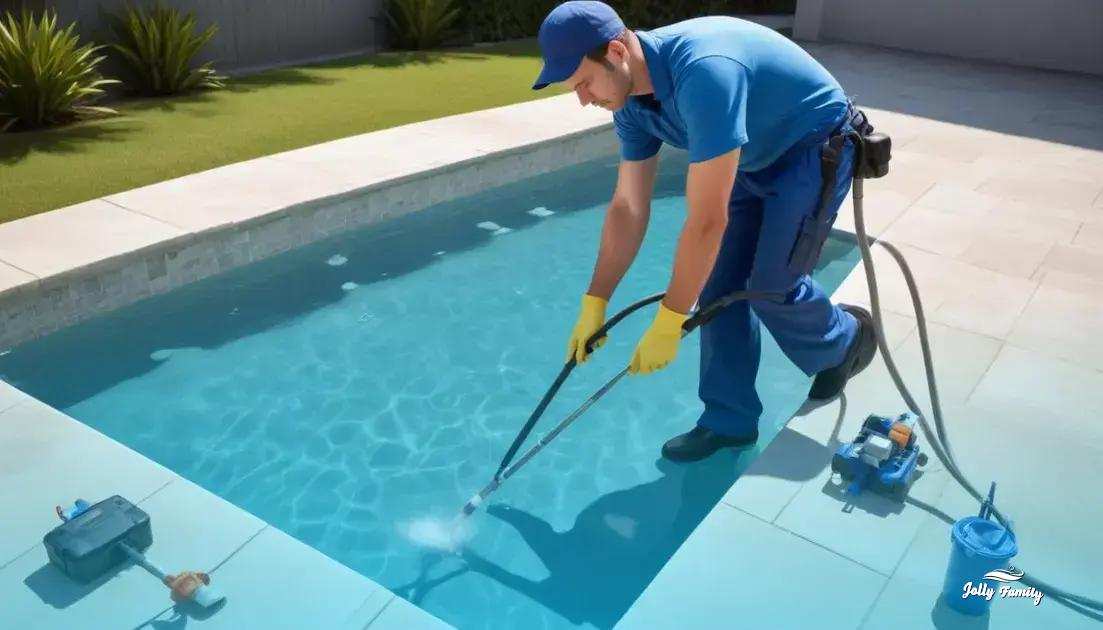
- Vacuum the pool floor and walls to remove settled debris and prevent phosphates and organics from fueling biofilm.
- Inspect and service pumps, valves, and automatic chemical feeders to prevent unexpected downtime.
- Comprehensive water chemistry checks, including alkalinity and calcium hardness, to support stable sanitization and protect surfaces.
- Review chemical consumption and adjust dosing schedules to prevent waste while maintaining safety margins.
With a consistent weekly rhythm, Davenport facilities reduce reactive maintenance and ensure pool service quality remains high, even during peak season.
This approach also aligns with the eco-friendly practices many operators expect from trusted providers like Jolly Family.
Monthly and Seasonal Tasks You Often Overlook
Monthly and seasonal activities address buildup, equipment wear, and regulatory readiness.
They’re crucial for facilities hosting frequent public use or seasonal attractions.
- Calibrate sensors and control systems; ensure chlorine management and pH regulation respond accurately to changes in occupancy and weather.
- Test for total dissolved solids and adjust to prevent scaling and odor issues that can affect guest experience.
- Inspect deck surfaces for cracks, spalling, or slip hazards; schedule timely repairs to maintain safety and code compliance.
- Schedule professional preventive maintenance for major equipment (pumps, motors, filters) to extend life and reduce downtime.
Monthly reviews provide an opportunity to reassess your program against guest feedback and health codes, ensuring your Davenport facilities stay ahead of evolving standards and expectations.
A proactive cadence also supports record-keeping and reporting, simplifying audits and inspections.
Mastering Water Chemistry in Davenport Pools: What to Test and Why
Water chemistry isn’t a mystery—it’s a precise balance of chemistry, flow, and sanitation.
For Davenport facilities, staying on top of water chemistry means safer water, better filtration performance, and a more enjoyable guest experience.
This section outlines the core parameters to monitor, how often to test, and practical fixes for common issues.
The goal is consistent water quality that minimizes odor, irritation, and algae growth while meeting local health regulations.
Core Parameters to Monitor
Among the most critical variables are pH, sanitizer levels, total alkalinity, and calcium hardness.
When these drift, you’ll see cloudy water, staining, or uncomfortable swimming conditions.
Use a reliable test kit or an electronic tester and document readings to track trends over time.
- pH balancing is foundational. Aim for a stable range that protects skin and eyes while preserving sanitizer efficacy.
- Maintain free chlorine or alternative sanitizers at target levels appropriate for public pools to ensure microbial control without creating harsh conditions.
- Control total alkalinity to stabilize pH and reduce fluctuations caused by weather or bather load.
- Keep calcium hardness within an appropriate window to prevent etching of plaster and scaling in equipment.
Correcting one parameter often helps others fall into place.
For example, if pH drifts high, sanitizer effectiveness drops, and you may see increased total alkalinity readings.
A coordinated approach keeps all variables in harmony and reduces total chemical consumption.
Testing Frequency and Best Practices
The most effective Davenport pools balance daily quick checks with more thorough weekly tests.
In facilities with high daily usage, consider increased testing frequency during peak season or after large events to catch drift early.
- Daily quick checks cover pH and sanitizer residuals, focusing on stability and safety for immediate use.
- Weekly comprehensive panels include alkalinity, calcium hardness, cyanuric acid (if used), and stabilizers to prevent photo-degradation of disinfectants.
- Seasonal adjustments account for pool usage patterns, weather, and occupancy, ensuring long-term water balance and equipment protection.
Documentation is essential.
Keep a log of readings and corrective actions so management can review trends and demonstrate compliance in annual audits or health inspections.
This practice reinforces EEAT by showing a track record of diligence and transparency.
Common Water Chemistry Problems and Fixes
Even well-managed pools will encounter chemistry challenges.
Understanding root causes helps you respond quickly rather than applying stopgap fixes that waste resources.
- Cloudy water may indicate high total dissolved solids, algae, or inadequate filtration. Address by improving filtration schedules, cleaning filters, and validating sanitizer levels.
- Foaming can be a sign of high total dissolved solids or organics; backwashing, shocking judiciously, and verifying dosing accuracy often resolve it.
- Scale formation results from high calcium hardness and elevated pH; reduce hardness, manage pH, and consider descaling and surface protection measures.
- Chlorine odor and eye irritation often reflect inadequate circulation or improper sanitizer balance; adjust flow, verify feeder calibration, and maintain target ranges.
These fixes are part of a disciplined approach that reduces operational headaches and extends the life of your equipment—an essential consideration for Davenport facilities looking to maximize uptime and guest satisfaction.
Filtration and Circulation: Keeping Water Clarity in Davenport Facilities
Filtration and circulation are the arteries of a public pool.
Even the best sanitizers can struggle to be effective without clean water passing through the system.
This section explains how to optimize filtration types, backwashing schedules, and pump health to sustain crystal-clear water in Davenport facilities of varying sizes.
A well-balanced system also minimizes chemical usage while improving energy efficiency.
Understanding Filtration Types and When to Use Each
Public pools commonly rely on sand, cartridge, or DE (diatomaceous earth) filters.
Each has its strengths depending on pool size, turnover rate, and maintenance capabilities.
- Sand filters excel in large, high-traffic pools with straightforward cleaning needs and economical backwashing cycles.
- Cartridge filters offer high filtration efficiency and lower backwash water losses, ideal for mid-sized pools focusing on water clarity.
- DE filters deliver the finest filtration, best for facilities requiring pristine water quality but with higher maintenance considerations.
Choosing the right filter type impacts energy efficiency, water clarity, and operational costs.
Consider your turnover rate, space for filter housing, and available staff training when planning upgrades or replacements.
Backwashing, Cleaning Schedules, and Head Loss
Backwashing is more than a maintenance chore—it directly affects filtration efficiency and disinfectant demand.
A disciplined schedule protects water clarity and extends filter life.
- Backwash when pressure rise exceeds manufacturer guidelines or when flow indicators show reduced performance.
- Monitor head loss to determine the optimal backwashing interval, balancing filtration efficiency with water and chemical usage.
- Record backwash cycles and gauge changes in pressure to detect developing issues early.
Proper backwashing reduces stress on pumps and reduces energy consumption, a tangible benefit for Davenport facilities looking to optimize budgets while maintaining superior guest experiences.
Pump Efficiency and System Maintenance
Healthy pumps keep circulation steady, reducing dead spots where debris and biofilm can accumulate.
Regular checks on seals, bearing wear, and motor temperature prevent surprise downtime.
- Inspect seals and gaskets for leaks; replace promptly to prevent cascading failures.
- Monitor motor temperature and vibrations; unusual heat or noise can indicate alignment or bearing problems.
- Schedule annual professional inspections for complex systems, and keep spare parts on hand for quick repairs.
Efficient circulation supports filter performance, lowers chemical demand, and protects your equipment, all of which are critical for Davenport’s high-traffic public pools.
Sanitation, Safety, and Compliance for Public Pools
Safety and regulatory compliance are non-negotiable in public pools.
A robust sanitation program reduces risk, promotes a positive guest experience, and simplifies audits.
This section covers chemical safety, staff training, and documentation practices that help Davenport facilities stay compliant and ready for any inspection.
Sanitation Management and Chemical Safety
Safe chemical handling protects staff and guests while ensuring consistent disinfection.
Implement clear protocols for storage, dosing, and spill response, and keep material safety data sheets accessible to all team members.
- Use clearly labeled containers and dedicated dosing lines to prevent cross-contamination.
- Lock chemical storage and enforce access control to minimize accidental exposure.
- Provide ongoing training on chemical safety, PPE use, and emergency response procedures.
Incorporating eco-friendly products and careful chemical management helps reduce environmental impact and aligns with modern public facility expectations.
Safety Protocols and Staff Training
Guest safety extends beyond chemical balance.
You should have formal procedures for lifeguard duties where applicable, facility signage, and routine staff training to handle emergencies and routine maintenance.
- Post clear safety signage about depth, no running, and bathroom facilities; ensure visibility for all guests and staff.
- Train staff on slip-resistance checks, deck cleaning routines, and reporting of hazards.
- Conduct regular drills for chemical spills, power outages, and filtration failures to minimize risk during incidents.
Well-trained teams improve response times, reduce injury risk, and demonstrate a professional, trusted pool management approach to Davenport clients and regulators.
Documentation and Compliance with Local Health Codes
Documentation proves due diligence and supports smooth audits.
Maintain logs for water chemistry, filtration maintenance, deck inspections, and incident reports.
Local health codes increasingly favor digital records and transparent reporting.
- Keep an accessible, organized log of daily readings and corrective actions.
- Archive maintenance and replacement schedules for critical equipment.
- Prepare regulatory-ready reports that summarize safety checks, sanitation levels, and staff training outcomes.
Comprehensive records boost accountability and reassure stakeholders that Davenport facilities are managed by a capable, reliable partner.
For operators seeking a proven path to compliance, aligning with a licensed and insured provider enhances credibility and reduces risk.
Maintenance of Surrounding Surfaces and Equipment
Maintenance isn’t just about water.
The health of pool decks, railings, pumps, and filtration housings directly affects safety, aesthetics, and performance.
This section details practical strategies for keeping every touchpoint in excellent condition, from the pool edge to the mechanical room, with attention to durability, efficiency, and guest perception.
Deck Cleanliness, Slip-Resistance, and Aesthetic Appeal
Deck condition sets the first impression for guests and influences safety.
Regular cleaning, sealant touch-ups, and proactive repair plans save money and reduce injury risk.
- Schedule routine deck cleaning to prevent slippery buildup and staining on concrete, tile, or plaster surfaces.
- Check for cracks, spalling, or loose tiles; address minor repairs promptly to prevent bigger problems.
- Assess drainage around the deck to avoid standing water and algae growth that can compromise traction.
Maintaining a clean, well-sealed deck enhances guest safety and strengthens the overall perception of your facility’s quality and professionalism.
Equipment Care and Preventative Maintenance
Preventative maintenance is a cornerstone of reliability.
A structured program lowers emergency repairs and extends the life of pumps, heaters, and filtration systems.
- Implement a calendar for scheduled lubrication, seal inspections, and electrical connections checks.
- Inspect valve actuators, gauges, and flow meters for accuracy; replace worn components to maintain system efficiency.
- Track service intervals and parts replacement to optimize inventory and reduce downtime.
With deliberate equipment care, Davenport facilities protect capital investments and ensure consistent operations, especially during peak guest periods.
This approach aligns with a professional service model that clients trust.
Choosing the Right Partner: Why Jolly Family Stands Out for Davenport Facilities
Selecting a pool maintenance partner is about more than price.
It’s about reliability, expertise, and the ability to adapt services to your facility’s exact needs.
Jolly Family has built a reputation on ten years of local experience, a deep understanding of Davenport’s climate and regulations, and a commitment to quality that translates into tangible results for clients across Davenport, Celebration, Winter Garden, and the surrounding area.
Here’s why our combination of licensed and insured professionals, eco-conscious products, and proven processes makes us the preferred choice for Davenport facilities seeking consistent, high-quality public pool maintenance.
Why Davenport Facilities Trust Our Local Expertise
Local experience matters.
Understanding weather patterns, water chemistry challenges, and seasonal usage helps tailor maintenance plans that minimize risk and maximize guest satisfaction.
Our team’s familiarity with Davenport’s health codes and environmental considerations ensures workflows that are compliant and efficient, minimizing downtime and reducing friction with regulators and inspectors.
- 10 years in the market, with a focus on pool cleaning and maintenance for commercial and residential pools.
- Comprehensive service areas including Davenport, Kissimmee, Celebration, Saint Cloud, and surrounding communities—ensuring rapid response and ongoing support.
- A track record of reliable, high-quality service backed by fully insured and licensed professionals who stand behind their work.
What to Expect from a Licensed & Insured Provider
Working with a licensed and insured provider reduces risk for facility managers and operators.
It signals accountability, quality control, and professional standards—critical factors when maintaining public pools in Davenport where guest safety and regulatory compliance are paramount.
- Formal service agreements that outline scope, response times, and performance metrics.
- Transparent pricing, with predictable maintenance costs and no hidden fees.
- Quality guarantees and client-focused communication that keep you informed with regular updates and reports.
Beyond compliance, partnering with Jolly Family means access to eco-friendly products and responsible maintenance practices that align with modern expectations for public spaces.
We emphasize pool cleaning and pool service that balance effectiveness with environmental stewardship—delivering a superior guest experience while safeguarding your budget and reputation.
Next Steps and How to Get a Quote
Ready to elevate your Davenport facility’s pool maintenance with a trusted local partner? Start with a no-obligation assessment that outlines a tailored plan, including a transparent scope of work, scheduling, and pricing.
Our team can discuss seasonal adjustments, energy-saving opportunities, and the most cost-effective combination of water treatment and filtration strategies for your site.
You’ll receive practical recommendations, backed by real-world results, that demonstrate how a professional approach reduces risk and optimizes performance.
To begin, contact Jolly Family today.
We’ll review your current program, performance metrics, and any specific concerns you have about public pool safety and operations.
The goal is a practical, scalable maintenance plan that keeps Davenport facilities inviting, compliant, and efficient—without disrupting guest experiences or adding unnecessary complexity to your operations.
Trust in a partner who blends experience, quality, and **local** know-how to deliver measurable results.
External resources for compliance and best practices: CDC Water Quality in Public Pools, and local health department guidelines for public pools.
Próximos Passos Estratégicos
Implementar uma abordagem de manutenção pública de piscina que combine rotina clara, monitoramento de química da água, e uma parceria com um provedor licenciado e insured tem impactos diretos na segurança, na experiência do usuário e no custo total de propriedade.
A estratégia apresentada neste guia enfatiza a importância de uma rotina semanal bem definida, ferramentas de monitoramento precisas, práticas de sustentabilidade com produtos eco-friendly, e um caminho claro para o envolvimento com a Jolly Family.
Se você administra uma instalação em Davenport ou região, entre em contato para um diagnóstico gratuito e uma proposta personalizada que alinhe seu programa de manutenção com as melhores práticas de 2025.
Nossa equipe está pronta para ajudar a transformar a qualidade da água, a confiabilidade dos equipamentos e a satisfação dos banhistas em resultados tangíveis.
Para avançar, solicite uma avaliação de seu cronograma atual de manutenção, níveis de química da água, e estratégias de filtração.
Jolly Family oferece soluções pool cleaning e pool maintenance que combinam eficácia, responsabilidade ambiental e atendimento local de alto nível.
Confiar em uma equipe licenciada e segurada com histórico comprovado de desempenho é a maneira mais inteligente de preservar o valor do seu empreendimento público, reduzir interrupções e manter seus padrões de segurança e qualidade em 2025 e além.
Frequently Asked Questions
What are the essential daily tasks in public pool maintenance for Davenport facilities?
Daily tasks include monitoring water chemistry (pH and sanitizer levels), ensuring proper filtration, skimming debris, checking pool and deck safety, and recording readings. These routine steps help prevent chemistry drift and keep guests safe.
How does weekly maintenance differ from daily tasks in Davenport public pool upkeep?
Weekly maintenance expands to a structured routine, such as full water chemistry tests, backwashing filters, verifying pump operation, cleaning surfaces, calibrating chemical dosing, inspecting safety equipment, and documenting results. This schedule addresses longer-term trends and helps avoid downtime.
How do I balance public pool water chemistry to ensure safety and guest comfort?
Maintain target ranges for pH, free chlorine, alkalinity, calcium hardness, and cyanuric acid, testing at least daily or per site protocol. Adjust with approved treatments and record outcomes to identify drift patterns.
What are the best practices for public pool filtration and circulation?
Keep pumps and filters running at the design flow, backwash when differential pressure rises, and monitor filter pressure and turnover rates. Regularly inspect pump seals and valves to prevent leaks and energy waste.
How can I maintain deck surfaces and prevent slip hazards in public pool areas?
Schedule routine deck cleaning, monitor for algae or grime, repair cracks, and apply non-slip coatings as needed. Keep chemicals away from the deck, maintain clear walkways, and ensure proper signage and barrier compliance.
How does a sustainable maintenance program save long-term costs for Davenport facilities?
A proactive plan reduces downtime, extends equipment life, and lowers energy and chemical use through optimized cycles. It also simplifies training and creates predictable budgets by avoiding emergency repairs.
What indicators suggest a problem with water quality or equipment in a public pool?
Cloudy or discolored water, persistent sanitizer demand, pH drift, unusual odors, high or low pump pressures, and abnormal noises or alarms signal potential issues. Early detection enables targeted maintenance before guest impact.
How should I structure a maintenance schedule to scale with pool size and seasonality for public pools?
Begin with a scalable weekly checklist that can be adjusted by site size and season, and document performance to guide staffing decisions. Use a modular framework that lets you add or reduce tasks as pools grow or staffing changes.