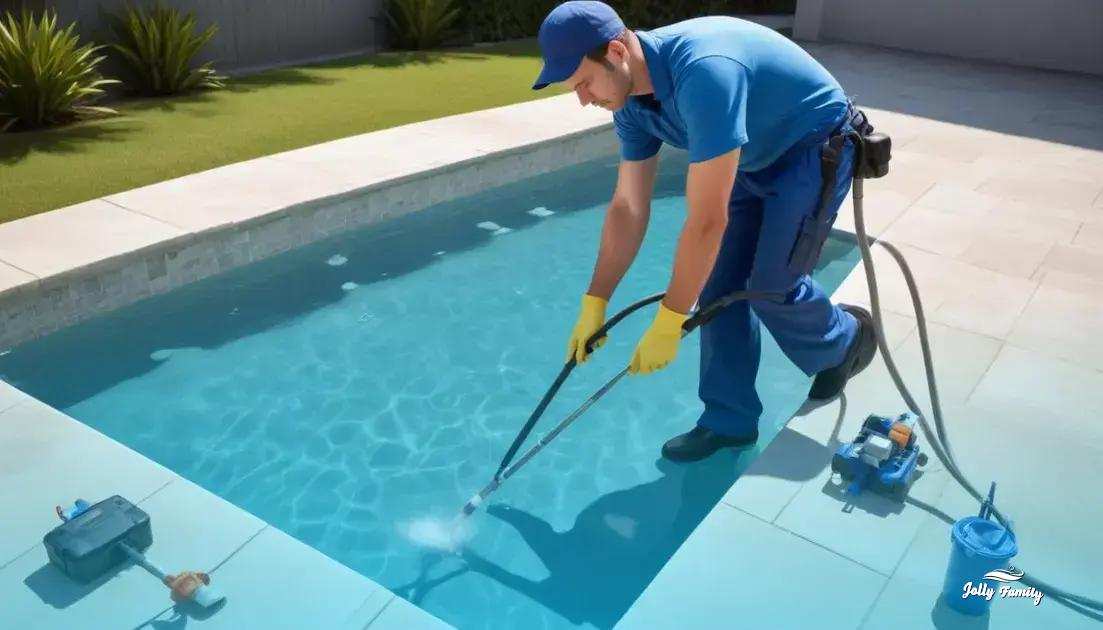

what does a pool cleaning service include: routine skimming, brushing and vacuuming; water testing and chemical balancing; filter, pump and equipment inspection and cleaning; tile and waterline scrubbing; minor stain treatments; documentation of readings and recommendations to prevent leaks, equipment failure and algae, keeping the pool safe and swim-ready.
what does a pool cleaning service include? Curious what pros actually do when they arrive — skimming, filter care, chemical tests and quick equipment checks. With Jolly Family you see consistent, family-owned service that helps you avoid surprises and keeps pools ready for family use.
What a standard pool cleaning visit includes
Water testing and chemical balance
Technician checks pH, free chlorine, alkalinity and calcium hardness with a handheld kit. Readings are taken from surface and mid-depth. Small chemical doses are added to reach safe ranges. Chemical balance prevents eye irritation, scale and algae growth.
Skimming, brushing and vacuuming
Leaves and debris are removed with a net skimmer. Walls and steps are brushed to loosen dirt and algae. The pool is vacuumed by hand or with an automatic cleaner to pull settled particles from the floor.
Filter, pump and equipment inspection
Skimmer and pump baskets are emptied. Filters are checked and backwashed or cleaned if needed. The technician inspects the pump, pressure gauge, valves, heater and any chlorinator or salt cell for leaks or wear.
Cleaning tile, waterline and returns
Tiles and the waterline are scrubbed to remove build-up and oil rings. Return jets are cleared so water flows evenly. Spot treatments are applied to stubborn stains or small algae patches.
Documentation, recommendations and routine care
Technician leaves a short report listing chemicals added and tasks done. They note repairs or parts to watch and recommend the ideal interval for the next visit. Regular service helps avoid bigger, costlier problems.
How chemical balance and water testing keep swimmers safe
Regular water testing keeps swimmers safe by finding problems before they cause illness, eye irritation, or cloudy water. Use a liquid test kit, test strips, or a digital tester and collect the sample about 18 inches below the surface.
Key measurements and safe ranges
- pH: ideal 7.2–7.8 — low pH causes corrosion and eye sting; high pH reduces chlorine effectiveness.
- Free chlorine: ideal 1–3 ppm — this is the active sanitizer that kills germs.
- Combined chlorine: keep under 0.5 ppm — a high level means the pool needs shock treatment.
- Total alkalinity: 80–120 ppm — it buffers pH to prevent sudden swings.
- Calcium hardness: 200–400 ppm for most pools — too low can etch surfaces; too high causes scale.
- Cyanuric acid (stabilizer): 30–50 ppm for outdoor chlorine pools — protects chlorine from sun breakdown.
How adjustments protect swimmers
When pH is off, chlorine won’t work properly and swimmers may get red eyes or skin irritation. To correct issues: add acid to lower pH or soda ash to raise it; add chlorine or shock to raise free chlorine; adjust alkalinity first if pH is unstable. These actions restore proper disinfection and reduce risk of infections.
Practical testing routine
- Test at least 2–3 times per week for home pools; test daily during hot weather or heavy use.
- Always test after heavy rain, many bathers, or after adding chemicals.
- Record readings and any chemicals added so trends are clear and problems can be spotted early.
Quick safety tips
Do not swim if free chlorine is below 1 ppm or water is cloudy. Handle chemicals with gloves, keep them sealed and locked, and call a professional if readings swing wildly or you suspect contamination.
Filter, pump and equipment checks: what pros inspect
Technicians inspect the pool’s mechanical system to ensure water moves, filters trap debris, and equipment runs without leaks or noise. A quick check can prevent breakdowns and keep water safe.
Filter maintenance and common signs
- Pressure gauge: steady rise above normal means the filter needs backwashing or cleaning.
- Cartridge and sand care: cartridges should be rinsed and replaced per manufacturer; sand filters often need media change every 5–7 years.
- Look for cracks, worn clamps, or cloudy water that returns after cleaning — these signal a filter problem.
Pump and motor checks
- Technician listens for unusual noises and feels for vibration or heat from the motor.
- Check for leaks at the pump seal, loose fittings, or wet base plate.
- Confirm proper suction and prime; low flow can mean clogged impeller or air leak in suction line.
Valves, skimmers and returns
- Inspect multiport valves, O-rings and actuators for wear and proper position.
- Empty skimmer and pump baskets and check skimmer throat for cracks.
- Ensure return jets are free, aimed correctly, and provide even circulation.
Salt systems, heaters and automation
- For salt pools, check the salt cell for scale and clean or replace as needed; test output to confirm chlorine production.
- Heaters are checked for ignition, leaks, unusual soot or error codes.
- Inspect timers, automation panels and sensors for correct settings and secure wiring.
Routine schedule and when to call
- Weekly: empty baskets and check pump operation.
- Monthly: inspect filters and test flow and pressure readings.
- Annually: professional service for deep filter cleaning, motor tune-up, and heater inspection.
- Call a pro immediately for loud bearing noise, motor not starting, major leaks, or sudden loss of pressure.
Technicians usually leave a short report noting readings, parts inspected, and recommendations so homeowners know what to watch next.
Common repairs and warning signs that need a call
Small problems often show early signs. Spotting them fast saves money and time. Take photos, note noises, and record when the issue started.
Urgent issues that need immediate service
- Major leak or fast water loss: pool level drops several inches in a day, wet ground near plumbing, or visible running water — call a pro right away to avoid damage.
- Pump or motor grinding, smoking, or not starting: loud bearings, burning smell, or the motor won’t run — stop power and get help immediately.
- Sudden loss of suction or no return flow: clear skimmer baskets, but if flow remains low it can mean a blocked impeller or air leak in the suction line that needs a technician.
- Filter pressure stays high after backwash: persistent high gauge readings can indicate a clogged or damaged filter element requiring professional cleaning or replacement.
- Gas heater with odd smells, soot, or error codes — avoid using and call a certified technician.
- Repeated electrical trips or visible sparks at the equipment pad — this is dangerous and needs immediate attention.
Common repairs that typically require scheduled service
- Leaking pump seals or worn O-rings — technicians can replace seals and test for proper priming.
- Salt cell scaling or low chlorine production — cleaning or cell replacement is common.
- Broken or stiff multiport valves and broken actuators — these affect flow and need parts and calibration.
- Cracked tiles, loose coping, or minor structural chips — a crew can repair and regrout to prevent worsening.
- Pool lights with water intrusion or failed LEDs — require professional removal and resealing.
- Automation and control panel faults — pros diagnose wiring, sensors, and software settings.
Warning signs you can monitor before calling
- Cloudy water after basic cleaning and testing — try shock and filter run; if it returns, call a pro.
- Frequent chemical swings or unstable pH — record readings for several days; persistent swings suggest hidden issues.
- Small stains or dark spots on plaster — try targeted stain treatment; if stains spread, professional stain removal may be needed.
- Slow drip at a fitting or valve — monitor level and mark it; a steady drip over days usually needs repair.
What to prepare for the service call
Have recent test readings, describe noises or smells, and share photos. Clear access to the equipment pad and pool area so the technician can work faster and diagnose issues more accurately.
Why Kissimmee homeowners trust Jolly Family for routine care
Many Kissimmee homeowners choose Jolly Family because they deliver reliable, local care that keeps pools safe and swim-ready.
Local focus and fast response
Technicians know local weather, algae patterns, and common plumbing issues. That means faster diagnosis and timely fixes after storms or heavy use.
Clear pricing and written reports
Every visit includes a short service note with chemicals added, readings, and recommended repairs. Transparent pricing and documented work build trust and reduce surprises.
Experienced, insured technicians
Staff are trained on modern equipment and safety. Insured and background-checked teams give homeowners confidence when technicians work on site.
Custom plans and preventive care
- Weekly, biweekly, or monthly schedules tailored to pool size and use.
- Seasonal tune-ups, filter cleanings, and pre-storm checks to avoid costly repairs.
- Equipment inspections and parts recommendations to extend system life.
Community reputation and guarantees
Local referrals, online reviews, and clear guarantees make it easy to verify quality. Homeowners often cite punctuality, friendly service, and consistent results as reasons to stay with Jolly Family.
Final thoughts on pool cleaning services
A regular pool cleaning service keeps water clear, safe, and ready to use. Technicians handle skimming, chemical balance, filter care, and equipment checks to prevent bigger problems.
Routine checks save money by catching leaks, worn parts, and stains early. Test and record water readings so trends are easy to share with your technician.
If you notice odd noises, steady water loss, or cloudy water that won’t clear, call a pro. A local, insured team can give fast repairs and peace of mind.
Schedule consistent service and keep a simple log. That small step makes your pool safer and more enjoyable all season.
FAQ – Pool cleaning services & maintenance
What does a standard pool cleaning service include?
A typical visit covers skimming debris, brushing walls and tiles, vacuuming the floor, water testing and chemical balancing, emptying baskets, checking filters and pumps, and leaving a brief service report.
How often should I have my pool professionally cleaned?
Most home pools need service weekly or biweekly. Heavy use, hot weather, or nearby trees may require more frequent visits. A technician can recommend the best schedule.
How long does a normal service visit take?
Visits usually run 30 to 90 minutes depending on pool size and tasks. Deep cleanings or repairs take longer and may be scheduled separately.
When should I call a professional for repairs?
Call right away for major leaks, loud motor noise, smoking equipment, sudden loss of suction, persistent cloudy water, or electrical sparks at the equipment pad.
Can I swim after the cleaner leaves?
Yes in most cases if chlorine and pH are in safe ranges. If the pool was shocked, wait the time recommended on the product label—often 8–24 hours—or follow your technician’s advice.
What should I prepare before the technician arrives?
Clear access to the equipment pad and pool area, secure pets, remove pool toys and furniture, and have recent water readings or notes about issues ready to share.