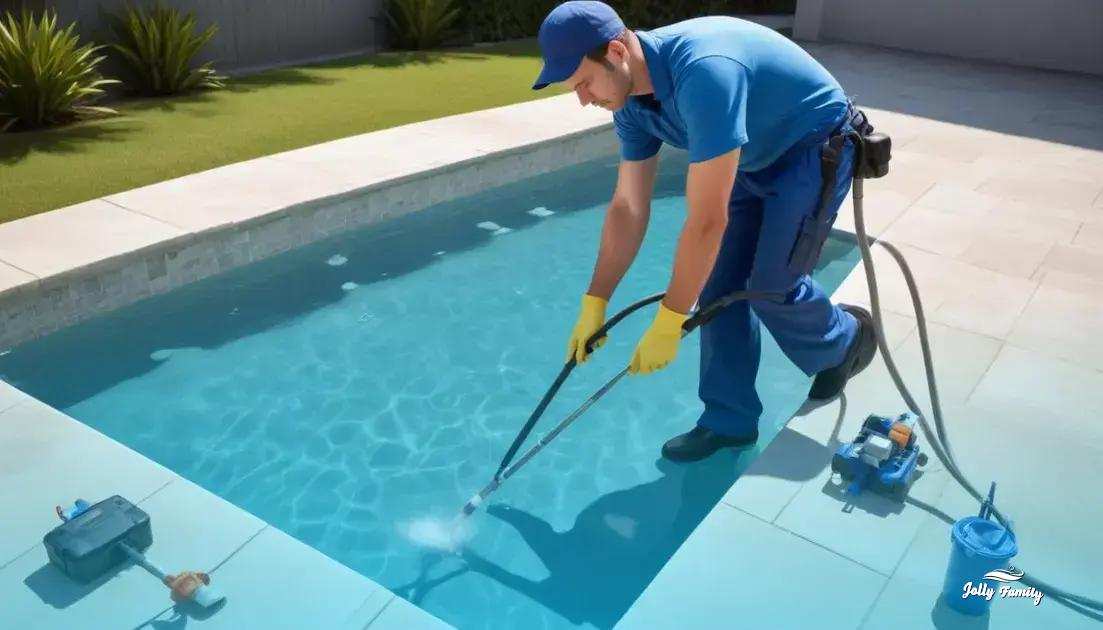

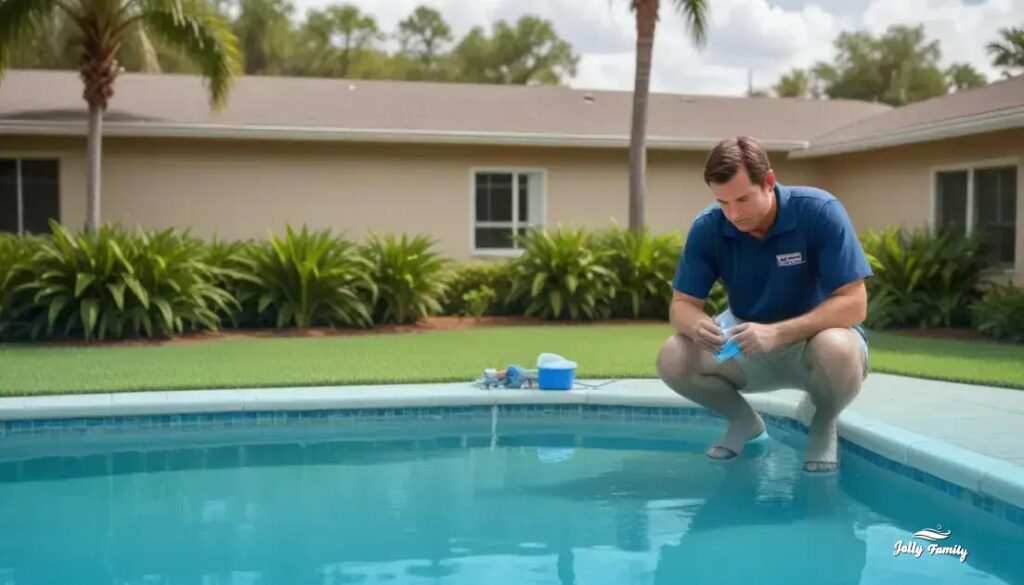
When to stop cleaning your pool yourself: call a professional if persistent algae or stains remain after proper treatment, water chemistry won’t stabilize after repeated testing, pumps or filters fail or make abnormal noises, you face electrical or chemical hazards, or repair costs and time exceed local maintenance plan pricing.
when to stop cleaning your pool yourself — Ever catch yourself spending weekends on skimming instead of relaxing? If recurring algae, failing equipment or safety worries keep showing up, Jolly Family, trusted in Kissimmee, helps you decide whether switching to professional maintenance makes sense.
How to tell when DIY pool care no longer works
If you keep battling the same pool problems despite regular care, that’s the first sign DIY maintenance may be failing. Look for concrete, repeatable issues rather than one-off glitches.
Water quality signs
Persistent cloudiness or green water after proper shocking and filtration usually means a deeper issue. Stains that return quickly, a strong chlorine smell (high combined chlorine), or constant pH swings are all red flags. Test results that won’t stabilize over several days suggest chemistry or circulation problems beyond simple fixes.
Equipment and circulation problems
Low flow, pump losing prime, a filter that won’t clean after backwashing, or loud/strange noises point to failing equipment. If the pump or filter performance drops and you can’t restore normal flow with basic checks, professional inspection is wise. Small fixes become costly if a damaged pump or heater runs incorrectly for weeks.
Chemistry that won’t balance
If you repeatedly add chemicals but free chlorine, total alkalinity, or calcium hardness won’t hold steady, something else is interfering—often stabilizer (CYA) levels, organic overload, or a faulty salt cell. When tests show volatile or extreme readings over several cycles, DIY dosing risks overcorrection and damage.
Time, cost and safety considerations
Track how much time and money you spend. If weekend maintenance eats into your free time, or chemical costs and replacement parts stack up, a pro may be more efficient. Also consider safety: handling high-strength shock, broken tiles, or electrical equipment can be hazardous without training.
Clear thresholds for calling a pro
Consider professional help when you notice any of the following: persistent algae after 72 hours of proper treatment, filter/pump failure that you can’t fix after basic troubleshooting, recurring staining despite treatment, or chemistry that won’t stabilize after several test-and-correct cycles. Bring recent water test results and a short log of what you’ve tried to speed diagnosis.
Common problems (algae, equipment, stains) that need pros
If pool problems return after basic cleaning, you may need a pro. Look for persistent issues that resist shock, brushing, and normal filtration.
Algae: types and why they need experts
Green algae often clears with shock, but when it returns or forms slimy mats, biofilm or poor circulation is likely. Black (or blue-green) algae embeds in plaster and vinyl and usually needs professional acid brushing or specialty treatments. Mustard algae sticks to rough surfaces and resists normal chlorine levels. Pros can identify the type, adjust treatment safely, and use tools you likely don’t have.
Equipment problems that require professional help
Failing pumps, clogged or damaged filters, heater malfunctions, and broken automation systems are more than annoying—they harm circulation and chemistry. If the pump loses prime, the motor hums, the filter never clears after backwash, or the heater won’t light, call a technician. Improper repairs can cause leaks, electrical faults, and faster equipment failure.
Stains and surface damage
Stains from metals (iron, copper) look brown, blue, or green and often return if the source is not fixed. Organic stains from leaves or tannins can darken plaster or vinyl. Deep scale or etched plaster and liner tears are structural issues. Some stains need an acid wash, professional chelation, or liner replacement—tasks that require skill to avoid further damage.
When DIY fixes make things worse
Overuse of shock, mixing incompatible chemicals, or running a damaged pump can create bigger problems. Repeated quick fixes hide the root cause and raise long-term costs. Safety risks include chemical burns and electrical hazards when working on equipment without training.
Practical signs to call a pro now
Seek professional help if you see: algae that persists after 72 hours of correct treatment, filters that never clear, unexplained staining that returns, visible corrosion, persistent pH or chlorine swings, or equipment noises and leaks. Bring recent water tests and a log of your attempts to help the tech diagnose faster.
Safety, liability and health reasons to stop DIY
Working on your pool can save money, but it can also create real risks. Small mistakes may cause injury, illness, or costly damage.
Chemical handling and health risks
Pool chemicals like shock and acid are strong. Mixing products or adding them improperly can create dangerous fumes or cause burns. Never mix chlorine with acids or other cleaners. Always use gloves, eye protection, and work in a well-ventilated area. Contaminated water can spread illness (for example, Cryptosporidium), so unstable chemistry is more than a nuisance—it affects health.
Electrical and equipment hazards
Pumps, heaters, and automation involve electricity near water. A wet switch or faulty bond can lead to shock or fire. If a motor hums, overheats, or leaks, stop using it. Electrical repairs should be done by licensed technicians. Improper fixes increase the chance of repeat failures and hidden damage.
Drowning, slips and structural safety
Loose tiles, torn liners, and broken ladders raise accident risk. Slippery decks and unsecured covers can cause falls. Keep children and pets away during work and avoid DIY fixes that change the pool’s barrier or safety systems without professional guidance.
Liability, insurance and legal concerns
If a guest is hurt because maintenance was done poorly, you may face liability claims. Some insurance policies require licensed service for certain repairs. Local codes or warranty terms can also void coverage after improper DIY work. Document all work and check your policy before major repairs.
When to stop DIY and practical next steps
Consider calling a pro if you face chemical burns, electrical faults, repeated equipment failure, structural damage, or ongoing health complaints from swimmers. Bring recent water tests, photos, and a brief log of what you tried. A licensed technician can offer safer repairs, proper disposal, and records that protect your home and guests.
Cost, time and hidden upkeep tasks you might be underestimating
DIY pool care can feel cheaper at first, but many tasks quietly consume time and money. Track hours, parts, and surprise fixes to see the real cost.
Time sinks you may miss
Weekly skimming, emptying skimmer baskets, brushing walls, vacuuming, and testing water add up. Plan on 1–3 hours per week for a typical backyard pool; larger or neglected pools take longer. Seasonal chores like opening, closing, and deep cleaning can require full weekend days.
Costs that add up
Chemicals alone often run $20–$60 per month. Filters, pumps, and heaters wear out: expect cartridge filters $100–$400, pumps $300–$800, and heaters $800–$2,500 when replaced. One-off services—acid wash, stain removal, liner replacement—can cost hundreds to thousands.
Hidden maintenance tasks
Beyond obvious cleaning, you’ll face: regular filter deep cleans or replacements, salt-cell cleaning, corrosion checks, pipe and heater checks, leak detection, tile and plaster repair, and calibration of automation systems. Many of these need tools or chemicals you may not own.
How to evaluate DIY vs. professional service
Log your time and out-of-pocket costs for 4–8 weeks. Compare that total to local service plans (many range from $75–$200 per month). Factor in safety, warranty protection, and the value of your free time when deciding whether to keep doing it yourself.
How Jolly Family in Kissimmee steps in: what to expect from professional service
Jolly Family technicians typically begin with a full on-site inspection to find the root cause of recurring problems. They test water chemistry, inspect pumps, filters, heaters, and check for leaks or damaged liners. This first visit focuses on diagnosis, not quick fixes.
thorough inspection and clear testing
Expect a digital water test and visual checks of circulation and equipment. The tech will measure chlorine, pH, alkalinity, calcium hardness, and stabilizer. They also watch pump flow, listen for motor noise, and inspect the filter and valves. Results are explained in plain language so you know what each issue means.
written plan and transparent pricing
After inspection, you receive a written plan with recommended repairs, timelines, and costs. Look for a clear estimate that separates labor, parts, and chemical treatments. Jolly Family technicians usually offer options: repair now, schedule later, or upgrade equipment with cost comparisons.
repairs, specialized treatments and safety
Pros handle complex tasks like acid washes, stain removal, salt-cell service, and electrical or heater repairs. Licensed electricians or certified specialists are brought in for high-risk work. Professional repairs reduce the chance of repeat failures and protect warranties.
maintenance plans and ongoing records
Many customers move to a scheduled maintenance plan that includes regular visits, water balance, filter cleaning, and seasonal openings/closings. Technicians keep service logs, digital photos, and test reports so you can track progress. These records help if warranty or insurance questions arise.
what you should prepare
Before the visit, clear pool access, gather recent test results if you have them, and note symptoms and what you tried. This helps the tech diagnose faster and may shorten labor time.
If pool problems keep coming back, it may be time to stop doing it yourself. Persistent algae, failing equipment, unstable chemistry, and safety hazards are common signs.
Call a professional when treatments fail after a few tries or when electrical and chemical risks appear. A technician will inspect, diagnose the root cause, and give a clear written plan and estimate.
Track your hours, expenses, and recent water tests to compare costs fairly. A pro can save time, reduce risk, protect warranties, and help you enjoy the pool again. Schedule an inspection if issues repeat.
FAQ – When to stop cleaning your pool yourself
How do I know it’s time to stop DIY pool care?
Look for recurring problems like algae that returns after treatment, filters that never clear, unstable chemistry, visible leaks, or noisy equipment you can’t fix.
How long should I try home treatments before calling a pro?
If algae or cloudiness persists after 72 hours of correct treatment or chemistry won’t stabilize after several test-and-correct cycles, call a technician.
Will hiring a professional cost more than doing it myself?
Not always. Compare your logged time, chemical and part costs to local service plans. Pros can save money long-term by preventing damage and preserving warranties.
What should I prepare before a technician arrives?
Clear pool access, recent water test results if available, photos of issues, and a short log of what you tried. This speeds diagnosis and may reduce labor time.
Are there safety or legal reasons to stop DIY pool maintenance?
Yes. Handling strong chemicals, electrical repairs, and structural fixes can be hazardous. Insurance or warranty terms may require licensed service for some repairs.
What can I expect from a professional service visit?
A pro will perform a full inspection, digital water testing, and equipment checks, provide a written plan and estimate, and offer repair or maintenance options and records.