
why Florida pools need regular servisse: Florida’s heat, humidity, intense sun and frequent storms speed chlorine loss, fuel algae, concentrate minerals and corrode equipment; scheduled professional maintenance restores chemical balance, clears debris, prevents stains and equipment failure, and preserves safe, clear water while avoiding costly repairs.
why Florida pools need regular servisse — think a quick chlorine tab is enough? In Kissimmee’s heat and sudden storms, small problems escalate fast; Jolly Family helps spot issues early and keep pools safe and clear.
how Florida climate accelerates pool wear and contamination
Florida’s climate speeds up wear and contamination. Heat and humidity raise water temperature and make chemicals react faster, while heavy rains and wind bring dirt, leaves and nutrients that feed algae.
Intense sunlight increases UV exposure, which breaks down chlorine more quickly. Near the coast, salt air and higher mineral content speed corrosion and leave stains on plaster and metal.
How these conditions harm pools
Common impacts are quick and visible. Watch for these signs:
- Algae blooms: green or cloudy water can appear in days after warm, wet weather.
- Chemical swings: pH and chlorine levels drop or spike after rain, causing irritation and cloudy water.
- Scaling and stains: minerals and sun-driven evaporation concentrate deposits on surfaces.
- Equipment strain: pumps and filters run harder, seals wear faster, and metal parts corrode from salt and humidity.
- Water loss: higher evaporation needs more frequent top-offs, which dilute chemicals and invite contaminants.
Simple, regular actions reduce these effects: test water more often during heat waves, clean skimmers after storms, and inspect equipment for rust or leaks. Small, steady maintenance prevents small problems from becoming costly repairs.
chemical balance: why weekly checks matter in hot weather
In hot weather, weekly chemical checks keep your pool safe and clear. Heat and sun burn off chlorine fast and change water balance in days, not weeks.
Warm water speeds chemical reactions and raises evaporation. That concentrates minerals and can push pH out of range. When pH and alkalinity shift, chlorine works less effectively and swimmers may get red eyes or itchy skin.
Key tests and target ranges
Test these values weekly and after storms or heavy use:
- Free chlorine: aim for 2–4 ppm in hot weather.
- pH: keep between 7.2 and 7.6.
- Total alkalinity: target 80–120 ppm to stabilize pH.
- Cyanuric acid (stabilizer): 30–50 ppm helps protect chlorine from UV.
- Calcium hardness: 200–400 ppm to avoid scaling or etching.
Follow the right order when adjusting: raise or lower alkalinity first, then correct pH, and finally adjust chlorine. This order makes chemical changes more predictable and effective.
Use a reliable test method: liquid kits or digital testers give better precision than strips. Take a sample from elbow-deep water away from returns, and test in the morning before heavy sun and after the pump has run a bit.
Shock your pool when combined chlorine is high, after heavy swim days, or following heavy rain. A weekly shock in very hot periods helps destroy organics that consume chlorine.
Small, regular actions matter: test weekly, add small doses rather than large bursts, run the filter daily, and clean skimmer baskets. These habits keep chemicals steady and reduce the need for big fixes.
common issues in Kissimmee pools: algae, stains and equipment strain
Algae often appears first in Kissimmee pools after warm, rainy spells. Green algae makes water cloudy, mustard algae forms yellowish patches on shallow areas, and black algae can cling to grout and rough surfaces.
To treat algae quickly: brush surfaces, shock the pool with the correct chlorine dose, run the filter continuously, and vacuum dead algae to waste if possible. Use an algaecide after chlorine levels return to normal to prevent recurrence.
Stains and surface damage
Stains come from metals, organic debris, and minerals concentrated by evaporation. Iron and manganese cause brown or rusty marks; organic stains from leaves look brown or tan; calcium scaling leaves white crusty deposits.
Address stains by identifying the source, using a metal sequestrant for metals, or a stain remover designed for the surface type. For heavy scaling or deep-set stains, professional cleaning or spot acid treatment may be needed to avoid damaging plaster or tile.
Equipment strain and signs to watch
High temperatures and debris increase workload on pumps, filters, and heaters. Signs of strain include reduced flow, higher filter pressure, noisy motors, frequent tripping of breakers, and visible corrosion on metal parts.
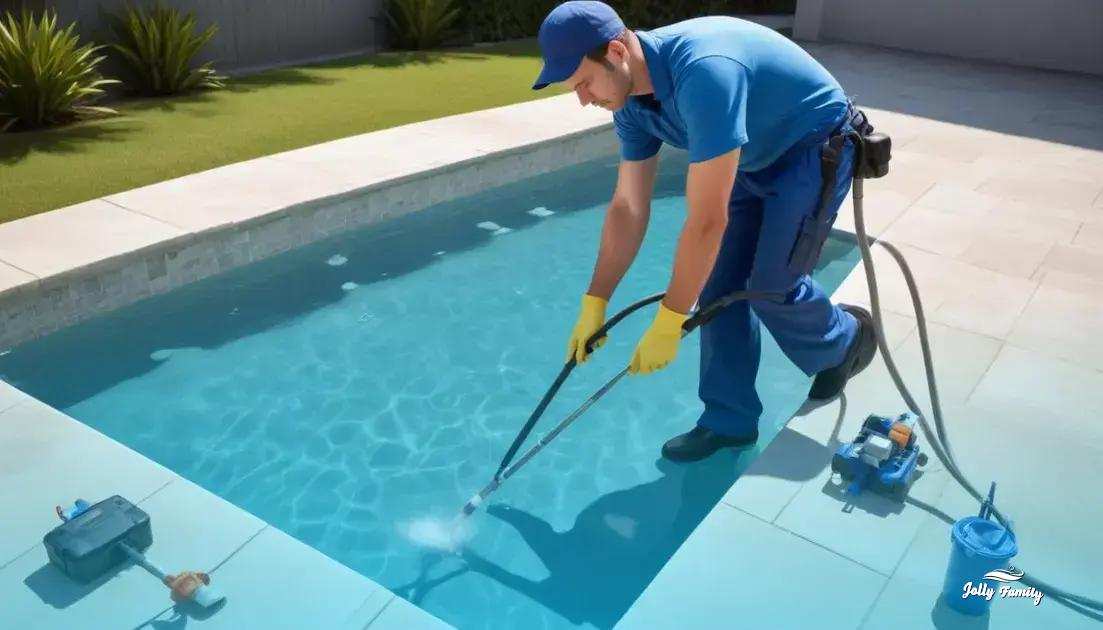
Simple checks reduce strain: clean skimmer and pump baskets weekly, backwash or clean filters as pressure rises, inspect O-rings and lids for cracks, and flush salt spray from exposed metal to slow corrosion. Replace worn seals and schedule a professional service if the pump loses prime or the motor overheats.
Combine quick treatments with regular attention: treat algae early, tackle stains promptly, and keep equipment clean. These steps cut repair costs and keep pools swim-ready in Kissimmee’s demanding climate.
a practical weekly-to-monthly maintenance checklist for homeowners
Use this checklist to keep your pool ready and avoid big repairs. Follow the schedule and adjust after heavy rain or high use.
Weekly
- Test water for free chlorine, pH, and alkalinity; adjust to recommended ranges.
- Skim surface and empty skimmer baskets; debris feeds algae.
- Brush walls and steps to prevent algae buildup.
- Run the pump 8–12 hours daily in hot weather; ensure steady circulation.
Every 2 weeks
- Check and clean the pump basket and impeller area for leaves and hair.
- Test cyanuric acid (stabilizer) if chlorine drops quickly; add only if low.
- Inspect visible equipment for leaks, loose wires, or rust.
Monthly
- Backwash or clean the filter per manufacturer guidance; monitor filter pressure.
- Measure calcium hardness and adjust to avoid scaling or etching.
- Shock the pool after heavy swim days, storms, or if combined chlorine is high.
Seasonal / every 3–6 months
- Inspect heater, automation, and salt cell (if present); clean salt cell per instructions.
- Deep-clean tile and check grout or plaster for wear or staining.
- Schedule a professional tune-up to test flow rates, heater function, and pump efficiency.
Quick tips: use a reliable test kit or digital meter, always add chemicals to water (never water to chemicals), and make small adjustments rather than large doses. Keep a log of readings and actions to spot trends and catch problems early.
why Jolly Family trusted in Kissimmee is the partner for routine care
Homeowners in Kissimmee often pick Jolly Family because the team understands local weather, water chemistry, and common pool problems. They offer steady care that matches Florida’s heat and storms.
- Local expertise: technicians know how heat, rain, and salt affect pools here.
- Fast response: same-day or next-day visits for urgent issues after storms or heavy use.
- Certified techs: trained staff who handle chemicals, equipment, and safety correctly.
- Transparent pricing: clear quotes and no-hidden-fee service visits.
- Customized plans: weekly, biweekly, or monthly schedules to fit each backyard and budget.
service features to expect
- Regular water testing with digital meters and written results.
- Skimmer and filter cleaning, plus backwash or cartridge service as needed.
- Routine inspection of pumps, heaters, automation, and salt cells.
- Targeted treatments for algae, stains, and mineral issues.
- Seasonal tune-ups and repair estimates before work begins.
Ask for a simple service log and a written maintenance plan. That record helps spot patterns early and keeps costs down by preventing big repairs.
Keep your Florida pool safe and cost-effective
Regular service stops small problems from getting big. Weekly checks and routine cleaning keep water clear and chemicals balanced. That prevents algae, stains, and equipment breakdowns.
Routine care also saves money. Fixing a pump or cleaning a stain is cheaper than a full replaster or major repair. Simple habits like skimming, testing, and running the filter make a big difference.
When you team with local pros who know Kissimmee weather, you get faster fixes and better advice. Set a maintenance plan, keep a log of readings, and act early. Your pool will stay safe, swim-ready, and enjoyable all year.
FAQ – Questions about why Florida pools need regular service
Why do Florida pools need regular service?
Florida heat, humidity, and storms speed up chemical loss and algae growth. Regular service keeps water safe and prevents costly repairs.
How often should I test my pool water in hot weather?
Test at least once a week and after heavy use or storms. More frequent checks help keep chlorine and pH in the right range.
What are early signs of algae or contamination?
Look for cloudy or green water, slippery surfaces, discoloration at the waterline, or a strong chlorine smell. Catching these early makes treatment easier.
What should I do after heavy rain or a storm?
Skim debris, run the pump, and test chemicals as soon as possible. Shock the pool if combined chlorine is high or if algae appear.
Can regular maintenance save me money?
Yes. Small, routine actions cut the risk of major repairs and extend equipment life, which lowers long-term costs.
How do I choose a reliable local pool service?
Pick a company with local Florida experience, certified technicians, clear pricing, fast response times, and a written maintenance log.